Stock vs Custom Wig Sourcing: Three Wholesale Routes
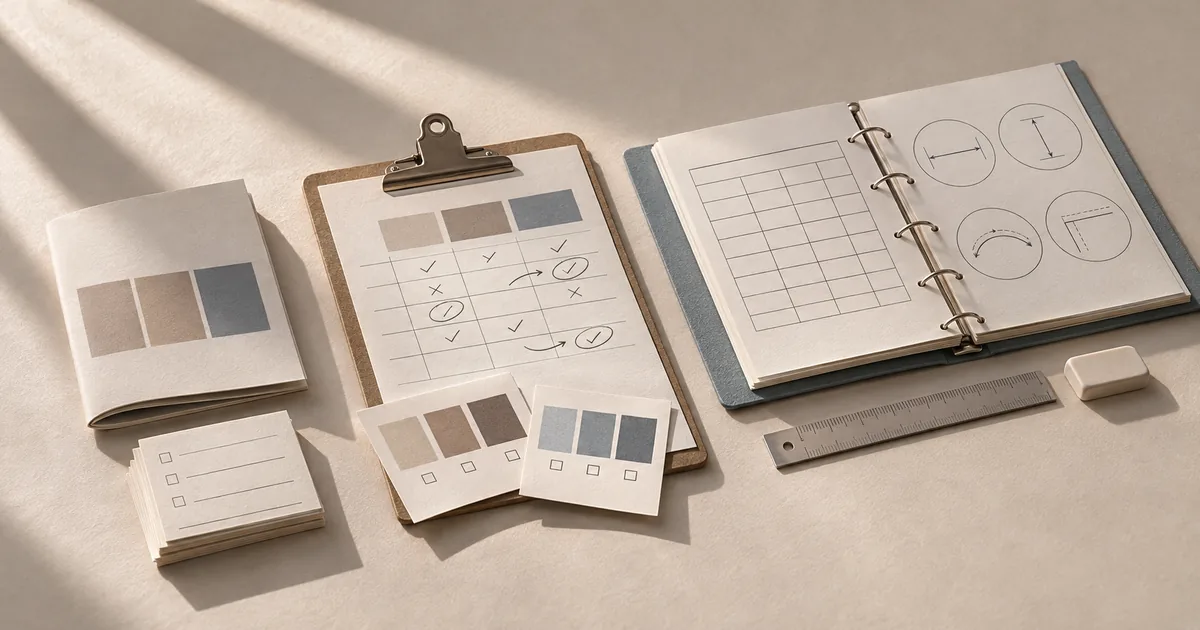
Sourcing Route Guide
For comparing quotes, group sourcing into three routes, defined by how much of the product is fixed before you buy: stock (finished wigs bought as-is), modified (a maker’s existing base changed within agreed limits), or full custom (built new to a specification you and the maker agree in writing). Separately from all three, you decide whose label the goods carry: where a maker supports private labeling, your branding can ride on any of the routes under the maker’s written program.
This guide defines the three routes, shows which specification fields each one opens and locks, how sampling changes between them, and how the quotations shape up — ending with a five-question sequence that picks your route. It is a sourcing-decision tool. Whose brand the customer remembers is a separate business-model decision, made independently of the route; and how to read the quotation each route produces is handled in the supplier quotations guide.
The Routes
The Three Sourcing Routes for Full Human Hair Wigs
| Stock | Modified | Full custom | |
|---|---|---|---|
| Starting point | Maker’s existing finished wigs | A base design with agreed fields changed | A specification of yours, built new |
| What you control | Selection within the existing range | The agreed variable fields only | Lengths, color system, density wording, cap — as agreed in writing |
| Waiting structure | Set by the seller’s dispatch terms on existing goods | Depends on the production cycle for the agreed changes | Runs through the full production cycle — window confirmed in writing |
| Capital pattern | Per-unit buying at the quoted minimums | Priced per the agreed change list | Priced as a production run of your spec |
| Suits | Testing a market, fast shelf fill | A near-fit base with specific must-change fields | A confirmed spec your current range cannot cover |
Three working notes on the table. First, the waiting and capital rows describe shape, not size — every maker’s actual windows, minimums, and payment terms are written quotations, not this table. Second, a maker can run all three routes in parallel; the routes describe your order, not the factory. Third, stock availability changes with production and sales — what is in stock today is confirmed per inquiry, and this guide deliberately carries no stock list and no ready-to-ship promise.
Spec Control
What You Can (and Cannot) Specify on Each Route
Route choice is really a specification question. The fields that matter for a full-top human hair wig:
| Spec field | Stock | Modified | Full custom |
|---|---|---|---|
| Length | Within existing range | Within agreed limits | Specified |
| Color (ring reference) | Within existing range | Within agreed limits | Specified against your agreed system |
| Density (agreed wording) | As made | Within agreed limits | Specified |
| Cap construction | As made | Within agreed limits | Specified |
| Cap sizes | Existing size set | Within agreed limits | Specified |
| Hairline/parting finish | As made | Within agreed limits | Specified |
| Packaging and label | Neutral or maker’s brand | Maker’s base + agreed branding | Per your specification |
The cells above deliberately do not say yes or no per maker — which fields can vary on which route is a capability fact each supplier confirms in writing. Use the matrix as the question list: take it to the supplier, field by field, and let the written answers fill the cells. Locked fields are not a weakness; they are a filter — if a locked field is a must-change for your market, that route just eliminated itself.
Private labeling is decided on its own line, not inside a route column: where a maker offers it, ask in writing which routes the branding support covers — stock, modified, custom builds, or some combination — and what it includes before you count on it.
Sampling per Route
Sampling: What Changes Between Routes
Sampling never disappears — its job changes:
- Stock: the sample is the goods. You are verifying batch consistency — that what ships matches what you were shown. Inspection method matters more than negotiation.
- Modified: the sample verifies the changes — did the agreed fields land where the specification said. Check the changed fields first, then the base.
- Full custom: the sample approves the whole specification before bulk production — the full approval-gate workflow, because everything downstream is built from this sign-off.
Where private label branding applies on any route, the branded layer — label, tags, packaging — is verified against its approved version when the parties agreed to one. Use an approved reference as the sample the bulk order is checked against when the route and supplier agreement provide for one, and ask each supplier in writing how production acceptance is documented on their route — sample terms such as availability, fee, and whether the fee credits against the bulk order are supplier terms to settle before the first order. The full sample-approval workflow is covered in the wholesale first-order guide.
The Trade-Off
Capital and Lead Time: The Real Trade-Off
| Capital pattern | Waiting structure | Watch out for | |
|---|---|---|---|
| Stock | Per-unit buying at the seller’s quoted minimums — payment terms come from the quotation | The seller’s dispatch terms on existing goods — confirmed per inquiry | Spec limits push you toward discounting slow movers |
| Modified | Changes priced per the agreed field list | The production cycle for the agreed changes — confirm the window | Change requests multiply; cap the agreed field list |
| Full custom | Priced as a production run — minimums and terms from the quotation | The full production cycle — confirm the window | Cash committed to goods only your brand can sell |
Ask each supplier for the dispatch or production window in writing and compare the quotes against the same need-by date — the quotation, not a pattern, settles the timing. The quotation is also where the routes diverge in shape: a stock quote is a price per existing SKU, a modified quote prices the changes, and a custom quote prices a production program. Comparing them line by line is covered in the supplier quotations guide, and the first-order budget example shows how the pieces assemble.
Deliverable
How to Choose: A Five-Question Decision Sequence
Ask in this order; the first “no” points to your route:
- Is your downstream demand confirmed for a specific spec? No — start with stock and let real sales write your specification.
- Is there a maker’s base close enough that only agreed fields need changing? Yes — modified, with the change list capped in writing.
- Does the product need to be built new to your specification? Yes — full custom, and the specification records you have been keeping become the brief.
- Should the goods carry your label? Decide this independently of the route: where the maker supports private labeling, confirm in writing which routes it covers and what it includes before you count on it.
- Can this batch’s capital stay committed for the route’s full cycle, and does your calendar allow at least one sample-and-revision cycle before you need goods? If not to either, step back toward stock — the written quotation, not a rule of thumb, sets both clocks.
One boundary note: this sequence picks the route for this batch of goods. Whether you operate as a distributor or a brand owner is the business-model question, decided separately from the sourcing route.
Sourcing Routes: Common Questions
Stock wigs are bought finished as-is; modified wigs start from a maker's base with agreed fields changed; full custom is built new to a specification you agree in writing. Private label is a separate branding overlay — where the maker supports it, your label can ride on any of the three routes under the maker's written program.
There is no fixed ranking. Stock is quoted per unit at the seller's minimums, modified prices the agreed changes, and custom is priced as a production run — so which commits the least cash depends on the written quotation: quantities, minimums, and payment terms decide it, not the route name.
That sequencing is possible, and your stock-era records are the bridge: what sold and what customers asked for become the specification evidence for the label. When you get there, ask whether the maker's private label support applies to the route you will be on — minimums, sampling, and branding support should be confirmed in writing for both stages.
Ask for it field by field, in writing: length, color reference, density wording, cap construction, sizes, finish, packaging. A written per-field answer is the only version of "we can modify" that survives contact with a production run.
Next Step
Next Step
Pick the route that matches your market’s certainty and your calendar’s honesty, then put it in writing: the route name, the specification fields, the sample terms, and the lead-time inputs. The first-order guide takes it from there, the wholesale human hair wigs page is the supply entry point for the inquiry — and the quotation that comes back will tell you, line by line, whether the route you picked was right.



Ready to Pick Your Route?
Take the spec matrix and the five-question sequence to your supplier conversation — and ask every route-dependent term in writing before the first order. Stock availability and route terms are confirmed per inquiry.
Contact LEV Wigs