Buying Guide
How Much Does a Sheitel Cost? Price, Lifespan and Value Guide

There is no single answer to how much a sheitel costs. The honest answer is that the price follows the specification: the hair type, how the cap is constructed, the length and density, any cut or color work, and the seller. On this page we show real, dated examples of what two sellers listed when we checked, explain what actually drives the differences, and give you a working method for comparing prices and thinking about cost per wear.
If you are new to sheitels in general, our guide to choosing Jewish wigs covers construction and coverage basics, and our cultural guide explains why Jewish women wear wigs. This page stays on one question: why prices differ, and how to compare them without guessing.
Key Takeaways at a Glance
Key Takeaways
- Price follows specifications, not a fixed tier — hair type, cap construction zones, length, density, included services, and seller all move the number.
- Named dated examples, not a market range — on October 22, 2026, Bee Wigs listed a full lace-top wig at $799 (that variant out of stock) and Tallie Wigs listed partial-coverage band falls at $4,200 to $4,500; different formats, not two ends of one range.
- Compare like for like — ask each seller to state hair type, construction, length, density, and included services in writing.
- Cost per wear is arithmetic you control — price plus budgeted services divided by expected wears; your actual wears are unknown in advance.
- This guide gives no universal lifespan — serviceable life depends on wear, care, and servicing; follow the maker's or seller's written guidance and keep records.
Price Drivers
What Goes Into a Sheitel Price?
When two sheitels look similar in a photo but are priced differently, the differences you can actually check sit in five places. This guide does not assign fixed percentage shares to them; instead it describes what each driver means and what to ask, so you can compare specifications and quote scope rather than weigh a number without context.
| Price driver | What it means | What to ask the seller |
|---|---|---|
| Hair type | Specialist sellers list processed human hair and virgin European hair as separate collections. | Which hair type is this unit, stated in writing? |
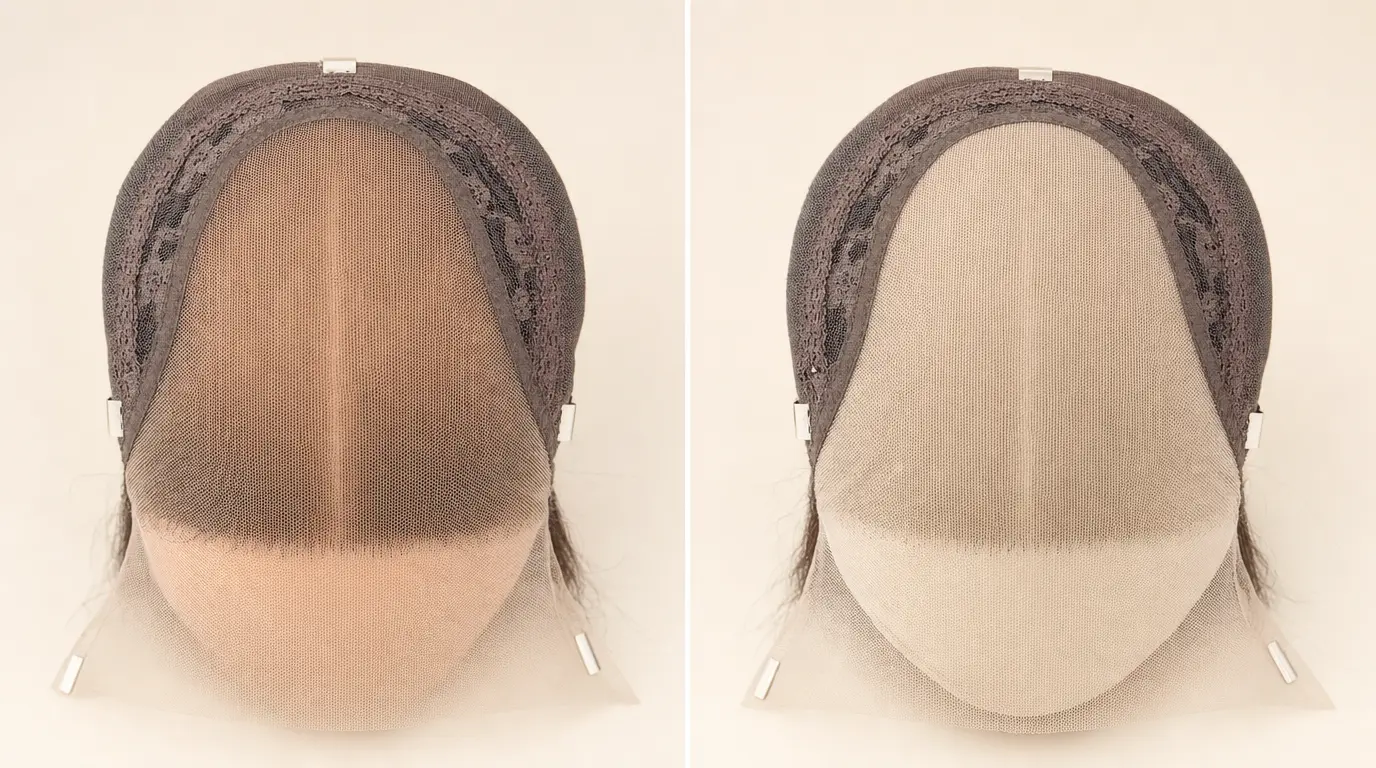
| Cap construction | Wefted, hand-tied, lace top, and silk top describe different work and materials in the cap; one unit can mix zones. | Which zones are hand-tied and which are wefted? |
| Length and density | Longer and denser units use more hair. | What are the length and density, stated in writing? |
| Cut, color, and services | Color services, cuts, and customization are often priced as additions at purchase time. | Which services are included and which cost extra? |
| Seller | An online catalog, a specialist salon with fittings, and a custom maker price differently for comparable specifications. | What does the price include beyond the unit itself? |
Asking each seller for the specification in writing — hair type, construction zones, length, density, and included services — makes quotes easier to compare and shows exactly what each price covers. For construction basics, our lace top versus silk top comparison and cap construction guide explain what each label means, zone by zone.
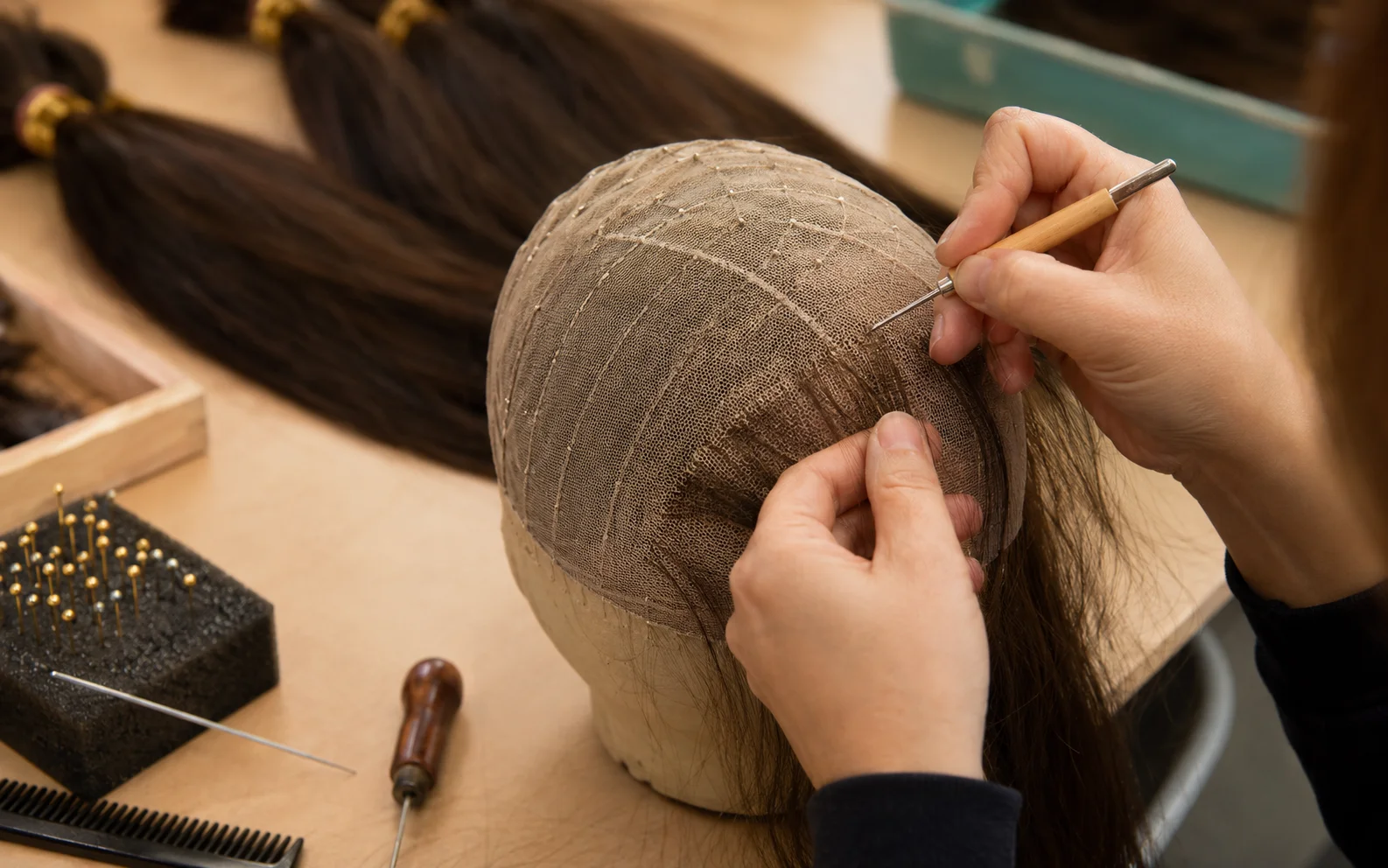
If you are comparing suppliers rather than single units, LEV publishes wholesale specification pages for lace top sheitels and silk top kosher sheitels that show how one manufacturer states construction for quoting.
Price Examples
What Sheitels Were Listed At: Dated Examples
Instead of quoting a market range, here are listings we opened and recorded on October 22, 2026. They are examples of what two sellers listed that day, nothing more — and they are different formats: a full wig at one seller and a partial-coverage band fall (a piece intended to be worn with a band or other covering) at the other. They are not equivalent alternatives at two price points. Prices and availability change (the Bee variant was out of stock, and one Tallie listing was sold out), and these are not LEV prices, not a market boundary, and not a ranking of quality.
| Seller | What we opened | Format | Specifications in the listing | Listed price we saw (USD) |
|---|---|---|---|---|
| Bee Wigs | #4 Dark Brown Natural Hair Lace Top Wig Sheitel (product page) | Full wig | Human hair; lace top; variant M / 18 inch / #4 | $799.00 for that variant, listed as out of stock |
| Tallie Wigs | Human hair band fall wigs, 24 to 27 inch (collection page) | Partial coverage, worn with a band or other covering | 100% human hair; medium and large caps; wavy | $4,200 to $4,500 (one listing sold out) |
Sources: beewigs.com product page (variant price and stock state as listed); sheitels.com (Tallie Wigs) collection page. All opened October 22, 2026. Listing prices, not offers from LEV Wigs.
Read the two rows separately. The Bee Wigs figure is one full-wig variant at one seller; the Tallie figures are partial-coverage band falls at another — longer, hand-selected one-of-a-kind pieces sold through a salon that fits them in person. The gap between them reflects format, hair, length, and seller, not a quality or value ranking, and one number cannot be read off the other. Whichever format you are pricing, the specification questions above are what make listings comparable.
What we deliberately do not say
No budget ceiling, no typical price, no quality ranking, and no lifespan estimate follows from these numbers, and the two formats are not interchangeable alternatives. If you need a current number, open the linked listings or ask the seller directly — and date whatever you record.
Lifespan
How Long Does a Sheitel Last?
This guide does not give a universal lifespan number. How long a unit stays serviceable depends on its hair and construction, how often it is worn, how it is washed, dried, stored, and styled, and the servicing it receives along the way.

Because of that, this article does not promise a lifespan; budget from your own wear plan, the written care instructions that come with your unit (they override generic internet rules, including ours), and the scope behind any estimate a provider gives you. Keep a short log of washes, products, and services, and read our sheitel lifespan guide for the factors that matter and how to plan for replacement.
Cost Strategy
Rotation and Cost per Wear: How to Compare Honestly
You will sometimes read that owning two sheitels saves money because each unit rests. This guide claims neither: it does not present rotation as a guaranteed saving and does not claim fibers recover by resting. Whether rotation saves money depends on prices, services, and how many times you actually wear each unit. What rotation observably does is practical — while one unit is washed or serviced, you can wear the other, and wear, washing, and styling are spread across two units instead of one.

Cost per wear: arithmetic, not a prediction
Cost per wear = (price + the service costs you budget) divided by the number of wears you actually expect. Suppose a wig is listed at $799, you budget $250 for services over the period you will own it, and you expect to wear it 250 times. Then (799 + 250) divided by 250 = 4.196, about $4.20 per wear. The price comes from a listing we opened on October 22, 2026 (that variant was marked out of stock), but the service budget and the wear count are assumptions you choose. Your actual number of wears is unknown in advance, so treat the result as a way to compare options, not as a forecast of what you will get.
Weighing two units against one
Compare over the same horizon: total cost means both prices plus the services you would budget for both, and total wears means the wears you actually expect across that period. Include the end state — a second unit kept as a backup or for occasions has value a single-unit plan does not. Rotation is a care and convenience choice, not guaranteed savings, and this guide does not tell you how many sheitels to own.
When to Replace
Signs It May Be Time to Replace Your Sheitel
Replacement decisions are made unit by unit, and the honest sequence is: observe, document, then ask a professional. Changes wearers notice include:
- Thinning or shedding at the part or hairline — photograph the area, note the date, and note what changed since your last check.
- Tangling that keeps returning — note when it started, which products you used, and whether it affects the whole unit or one zone.
- Tears, holes, or loosening in the cap or lace — photograph inside and out, and stop wearing the unit if the structure feels unstable.
- Color or texture change — note when you first saw it and which care steps you followed.
- Fit changes — a cap that stretches or no longer sits securely; note when you noticed and anything that changed in how you wear it.
These observations are not diagnoses on their own. Whether a change can be cleaned, repaired, or only replaced is a question for a qualified sheitel provider or sheitel macher who can handle the unit: ask for a written assessment of the care or repair options and what each would cost before deciding. Our sheitel repair guide covers specific repair approaches in detail.
Care
Caring for What You Buy
Care guidance belongs to the people who made your unit: the maker or seller written instructions override anything generic, including this page. Follow them, and keep a simple log — wash dates, products used, services done — so that if something changes, you and your provider can see what happened and when.
For full routines, use the dedicated guides: our lace top sheitel washing guide covers the wash method step by step, and our sheitel storage guide covers stands, travel, and seasonal storage.
FAQ
Frequently Asked Questions
There is no single price, and listings in different formats are not directly comparable. On October 22, 2026, Bee Wigs listed its #4 Dark Brown Natural Hair Lace Top Wig Sheitel, a full wig (human hair, lace top, variant M / 18 inch / #4), at $799.00 with that variant marked out of stock, and Tallie Wigs listed 24 to 27 inch human-hair band falls, a partial-coverage format worn with a band or other covering, at $4,200 to $4,500 with one listing sold out. These are dated examples from two sellers in different formats, not a market range and not equivalent alternatives; prices change, and what a listing includes varies by hair type, construction, length, and services.
This guide does not give a universal lifespan. Serviceable life depends on the hair and construction of the unit, how often it is worn, and how it is washed, stored, styled, and serviced. Follow the written care instructions from your maker or seller, keep a care log, and ask a qualified provider for an assessment when the condition of the unit changes.
Five things to compare: hair type, cap construction, length and density, cut or color services, and the seller's own retail context. Specialist sellers list processed and virgin European hair as separate collections, and construction varies by which zones are hand-tied or wefted. This guide does not assign fixed percentage shares; ask each seller to state the specification in writing so quotes can be compared.
Cost per wear is arithmetic, not a verdict: add the purchase price and the service costs you budget, then divide by the wears you actually expect. A $799 wig with $250 of budgeted services over 250 expected wears works out to (799 + 250) divided by 250 = 4.196, about $4.20 per wear. Because your actual wears are unknown in advance, use the result to compare options rather than as a promise that a higher price always pays off.
There is no universal number to own. Rotation lets one unit be washed or serviced while you wear the other, and it spreads wear across both. If you weigh two units against one, compare total cost, meaning both prices plus services, against total expected wears over the same period. Rotation is a care and convenience choice, not a guaranteed saving, and how many units make sense depends on how you wear them.
Conclusion
Making the Right Choice for Your Needs
A sheitel price is a specification with a number attached. Once you compare the same hair type, the same construction, the same length, and the same included services, prices become comparable — and asking the seller to put the full specification in writing is the reliable way to check a quote before you rely on it.
Match the purchase to how you will actually wear the unit, keep the records that let you and your provider see how it ages, and when a lifespan or savings estimate matters to your decision, ask what it is based on before you rely on it. The dated examples above will age too: re-check a listing before you rely on it.
If you are comparing suppliers rather than single units, you can prepare the specification fields from this guide — hair type, cap construction zones, length, density, and services — and send them with your questions when you contact LEV Wigs.


Questions About Sheitel Pricing?
Whether you are comparing one unit or planning a boutique assortment, you can send your specification questions and requirements to LEV Wigs through the inquiry page.
Contact Our Team