Sheitel Care
How to Wash a Lace Top Sheitel: 2026 Factory Care Guide

Wash your lace top sheitel every 8 to 10 wears using lukewarm water and sulfate-free shampoo, always air drying on a wig stand. That's the short answer. The longer answer involves a technique most people get wrong — and honestly, we've seen sheitels come back looking like they'd been through a washing machine. A typical case: a salon sends us a lace top that a client had scrubbed with dish soap and blow-dried on high heat. The Swiss lace had shrunk noticeably. The hand-tied knots at the crown had loosened to the point where hair was shedding in clumps. As a manufacturer, this hurts to see — because proper how to wash a sheitel technique would have prevented every bit of that damage.
There's a thread on Reddit's r/Judaism that pops up every few months: "My sheitel macher moved away, how do I wash this?" The answers range from decent to genuinely dangerous for your wig. For this reason, we're writing this guide factory direct — meaning the advice comes from the people who hand-tie each strand, who know exactly what Swiss lace can and can't handle, and who refine the washing protocol on our own caps before recommending it for lace top sheitel construction.
What this means: if you follow these five steps, your sheitel will last longer, shed less, and maintain the lace elasticity that keeps it fitting properly.
One note before we begin: every care decision below depends on how your lace top is actually built. For the full construction background — the Swiss lace mesh, the hand-tied knot count, the cap weight — see our lace top sheitels complete guide.
Preparation
What You Need Before You Start
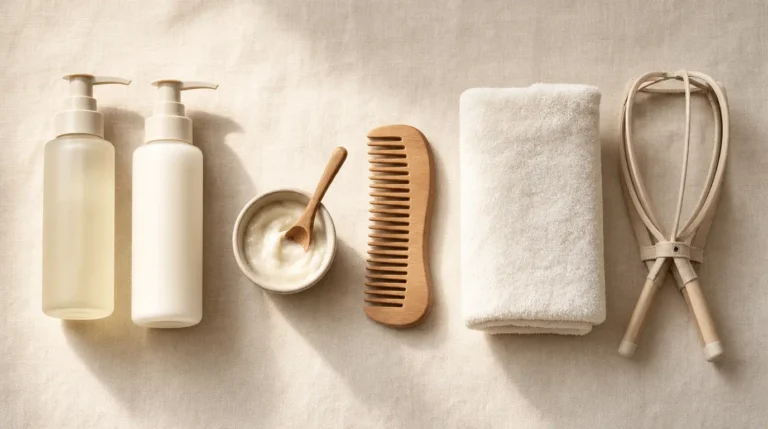
Next, you need sulfate-free shampoo, a deep conditioner for European hair, a wide-tooth comb, a wig stand, and a microfiber towel. Don't improvise with whatever's in your shower caddy — the products you use on the wig matter more than the technique itself. Our factory tests every product recommendation below on actual European hair samples before listing it here (and yes, this is where most people go wrong).
Products
Sulfate-Free Shampoo. Sulfates strip the cuticle layer of European hair. Therefore, always look for formulas labeled "sulfate-free" — not "low sulfate," not "gentle cleanse." The ingredient list should not contain sodium lauryl sulfate or sodium laureth sulfate. In LEV in-house hair-sample checks, sulfate-based shampoos created visibly more cuticle roughness than sulfate-free alternatives on processed European hair.
Deep Conditioner for European Hair. A standard drugstore conditioner won't penetrate the cuticle of European hair that's been processed and ventilated. You need something with hydrolyzed keratin or argan oil. Apply from mid-length to the ends — never on the lace base (more on why in Step 4).
What to Avoid. For example, dish soap (yes, people try this). Similarly, clarifying shampoos (too harsh for European hair). Also avoid anything with alcohol as a primary ingredient. As for "2-in-1" shampoo-conditioner combos, they don't condition deeply enough. And skip hot oil treatments — the heat loosens hand-tied knots.
Tools
Wide-Tooth Comb. Not a brush. Not a fine-tooth comb. Instead, a wide-tooth comb with smooth, rounded teeth. Brushes catch on the knots at the lace base and yank strands out. In LEV wet-combing checks, brushing repeatedly caused noticeably more shedding than slow wide-tooth combing.
Wig Stand. Canvas or styrofoam — not a plastic head (those trap moisture and create mildew). A canvas block stand allows airflow through the cap while the sheitel dries, which is critical for the lace base.
Microfiber Towel. Regular bath towels have rough fibers that snag on the lace mesh and create friction on the cuticle. By contrast, a microfiber towel absorbs water without pulling. If you don't have one, a clean cotton t-shirt works as a substitute.
The Wash Method
Step-by-Step: The Factory Wash Method
Detangle first, then soak in lukewarm water with sulfate-free shampoo, gently cleanse the lace base, deep condition the hair, rinse and air dry on a stand. Five steps, zero shortcuts. Our factory developed this method through repeated testing on our own caps, and we share the same protocol with salon partners so every unit is delivered with consistent care advice.
Step 1: Detangle Gently Before Wetting
Start with a dry sheitel. Hold it at the cap with one hand and comb from the ends upward with the other. Never comb from the roots down — this pulls knots through the lace and causes shedding at the base. Work in 2-inch sections. If you hit a tangle, don't force it. Isolate the knot with your fingers and gently pull individual strands apart. This takes patience. It's supposed to. In LEV internal return reviews, rushed detangling is one of the most common preventable shedding patterns we see in lace top sheitels sent back for repair.
Step 2: Prepare Lukewarm Water (Never Hot)
Fill a clean basin with lukewarm water — between 30 and 35 degrees Celsius. If you don't have a thermometer, the water should feel neutral on your wrist. Not warm, not cool. Just... there. Hot water is the single most common cause of lace damage we see. Swiss lace (0.08mm) warps at temperatures above 40 degrees. Once it warps, the cap shape changes permanently and no amount of re-blocking will fix it properly.
Step 3: Shampoo the Lace Base — Technique Matters
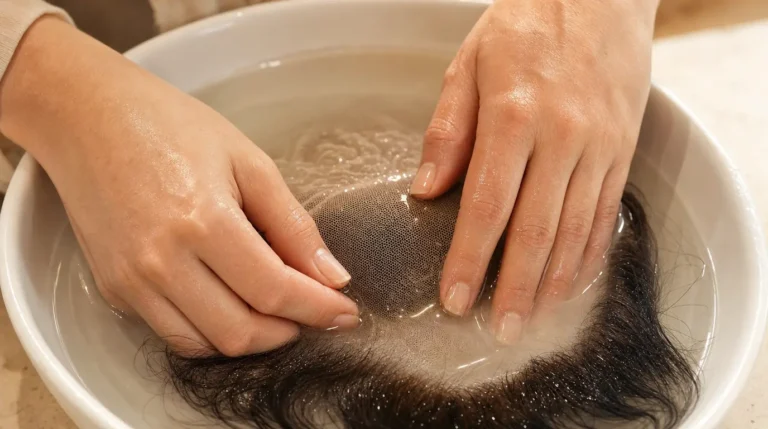
Add a coin-sized amount of sulfate-free shampoo to the basin and swish until the water is sudsy. Submerge the sheitel cap-first, letting it soak for 3 to 5 minutes. Then, using only your fingertips, gently press the suds through the lace base in a pressing motion. Not a rubbing motion. Not a scrubbing motion. Press and release. Think of it like hand-washing a delicate silk garment (which, structurally, isn't far off). The lace base holds the majority of dirt and oils from your scalp — that's what you're targeting.
Step 4: Deep Condition the European Hair
Drain the shampoo water and refill the basin with fresh lukewarm water. Apply a generous amount of deep conditioner from mid-length to the ends, avoiding the lace base entirely. Why avoid the base? Conditioner contains silicones that coat the lace and loosen the grip on hand-tied knots. Let the conditioner sit for 3 to 5 minutes. For European hair that's been colored or highlighted, extend to 7 minutes. The hair will feel noticeably softer and more elastic when you're done.
Step 5: Rinse, Blot, and Air Dry on a Stand
Rinse the sheitel under cool running water — not cold, not warm. Cool. Rinse until the water runs completely clear, which usually takes 2 to 3 minutes. Any residual shampoo or conditioner left in the lace will cause buildup over time and attract more dirt faster. Then lay the sheitel flat on your microfiber towel and blot gently. Don't wring or twist — and never squeeze. Place it on your canvas wig stand, adjust the part line to your preferred position (do this now, while the hair is damp and pliable), and let it air dry completely. This takes 12 to 24 hours depending on length and density. Don't rush it with a hair dryer.
Common Mistakes
Washing Mistakes That Ruin Lace Tops
The three most damaging mistakes: hot water (warps lace), rubbing the base (loosens knots), and blow drying on high heat (cracks European hair). Damaged sheitels that come back to the factory nearly all trace to one of the errors below.
Hot water warps the lace mesh permanently. Swiss lace is 0.08mm thick — thinner than a human hair. Consequently, temperatures above 40 degrees Celsius cause the mesh to contract unevenly. Once that happens, the cap won't sit flat against the scalp. We can't fix this at the factory level. Prevention is the only option.
Rubbing the lace base loosens hand-tied knots and causes shedding. Each strand in a lace cap wig is secured with a single knot. Rubbing creates lateral friction that pulls those knots through the lace holes. Once a knot slips through, that strand is gone for good. As a manufacturer, we can re-ventilate individual spots, but it's time-consuming and costly.
Blow drying on high heat cracks the European hair cuticle. European hair in sheitels has been chemically processed — washed, sometimes bleached, sometimes dyed. The cuticle is already more fragile than virgin hair. Blow dryer heat above 180 degrees Celsius causes micro-fractures along the shaft. The hair becomes brittle, frizzy, and dull within weeks.
Washing too frequently strips lace elasticity. Every wash cycle flexes the lace mesh. Do it too often and the mesh loses its snap-back ability. The cap stretches, gaps appear at the temples, and the sheitel starts slipping. For daily wearers, 8 to 10 wears between washes is the sweet spot.
Using the wrong brush breaks hand-tied strands at the root. Paddle brushes, boar bristle brushes, anything with densely packed bristles — these catch on the knots and snap strands at the base. That's why a wide-tooth comb is the only tool that should touch your sheitel, wet or dry. Period.
Ongoing Care
Between Washes: Daily and Weekly Maintenance
Brush daily with a wig-friendly comb, store on a stand, and apply a light conditioning spray weekly to keep European hair supple. Overall, washing is only a small part of sheitel care. Most of the result comes from what happens between washes — and it's not complicated, but it does require consistency.
Daily — Brush, Store, Refresh
Before bed, remove your sheitel and give it 5 to 6 gentle strokes with a wide-tooth comb, starting at the ends and working up. Then place it on a canvas wig stand — not tossed over a bedpost, not stuffed in a drawer, not inside a plastic bag. The stand holds the cap shape and lets air circulate through the lace. Removing it overnight also protects the nape from bedding friction, one of the fastest ways to tangle a freshly washed cap; our sleeping in a sheitel guide covers overnight sheitel care in detail for the nights when taking it off isn't an option. In the morning, a light mist of water from a spray bottle is enough to refresh the style without a full wash. However, avoid dry shampoo — it leaves residue in the lace that builds up over time.
Weekly — Deep Condition Spray, Lace Base Check
Once a week, apply a leave-in conditioning spray to the mid-lengths and ends. Don't spray anywhere near the lace base. At the same time, inspect the lace for any loose strands, small tears, or areas where the mesh appears stretched. Catching these early means a quick fix at your wig technician instead of a full lace panel replacement later. For a deeper comparison of how different cap constructions hold up over time, see our lace top vs silk top durability comparison.
The advice we give most often: wash your sheitel like you'd wash a cashmere sweater. Gentle products, cool water, patience. Wearers who follow that bring their wigs back for maintenance, not replacement.
LEV factory care guidance shared with salon partnersLongevity
How Long Should Your Sheitel Last?
A quality lace cap wig lasts 1 to 2 years with daily wear, or 3+ years when rotated between 2 to 3 wigs and washed correctly. These are LEV internal service-window ranges based on return, repair, and reorder conversations across our wholesale salon network; they are not a universal guarantee for every wearer or cap.
Daily wearers who follow the washing protocol above typically get 18 to 24 months before the lace starts showing its age — slight stretching at the temples, minor thinning at the crown. At that point, a lace panel replacement from your wig technician is usually far less expensive than replacing the full sheitel.
Clients who rotate between 2 or 3 sheitels and wash each one correctly often extend service well past that window, and units do come back for re-ventilating years later still in sound structural condition. The lace elasticity holds up when it's not being stressed daily by washing, heat styling, and long full-day wear cycles.
For a full breakdown of cap construction and how it affects durability, read our cap construction guide. If you're considering a lace top from a halachic perspective, our halachic considerations for lace top wigs article covers the relevant questions.
Wholesale
B2B Procurement FAQ
Yes. Every wholesale order ships with printed care cards that cover washing, conditioning, storage, and daily maintenance. Available in English, Hebrew, and French at no extra cost. You can also request digital versions for email newsletters or salon websites.
Absolutely. For orders of 20+ units, we co-brand the care cards with your salon logo, contact information, and preferred product recommendations. The MOQ for fully custom care guides is 20 units per style.
FAQ
Community FAQ
Every 8 to 10 wears for daily use, or roughly every 2 to 3 weeks. Washing too frequently strips the European hair of its natural oils and gradually weakens the Swiss lace elasticity, causing the cap to stretch prematurely and fit loosely over time.
No. Regular shampoos contain sulfates and alcohol-based ingredients that dry out the European hair cuticle and degrade the delicate lace base. Always use a sulfate-free shampoo specifically formulated for processed or European hair to preserve both the hair quality and the lace integrity.
Minor stretching can often be corrected by a skilled wig technician who re-blocks the cap on a canvas mold to restore its original shape. Severe stretching usually requires a lace panel replacement, which involves removing and rebuilding the affected section. Either way, the repair costs far less than replacing the full sheitel.
Final Word
Wash It Right, Wear It Longer
A quality sheitel is a significant investment — whether you're buying one for personal use or sourcing wholesale for your salon clients. The washing method we've outlined above is the same protocol our factory uses on every unit before it ships. Five steps: detangle, lukewarm soak, gentle shampoo on the lace base, deep condition the lengths, air dry on a stand. No shortcuts, no special equipment, no expensive salon visits required.
As a manufacturer, we see the difference firsthand. In fact, clients who wash correctly return for re-ventilating and color touch-ups — not full replacements. Similarly, salon partners who educate their buyers on proper care report fewer returns, better reviews, and stronger re-order rates. Ultimately, it's not complicated, but it does require consistency.
If you're a salon owner, retailer, or individual buyer with questions about sheitel care or wholesale pricing, contact LEV directly. We're happy to send sample care cards or product recommendations for your specific stock.

Need Care Cards for Your Wholesale Order?
LEV Wigs ships co-branded care instruction cards with every wholesale order. Custom logos, multiple languages, and product-specific guides available for orders of 20+ units.
Request Wholesale Pricing