Buyer's Verification Guide
Fully Hand-Tied Sheitels: How to Verify a Weft-Free Cap
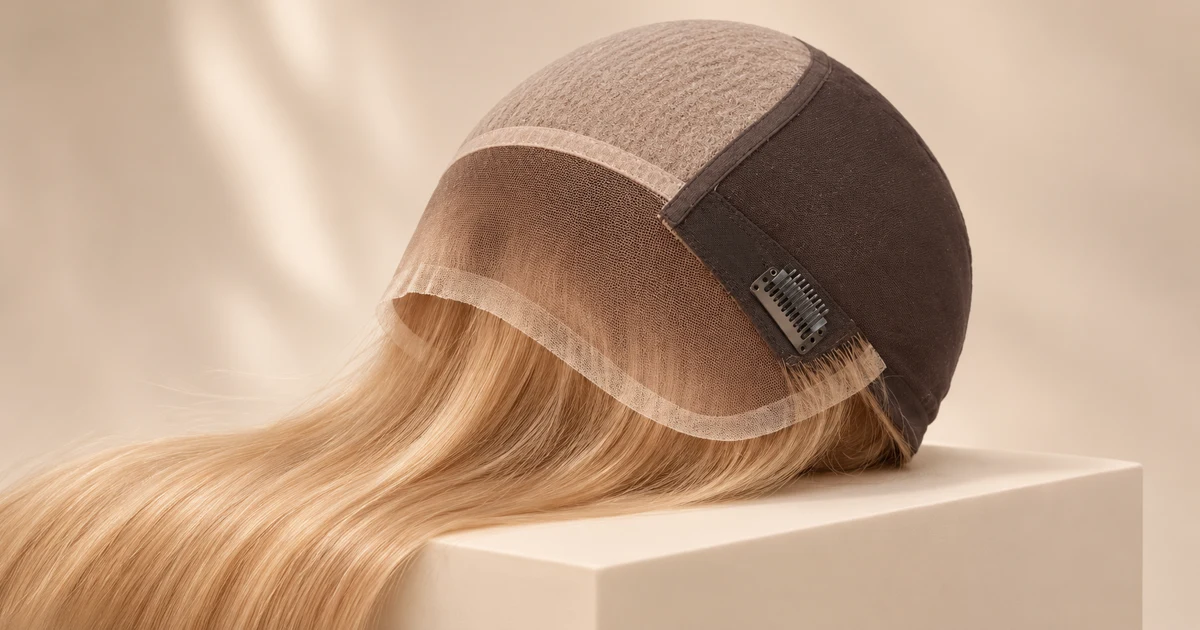
Fully hand-tied is a construction claim some makers make about the whole cap, and it is not a label on every listing. ZTF’s product page fields the question “Why does it cost more?” and answers it with hand knotting. A seller using the phrase claims the cap is tied by hand throughout with no machine wefts — a construction statement to inspect on a sample, not take on faith. This guide is for the buyer comparing a fully hand tied sheitel with a wefted-back lace top before a wholesale order: what the term means, how the interiors differ, which zones to inspect, and which spec fields to confirm in writing.
The Term
What Fully Hand-Tied Means in Current Listings
Two sellers checked for this guide define the phrase almost identically. ZTF WIG, a sheitel maker selling into the Jewish market at wholesale, titles its product page Fully Hand-Tied Sheitel and leads with: “All strands hand knotted. Zero machine wefts.” The same page states there is no machine track anywhere on the cap and ties free parting to that absence — the seller's own account, not an independent test.
Goldylost Hair, a general-market wig brand whose hand-tied collection carries no Jewish or sheitel labeling, serves as this article's general-market reference. Its hand-tied collection page, opened in November 2026, presents the collection as hair tied by hand across the entire cap with no wefts — the seller's own statement about its own line. The collection dedicates a full line to the construction.
Wholesale catalogs list it too: RemyPatra Hair Group places fully hand-tied alongside silk top, lace top, and mono top among its standard constructions. The counter-check matters as much: the Bee Wigs Jewish-wigs collection, opened the same day, carried no hand-tied wording anywhere. Within the listings checked, fully hand-tied is a distinct claim a maker opts into — not a label that travels with the category.
Interior Comparison
Weft-Free Interior vs a Wefted-Back Cap
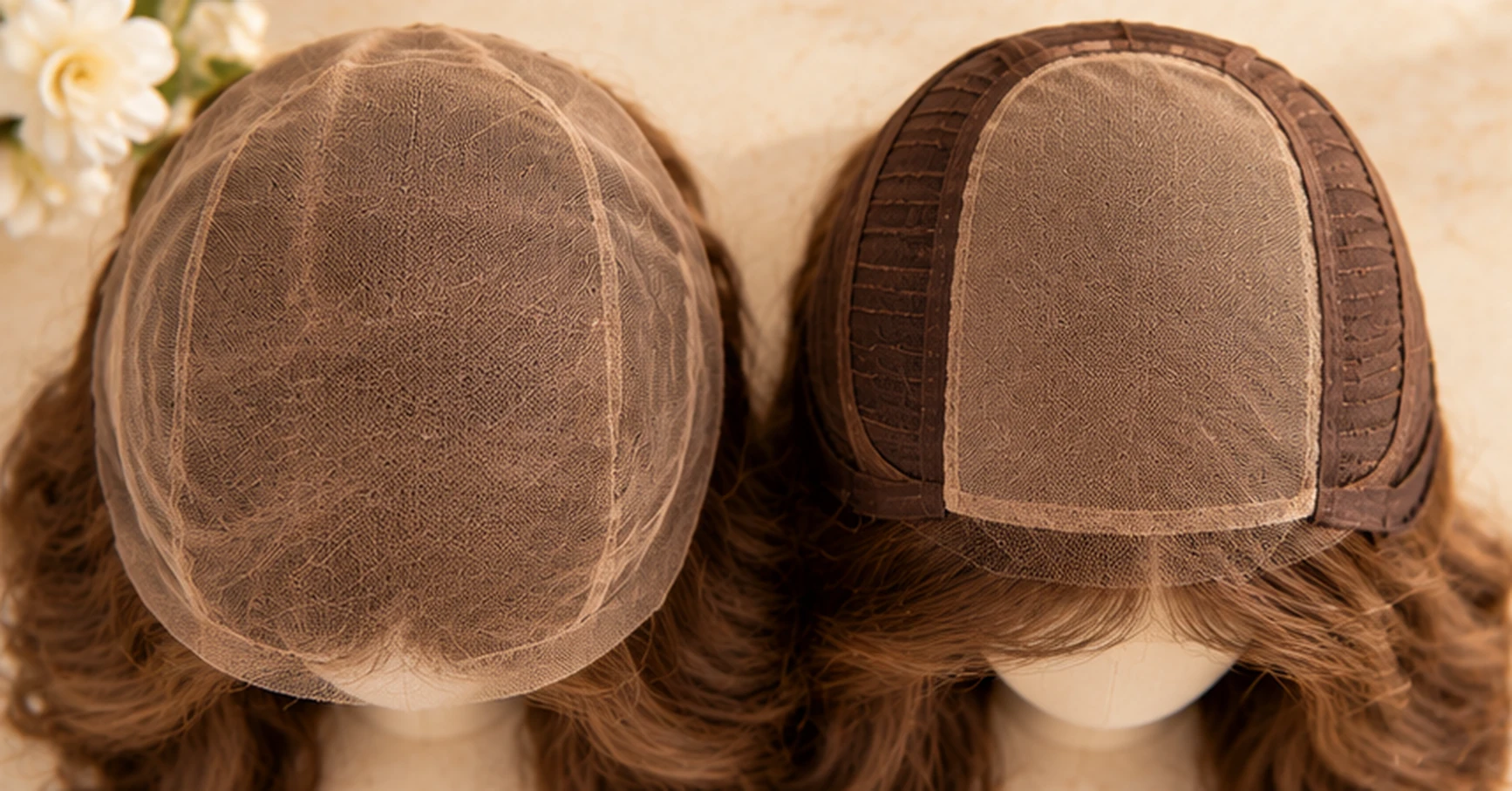
Measured against what? The clearest wording comes from inside the market: Sherogaga, a Jewish-wig shop, describes its lace tops on the category page as a “hand-tied lace top with wefted back.” ZTF's comparison table sketches the same tiers, setting “Full Hand Tie” against “Hand-Tied Crown plus Wefts” — with the weft line reading None for the first and Sides and back for the second.
That gives a buyer two interiors to tell apart. In the hybrid layout, hand-tied work covers the crown or top, while rows of machine-wefted hair carry the back — and, in some layouts, the sides. In the weft-free layout the checked sellers describe, the tied surface continues across the whole cap, with no machine rows under the crown, the sides, or the nape. The cap construction guide covers each zone's job; here the question is narrower — where the wefts stop.
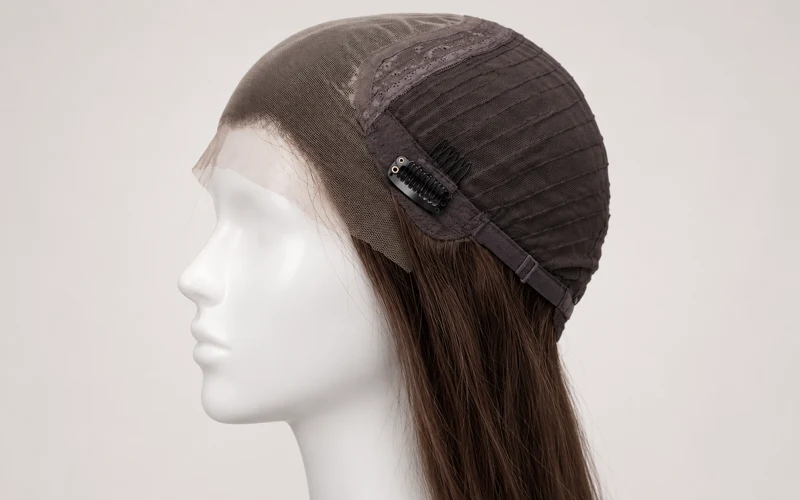
ZTF markets the construction for feel, calling it “a breathable lightweight cap.” That phrase is a seller description. Treat it as a claim to test on a sample, not a settled property of the construction class — feel and weight vary cap by cap, and this guide repeats no comparative lightness or comfort ranking from any seller.
Sample Inspection
Three Zones to Inspect on the Physical Sample
The routine below is an observation checklist, not a lab protocol or a quality verdict. Note what you find zone by zone; the written spec, not the inspection, carries the order. Once a sample is approved, the sample-to-bulk QC sequence is covered in the wholesale quality-control guide.
Crown
Open the part, examine the crown surface, then look underneath. A tied crown shows hair emerging across the surface with no raised rows. If the sample carries a silk or monofilament panel over the tied base, record the panel as its own field — it is not evidence against a weft-free cap beneath it. If the underside shows sewn tracks, note where each starts and stops.
Sides
Run a fingertip along the inside from each ear tab up toward the crown. A raised, cord-like horizontal track is the machine-weft cue — the ridge is easier to feel than to see; a tied side reads flat against the cap material. The cue is an observation to record, not proof on its own — the zone-by-zone record and the supplier’s written answer carry the conclusion.
Nape
Lift the hair at the back and inspect the lower interior — a place to inspect, not a verdict by itself: the wefted back in the sellers’ hybrid layouts lives there. Weft rows at the nape rule out the weft-free claim for this piece. They do not make the unit defective, and they do not by themselves make the cap a mixed construction: identify whether the remaining zones are actually hand-tied before calling it hybrid. Record what each zone shows separately.
Titles alone do not settle it: listings opened for this guide disclose construction unevenly — one Jewish-wigs collection named no construction anywhere — so a fully hand-tied title is a claim to verify on the sample. Record each zone, then ask the supplier to state the same three zones in writing. When sample and written answer agree, the term is doing real work.
Wholesale Order
Spec Fields to Compare Before Wholesale Sampling
Put the construction into the order as fields, not adjectives — line items a supplier can confirm or correct in writing:
| Field | What to ask the supplier to state in writing |
|---|---|
| Interior by zone | Crown, sides, and nape each named — fully hand-tied, hand-tied top with wefted back, or the actual layout |
| Weft statement | Whether machine wefts appear anywhere on the cap, answered zone by zone |
| Top layer | Whether a silk, monofilament, or other panel sits over the tied base, and the panel's size |
| Parting | Parting area and direction behavior — ZTF grants free parting on its fully hand-tied cap; confirm what your supplier supports |
| Fit and grip | Cap size and depth, plus the clip or band layout |
| Sample check | Interior inspected zone by zone on the physical sample before bulk approval |
Keep the comparison level across suppliers: a quote naming each of the three zones is easier to hold against a sample than a single word. Knot type, knot treatment, and density sit a layer deeper than this guide goes — raise them as their own spec conversation. The move from approved sample to bulk follows the QC sequence in the wholesale quality-control guide.

Common Questions
Fully Hand-Tied Sheitels: Common Questions
In current listings it means the seller claims the cap is tied by hand throughout with no machine wefts. ZTF words it as 'All strands hand knotted. Zero machine wefts.' Goldylost, a general-market retailer, words it as hair tied by hand across the entire cap with no wefts. Both are seller claims to verify on a sample.
Inspect the interior zone by zone on the physical sample: crown, sides, and nape. Raised horizontal tracks are the machine-weft cue; a tied surface reads flat — the cue is an observation to record, not proof on its own. Finding weft rows means the weft-free claim does not hold for this piece — not that the unit is defective, and not yet that the cap is a mixed construction: identify whether the remaining zones are actually hand-tied before calling it hybrid. Record each zone separately, ask the supplier to state the construction zone by zone in writing, and check the sample against it.
No — as the checked sellers define the terms. Sherogaga describes its lace tops as a hand-tied top with a wefted back, the hybrid layout. A fully hand-tied cap, in ZTF's and Goldylost's listings, carries no wefts anywhere. Compare the written spec, not the label.
Interior construction named by zone (crown, sides, nape), whether machine wefts appear anywhere, any top layer over the tied base and its size, parting behavior, cap size and depth, and grip components. Inspect the sample against the written spec before approving bulk. The sample-to-bulk QC sequence is covered in the wholesale quality-control guide.
Conclusion
Verify the Interior, Not the Adjective
A fully hand-tied cap is a construction claim with a physical shape: tied surface across the whole cap, no weft rows at crown, sides, or nape. Checked seller definitions agree on that much. Everything beyond the shape — comfort wording, pricing, parting — is an attributed seller description or a field to confirm in writing. Run the three-zone check on the sample, get the zone-by-zone statement in writing, and the adjective becomes a specification you can order against.


Sampling a Fully Hand-Tied Cap?
Write the interior spec fields zone by zone, and ask the supplier to confirm each in writing before the sample is approved.
Contact LEV Wigs