Specification Guide
Single vs Double Drawn Hair for Sheitels: Compare Ends
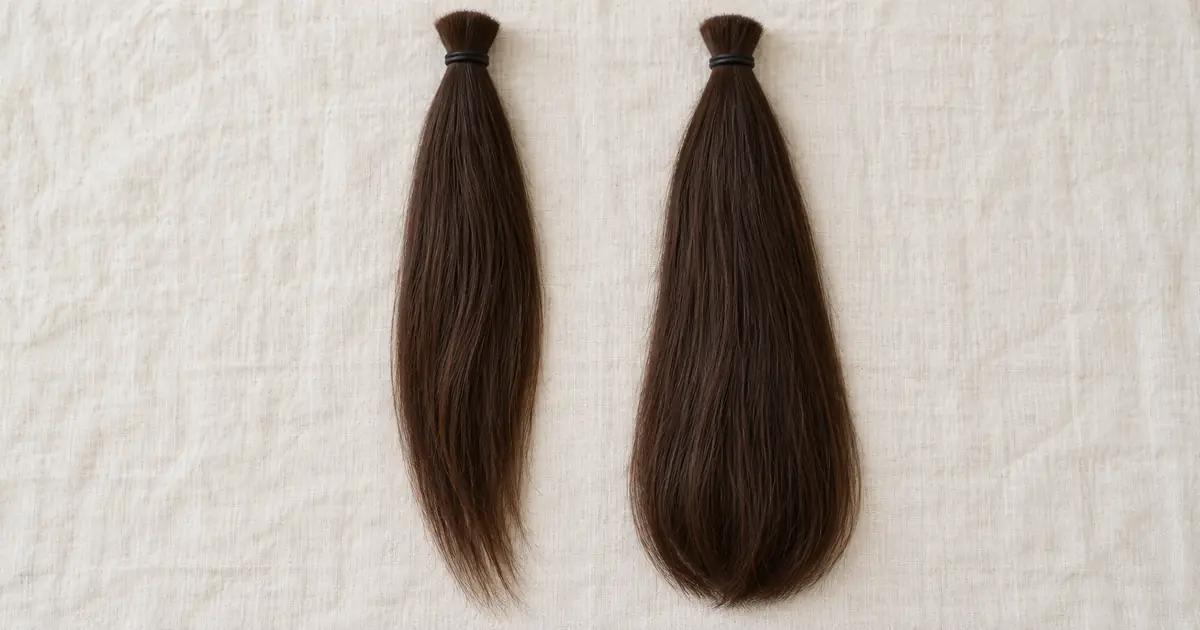
In common bundle descriptions, single drawn hair contains more mixed strand lengths and tapers toward the ends. Double drawn hair has more shorter strands removed, leaving fuller ends. These terms describe the bundle; cutting, density, and styling also affect the ends of a finished sheitel.
Compare the supplier’s definition with the actual sample at the length and style you intend to order. Neither label alone establishes overall quality, total weight, or lifespan.
The Definition
What "Drawn" Actually Describes
The terms describe the mix of strand lengths in a bundle and how much shorter hair has been removed. Beka’s explanation and Cliphair’s extensions guide share this basic distinction. Their descriptions do not establish a shared percentage threshold.
Hair origin, cap construction, and the amount of hair are separate specifications. The sheitel density guide covers the separate question of how much hair is placed across the cap.
End Profile 1
Single Drawn: The End Profile
Single-drawn bundles are described as tapering toward the ends because they retain more mixed strand lengths. On a finished sheitel, compare the actual ends: the cut, density, and styling also affect their shape.
If you prefer a tapered look, show the supplier or stylist a reference and compare it with the sample. Do not use the finished haircut alone to certify the bundle category.
End Profile 2
Double Drawn: The End Profile
In the definitions used by Beka and Cliphair, double drawn describes a bundle with more shorter strands removed, leaving fuller ends than a mixed-length bundle. Ask the supplier how it applies the label.
On a finished piece, check the fullness at the ends alongside the intended cut. Ask for like-for-like quotes rather than assuming which option costs more. If weight matters, request the actual gram weight and compare the feel during a fitting where possible.
The Hands-On Check
Comparing Ends on a Sample
Whatever the paperwork says, the sample is the thing you can hold. Two passes read it:
- The gather test. Draw the hair into a low, loose ponytail at the nape and look at how the volume behaves toward the ends: a profile that steps down visibly, or one that stays nearly as thick at the tip as at the top. Photograph what you see for the record.
- Read it as a comparison, not a grade. A visual check helps you compare two options and describe what you want; it does not certify a drawn grade or measure what share of strands reaches full length. That number, if it matters, is a question for the supplier.
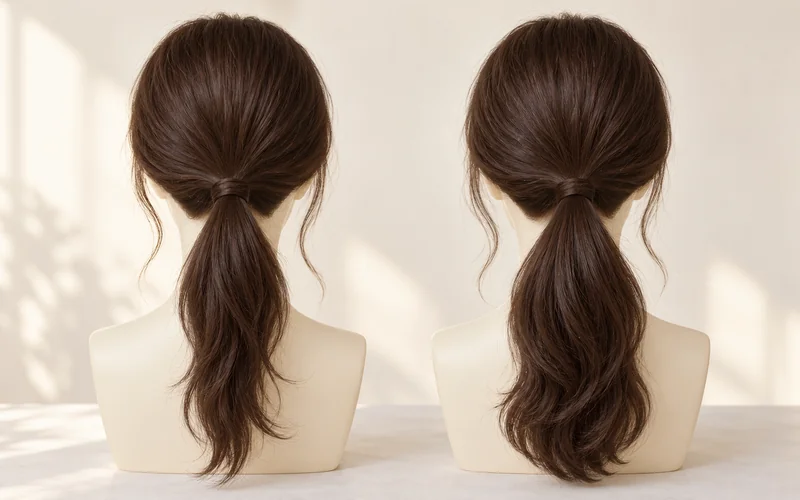
Run the check at the length you intend to order — the same label can read differently at different lengths.
The Labels Vary
Terminology Varies: Confirm the Meaning
Ask the supplier to define its grading criteria. Beka and Cliphair describe the distinction in terms of shorter strands, but these references do not establish a shared percentage threshold.
Record the supplier’s definition, the intended length and cut, and the approved sample. If the supplier provides a full-length strand percentage, ask how it is measured. For the broader selection process, see the choosing Jewish wigs guide.
Matching The Cut
Which Fits the Intended Cut
Once the profiles are clear, the table below pairs end effects with the points worth verifying. Use it as a starting point, then confirm against the sample:
| End effect you want | What to verify with the supplier |
|---|---|
| A clean one-length line that keeps fullness at the ends | How full the bundle stays toward the tip, checked on the sample at the ordered length |
| Soft taper and lighter ends | How much the bundle thins toward the ends, and whether the intended cut assumes that taper |
| Layers that keep weight at the perimeter | Where the mass sits on the sample — full ends can carry layers too |
| Comparing price and weight | Like-for-like quotes and the actual gram weights of the samples |
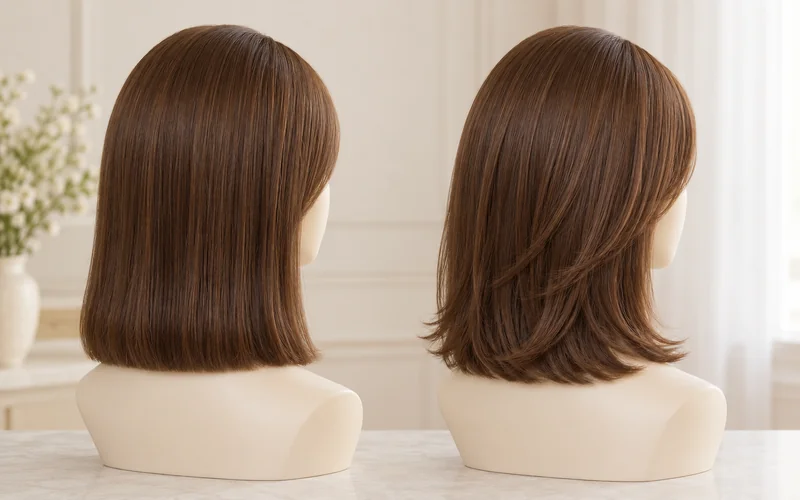
If weight matters, compare samples at the intended length and ask for their actual gram weights. Assess the feel during a fitting where possible.
FAQ
Single vs Double Drawn: Common Questions
In the bundle definitions discussed here, double drawn means more shorter strands have been removed, leaving fuller ends. Check the finished sheitel because cutting, density, and styling also affect the result.
Neither is universally better. Each end profile suits different end effects — full ends support a clean one-length line and can carry layers too; a natural taper suits soft, layered looks. Price and weight are quotation and specification questions, not properties of the label. The end effect you want decides which profile fits.
Ask each supplier what the label means in its specification. The Beka and Cliphair references describe differences in shorter strands without establishing a shared percentage threshold. Keep the supplier’s definition and approved sample together.
Gather the hair loosely and compare how the visible fullness changes toward the ends. Take photos at the intended length and style. This helps describe a preference; it does not certify a drawn grade.
Conclusion
Compare the Finished Ends Before Ordering
Compare the finished ends at the intended length and cut, then record the supplier’s definition and the sample you approved. A single or double drawn label is one specification, rather than a guarantee of how the complete sheitel will look, feel, or wear.

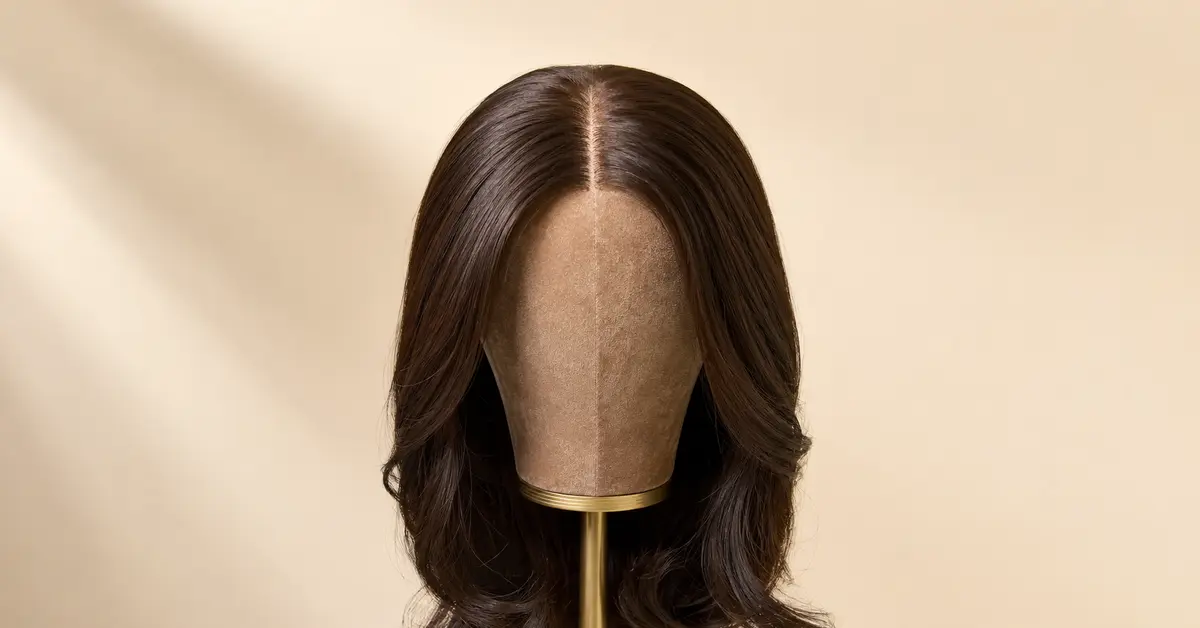
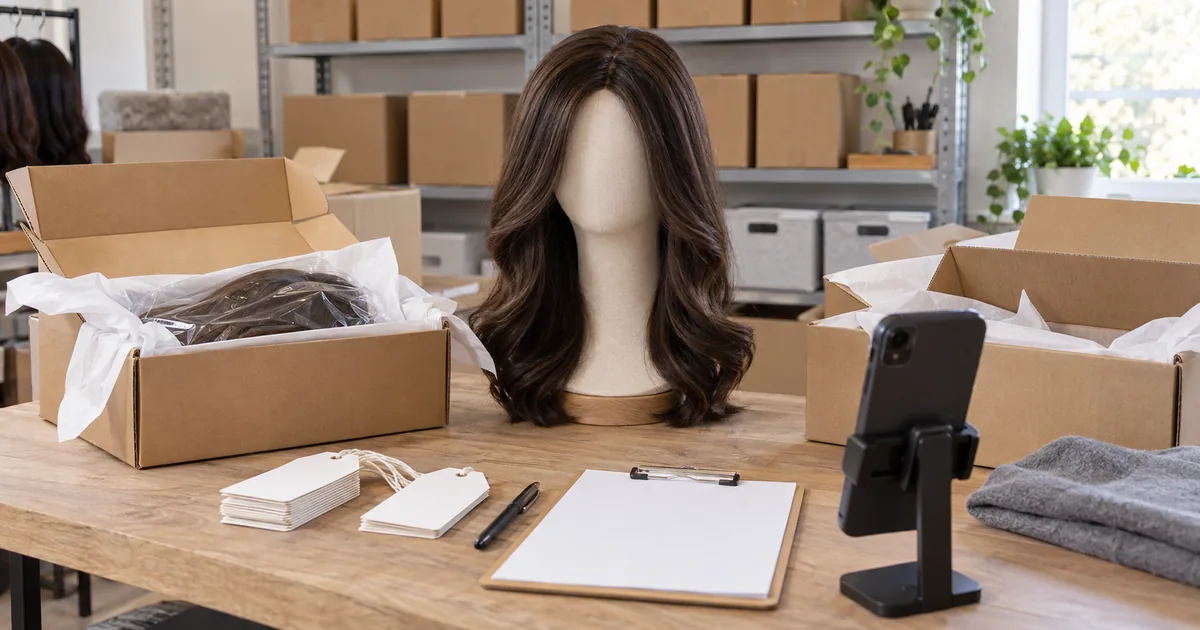
Comparing Hair Options for an Order?
Ask for the supplier’s grading criteria and compare the finished sample at the intended length and cut before approving the order.
Contact LEV Wigs