Material Choice
Human Hair vs Synthetic Sheitels: How to Choose

The Short Answer
In the human hair vs synthetic sheitels comparison, human hair behaves closest to growing hair: it takes heat styling, re-sets between washes, and responds to humidity much like natural hair — with higher upkeep. Synthetic fiber holds a factory-set style with minimal daily effort and lower upfront cost, but standard fibers do not tolerate heat and can wear faster depending on grade and frequency of use. Usable life for either material depends on grade, construction, wear frequency, and care, so request supplier care guidance before buying; on the halachic side, sourcing of human hair deserves verification and guidance from one's own rav.
Most comparison articles about wig materials are written for the fashion market, where the question is "which looks better for a night out." The human hair vs synthetic sheitel version of the question usually reads differently: these units are often worn across long days and repeated wears; they are meant to disappear into the wearer's look rather than create one; and for many buyers there is a halachic dimension that fashion retailers never have to think about. The pages below take all three differences seriously, from the manufacturing side of the trade.
One scope note first: if you are comparing materials for a topper rather than a sheitel, that is a different product with different rules, and we keep those guides separate.
The Materials
What Human Hair Gives a Sheitel Wearer
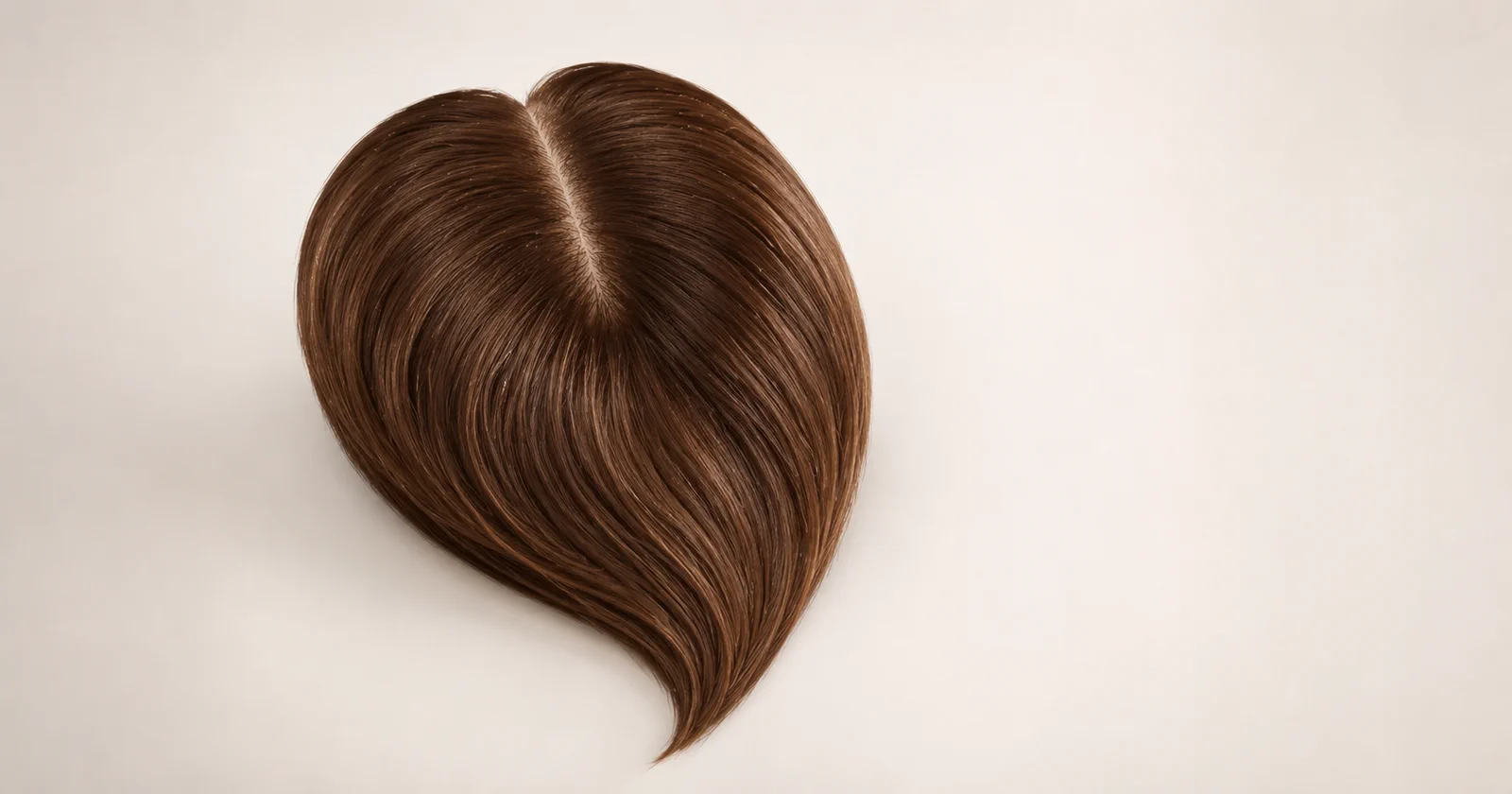
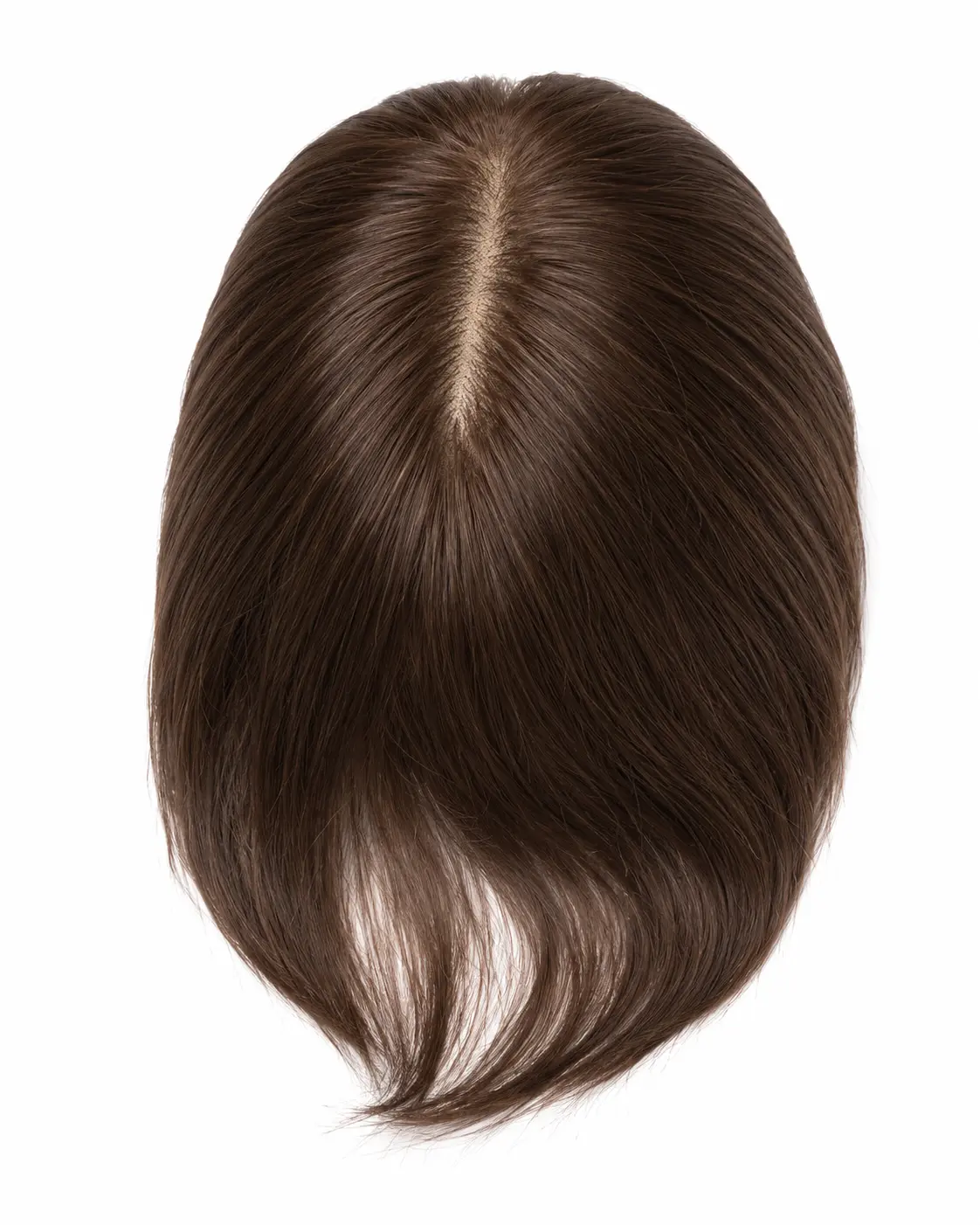
Human hair behaves like hair — which sounds circular until you compare it against alternatives. It holds a blow-out, moves in wind, reflects light with natural variation strand to strand, and can be re-styled as preferences change. For wearers whose goal is for the sheitel to read as their own hair, that realism is functional, not merely cosmetic.
Human Hair
Strengths
- Takes heat styling — curls and straightening are possible, within careful heat limits.
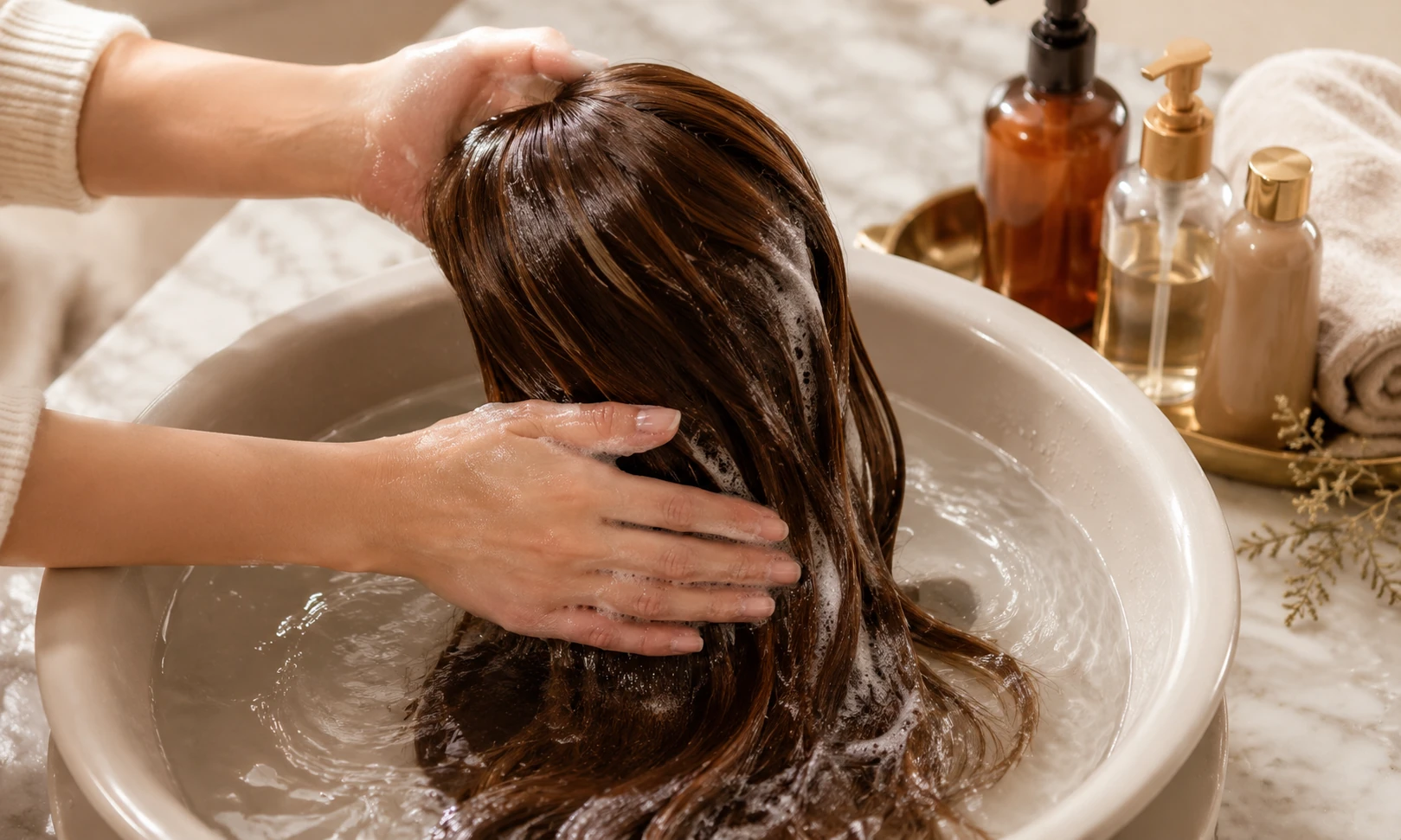
- Re-styleable between wears — washing and re-setting follow familiar hair routines.
- Natural light response — natural, minimally processed strands vary tone subtly under daylight.
- Color work possible — rooted colors, gray blending, and gentle toning at the workshop.
- Repairable in principle — ventilated sections can be re-knotted and perimeters rebuilt; whether a specific unit is worth repairing depends on its base condition and age, which a repair service should assess case by case.
Human Hair
Costs of Choosing It
- Higher unit price — raw material and hand ventilation raise cost, varying by origin and grade.
- Ongoing maintenance — wash days, brushing care, and styling time.
- Weather-reactive — humidity and rain affect it as they affect growing hair.
- Quality variance — origin and processing honesty vary between suppliers; sourcing claims need real verification.
Within human hair, quality tiers matter more than the human hair vs synthetic sheitels choice itself: cuticle-aligned European hair versus processed hair is a bigger daily-wear difference than hair versus good synthetic. That sourcing story — and how to verify it — is covered in our hair specification guide.
The Materials
What Synthetic Gives a Sheitel Wearer
Modern synthetic fiber is not the shiny costume material of memory. Quality synthetics hold a factory-set style through rain, humidity, and a rushed morning — wash, shake, wear — usually at a lower upfront price than human hair. For a weekday covering that needs to look presentable quickly with minimal styling, that reliability is a genuine advantage, not a consolation prize.
Synthetic
Strengths
- Minimal daily styling — the set is held by the fiber rather than re-created each morning.
- Holds set in damp weather — humidity and light rain disturb the style less than they would many human hair sets.
- Often lighter on the head — depending on construction and density, some wearers find synthetic units feel cooler or lighter.
- Accessible price — commonly a first sheitel, a backup unit, or a weekday rotation option.
- Different halachic profile — as discussed below, the human-hair sourcing question does not arise for manufactured fiber the same way.
Synthetic
Costs of Choosing It
- No heat styling — standard fibers melt or kink under irons.
- Wear shows earlier — dulling and nape frizz appear sooner than on well-maintained human hair, though timing depends on fiber grade, wear frequency, and care.
- Fixed style — the cut and set you buy is essentially the one you keep.
- Limited color work — no rooted blending or toning after purchase.
- Caps differ — some budget units pair synthetic hair with simpler cap construction; check construction fields per unit.
Heat-friendly synthetic splits the difference — it tolerates low-temperature tools within stated limits — but trades away part of the shape retention that makes standard synthetic convenient. Whether it suits a wearer depends on how much styling variety she actually needs day to day.
Context
The Halachic Layer: Where the Hair Comes From

Wearing a sheitel at all is itself a subject with history: classical authorities differ on how fully a wig satisfies the obligation of kisui rosh, hair covering, and community practice has settled the question differently in different circles — background covered in our halacha guide and in references from Chabad and My Jewish Learning. For the human-versus-synthetic decision specifically, the live material question is hair source.
The classical discussion around human hair in wigs concerns where the hair was obtained — a question raised publicly in recent decades around certain sources of human hair. This page is written by wig manufacturers, not halachic authorities; we do not state, weigh, or summarize specific rulings here, and LEV Wigs is not a halachic authority. What we can say is procedural: the sourcing questions are real, they have been discussed by respected authorities at different times with different conclusions, and practice varies across communities and households. Anyone with a question about hair source should ask their own rav or halachic authority.
What this means practically for human hair vs synthetic sheitels: the human-hair sourcing question described in this section does not attach to synthetic fiber in the same way, since manufactured fiber has no origin-of-hair history to document. Human hair, meanwhile, deserves two things before purchase — documentation from the supplier about where it comes from, and guidance from the wearer's own rav or halachic authority for her situation. What we can contribute on the manufacturing side is traceability: we document hair tier and origin disclosure so your rabbi's answer can be implemented. The material choice is not "human versus synthetic"; it is "whichever material answers to your own halachic guidance."
Economics
Cost Over the Life of the Piece
Unit price alone does not settle the human hair vs synthetic sheitels comparison — many wearers weigh purchase price alongside upkeep, re-styling options, and how often a unit is replaced, and those variables depend on grade, construction, and habit rather than material alone. Where each option sits financially varies by supplier; rough bands for what sheitels cost at each tier, and what drives them, are covered in our cost guide. When comparing quotes, ask suppliers to itemize what their care and longevity expectations are for the specific line you are buying.

That logic also explains a wardrobe pattern some wearers adopt: not choosing one material for everything. A weekday unit in synthetic can absorb heavy rotation and bad weather; a Shabbat-yom-tov unit in human hair serves finer occasions with more styling options. How well that split works depends on the wearer's routine — and on what each supplier specifies for care and replacement expectations of each line.
Human hair also offers repair options synthetic generally does not: worn sections may be re-ventilated or recut, depending on condition — see our repair guide for what a service assessment covers. Whether repair makes sense for any given unit is a case-by-case judgment; a repair service should assess base condition before promising results. For buyers thinking in terms of a wardrobe rather than a single purchase, that optionality is one more variable to weigh alongside price.
Context
Community Patterns, Honestly Stated
The human hair vs synthetic sheitels split also has a community dimension, shaped by the sourcing questions above and by simple economics. Some households favor synthetic or synthetic-blend units for daily wear; in other circles human hair is the more common choice — matters of budget, appearance norms, and each family's own halachic guidance rather than a single standard. Within any community, individual households decide their own balance. The pattern a supplier can safely plan around is variation itself.
What this means for a buyer — and doubly for a boutique owner — is that material stock should follow the community you actually observe and serve, not averages published anywhere. Observed local patterns differ from place to place; our community-specific briefs exist precisely because supplier-side assumptions are one place where assortment mistakes tend to start.
Decisions
The Decision, in One Table
| Your Situation | Better Fit | Why |
|---|---|---|
| First sheitel, firm budget | Quality synthetic | Learn care and wear habits before investing in human hair |
| Daily wear with minimal restyling | Synthetic | Pre-set style can reduce daily restyling; response depends on fiber grade, heat and humidity |
| One unit for everything, styled freely | Human hair | Heat styling and re-sets within one unit; repair options depend on condition — ask before purchase |
| Shabbat and simchas unit | Human hair | The occasions where maximum realism earns its cost |
| Household weighing hair-source questions | Synthetic or verified-origin human hair | Synthetic raises no sourcing question; documented sourcing answers it — with the final call belonging to the household's rav |
| Boutique serving mixed budgets | Both lines | A synthetic entry point serves one price tier; human hair serves buyers ready for a longer-lived unit |
Read the table as a wardrobe-planning tool rather than a verdict. Many wearers will find two rows that both describe them — which is the two-unit pattern arriving by itself.
B2B
What a Boutique Should Stock
For shop owners, stocking human hair vs synthetic sheitels is an assortment question, and each line serves different uses. A synthetic line can offer an entry price point, a weekday-rotation option at accessible cost, and a lower-commitment first purchase for hesitant buyers. A human hair line serves customers who want heat styling, or a finer look for occasions, and it carries repair options worth discussing with the supplier. Which balance earns in your store depends on your clientele, so treat any industry average — including ours — as a hypothesis to test against your own sales.
Weight both lines toward your own community's observed pattern rather than by supplier catalogs alone — and make the in-store conversation about usage, not materials: "Is this for every day, or for Shabbat?" sorts a customer into the right line faster than any fiber lecture. When you are ready to review what a two-line assortment could look like for your clientele, send our wholesale team your price points and usage mix, and we will confirm which options we can support.
FAQ
Human Hair vs Synthetic Sheitels: Common Questions
The fiber itself is not the halachic question — the classical discussion concerns where human hair was sourced, a topic on which respected authorities have ruled at different times with different conclusions. A supplier should be able to document hair origin; the ruling belongs to the wearer's own rav or halachic authority. Practice varies across communities.
Human hair comes from a natural supply that varies by origin and grade, and hand ventilation adds labor time; synthetic fiber is manufactured at scale and machine-set. Those inputs tend to push prices in opposite directions, but the size of the gap varies by supplier, fiber grade, and construction — compare quotes on equivalent specifications rather than material labels alone.
There is no single answer: usable life depends on fiber grade, cap construction, how often the unit is worn, and the care routine behind it. In general terms, synthetic fiber shows wear — dulling and nape frizz — earlier than well-maintained human hair does. Ask any supplier for its care guidance and longevity expectations per product line before buying.
Standard synthetic fiber cannot take heat — curling irons and straighteners melt or kink it permanently. Heat-friendly fibers exist and tolerate low settings, but they trade away some of the crisp, wash-and-wear shape retention that makes synthetics convenient. Human hair, by contrast, styles with heat the way growing hair does.
Preferences differ. Some households favor synthetic or blended units for daily wear; in other circles human hair is the more common choice — shaped by budget, appearance norms, and each family's halachic guidance. How common each pattern is varies by community and household, which is why a supplier should ask rather than assume.
Closing
Choose for the Life the Unit Will Live
The material question becomes clearer once you describe the job the unit will do: daily rotation or special occasions, heat styling or a fixed set, one purchase or a wardrobe. The human hair vs synthetic sheitels question is less a ranking than a matter of fit: the two materials suit different patterns of use, and where your own answer lands depends on grade, care, and wear frequency, so compare supplier specifications before deciding.
From here, two directions serve different needs: the sheitel lifespan guide looks at how long each material can serve, and the sheitel buying guide covers the purchase as a whole.
Planning a Sheitel Material Mix for Your Store?
Send the LEV team your usage scenarios (weekday rotation, Shabbat and simchas), price points, and any specification requirements, and we will confirm which human hair and synthetic options we can support for your store.
Discuss Material LinesRequest Wholesale Terms