Construction Guide
Lace-Front vs No-Lace-Front Sheitels: Choosing a Hairline

Some sheitels finish the front edge with a panel of lace and knotted hair. Others build the front without lace at all and get their hairline another way. Both kinds are sold as sheitels, both can look natural, and neither label tells you enough on its own — this guide compares the two front constructions and lists what to confirm before ordering.
The Two Fronts
Two Ways to Finish the Front Edge
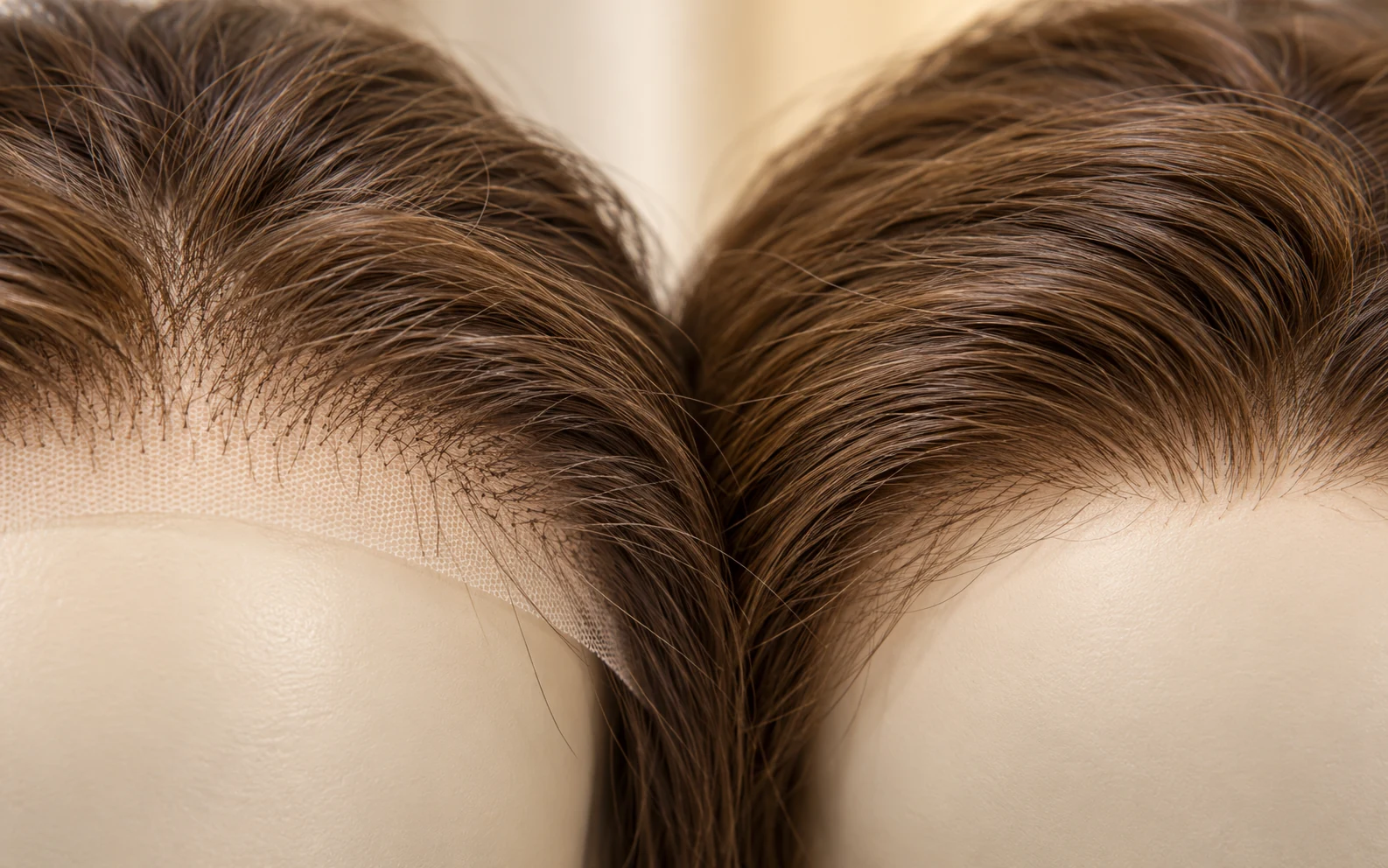
A lace front sheitel uses a strip of fine lace — French lace is the name used across the listings checked for this guide — across the hairline, with hair knotted into it so the edge reads like a gradual hairline. Hair Queen LA describes the 4x4 French lace front on one sheitel as creating “a seamless, natural-looking hairline for undetectable styling.”
A no-lace-front sheitel leaves the lace out. In the sheitel market, one no-lace listing is built around a silk top: Fine Lace Wigs lists a “Silk top Sheitel Wig Without Lace” with an “Undetectable Hairline” claim and “Parting any direction in the top.” The page discloses the silk top and the parting scope, but not how the front edge itself is finished — so the edge construction is a field to confirm on the sample rather than a documented mechanism.
These are two mechanisms, not two quality tiers. For where the lace sits elsewhere on the cap — front versus crown — the lace front vs lace top comparison covers that placement question separately.
Hairline
What the Hairline Looks Like on Each
On a knotted lace front, the look depends on the knotting at the edge. Lord Hair’s knotting guide describes fine single split knots at the front of lace bases because they produce a gradual hairline, and notes that bleach treatments to make lace knots less visible are available only on lace materials such as French or Swiss lace.
On a silk top, the general construction Emeda’s guide describes puts the knots beneath the silk layer rather than on the surface — that is the general concept a silk-top listing trades on, not a verified account of how this specific piece finishes its front edge. Whether the silk face runs all the way to the hairline on the Fine Lace piece, and how the no-lace edge is actually closed off, is not stated on the page and is a front-edge question for the supplier. What you gain or lose in delicacy at the edge differs by maker and by how the top is finished — compare the two looks on actual pieces under the same light rather than deciding from the label.
Attachment
How Each Front Is Held and Worn
Attachment is set by the whole cap, not only by the front. In the no-lace listing opened for this guide, the specification reads “Silk top Shietel Cap Wig with combs and adjustable cap,” and silicone strips are listed as a feature — grip comes from combs, straps, and silicone rather than from lace at the hairline.
On a lace front piece, the lace panel itself usually contributes to how the front sits against the skin, and the rest of the cap carries its own grip arrangement. Wear reports differ from person to person, so treat comfort statements as things to check on the head: how the front edge sits after a full wearing session, and whether the grip method suits the client’s hair underneath.
Care is per front and per maker. The pages checked for this guide do not document a maintenance comparison between the two front types, so rather than assuming either one is more or less demanding, ask each supplier for the care sheet covering the exact front construction you are ordering — including whether any knot treatment at the edge changes the routine.
Silk Top Both Ways
Silk Top With and Without a Lace Front
A silk top does not decide the front question — it comes both ways. The no-lace example above is listed as silk top without lace; that label does not document how its front edge is finished. The Hair Queen LA example runs a silk top crown behind a 4x4 French lace front, with the silk top described as mimicking “the look of a real scalp, offering versatility and realism in every part.”
So when a listing says “silk top,” the front can still be either construction. Read the front-edge field separately from the top field. The lace top vs silk top guide explains the two tops themselves; the front edge is a separate line on the order.
Client Fit
Matching the Front to the Client
A few client situations tend to push the choice one way, and each is worth checking on the piece:
- Covered hairlines. When the front sits under a hat, scarf, or band much of the time, the exposed-hairline advantage of a lace front matters less, and a no-lace front can simplify the edge.
- Fine or receding hairlines. When the front will be visible and close-cut, compare both fronts worn against the skin in daylight before deciding.
- Handling habits. A client who is rough with the front edge or washes frequently may prefer asking the supplier which front tolerates her routine — the answer is maker-specific.
- Sensitivity. Silicone strips and combs suit some wearers and bother others; the grip layout is checkable on the sample.
None of these points is a rule about construction classes. They are the questions a salon can work through with the sample in hand.
Before You Order
Read the Label, Then Confirm the Front
Labels are not always clean. On the no-lace listing opened for this guide, the product fields read silk top without lace, while the page’s shared wear instructions include a lace-trimming step written as “(If it’s a lace front)” — a conditional covering lace-front products generally, not a sign that this piece has lace. The useful takeaway stands either way: confirm the front construction in writing rather than assuming it from a title.
| Field to confirm | What a specific answer looks like |
|---|---|
| Front-edge construction | “French lace strip, knotted, 4x4” or “silk top continued to the edge, no lace” — not just “natural hairline” |
| Hairline finish | How the edge is finished and whether any knot treatment applies |
| Grip layout | Named components: combs, adjustable straps, silicone strips, bands — and where each sits |
| Parting scope | Where the hair can be parted on this cap, stated for this construction |
| Care sheet | The maker’s care instructions for this exact front, so lace-front instructions do not get applied to a no-lace piece |

A sheitel built without a lace panel at the front edge. The listing checked for this guide names a silk top without lace, with grip from combs, an adjustable cap, and silicone strips; how its front edge is actually finished is not stated on the page and is a field to confirm on the sample.
No. Both listings make natural-hairline claims, but the no-lace listing does not document its front-edge construction. Compare the actual pieces on the head under the same light, and ask each supplier to identify the front-edge finish rather than inferring it from a silk-top label.
The same way the rest of the cap does. In the no-lace listing checked for this guide, the specification names combs and an adjustable cap, with silicone strips listed as a feature. The grip layout varies by maker, so confirm the components and their placement for the piece you are ordering.
Confirm the front-edge construction in writing, the hairline finish, the named grip components, where the hair can be parted, and the care instructions for that exact front. On the listing checked for this guide, the shared instructions included a “(If it’s a lace front)” trimming step while the product fields said silk top without lace — one page serving several products at once, which is why the written confirmation matters more than the title.
Conclusion
Order the Front Edge on Purpose
The lace-or-no-lace question is a front-edge specification, not a verdict on quality. Decide it the same way you decide any construction detail: look at the edge on the actual piece, match it to how the client wears her hair, and record the confirmed front, grip, parting scope, and care instructions with the order.



Ordering Sheitels With a Specific Front Construction?
Use the confirmation fields above to record the front edge, grip layout, parting scope, and care instructions with your supplier before a sample is approved.
Contact LEV Wigs