Ordering Guide
Fixed vs Free Part Sheitels: Cap Construction and Styling

In a free part sheitel, the part is not set to a single direction. The seller builds or styles the unit that way. On the opened listings, a middle, left, or right part are all orderable on one cap. In other words, it is a real, orderable option. However, its mechanics are the buyer’s specification work. Which surface carries the part, how large that area is, and what ships by default are three separate fields. A boutique should ask for all three in inches and in writing.
The sections below separate the terms, the panels, and the directions an order can name. Then they cover the limits of the parting area and the fields to put in writing.
The Terms
What Fixed Part and Free Part Actually Mean
“Fixed” and “free” are order language, not a diagnosis of cap construction. Read across the opened listings, the terms cover three separate decisions. First, what the unit ships styled as: Factory Wigs states “Middle part by default” on its Jewish Kosher Wig. Second, what can be ordered instead of the default. On the same page, “free part/side part is also available”; Rosa’s free-part line covers middle, left, and right. Third, whether a part can be moved after the unit arrives. That point appears on none of the checked pages. Therefore, it is a question to ask in writing rather than an assumption to carry into an order.
How the Sellers Word It
The wording changes from shop to shop. Rosa Hair, a Jewish wig wholesaler whose site banner states it deals in sheitel Jewish wigs, writes: “Free Part: Yes. Middle part, left part, and right part is all available.” The same listing specifies the panel as a 3.5"×5" lace top “from ear to ear, or by request.” Factory Wigs takes the opposite path on its Jewish Kosher Wig. Its line reads: “Middle part by default, free part/side part is also available.” Superhairpieces labels its Sarah kosher sheitel’s style “Freestyle,” and its description promises “total parting flexibility.”
Treat that phrase as the listing’s pitch rather than a measurement. “Total” is the seller’s word, and the page gives no panel dimensions beside it. These pages also share a gap. No page among the four opened for this guide defines the term in words. What “free part” commits a maker to build has to be read from the cap structure. That is where this guide goes next.
The Panels
How Lace and Silk Top Panels Support Parting
What Each Listing Says About Its Top Zone
The opened listings describe their own top zones in different words. Those words are all the buyer has to go on. Rosa’s cap line reads “Top lace with lace front and wefts.” Superhairpieces describes the Sarah kosher sheitel zone by zone. The listing reads: “French lace front for a natural hairline, an injected silk top for a realistic scalp, and machine wefts in the back.” That page markets the injected silk construction as “completely conceal[ing] knots” with “total parting flexibility.” In other words, the seller wording describes the appearance, not the build method.
The name alone settles neither direction. Lordhair’s own YJ3783 product page uses “injected silk top” naming. The page describes hair ventilated into a lace layer first. Then the hair is drawn one hair at a time through a Silk Mono layer above. “The knots on top is hidden in two layers of lace/mono, no visible knots at all” (observed 2026-10-29). That knot-hiding example comes from Lordhair’s product page alone. “Injected” on a label is therefore a naming convention to ask about, not proof of a knot-free or hand-tied build.
Meanwhile, Silk or Lace pairs its top with a measured parting area and a “multidirectional parting” label. So what “free” covers on a given cap is a per-seller specification field, not a shared industry definition.
The One Measured Parting Area
One listing puts a number on the zone. Silk or Lace, a wig marketplace, lists a Sayar Wigs lace top. Its spec block carries a measured line. “Parting area (measured center cross section of area, side to side x front to back): 4 x 4.5 in.” That quote is bound in the same block to “multidirectional parting.” One qualifier belongs beside that quote. The Sayar page carries no Jewish/Kosher/Sheitel wording. That page is used only as a structural reference for how one seller phrases and measures the zone. It is not a sheitel-market example.
For zone-by-zone cap anatomy, the cap construction guide is the background read.
The Directions
Middle, Side and Multidirectional Parting
Between those poles sit the requests a boutique actually writes. Factory Wigs ships its kosher wig parted at the center unless the order says otherwise. However, it asks buyers to make contact before ordering a different part. Rosa’s free-part line enumerates the directions behind the term: middle, left, and right. A fixed side part is its own request. The client simply names left or right outright if she wears her hair to one side.
The vocabulary shifts from seller to seller, but the request behind the words is the same. It is to move the part at the crown. When shops answer one question in different words, the specification — not the label — keeps quotes comparable. Which construction parts more freely across the whole cap is a separate comparison. The lace front vs lace top guide takes up that question directly.
The Boundary
Limits of the Actual Parting Area
Where does the freedom stop? The checked pages do not answer in words. Still, the closest textual link is Silk or Lace. It prints “multidirectional parting” in the same spec block as its measured “Parting area …: 4 x 4.5 in.” There, freedom and measured zone print together. Rosa keeps its facts on separate lines — “Free Part: Yes” on one, the 3.5"×5" lace top on another. Nothing in the wording ties the freedom to the panel edges. Superhairpieces’ Sarah description names the front, the injected silk top, and the machine-wefted back as different zones. However, it gives no dimensions. Factory Wigs names “Real Swiss lace top & ear to ear, with elastic net back” with no parting figure.
The caps also differ in what they disclose. One lists a 3.5"×5" top panel, and another measures a 4 x 4.5 in. parting area. Two name no dimensions. Same term, different (or missing) measured territory. Moreover, none of the pages states that parting is limited to a named area, so the limit stays unverified. Treat “free part” as freedom whose boundaries the seller has to state. Ask where parting is possible on the exact cap, on what surface, and the measured size of that area. Put that in writing before sample approval.

The Order
How Boutiques Should Specify Parting Options
The label does not carry the specification; the order lines do. Five fields do the work:
| Field to confirm | What a specific answer looks like |
|---|---|
| Parting direction | Fixed middle, fixed left, fixed right — one named direction — or free |
| Seller’s term for it | “Free Part” (Rosa Hair), “free part/side part” (Factory Wigs), “Freestyle” (Superhairpieces), “multidirectional parting” (Silk or Lace) |
| Top panel | Material — lace top or silk top — and whether the cap carries a front |
| Panel size in inches | A measured line such as 3.5"×5" or Silk or Lace’s “Parting area …: 4 x 4.5 in.” — asked for by number, not by adjective |
| Default and confirmation | What ships unless asked — Factory Wigs names a middle-part default and requests contact before a different part |
Then keep the reply in writing. A written answer on panel material and measured size gives the boutique something to check the sample against. In addition, it converts three seller vocabularies into one comparable line. If a reply arrives without a measurement, ask for the parting area in inches before confirming. The Sayar listing is an example of such a line, in writing.

Common Questions
Fixed vs Free Part Sheitels: Common Questions
On the listings opened for this guide, free part is a seller term. It refers to a unit that can be ordered with the part open to more than one direction. Rosa Hair writes “Free Part: Yes. Middle part, left part, and right part is all available.” Factory Wigs lists free part or side part beyond its middle-part default. Meanwhile, Superhairpieces names the Sarah kosher sheitel’s style “Freestyle.” The pages sell the term without defining it in words. Which surface carries the part, and where that surface ends, is a specification to confirm in writing.
The pages do not say. No checked seller defines free part in print. None states in words where parting is possible on the cap. What the pages show: Silk or Lace binds “multidirectional parting” to a measured parting area of 4 x 4.5 in. However, Rosa, Factory Wigs, and Superhairpieces leave the bounds unstated. Treat the boundaries as an open question. Ask where the seller’s free part applies on the exact cap, on what surface, and over what measured area. Then put the answer on the order.
In listing language the contrast is between what ships by default and what can be requested. Factory Wigs ships a middle part unless the order says otherwise. In contrast, Rosa’s free-part line covers middle, left, and right on one cap. Orderable directions are not the same as a changeable part. None of the pages checked states whether a shipped unit can be re-parted later. Therefore, a client who wants to move the part after arrival must ask the seller first. Ask for the exact SKU, in writing, before relying on it. Comparative evidence on comfort, durability, and price was not established by this review.
Name the direction explicitly: fixed middle, fixed left, fixed right, or free. Also ask for the top panel material and its measured size in inches on the same line. Confirm what ships unless asked. For example, Factory Wigs names a middle part as its default. It asks buyers to make contact before ordering a different part. Keep the seller’s reply in writing and check the sample against it.
Conclusion
Write the Term Down, Then Measure the Zone
Fixed and free are order language for a real styling decision. They cover which direction the part ships in, and whether more than one direction is available. Its construction travels without a definition. The four listings checked on 2026-10-29 sell free part, freestyle, or multidirectional parting. However, none states the surface it covers or where it ends. The specification closes that gap. Write one line naming the direction. Then add one line asking the surface and its measured size, plus a written reply to check the sample against.


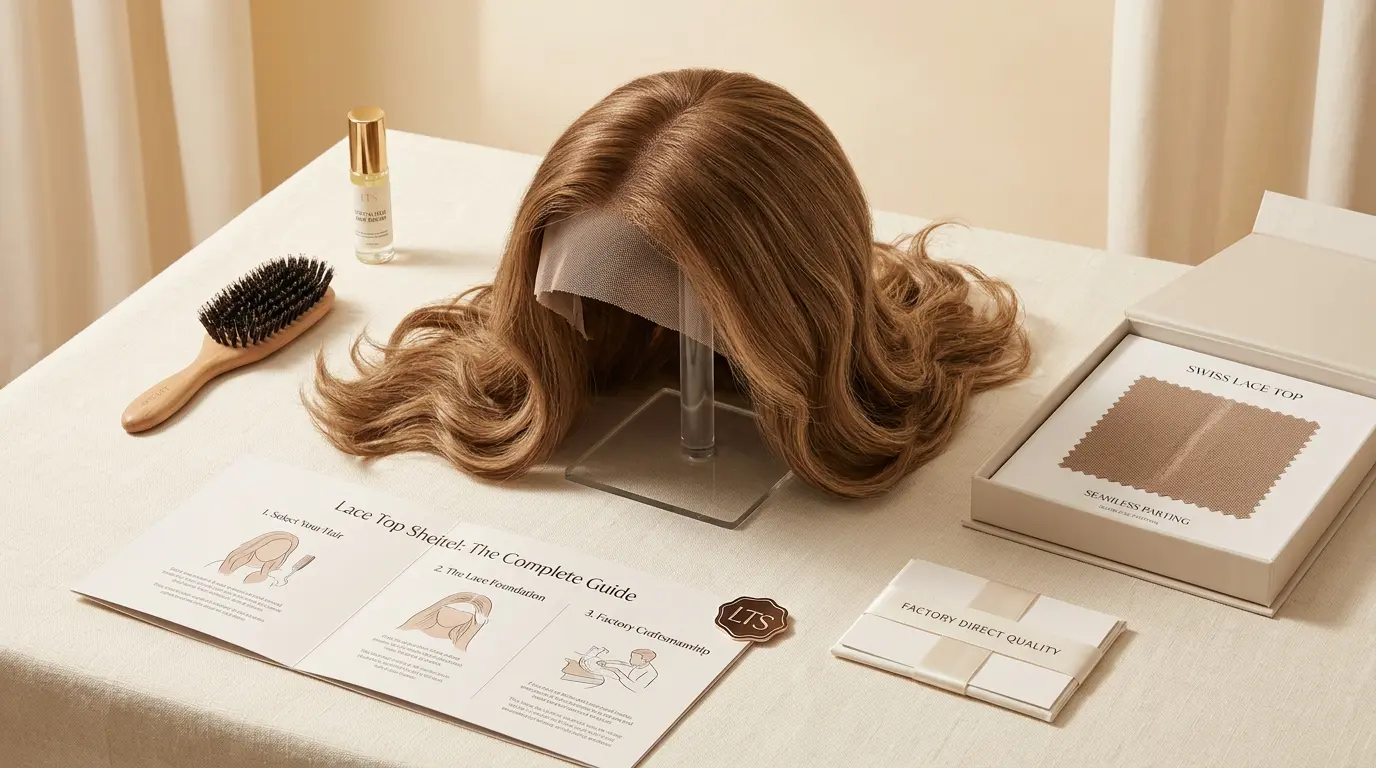
Specifying Parting on Your Next Sheitel Order?
Use the fields above to put the direction, the panel, and its measured size in writing before samples are approved.
Contact LEV Wigs