Front Design Guide
Sheitels With Bangs vs Exposed Lace Hairlines: Front Design
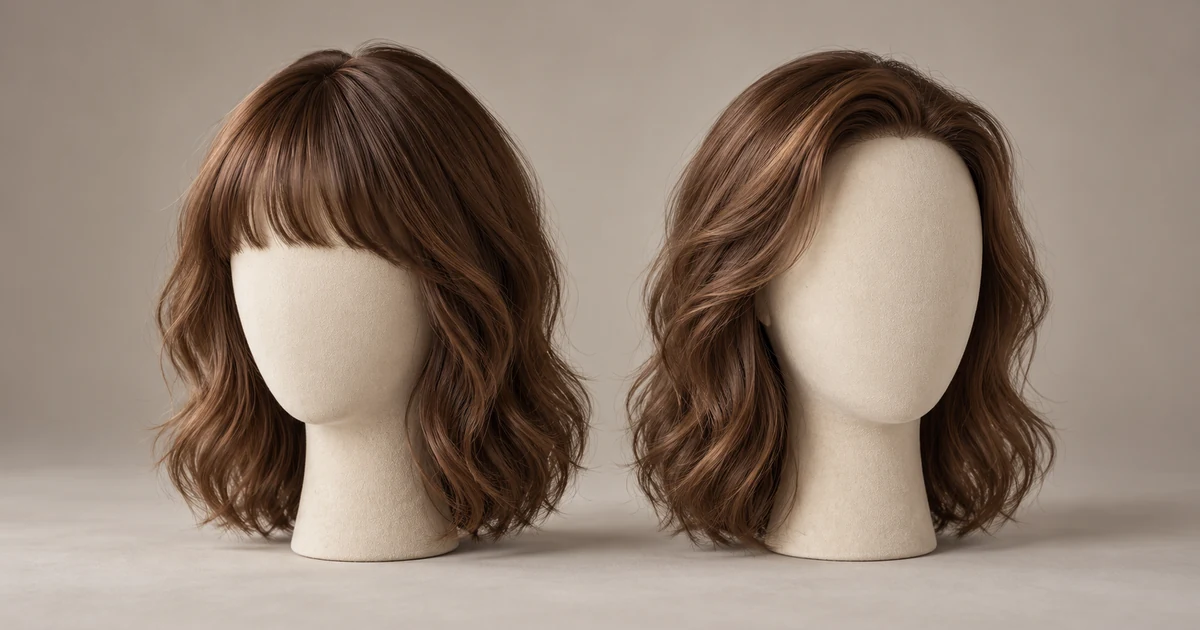
A sheitel with bangs and a sheitel with an exposed lace hairline are two front designs, not two products. The front design sets what the client can do at the mirror. A bangs front is planned so a fringe can sit over the hairline edge. An exposed front, in contrast, is built to show a fine lace edge when the hair is worn off the face. A versatile front claims to support both wear modes on one cap. This guide compares the two looks. Finally, it ends with the fields a boutique should confirm in writing before ordering.
The Two Presentations
Bangs and Exposed Hairlines in Sheitels
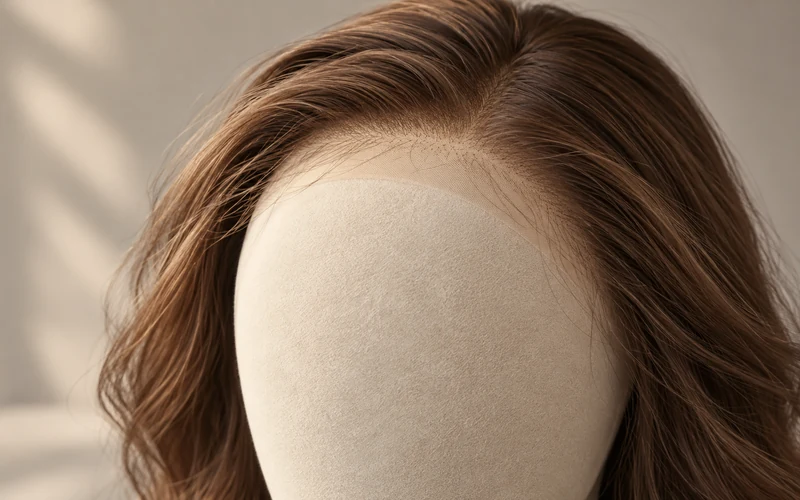
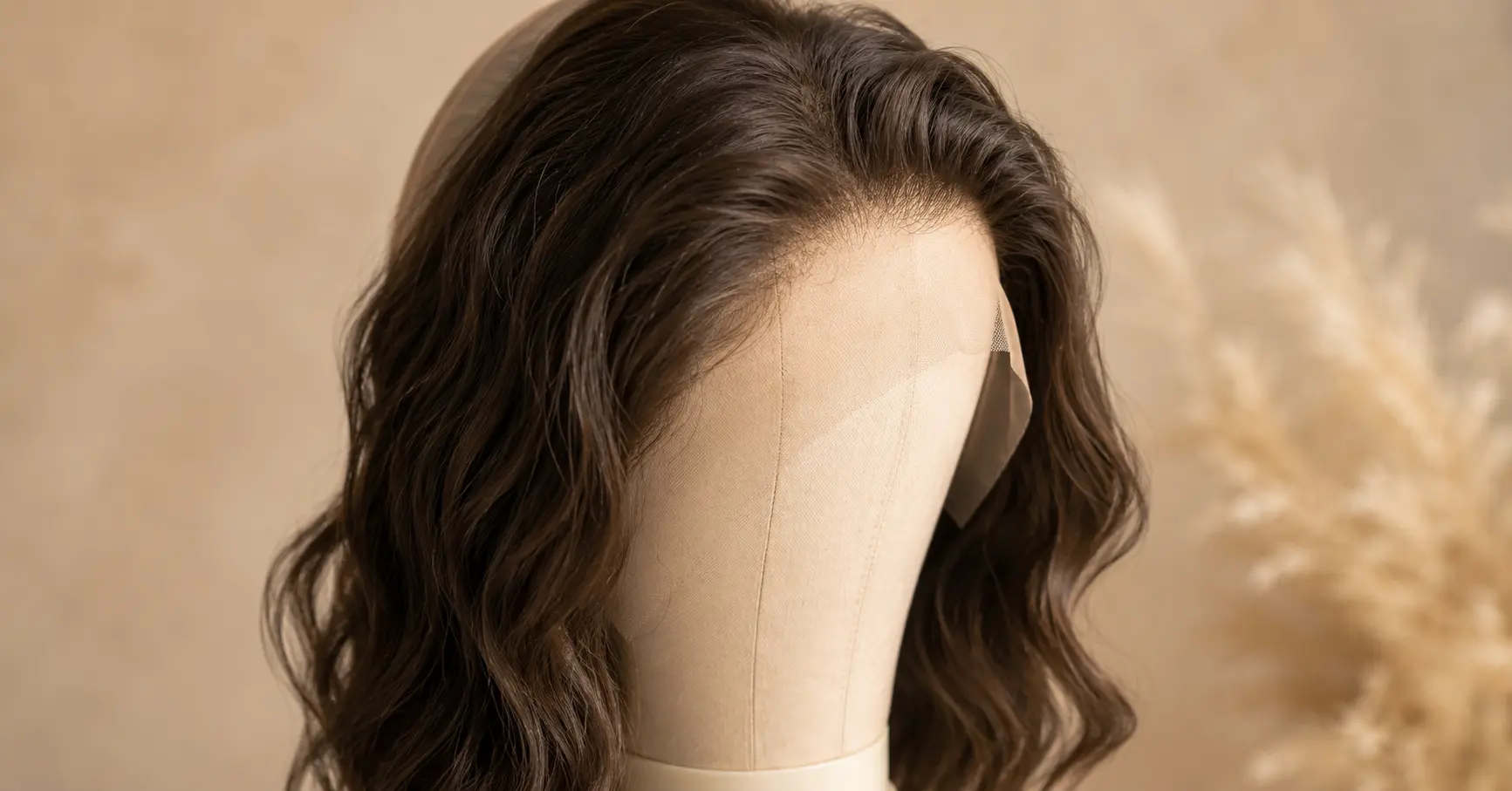
Two presentations matter at the front. In one, the hair falls forward. A fringe sits across the hairline, so the front edge stays out of view in everyday wear. That look is a sheitel with bangs. In the other, the hair is worn off the face. The cap’s lace front then reads as a fine, scalp-like edge along the forehead — the exposed lace hairline. For readers new to the term itself, the what-is-a-sheitel explainer covers the basics.
The two presentations ask different things of the cap. A fringe needs enough front hair to cut a bang into. An exposed hairline, in contrast, needs an edge designed to be seen. The listing evidence opened for this guide splits along that line. The Jewish-market listings opened on 2026-10-29 — lace-front and silk-top units from Hair Queen LA and Michelle Michaels Collection — are built for exposed wear. None of them advertises a bangs variant.
That is a scoped observation about the opened set on a single date, not a market-wide statement. So when a client wants a fringe, that front becomes a specification to arrange with the maker, not a labeled option to select.
How much front edge shows is the client’s chosen coverage requirement. It is a styling decision to settle with the client, not a construction question this guide answers. The sheitel styles and cuts guide carries the styles-side discussion.
Front Construction
How Front Construction Changes the Look
Front construction decides what the front edge can do. The evidence below comes from opened listings and maker guides, each quoted with its observation date.
What the Milano Listing Documents
For this guide, the bangs-capable front is Milano Wigs’ Victoria (“Soft Black w/ Bangs”). The page describes it as a French silk top wig with a Swiss lace front. The product page opened on 2026-10-29 carries no Jewish, kosher, or sheitel wording. That is a fact about the page text only. This guide draws no conclusion from it about who the unit is sold to or how it is positioned.
What the page documents is the link between front construction and wear mode. Two lines from the product description (observed 2026-10-29):
“The Swiss Lace front hairline creates a seamless transition from your forehead to the front hairline.” / “The versatile front hairline allows you to wear your hair off your face or with a fringe/bang.”
Milano Wigs, Victoria “Soft Black w/ Bangs” product description, observed 2026-10-29
The same page’s front-options panel labels its flatter lace-front choice “Best for Bangs”. The panel’s own wording calls it “a flatter, lower-profile finish (3/4" depth) that sits close to the scalp” (observed 2026-10-29). Taken together, the listing presents one unit that wears two ways. The hair can go off the face with the lace edge showing, or a fringe can sit over it.
How Maker Education Frames the Same Choice
Maker education frames the same split as a styling choice. Jon Renau’s cap guide directs readers to a lace front “because you like to wear your hair pulled back.” The same guide adds that “if you prefer to wear bangs or fashionable fringe, SmartLace may not be necessary” (observed 2026-10-29).
The Milano page also pairs that front with a “Lightweight French Silk top”. That layer is described as mimicking the look of scalp and allowing parting versatility. In other words, the scalp-top layer and the front edge are separate constructions doing separate work. The styles guide reads the same link from the sheitel side. Soft bangs ask for a front that graduates naturally, while heavily wefted fronts read as a solid edge. For how lace fronts differ from lace tops elsewhere in the cap, see the lace front vs lace top comparison.
Bang Geometries
Full Bangs, Side Bangs and Curtain Bangs
Bang geometry changes how much of the front edge shows. The same cap therefore reads differently depending on how the front is cut and worn. A full bang sits straight across and covers the hairline while it is down. Lifted or pinned back, though, the front edge returns to view. A side bang sweeps diagonally and leaves part of the hairline open on one side. The edge shows through that opening.
Curtain bangs part near the center and fall to both sides. The midline of the hairline stays visible between them, so this geometry is the nearest to exposed wear.
The cut itself is the styles guide’s territory. Its curtain-bangs entry describes the style, and its FAQ takes up what front construction soft bangs need. What this guide adds is the specification side. That means enough front hair to support the chosen geometry, plus a front edge that behaves both under a fringe and exposed. In short, those are two different conversations with the supplier.
Client Fit
Choosing the Right Front for Different Clients
The exposed lace hairline is the presentation the Jewish-market listings opened for this guide are built to show. Hair Queen LA’s chestnut brown listing is titled as a 4x4 French lace front and Jewish silk top kosher sheitel. It describes its front this way (observed 2026-10-29): “4x4 French Lace Front — Creates a seamless, natural-looking hairline for undetectable styling.”
The Michelle Michaels Hadarat bespoke sheitel sits in the same exposed category with a custom fit. Its features include a “Custom Hand-Tied Skin Top” with “hand-knotted lace extending ear to ear.” They also include “Premium Lace Parting: Designed for the most realistic look, allowing effortless styling and parting versatility” (observed 2026-10-29). The page is positioned “for Jewish women”. However, it carries no fringe or bangs option. Within the opened set, it anchors the exposed, parting-versatility side, not the bangs side.
Client questions then sort by wear mode:
- A client who keeps her hair off her face and wants the hairline to read as skin is describing the exposed front. Hair Queen LA and Hadarat represent that category.
- For example, someone who wants a fringe as her everyday look is describing a bangs front. The opened Jewish-market listings do not label that construction as an option, so the written specification matters more here.
- A client who alternates between the two is asking whether one front supports both modes. That is a per-unit question, with Milano’s “versatile front hairline” line as the wording to test in writing.
Before You Order
Boutique Consultation Checklist
Whichever front the client lands on, the consultation ends the same way. What remains, then, is a list of fields to confirm with the supplier, in writing, before a sample is approved.
| Field to confirm | What a specific answer looks like |
|---|---|
| Front construction | Lace type, edge finish, and front depth at the hairline |
| Bangs in the unit’s own hair | Whether bangs are cut into the unit’s hair or styled from existing length, and who does the cutting |
| Front density | The density across the fringe zone, stated as a figure |
| Scalp-top interaction | How the front meets the silk or lace top where the bang parts |
| Wear-mode claim | If a listing claims both off-the-face and fringe wear, the supplier states it for the exact cap in writing |

FAQ
Sheitels With Bangs: Common Questions
Bangs are a front-design and cutting decision, not a cap type. The bangs-capable front documented for this guide is Milano Wigs’ Victoria. Its listing pairs a “versatile front hairline” with a “Best for Bangs” label (observed 2026-10-29). None of the Jewish-market listings opened the same day advertises a bangs variant. So a sheitel with bangs is a specification to arrange with the maker, not a labeled option.
A full bang covers the front edge while it is down. That is consistent with the Milano Victoria listing: the photographed hairline sits beneath the bang. Swept or pinned off the face, the edge shows — the exposed presentation the checked listings build for. Hair Queen LA describes its 4x4 French lace front as creating a “seamless, natural-looking hairline” (observed 2026-10-29).
Milano’s own line presents the unit as supporting both wear modes: “The versatile front hairline allows you to wear your hair off your face or with a fringe/bang” (observed 2026-10-29). The Jewish-market pages opened for this guide make no matching both-modes statement. Treat it as a per-product question: front depth, front density, and whether bangs are cut into the unit’s own hair.
Five fields. First, the front construction: lace type and edge finish at the hairline. Second, whether bangs are cut into the unit’s own hair or styled from existing length. Third, the front density across the fringe zone. Fourth, how the front meets the scalp top where the bang parts. Fifth, a written wear-mode statement for the exact cap. Ask the supplier to confirm each field in writing before approval.
Conclusion
Decide the Wear Mode, Then Specify the Front
A sheitel with bangs and a sheitel with an exposed lace hairline are two wear modes. The front design sets which of them a unit can deliver. The opened evidence separates cleanly. Milano’s listing documents a bangs-capable versatile front. In contrast, the Jewish-market listings opened for this guide document lace-front and silk-top construction for exposed wear, without bangs variants. Read listings in that order — wear mode first, construction second — and take the checklist above to the supplier. The written specification, confirmed field by field, is what protects the order.

Specifying a Sheitel Front?
Use the consultation checklist above to prepare the specification fields to confirm in writing. Cover front construction, bangs, front density, and scalp-top interaction before a sample is approved.
Contact LEV Wigs