Sheitel and Halacha
Lace Top Wigs and Halacha: 2026 Guide for Sheitel Buyers

Yes — when fully lined, lace top wigs are accepted in many Orthodox sheitel-buying contexts where the community permits sheitels. The lining fabric beneath the Swiss Lace mesh prevents scalp or natural hair from showing through, which is the practical halacha concern buyers usually ask us to document. That question — "Are lace top wigs halachically ok?" — has been circulating on Imamother, local WhatsApp groups, and salon waiting rooms for over a year now. It comes up constantly, and the threads fill with conflicting answers fast.
As a manufacturer who supplies lined lace wholesale collection to Orthodox communities across Brooklyn, Lakewood, Jerusalem, and London, we've fielded this question from many salon partners. Honestly, most of the confusion stems from one simple distinction: lined versus unlined. Once you understand that, the halachic picture clears up.
In our own order mix, requests for fully lined lace tops have grown noticeably over the past few years — a shift that tracks where the market and the poskim have settled.
If the construction itself is new to you — how Swiss Lace mesh is woven, how each strand is hand-tied through the crown, what separates one lace grade from the next — our complete guide to lace top sheitels lays out the foundations first. Once those basics are clear, the halachic questions below become far easier to reason through.
Cap Construction
What Is a Lace Top Wig? Construction From the Factory Floor
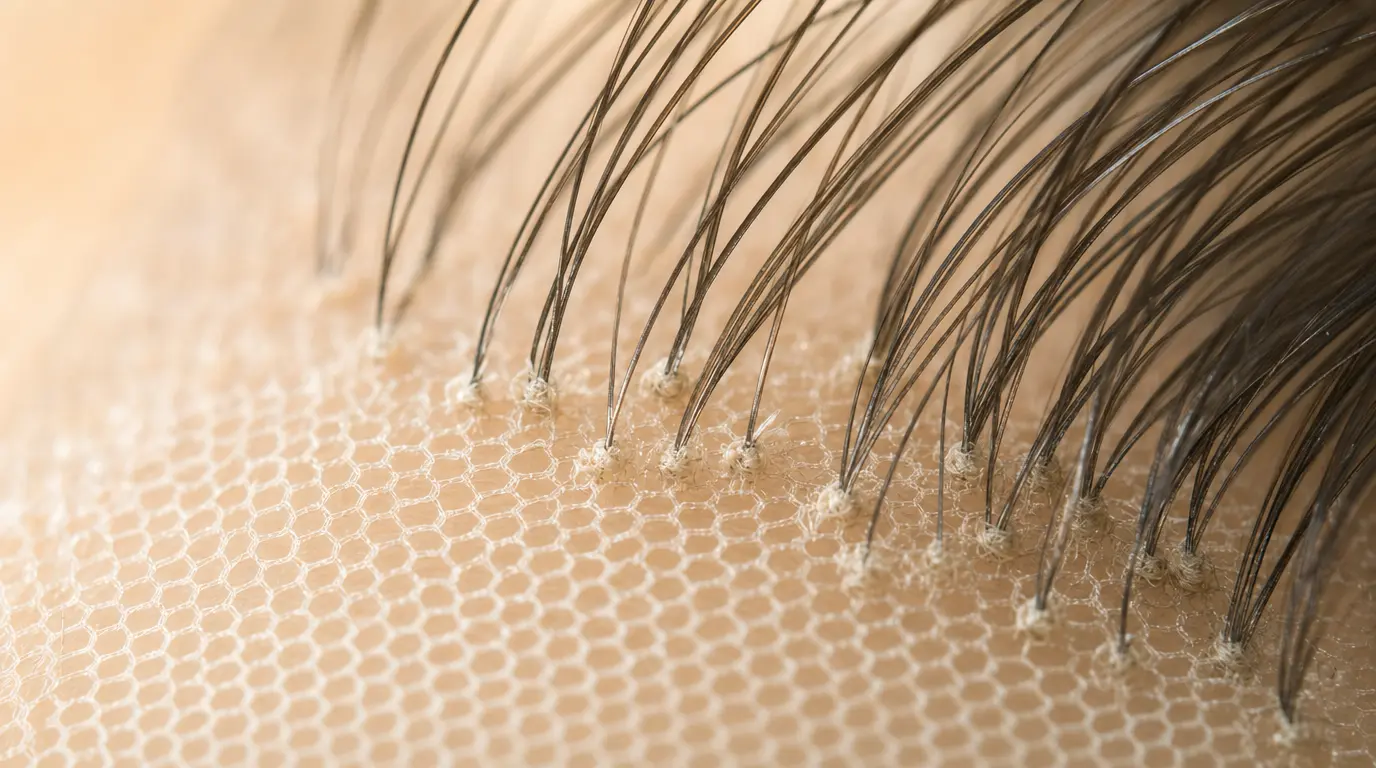
A lace top wig is a sheitel — a wig worn for hair covering — built with hand-tied hair on Swiss Lace mesh across the entire crown. Each individual hair strand is ventilated (knotted) through tiny holes in the lace using a crochet hook — one strand, one knot, repeated tens of thousands of times. Unlike machine wefting where a sewing machine binds hair in rows, hand-tying through lace produces a cap that moves, parts, and breathes like real scalp.
Swiss Lace Base — The Foundation
The lace itself is a nylon-polyester blend woven into a mesh so fine it's nearly invisible against skin. Swiss Lace, at roughly 0.08mm thick, is what we use for our premium Orthodox-market sheitels. It's softer than French Lace (0.10mm) and far more durable than HD Lace (0.06mm), which tears if you look at it wrong. The mesh comes on rolls — 120cm wide, usually — and we cut cap-shaped panels from it before the hand-tying begins.
Hand-Tied Knots vs Machine Wefting
Machine wefting is fast: a sewing machine binds hair strands into continuous tracks, which are then sewn onto a cap. By contrast, hand-tying through lace requires focused manual work across the crown. The result is hair that can move and part more freely, but the buyer should confirm the finished-cap specification on the selected sample rather than assume a single weight or production time.
Lined vs Unlined: Why This Matters Halachically
First, the distinction that drives most of the halacha confusion. Unlined lace top: the Swiss Lace mesh sits directly against the wearer's head. The mesh has holes — that's the whole point — and those holes can, depending on lighting and angle, reveal patches of the wearer's real hair or scalp underneath. Lined lace top: a thin, solid fabric layer (usually a soft nylon or silk-blend) sits between the lace mesh and the wearer's head. The lace still provides breathability and the natural hairline, while the lining blocks visibility through the mesh.
For a detailed breakdown of how lace compares to other cap constructions, see our lace top vs silk top cap construction guide.
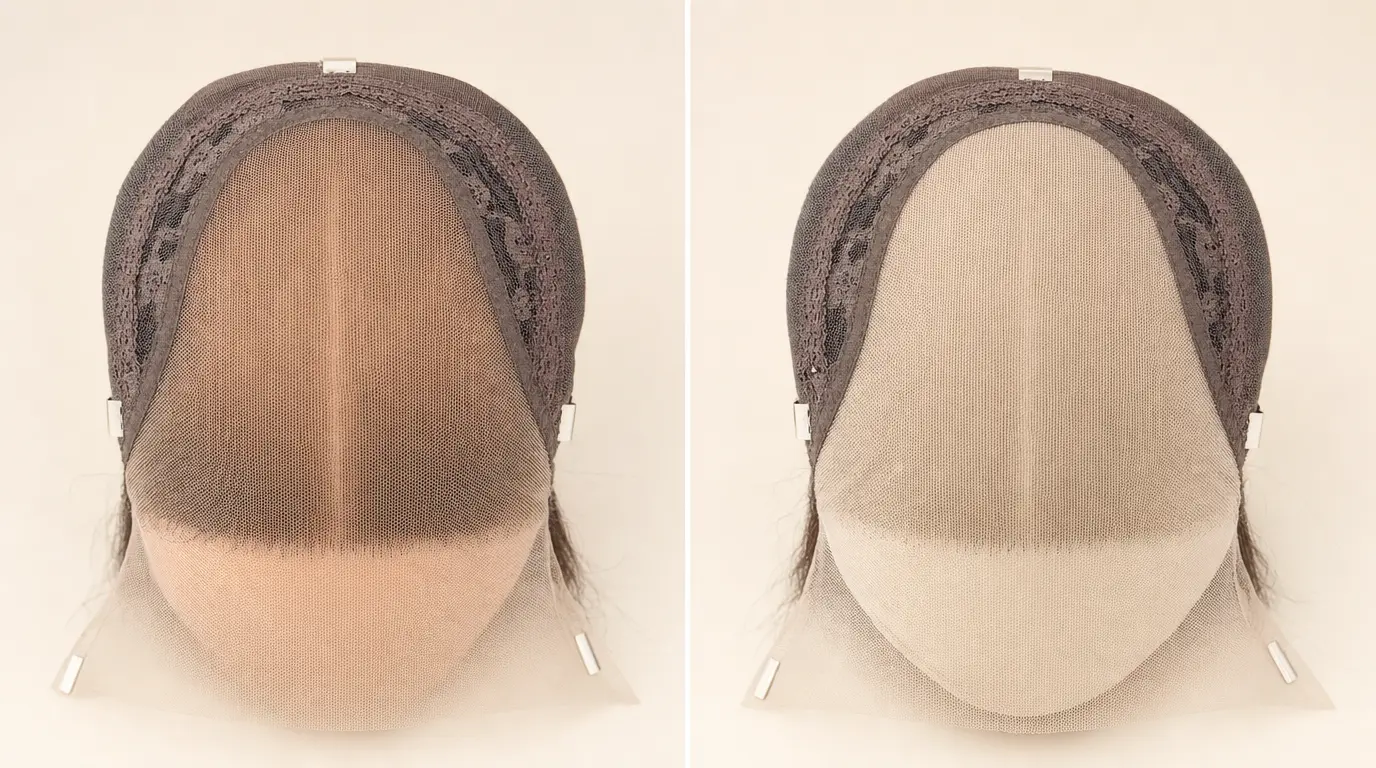
A common example: a salon owner calls because a client's Rabbi rejected an unlined lace top sheitel she'd sold, and the store needs a lined replacement quickly. Situations like that one are why many retailers move to stocking only lined lace tops for community-sensitive clientele. That's the practical difference.
Halacha and Kashrus
Are Lace Top Wigs Halachically Acceptable?
Yes — when fully lined, lace top wigs are commonly treated as acceptable in Orthodox markets where the buyer's community permits sheitels. Specifically, the lined construction addresses the key requirement that the wearer's natural hair is concealed completely, without visible gaps or transparency.
The Core Concern — Does Lace Defeat the Purpose of Covering?
The halachic question boils down to one issue: if the lace mesh has holes, and those holes allow the wearer's real hair (or scalp) to show through, does the sheitel actually function as a covering? The answer depends entirely on whether there's a lining. An unlined lace top can, under certain lighting conditions, reveal what's underneath. A lined lace top cannot. The solid fabric layer under the mesh makes the question moot — the covering is complete, even if you hold it up to direct sunlight.
And yes, this is where most retailers get confused. They hear "lace top" and assume it's automatically problematic. It isn't. The lace is the outer layer — the part people see. The lining is the inner layer — the part that matters halachically.
What Poskim Say About Lined Lace Tops
Published rabbinic guidance on lace top sheitels focuses on the same practical test: sheer areas, especially the part and hairline, should be fully lined so no natural hair is visible. That is why LEV treats a complete lining and opacity check as the minimum production requirement for Orthodox-market lace top orders. Lined lace tops pass this test. Unlined ones do not reliably pass it because visibility depends on lace density, lighting, and the wearer's hair color underneath. See the published lace top sheitel guidelines for the source principle.
For wholesale buyers, the practical compliance test is simple: if the part or hairline is sheer, the under-layer must block visibility before the sample is presented for community review.
LEV production note, aligned with published rabbinic lace-top guidanceHalachic vs Hashkafic — Two Different Conversations
There's halacha (Jewish law), and then there's hashkafa (religious philosophy and community custom). Some communities, particularly certain Chassidic groups, have stringencies that go beyond the baseline halacha. They may require a specific type of covering, or they may discourage lace tops regardless of lining. That's a hashkafic preference, not a halachic ruling. As a manufacturer, we don't take positions on community customs. What we can tell you — and what we document for every wholesale order — is whether our lace top sheitels meet the objective halachic standard of complete coverage.
When salon partners ask us for documentation, we provide a written specification sheet confirming the lining material, its opacity rating, and its placement relative to the lace mesh. That sheet is designed for a buyer's Rav to inspect alongside the physical sample when community approval is required.
Market Trends
Why Lace Tops Have Become the Preferred Sheitel for Orthodox Women
Comfort, Weight, and Everyday Styling
Lace tops are increasingly requested because Swiss Lace can offer breathability and a natural-looking hairline for daily wear. For buyers, the more useful question is not which cap is universally best, but which construction fits the wearer's comfort, styling, and community requirements.
Swiss Lace uses an open mesh, while silk and solid-cap constructions add more layers beneath the hair. Consequently, a buyer should compare the complete cap specification, hair density, length, and intended wear pattern instead of assuming that a cap label alone predicts comfort.
Weight can vary substantially with length, density, ventilation, and cap construction. However, the buyer can request comparable samples and confirm the finished-cap specification before placing a stock order. That gives salon staff a more reliable basis for fitting than a generic weight claim.
In addition, lace at the front edge can soften the transition from cap to hairline. This is especially relevant when a wearer wants flexible parting or styles that expose the front and sides of the sheitel.
Lace top is one construction among several. To see how it compares against silk top, full lace, lace front, hand-tied, band, and custom sheitels, read our guide to the seven jewish wig types.
How Construction Affects the Buying Decision
| Feature | Lace Top Sheitel | Silk Top Sheitel |
|---|---|---|
| Weight | Often lighter, depending on the specification | Often more structured, depending on the specification |
| Breathability | Excellent (open mesh) | Good (double-layer silk) |
| Lifespan (daily wear) | Confirm care expectations with the supplier | Confirm care expectations with the supplier |
| Part-line realism | Natural (slight grid) | Scalp illusion (no grid) |
As a factory supplier, we see buyers increasingly request lined lace options alongside silk tops. Therefore, retailers should test a balanced sample assortment, collect fit feedback from their own clients, and adjust their stock mix from documented local demand rather than relying on a universal turnover claim.
B2B Wholesale
What Wholesale Buyers Need to Know
Wholesale buyers should evaluate lined lace tops when their retail clients need a construction that can be reviewed against local halachic expectations. The right stock mix depends on the communities served, the wearer's preferences, and the specifications approved by the buyer's Rav.
MOQ and Sampling
MOQ, sample quantities, length mixes, and production timing should be confirmed in writing before an order is placed. New partners can use representative samples to evaluate lining, fit, hair density, and finish with their own clients before they commit to a broader inventory plan.
Lined vs Unlined Specifications
A lining changes the cap specification and should be quoted as part of the complete construction, not as an afterthought. Nevertheless, whether a lined version is appropriate depends on the retail client's community standards and the physical sample reviewed for that order.
Handling Halacha Questions From Retail Clients
When a customer asks whether a lace top sheitel is acceptable, explain the visible construction accurately: a lined model places an opaque layer beneath the lace mesh. Then provide the available specification sheet and direct the client to her Rav when community approval is required. A supplier should not make the halachic ruling for the wearer.
Yes. Every wholesale shipment includes a printed specification sheet confirming the lining material, opacity rating, and placement relative to the lace mesh. This document is designed for your clients' Rav to inspect alongside the physical sample when community approval is required.
MOQ, sample quantities, and production timing depend on the approved specification and current order schedule. Request a written quote for the selected length mix, lining, hair density, and packaging so your purchasing team can compare like-for-like options.
Community FAQ
Common Questions About Lace Top Wigs and Halacha
Yes, when the buyer's community accepts sheitels and the sheer lace areas are fully lined. The lining prevents scalp or natural hair from showing through the mesh, which is the practical requirement many rabbinic lace-top guidelines focus on.
It depends on your clients' community standards. Many Orthodox women wear fully lined lace tops without seeking specific rabbinic approval, but certain communities have additional stringencies. If your store serves those communities, keep a sample and lining spec sheet ready for the buyer's Rav to inspect.
No sheitel should be worn during mikvah immersion, regardless of cap construction. This applies equally to lace top, silk top, and any other wig type. Retailers should give a simple answer and direct clients to their local mikvah attendant for procedure and timing.
Conclusion
Lined Lace Tops Are Halachically Sound — and They're What Your Clients Want
The practical takeaway is straightforward: a lined lace sheitel should be evaluated against the wearer's community standards and a physical specification sheet. As a manufacturer, we can document the cap construction; the retailer and client should use that information to make an informed fit and halacha decision.
If you are a salon owner or retailer building a sheitel assortment, request a lined lace sample with its construction specification. Then let your clients assess the hairline, fit, and community suitability before you expand the order.
Ready to add lined lace tops to your product line? Contact LEV to request a lace sample kit and halacha compliance documentation for your rabbinic reviewers. Samples ship worldwide on the current factory schedule, direct from Qingdao.


Request Lace Samples and Halacha Documentation
LEV Wigs manufactures lined lace top sheitels in Qingdao, China. Every wholesale order includes halacha compliance documentation. Minimum order quantities and sampling options are confirmed during inquiry.
Request a Quote