Jewish Wigs
Jewish Female Wigs: What Orthodox Women Wear

Most explanations of Jewish head covering stop at why — modesty, tradition, religious law. Far fewer explain what Orthodox women actually wear, and almost none from the people who build these wigs. As the Qingdao workshop that manufactures and supplies jewish female wigs to stylists, salons, and retailers, we see which constructions, hair origins, and densities different communities order, batch after batch. That production view is what this guide shares.
A jewish female wig — a sheitel — is not a single product. It is a family of constructions built from specific hair types, cap structures, and ventilation densities, and the combination a woman wears reflects her community, her budget, and how natural she wants the result to look. For the religious and cultural background, see our guide to why Jewish women cover their hair. This guide stays on the product itself: what it is, what it is made of, and what different Orthodox women tend to wear.
Key Takeaways
- A jewish female wig (sheitel) is built from specific hair origins, cap constructions, and ventilation densities — not one uniform product
- Hair sourcing (European, Asian, processed) is the biggest driver of price, feel, and longevity
- Cap type (silk top, lace top, lace front) controls realism and breathability, not quality tier
- Community context can shape a fit brief, but the final density, length, and construction should be confirmed individually
- Wholesalers and stylists should map community demand to construction specs before ordering
Definition
What a Jewish Female Wig Actually Is
A sheitel is a full wig constructed to cover a married woman's natural hair completely. The "jewish" part is a use context, not a construction category — the same wig could in principle be worn by anyone. What makes one sheitel different from another is three things: the hair it is built from, the cap that holds it against the head, and how densely that hair is tied in. Those three decisions are what determine how a jewish female wig looks, feels, and lasts.
Human Hair Sourcing
The biggest variable in any jewish female wig is where the hair comes from. Three origins dominate. European hair — collected across Eastern and Southern Europe — has a finer diameter and a natural cuticle layer that holds color and styling well, and it is the most sought after for blonde and light tones. Asian hair, sourced mainly from China and India, is thicker in diameter and usually acid-treated to straighten and lift the cuticle so it can be recolored; it is durable and cost-effective, and it is what most mid-range sheitels are built from. Processed grades strip and overlay the cuticle, which shortens working life, while cuticle-aligned (Remy) grades keep roots and tips running the same direction to reduce tangling.
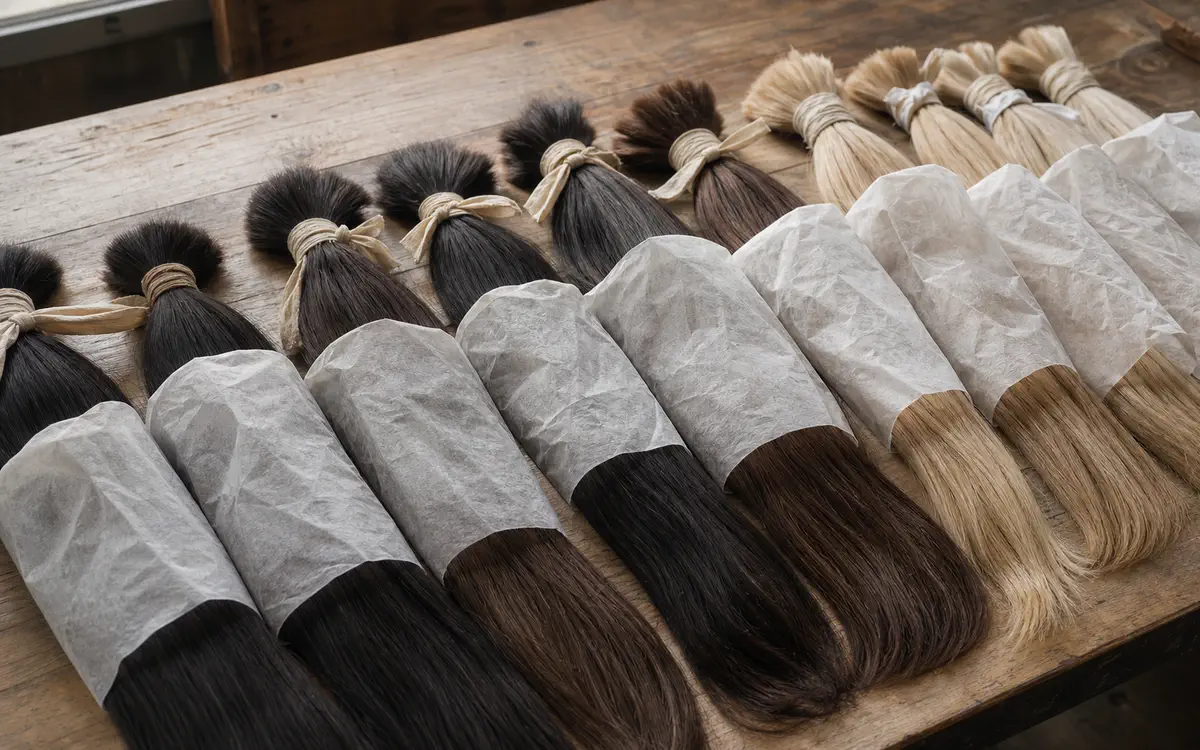
One point worth stating plainly: hair origin is a sourcing and price distinction, not a quality verdict. A well-ventilated Asian-hair sheitel outlasts a poorly built European one. The origin sets the feel and the natural color range; the construction sets the lifespan.
Cap Construction Layers
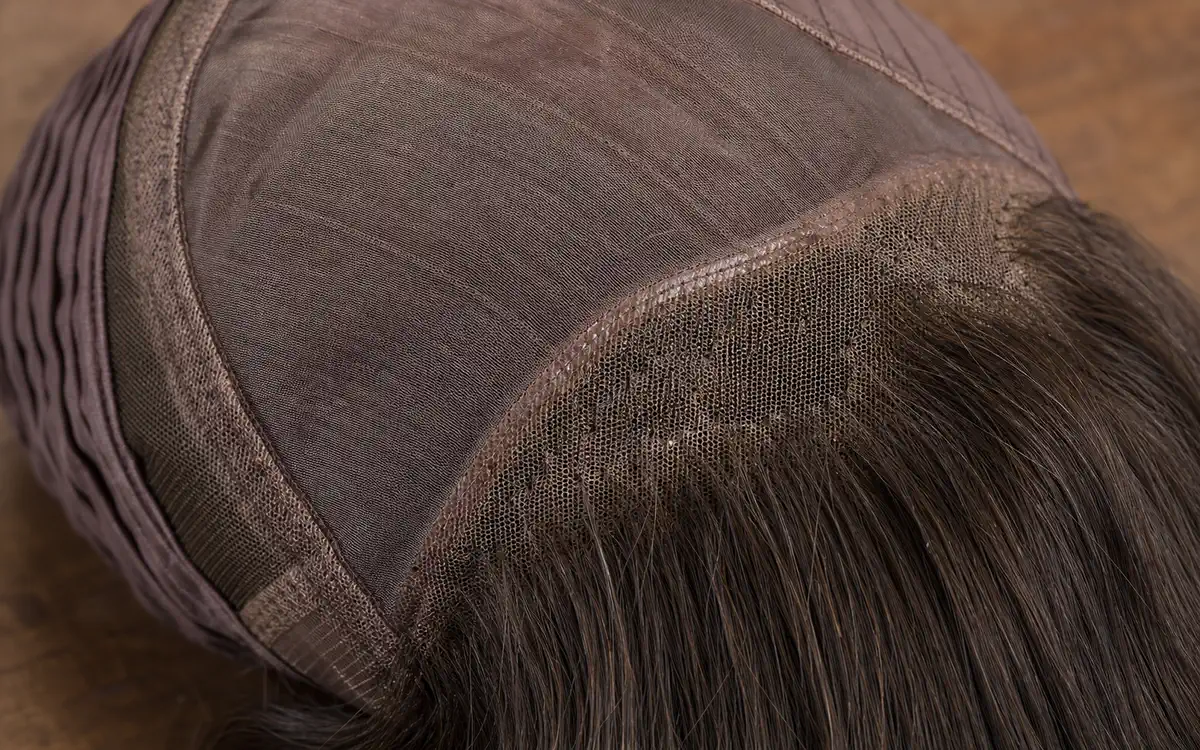
Cap construction controls the two things buyers care about most: how realistic the hairline looks, and how breathable the wig is. The three cap types Orthodox women wear most are silk top, lace top, and lace front. For the full type-by-type breakdown, see our seven jewish wig types guide — here we focus on what each layer actually does.
A silk top cap has a silk layer at the crown where hair is ventilated through, creating the illusion of hair growing from the scalp — the most realistic parting, at the cost of slightly more weight. Lace top caps use a fine lace layer across the top for a lighter feel and good parting realism. A lace front adds a delicate lace strip at the hairline only, paired with a machine-wefted back — the most affordable route to a natural front. None of these is a higher tier than another; each trades off realism, breathability, weight, and price differently.
Communities
How Community Context Shapes a Wig Brief
One question we hear from wholesalers is whether there is a "standard" jewish female wig. There is not. Community custom can inform a consultation, but an individual brief must confirm the desired density, length, hairline, cap type, and styling. Personal taste, budget, local practice, and rabbinic guidance all matter, and they do not map neatly to a single construction.
Start With the Wearer's Priorities
Begin with the look the wearer wants to achieve: an understated, natural hairline; a fuller silhouette; a lightweight cap; or a style that holds a particular finish. Those preferences can be translated into density, parting realism, cap construction, color range, and cut without assuming that a community label predicts the answer.
Turn the Brief Into Construction Specs
For a more discreet, scalp-like parting, a silk top or a well-finished lace top may fit the brief. For a lighter feel, buyers can compare lace coverage and density; for a more substantial silhouette, they can specify fuller density and a styling plan. Sampling is the safest way to confirm how those choices feel and wear before a wholesale order is placed.
Hasidic Communities
Hasidic communities carry their own conventions around cap structure, length, and texture, shaped by community minhag (custom) rather than a single standard. The details vary between groups, and we build to each community's brief rather than assuming one universal spec. For cultural background on these traditions, our guide to why Jewish women cover their hair is the better starting point.
Production Note
Use community context as a conversation starter, not a proxy for the wearer. An individual fit brief — including cap type, density, length, color, styling, and daily-wear needs — should always override assumptions.
Construction
The Construction Choices Behind What They Wear
Density, knot type, and hairline finish are the three construction decisions that determine how a jewish female wig looks, feels, and wears over time. Hair and cap type set the raw materials; these three choices set the character of the finished unit.
Density is how much hair is tied into the cap. Light density reads as natural and fine but shows the cap sooner as it ages; heavy density looks full and substantial and lasts longer between top-ups but can look less like real hair. In our workshop, density is set by how many strands a ventilator ties per square centimeter — a slow, hand-driven decision, not a machine setting.
Knot type matters more than most buyers realize. Single knots are smaller and nearly invisible at the hairline, but slower to tie and slightly less secure. Double knots hold better and are standard in high-shedding zones, at the cost of a marginally more visible root. Where each knot type sits on the cap is a construction choice a factory makes deliberately, not a detail to uniform.
Hairline finish — bleached knots, a graduated baby-hair row, and a lace tint matched to the wearer's scalp — is what separates a sheitel that looks installed from one that looks grown. It is finishing labor, done last, and it is where cheaper and better-built units diverge most visibly. For help weighing these against budget, our orthodox buyer's guide walks through the evaluation step by step.
Wholesale
What Wholesalers and Stylists Should Know
If you stock or supply orthodox women's wigs, the construction decisions above are what your customers are implicitly asking for when they name a community or describe a look. A buyer who says "natural, for professional wear" is describing light density, a silk top or quality lace front, and a realistic hairline finish. A buyer who says "full and long, holds its shape" is describing heavy density and structured styling. Translating demand into those specs is the core skill of sourcing this category well.
A few practical points from the production side. Sample before you commit to bulk — a construction that looks right in a photo can feel wrong on the head, and density especially needs to be felt. Specify hair origin, cap type, density, and length explicitly on every order rather than relying on a "standard," because there is no standard. And plan lead time around construction: a fully hand-ventilated silk top unit takes longer to build than a lace front with a wefted back, which affects how you promise delivery. For the partial-versus-full decision many stockists face, our fall versus full sheitel comparison lays out the trade-offs.
FAQ
Frequently Asked Questions
It is called a sheitel, Yiddish for wig. A jewish female wig worn by a married Orthodox woman to cover her natural hair is a sheitel, and the term covers every construction from silk top to lace front. The plural is sheitels.
No. Many wear a sheitel, but others cover their hair with a tichel (headscarf), snood, hat, or shpitzel instead, and some combine a partial wig with another covering. The choice varies by community, family custom, and personal preference; wigs are common but not universal.
Most are human hair, sourced mainly from Europe or Asia. European hair is finer and pricier, ideal for light tones; Asian hair is thicker, usually processed and recolored, and more affordable. Cuticle-aligned (Remy) grades tangle less and last longer than stripped grades.
A full sheitel covers the whole head; a fall is a partial piece that leaves some of the wearer's own hair or a band visible at the front. Falls are lighter and cooler; full sheitels give complete coverage. Our fall versus full sheitel comparison breaks down the trade-offs.
Yes. We supply jewish female wigs wholesale to salons, stylists, and retailers, with options for stock units, custom construction, and private label. Share the communities and specs you want to stock and our Qingdao team will quote minimums, lead times, and sampling.
Conclusion
A Family of Constructions, Not One Product
A jewish female wig is shaped by three decisions — hair origin, cap construction, and ventilation density — and the combination a woman wears reflects her community and her priorities more than any single "right" answer. Understanding those decisions is what separates a unit that looks right from one that feels right, and it is what lets a buyer or wholesaler map demand to spec instead of guessing.
If you are stocking or sourcing sheitels, tell us the communities and constructions you need. Our Qingdao factory builds silk top, lace top, and lace front sheitels to spec for wholesalers, salons, and stylists.

Sourcing Jewish Female Wigs?
Our Qingdao factory builds silk top, lace top, and lace front sheitels to spec for wholesalers, salons, and stylists. Tell us the communities and constructions you need and we will quote.
Contact LEV Wigs