Care & Diagnostics
Why Is My Sheitel Turning Orange? Color Changes to Log
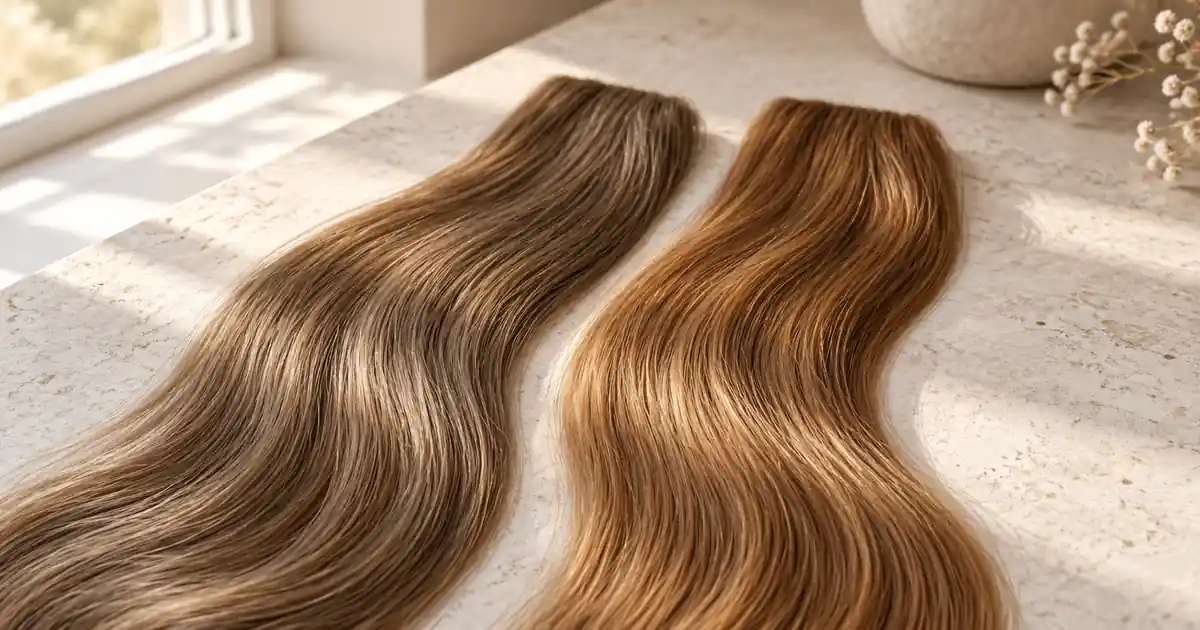
A warmer or orange tone can have more than one explanation. Record where the change appears, when you first noticed it, and the piece’s care history before seeking color advice. The color alone does not identify the cause.
The Observation
What a Color Change Looks Like
Note whether the change appears in one area or across the lengths. Compare it with any delivery photos or approved color reference, while remembering that different lighting and camera settings can change how the color appears.
Milano notes that color changes can be more noticeable on lighter shades. That is a visibility observation in its care guidance, rather than evidence that lighter hair changes faster.
The Record Beats the Shade
Why the Care History Matters
Similar-looking color changes can have different explanations. Share the care history as well as photos. Milano lists several possible influences on its human-hair pieces; Daniel Alain discusses light, washing, and heat in its guidance on dyed human hair. Neither source can identify what happened to your piece from its color alone.
Investigate, Don't Diagnose
Care History to Share With a Wig Colorist
Include the details below when asking the maker or a wig-experienced colorist for an assessment. They provide context, rather than a diagnosis.
| History field | What to write down |
|---|---|
| Sun and light exposure | Outdoor hours, storage near windows, sunny-season wear — written down, not guessed |
| Heat styling history | Tool frequency and settings, and any change in routine before the shift appeared |
| Water and washing | Wash count and the water the piece is washed in — a fact for the record, not a mineral diagnosis |
| Products used | Shampoos, conditioners, stylers — what actually touched the hair, with dates where possible |
| Color treatment | Whether the piece was dyed, toned, or highlighted at any point, and when |
Before You Seek Help
What to Record Before Seeking Help
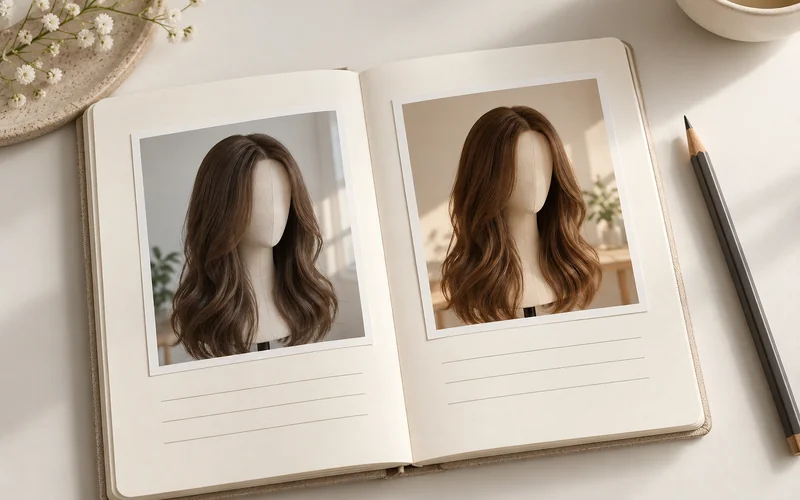
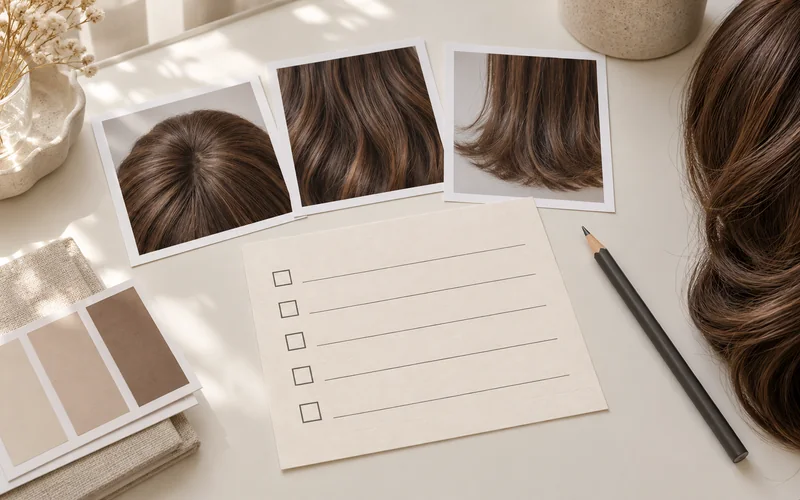
Take overview and close-up photos under similar lighting. Show the top, mid-lengths, and ends where useful, and date the photos. Use them to communicate where and when the appearance changed, rather than to establish an exact color match.
Keep the photos with your notes about washing, styling, products, and any color services. Bring the piece itself if the professional needs to examine it.
The Professional Route
When and How to Bring In a Professional
Before attempting color correction, consult the maker or a professional experienced with human-hair wigs. Daniel Alain and Milano both recommend professional guidance for coloring their human-hair pieces.
Ask whether a toning product is appropriate for this particular piece before using it. Color Wow describes purple shampoos as pigment-depositing products and cautions that toning does not address every cause of a warm appearance. This is not a recommendation to use its products on a sheitel.
Ask what options, if any, suit the piece and how the proposed service accounts for its base and knots. An assessment does not guarantee that a particular color can be restored.
FAQ
Sheitel Color Changes: Common Questions
Several factors can contribute to color changes in human hair, and an orange tone alone does not identify the cause. Milano and Daniel Alain discuss influences including sun exposure, heat, and washing in their care guidance. Share dated photos and the care history with the maker or a professional experienced with wigs.
Not as a default first move. One brand's technical guidance (Color Wow) describes purple shampoos as temporary pigment that can deposit unevenly on porous hair and does not address every underlying cause of a warm shift. Whether any home product suits a particular sheitel is a question for a professional who works on wigs.
Conclusion
Log It Before You Treat It
Keep the photos and care history, and consult the maker or a professional experienced with human-hair wigs before attempting color correction. Describe what changed without assuming why it happened.

Questions About a Sheitel Color Change?
For an assessment of an existing piece, contact its maker or a professional experienced with human-hair wigs. Keep the photos and care history ready for that conversation.
Contact LEV Wigs