Men's Hair Systems
Lace vs Skin Hair System: How Buyers Judge Each Base
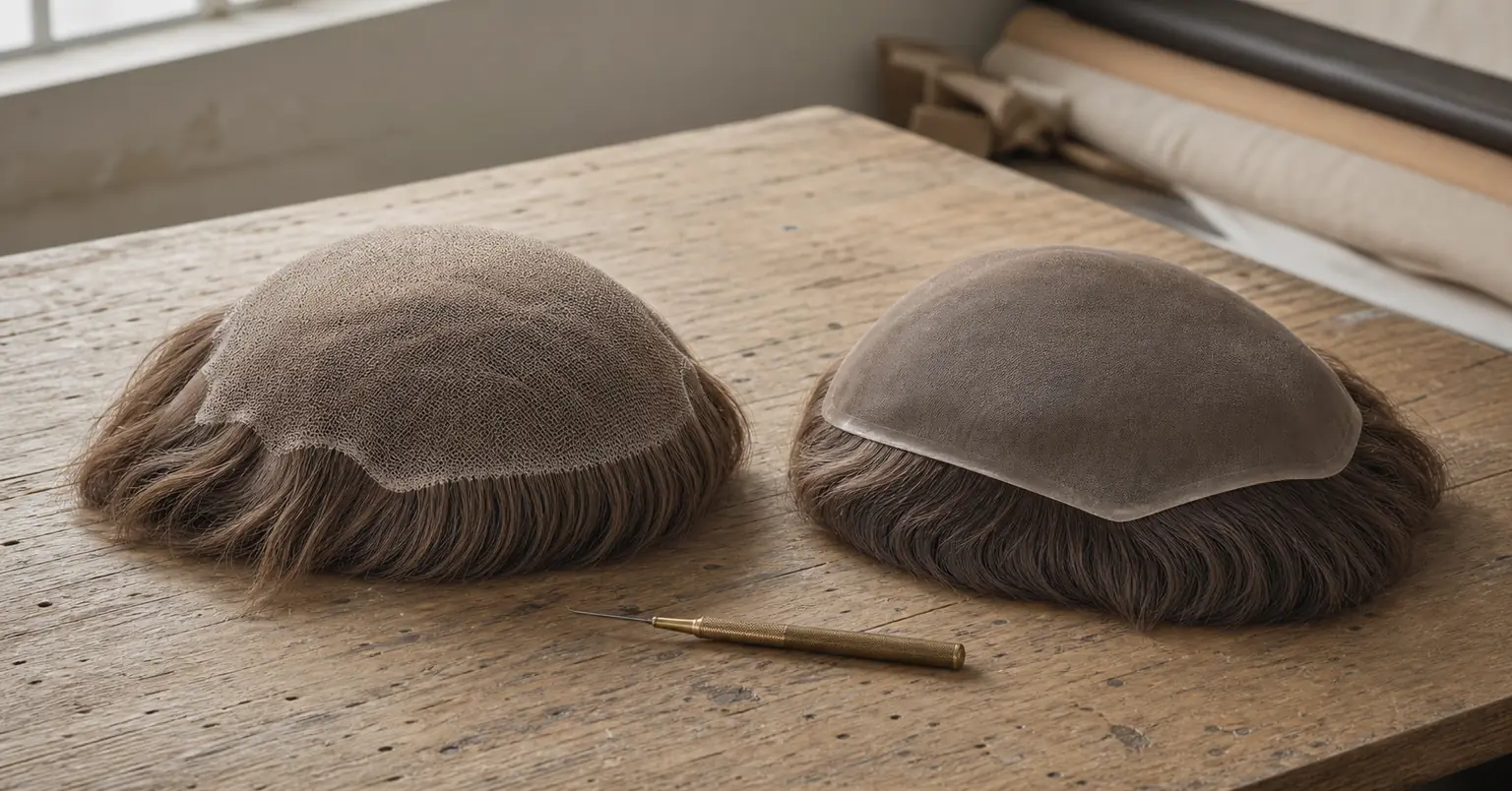
Short answer: neither a lace nor a skin base is the better choice in the abstract. A lace base (a knotted mesh) tends to give a softer, more invisible front hairline and better airflow. A skin base (a thin polyurethane membrane) tends to give a cleaner edge bond and faster cleanup. Which one actually serves a client comes down to four things you can judge directly: how much front hairline exposure that client tolerates, how the edge needs to adhere, how the base fits your studio's service workflow, and how the cleaning and reattachment cycle plays out. This guide is written for buyers, studios, and installers who stock and service men's hair systems, so you can compare lace and skin hair systems against your whole client roster instead of one person's preference.
At LEV, we confirm a client's front-hairline exposure, outline, density direction, attachment method, and maintenance routine before we ever discuss base manufacturing specs. The base is a downstream decision — the answer to "lace or skin?" only becomes clear after those five inputs are on the table. Skip that step and you end up ranking two materials instead of fitting a person.
Decision rule
Do not pick a base from its name. Judge it against the client's exposed hairline, the attachment routine your installers use, the service-cycle labor it adds, and how it cleans — on a physical sample, not a spec sheet.
Construction
What Lace and Skin Bases Actually Are
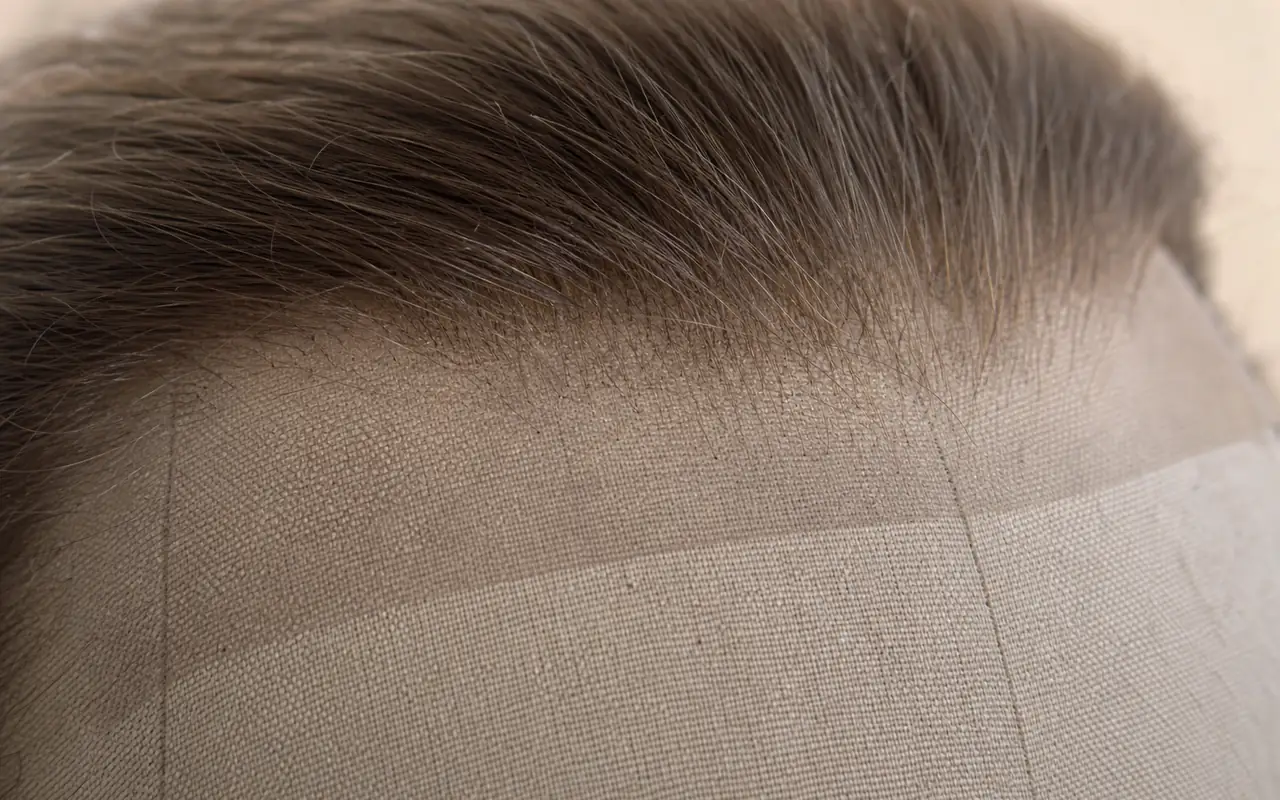
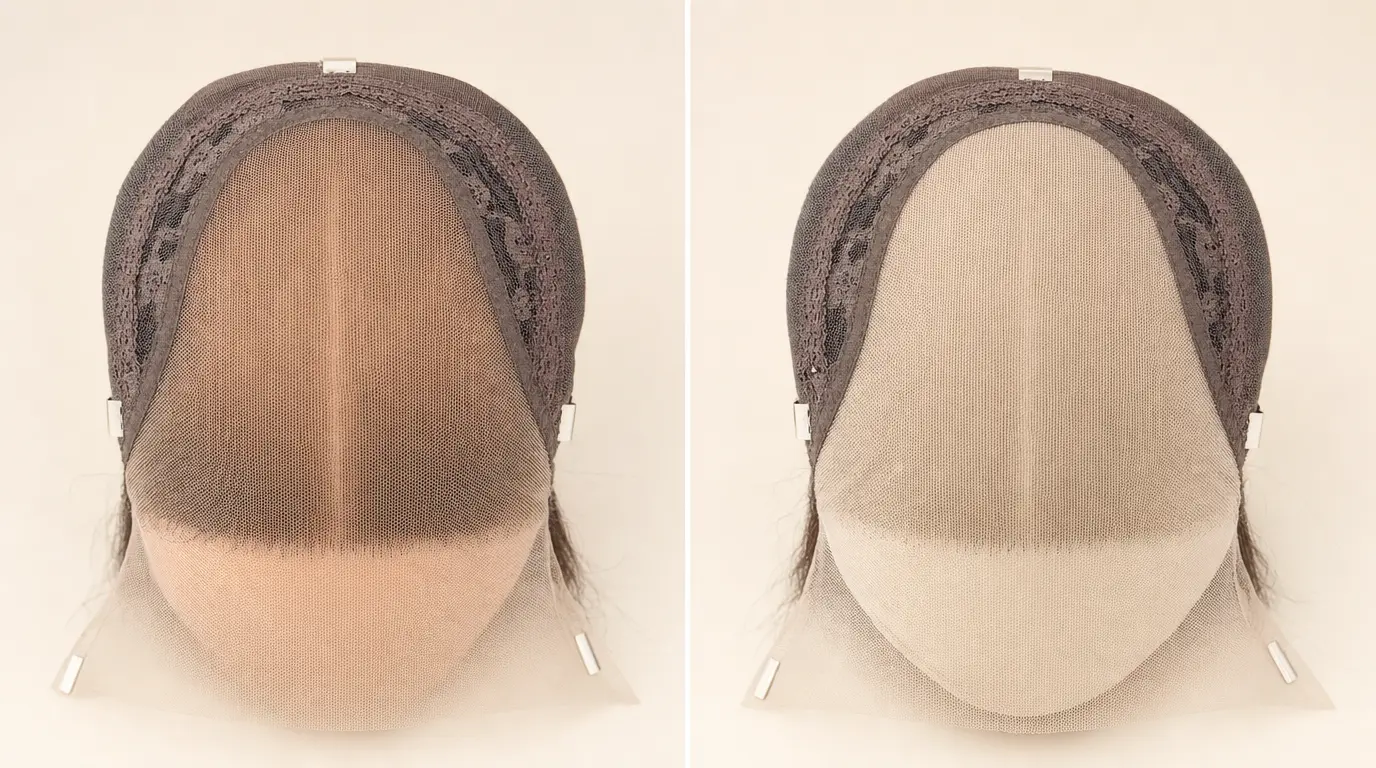
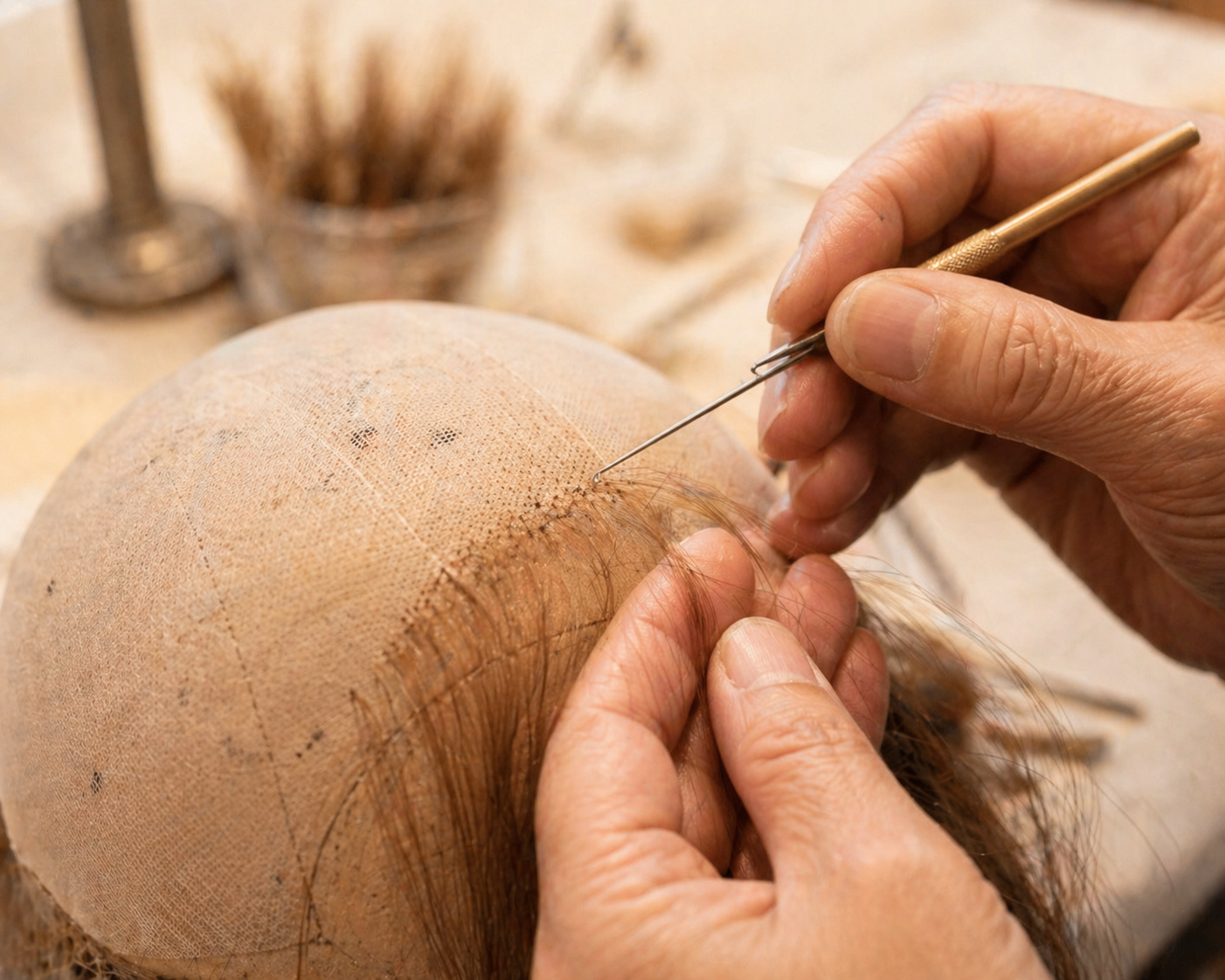
A lace base is a fine mesh. Each hair is hand-ventilated — knotted individually into the mesh, usually a French or Swiss lace. Because the mesh is porous, air moves through it, and the front edge can disappear into the skin when the lace color, knot size, and density are well matched. That same openness is what makes adhesive residue harder to flush out of the mesh and what leaves a lace panel more exposed to snagging.
A skin base is a thin polyurethane membrane. Hair is injected or knotted into the membrane, which lies flat against the scalp. That solid surface is why it holds liquid adhesive so well and wipes clean quickly — and also why it traps heat and why the front edge can read as a faint film on a fully exposed hairline unless the thickness and color are chosen with care.
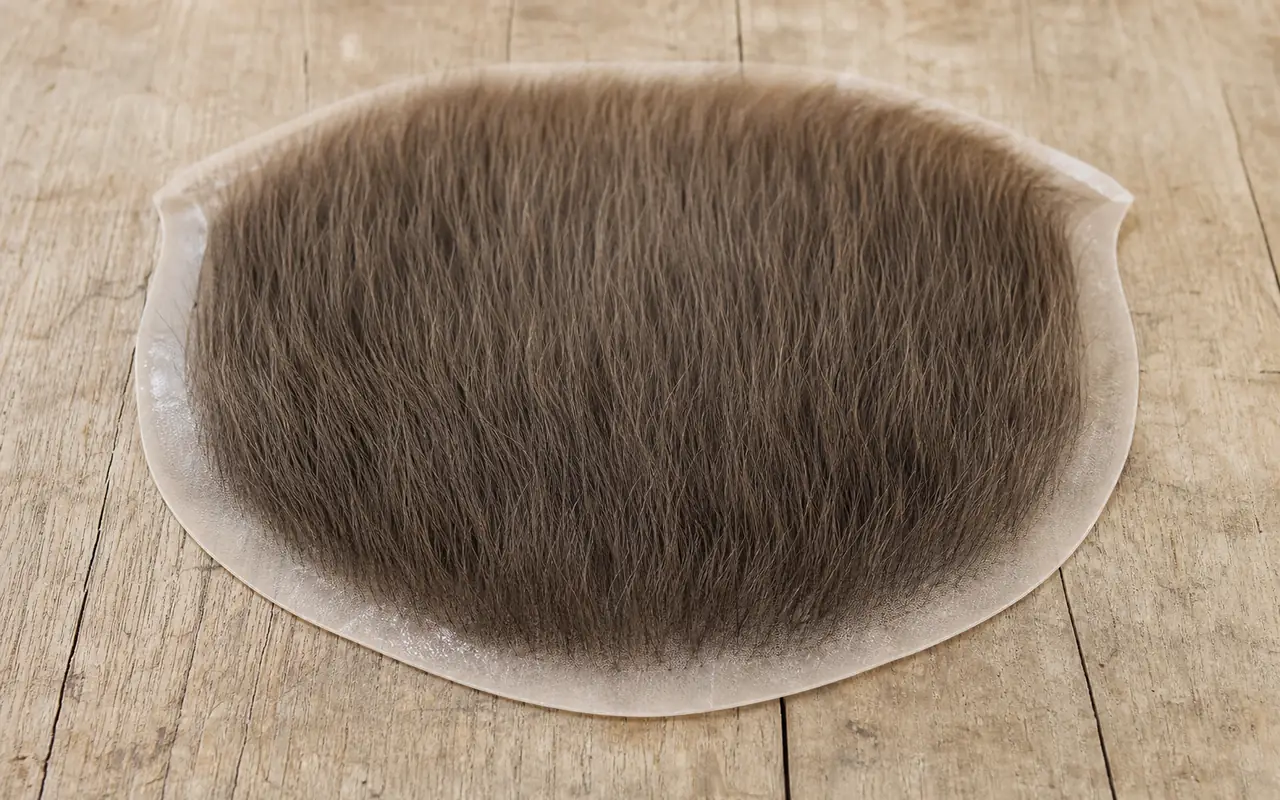
Both descriptions are generalities. The grade of lace, the thickness of the skin (often described in hundredths of a millimeter), the knotting method, and the front-edge finish move the result far more than the two-word label does. Treat "lace" and "skin" as the opening of a conversation with your supplier, not the conclusion.
How to Judge
Four Axes That Actually Decide the Base
Most comparison guides line up pros and cons and then declare a winner. That framing collapses in a B2B setting, where the same studio serves clients with opposite needs on the same day. Instead of a verdict, judge each base against these four axes.
1. Front hairline exposure
This is the single biggest divider. If a client styles their hair back or wears an exposed hairline, the front edge is on permanent display. A lace front can dissolve into the skin; a skin edge, even a thin one, can catch light and read as a membrane. For a client whose hairline stays covered by forward styling, that disadvantage mostly disappears, and the skin base's easier bond becomes the more useful trait. The judgment is per-client: how much forehead does this person actually show, and under what lighting do they live and work?
2. Edge adhesion and the attachment routine
Skin bases pair naturally with liquid adhesive spread across the full membrane, which gives a secure, uniform hold. Lace bases pair more naturally with tape along the perimeter, because flooding a mesh with liquid adhesive pushes residue into the knots. Neither routine is wrong, but each demands a different skill set from your installer and a different set of consumables on your shelf. A studio that has standardized on one attachment method should weigh the base choice against the cost of retraining, not only against the unit price.
3. Service workflow and the reattachment cycle
This is the axis consumer guides almost never cover, and it weighs heaviest on a working studio. Men's hair systems are removed, cleaned, and reattached on a recurring cycle as the bond breaks down and growth pushes the unit forward. A skin base cleans faster — the membrane wipes down — which shortens chair time per appointment. A lace base demands more patient adhesive removal from the mesh, which adds labor to every service. Across a full roster, that per-service labor difference compounds, and it belongs next to unit cost in your margin math. At LEV we map a client's service interval and attachment routine before specifying the base, because a base that doubles your cleaning time is not the cheaper option at the roster level.
4. Cleaning, durability, and tear risk
Skin is easier to clean but easier to tear — a thin membrane can puncture if it is pulled or scraped during removal. Lace is more tear-resistant as a fabric but more tedious to clean and more prone to fraying at the front edge over time. Durability is not a property of the material name; it depends on membrane thickness, mesh reinforcement, cap fit, how aggressively the unit is cleaned, and how soon small damage gets repaired. We will not quote a fixed lifespan here, because no honest number exists without those variables — treat any supplier who quotes a guaranteed month count as a red flag.
Before you turn those four axes into an order, it helps to build the custom brief for each client profile, so the base decision sits inside a documented specification rather than a guess. If you are newer to the category itself, our consultation framework for what a men's hair system actually is covers the groundwork.
Side-by-Side
A Trade-off Matrix, Not a Winner
Use this matrix as a per-client worksheet, not a verdict. A cell marked stronger on a given axis means exactly that — stronger on that axis, for that client's situation — not superior overall. The final row deliberately has no winner, because the right base depends on which client is in the chair.
| Judgment axis | Lace base | Skin base |
|---|---|---|
| Front hairline invisibility | Stronger — mesh dissolves into the skin | Can read as a faint film on an exposed hairline |
| Breathability | Stronger — porous mesh lets air through | Traps heat — solid membrane |
| Attachment pairing | Optimized for perimeter tape | Optimized for full-surface liquid adhesive |
| Cleaning turnaround | Slower — residue clears slowly from the mesh | Faster — membrane wipes clean |
| Tear resistance | Stronger as a fabric | Easier to puncture or tear if scraped |
| Best-fit client | Exposed hairline, heat-sensitive, breathable daily wear | Covered hairline, active lifestyle, fast service turnaround |
Procurement
Three Procurement Misjudgments to Avoid
- Stocking one base for the whole roster. It feels efficient until your exposed-hairline client gets a visible edge and your active-lifestyle client melts in a solid membrane. A two-base assortment matched to client profiles usually costs less in service headaches than a single-base default.
- Reading durability off the material name. "Lace lasts longer" and "skin lasts longer" are both wrong in the wild. Membrane thickness, mesh reinforcement, fit, cleaning force, and repair timing decide lifespan — ask your supplier for the construction detail behind the name, not the name itself.
- Letting unit price outrank service-cycle labor. A base that is cheaper per unit but adds ten minutes of cleaning per appointment erodes margin across a roster. Price the base against the labor it creates over a season of services, not against the invoice line alone.
FAQ
Frequently Asked Questions
For a fully exposed hairline, a lace front usually reads more natural because the mesh dissolves into the skin, while a skin edge can catch light and look like a film. Still confirm lace grade, knot size, density progression, and the client's usual lighting before locking the choice, because the label alone does not guarantee an invisible front.
A skin base generally cleans faster because the membrane wipes down, which can shorten chair time per service. A lace base needs more careful adhesive removal from the mesh. Across a full client roster that per-service labor difference is often more significant than the unit-price gap between the two bases.
In practice, yes. Skin bases pair well with full-surface liquid adhesive, while lace bases pair better with perimeter tape, because liquid adhesive pushes residue into the mesh. Standardize the base choice against the attachment method your installers already use so you avoid retraining cost and mismatched consumables.
You can, but it usually leaves some clients poorly served. A working roster mixes exposed-hairline, heat-sensitive, and active-lifestyle clients whose needs pull in opposite directions. A small two-base assortment matched to client profiles tends to outperform a single-base default over a season of services.
Conclusion
Match the Base to the Client, Not to a Ranking
Across a working studio, the lace vs skin decision resolves per client, not once for the shelf. Hold front-hairline exposure, attachment routine, service-cycle labor, and cleaning against each person's situation, and the right base surfaces on its own. Neither lace nor skin is the default answer — both belong in a considered assortment, chosen against how your studio actually operates.
From here, two natural next steps: prepare a custom men's hair system brief that captures each client profile, or start with the consultation framework if your team is still getting familiar with the category.

Build a Base Assortment That Fits Your Roster
LEV Wigs manufactures men's hair systems in Qingdao and confirms each client's front exposure, attachment method, and service routine before specifying the base. Compare lace and skin hair systems across our manufacturing options and request a sample set built around your studio's workflow.
Request a Sample Set