Kosher Wig Guide
Kosher Wigs: What Makes a Wig Kosher and Wholesale Pricing
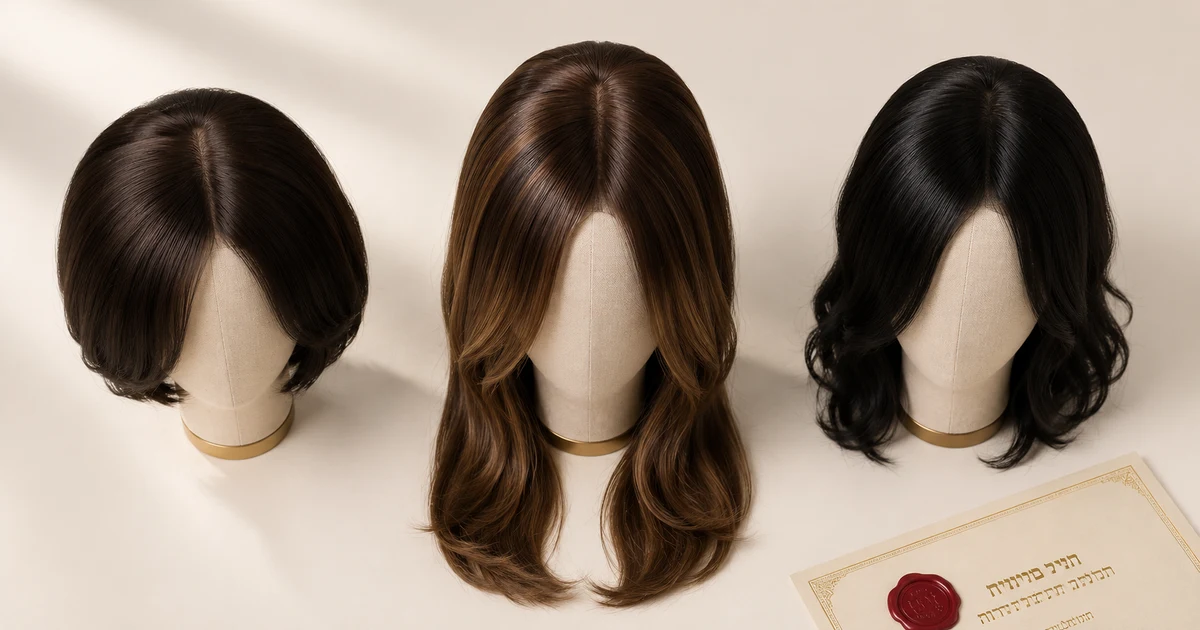
The global hair wig market reached USD 2.78 billion in 2026, and within that market, kosher wigs represent one of the most demanding quality segments. Orthodox Jewish women who wear sheitels as part of their religious practice need assurance that their hair covering meets halachic standards. However, many wholesale buyers we speak with cannot clearly explain what makes a wig kosher versus a standard human hair wig. As a result, that knowledge gap leads to lost sales, returned orders, and reputational risk.
At our Qingdao factory, we have been producing kosher wigs under rabbinical supervision for over a decade. Therefore, this guide explains the certification process from our manufacturer perspective, breaks down wholesale pricing by hair grade and cap construction, and gives you practical tools to evaluate suppliers before committing your inventory budget.
Key Takeaways
- Kosher certification requires rabbinical supervision — not all human hair wigs automatically qualify
- In addition, factory gate prices range from $300 to $1,200 depending on hair grade, cap type, and density
- Moreover, certification adds $15 to $30 per unit but is essential for the Orthodox Jewish market
- Finally, verify certificates directly with the issuing rabbi — fake documentation is more common than most buyers realize
Kosher Standards
What Does "Kosher" Mean for Wigs?
The Halachic Basis for Kosher Wigs
In Jewish law (halacha), married women cover their hair as a requirement of modesty (tzniut). A sheitel serves this purpose, but the sheitel itself must meet certain standards to be considered acceptable. Specifically, the primary halachic concern centers on the origin of the hair. Hair sourced from idol-worship rituals — particularly hair from Hindu temples in India, where devotees shave their heads as a religious offering — has been the subject of major rabbinical rulings. In 2004 and again in 2006, leading halachic authorities issued rulings about temple hair, causing significant disruption in the sheitel market.
Consequently, kosher wig manufacturers must demonstrate that their hair comes from acceptable sources. Moreover, this is where kosher certification enters the picture. Therefore, a certified kosher wig carries documentation that a recognized rabbinical authority supervised the entire production chain — from hair procurement through final assembly — verifying that no halachically problematic materials were used.
Note
A wig made with 100% human hair is not automatically kosher. The hair source, the production environment, and the supervision chain all factor into whether a rabbinical authority will certify the final product. In fact, many buyers confuse "human hair" with "kosher" — they are separate designations.
Key Requirements That Make a Wig Kosher
Although requirements vary somewhat between certifying authorities, the core standards remain consistent across the industry:
- Verified hair sourcing — Hair must come from donors who are not associated with idol worship. For example, many factories source from Eastern Europe, Mongolia, or verified Chinese donors.
- Rabbinical supervision during production — For instance, a mashgiach (supervisor) must oversee the manufacturing process, either on-site or through documented inspections at defined intervals.
- Separate production lines — Similarly, certified sheitels should be produced on dedicated lines that do not share equipment with non-kosher hair products.
- Documentation trail — In addition, each batch requires a certificate linking it to the supervising rabbi and the specific production run.
- Cap construction standards — Therefore, the wig must provide complete hair coverage with no sheer areas that would fail modesty requirements in Orthodox communities.
Certification Process
Kosher Certification: From Factory to Final Product
Certifying Bodies and Rabbinical Supervision
Moreover, several recognized certifying organizations operate in the kosher wig space. In most wholesale programs, the most widely accepted certifications come from rabbinical courts (batei din) in Israel and the United States. Furthermore, these organizations dispatch mashgichim to factories — primarily in Qingdao, China, which produces the majority of the world's kosher sheitels — to conduct inspections. Meanwhile, the frequency of these visits ranges from monthly to quarterly depending on the certifier and the factory's track record.
Our Qingdao workshop maintains a standing relationship with two certifying authorities. In addition, this dual certification gives our wholesale partners flexibility when serving different community standards. Because some communities accept only specific certifiers, carrying dual-certified inventory broadens your potential customer base.
Manufacturer Proof Requirements
Specifically, during each inspection, the mashgiach verifies several elements:
| Verification Point | What the Mashgiach Checks | Documentation Required |
|---|---|---|
| Hair Origin | Purchase invoices, donor consent forms, shipping records | Customs declarations, supplier affidavits |
| Storage Separation | Kosher hair stored apart from non-kosher inventory | Warehouse layout diagrams, inventory logs |
| Production Line Isolation | Dedicated workstations for kosher assembly | Production schedule, employee assignment records |
| Finished Product Tagging | Each unit labeled with batch number and certifier seal | Batch tracking system, holographic seals |
| Employee Training | Workers understand kosher versus non-kosher protocols | Training sign-off sheets, photo documentation |
Tip
Request a sample certificate from any supplier before placing a wholesale order. Then contact the certifying rabbi directly using the phone number or email on the document. Furthermore, legitimate certifiers maintain registries and will confirm whether a specific factory is currently under their supervision. This one phone call can save you thousands in returned inventory.
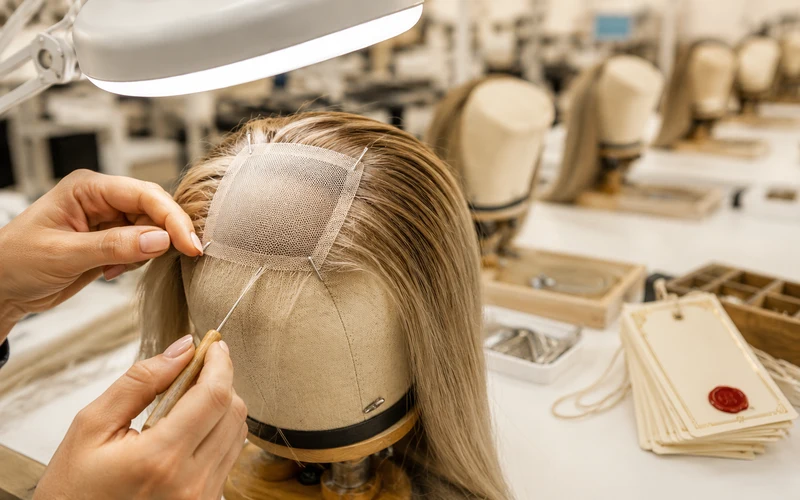
Three Ways to Verify a Supplier's Kosher Certificate
Before committing inventory dollars, use these practical verification methods:
- Direct contact method — First, call the certifying rabbi listed on the certificate. Then, ask whether the factory batch number matches their records. As a result, a legitimate certifier can confirm or deny the document within minutes.
- Cross-reference check — Next, search the certifying organization's website or registry. Most maintain public lists of supervised factories. If the factory does not appear, the certificate may be fabricated.
- Batch tracking test — Finally, order a small sample and trace its batch number through the factory's tracking system. Ask for the specific production date, the mashgiach who supervised, and the hair source for that batch. Therefore, incomplete answers are a warning sign.
Product Types
Types of Kosher Wigs: Silk Top, Lace Top, and Bandfall
Kosher certification applies across all cap constructions, but the type you choose affects both price and your end client's experience. In addition, for a full breakdown of wig types used in the Orthodox community, see our guide to seven types of Jewish wigs. Therefore, the comparison below focuses on the kosher wholesale angle.
| Construction | Kosher Compatibility | Wholesale Price Range | Best For |
|---|---|---|---|
| Silk Top Full Cap | Excellent — complete scalp coverage, no base visibility | $700 – $1,200 | Premium retailers, special occasion clients |
| Lace Top Full Cap | Good — full coverage, requires lined or layered construction | $400 – $800 | Everyday wear, warm climates |
| Bandfall | Good — partial coverage with natural hairline in front | $300 – $600 | Cost-conscious buyers, layered styling |
| Fall (Half Wig) | Moderate — covers back and crown, front hair exposed | $250 – $500 | Experienced wearers with compatible natural hair |
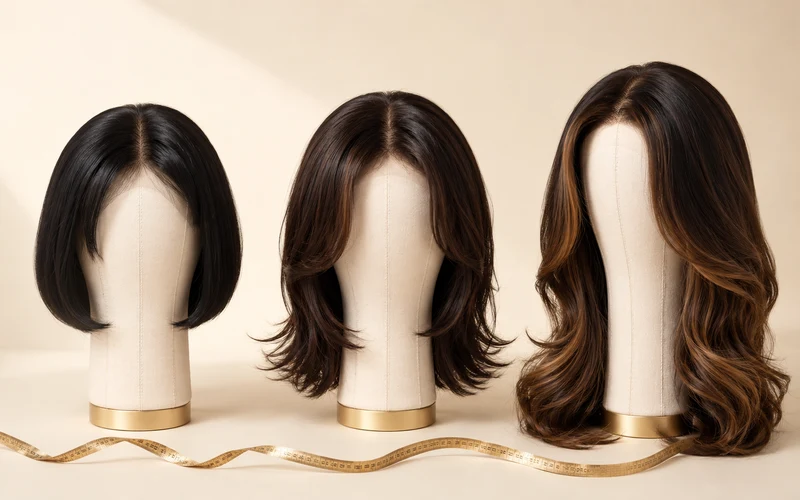
Silk top constructions command the highest kosher wig prices because the triple-layer base provides unquestionable scalp coverage — no lace dots or mesh patterns show through. By contrast, lace top units can feel lighter and cooler, but they require careful lining for stricter communities. If you are building a kosher wig inventory for the first time, our factory recommends starting with a mix of 60% lace top and 40% silk top, adjusting the ratio based on your local community's preferences.
In addition, for a deeper look at how lace top wigs interact with halachic requirements specifically, see our lace top wigs and halacha guide.
Pricing Breakdown
Kosher Wig Pricing: Factory Cost to Retail Shelf
Factory Gate Price by Hair Grade
Wholesale pricing depends primarily on hair grade, length, and cap construction. However, the kosher certification surcharge applies uniformly across all grades. Therefore, here is what you can expect from Qingdao factories:
| Hair Grade | Length Range | Lace Top (Wholesale) | Silk Top (Wholesale) |
|---|---|---|---|
| Chinese Remy | 14" – 18" | $300 – $420 | $500 – $700 |
| Mongolian Remy | 16" – 22" | $420 – $580 | $650 – $900 |
| European Remy | 16" – 24" | $600 – $800 | $850 – $1,200 |
Tip
The same silk top kosher sheitel that costs $900 wholesale from a Qingdao factory retails for $2,500 to $3,500 in Brooklyn wig shops. That margin covers the distributor markup, the sheitel macher's cut-and-style service, rent in high-cost neighborhoods, and the personalized fitting experience. Overall, understanding this chain helps you price your own inventory competitively.
The Complete Price Chain
Next, here is how a single kosher sheitel moves from our Qingdao production line to the end wearer:
| Stage | Typical Price | Markup |
|---|---|---|
| Factory Gate (Qingdao) | $700 | Base cost + materials + labor + kosher fee |
| Import/Distributor | $1,050 – $1,200 | 50% – 70% markup |
| Retail Wig Shop | $2,000 – $2,500 | 80% – 120% markup |
| End Client (after cut and style) | $2,500 – $3,500 | Includes $150 – $350 styling service |
Sourcing Guide
How to Source Kosher Wigs Wholesale
Finding the right kosher wig supplier is not just about price. However, a factory that produces excellent lace top units but cannot provide current kosher documentation will create more problems than they solve. Therefore, use this evaluation framework when comparing suppliers:
Supplier Verification Questions
| Evaluation Criteria | What to Ask | Red Flags |
|---|---|---|
| Kosher Certificate | "Can you send a current certificate with rabbi contact details?" | Expired certificate, no phone number, generic certifier name |
| Hair Source Documentation | "What country does your hair come from, and can you show purchase records?" | Refuses to share, vague answers, claims "mixed sources" |
| Minimum Order Quantity | "What is your MOQ for first-time buyers?" | MOQ above 50 units for new partnerships |
| Sample Availability | "Can I order 2 to 3 sample units before committing?" | No sample option, requires full payment before sample |
| Production Lead Time | "How long from order to shipment for a standard batch?" | Under 7 days (rushed production often skips quality steps) |
| Quality Guarantee | "What is your return or replacement policy for defective units?" | No returns accepted, "all sales final" |
Sample Quality Checks Before a Full Order
When you receive samples, run these three quick quality checks before placing a full order. First, the water test: drop a few strands into a glass of water. In general, virgin human hair sinks slowly because the cuticle layer absorbs water gradually. By contrast, coated or processed hair floats or sinks rapidly. Second, the stretch test: gently pull 5 to 6 strands. Usually, virgin hair stretches 20% to 30% and bounces back. If hair snaps or does not stretch, it has likely been chemically damaged. Third, the smell test: chemically treated hair carries a faint acid odor even after washing. However, clean virgin hair smells neutral.
If you are evaluating kosher wig suppliers for the first time, our Qingdao factory offers sample kits for qualified wholesale buyers. Overall, this gives you a practical way to compare units at different price points before committing to a full production run.
FAQ
Frequently Asked Questions
What makes a wig kosher?
In short, a kosher wig must meet halachic requirements: no hair from idol-worship origins, rabbinical supervision during production, and a valid kosher certificate from a recognized certifying body. Moreover, our Qingdao factory works with certified rabbinical supervisors who inspect every stage from hair sourcing to final assembly.
How much does a kosher wig cost wholesale?
For example, wholesale kosher wig prices from Qingdao factories usually range from $300 for basic lace top units to $1,200 for premium silk top constructions with European hair. Moreover, kosher certification adds approximately $15 to $30 per unit. Retail prices in Brooklyn and London typically range from $800 to $3,000.
Can I verify a kosher certificate myself?
Yes. First, contact the certifying rabbi or organization directly using the details printed on the certificate. Then, ask whether the specific factory batch was supervised. Finally, be cautious of certificates without contact information or those issued by unrecognized bodies.
What is the difference between a kosher wig and a regular human hair wig?
Although the hair material and construction may be identical, a kosher wig has been produced under rabbinical supervision with verified hair sourcing that meets halachic standards. Therefore, it carries a kosher certificate. By contrast, a regular human hair wig lacks this oversight and certification.
How do I start buying certified sheitels wholesale?
First, order samples from two or three factories with valid kosher certification. Next, verify each certificate with the issuing rabbi. Then, test hair quality using the water and stretch methods described in this guide. Finally, our Qingdao factory accepts initial orders from 10 units for new wholesale partners.
Conclusion
Building Your Kosher Wig Inventory With Confidence
Halachically certified wigs occupy a distinct niche within the hair industry. Moreover, they demand verified hair sourcing, rabbinical supervision, and documented production chains that go beyond what standard human hair wigs require. Therefore, understanding these requirements — and being able to explain them to your clients — sets your business apart from retailers who sell sheitels without knowing the certification details behind them.
| Decision Factor | Silk Top Kosher | Lace Top Kosher | Bandfall Kosher |
|---|---|---|---|
| Price Point | Premium | Mid-range | Entry-level |
| Scalp Coverage | Complete — zero visibility | Full — may need lining | Partial — front hairline open |
| Maintenance | Low | Medium — periodic bleaching | Low |
| Best Client Profile | Strict communities, special events | Daily wear, budget-aware | Experienced wearers |
Whether you are opening a new wig shop or expanding an existing catalog, sourcing certified sheitels from a factory with transparent certification practices protects your reputation and your clients' trust. In addition, our team in Qingdao ships worldwide with lead times of 15 to 25 business days for production orders. Next, contact us to request samples and a current kosher certificate.


Ready to Source Kosher Wigs?
Whether you are opening a new sheitel shop or expanding your wholesale catalog, our team in Qingdao can help you select the right kosher wig inventory for your market.
Request Wholesale Pricing