Jewish Wig Styling
Orthodox Jewish Hairstyles — Community Styling Trends

Key Takeaways
- Orthodox Jewish hairstyles vary by community, family practice, rabbinic guidance, lifestyle, and individual preference; no community label determines one fixed style
- Brooklyn is an influential sheitel retail and styling center, but published evidence does not support universal length, color, or density rules for its communities
- Natural movement, face-framing layers, subtle dimensional color, and flexible parting are useful styling options, not requirements for every wearer
- Furthermore, sheitel machers occupy a central role in community life, combining technical styling expertise with deep knowledge of communal standards and personal preferences
- A written fit brief should confirm coverage expectations, cap measurements, length, density, color, texture, maintenance, and intended use before production
Orthodox Jewish hairstyles do not follow one universal template. A community can shape expectations around hair covering, but the finished sheitel still reflects family practice, rabbinic guidance, lifestyle, fit, and personal preference. A 2025 cross-sectional survey of 244 Orthodox Jewish women in the United States and Israel found that 66.9% reported using a full wig or sheitel among their hair-covering methods. The study did not measure styling trends or establish a universal primary covering, so its result should not be used to assign one look to all Orthodox women.
Understanding the Framework
What Defines an Orthodox Jewish Hairstyle?
The Modesty Framework
Orthodox Jewish hair covering is discussed within the framework of tzniut, the broader concept of modesty in dress and behavior. The Talmudic discussion in Ketubot 72a is a central source for the practice, while later halachic rulings and local minhag shape how communities apply it. Coverage details, acceptable materials, and styling boundaries are therefore matters for the wearer, her family, and the relevant rabbinic authority rather than a universal fashion rule.
Jewish hair covering can take different forms, including tichels, hats, falls, and full sheitels. The chosen form and styling can express personal taste, but the relevant halachic and community guidance comes first.
Community Standards vs Personal Expression
Community standards can influence what feels familiar or appropriate, but they should be treated as context rather than a deterministic product specification. Even within Satmar, Bobov, Chabad, or Modern Orthodox settings, preferences differ by household, locality, generation, occasion, and personal guidance. A retailer who starts with a stereotype can easily recommend the wrong length, color, or cap.
Personal expression finds its place within those boundaries. One wearer may prioritize a conservative silhouette, another may need a low-maintenance work style, and a third may want a separate piece for Shabbat or events. The reliable approach is to document the wearer's actual coverage standard, daily routine, styling comfort, and maintenance tolerance before discussing aesthetics.
Community Breakdown
Styling Trends by Community
Orthodox Jewish communities have different histories, institutions, and local practices. Those differences matter, but they do not create a reliable catalog of fixed hairstyles. The sections below describe consultation contexts that retailers may encounter, followed by the questions needed to turn context into an accurate fit brief.
Lubavitch (Chabad): Fashion-Forward Within Bounds
Chabad and Lubavitch clients may ask a retailer to interpret a contemporary salon reference within their personal modesty standard. Crown Heights also has an active network of sheitel professionals, so retailers may encounter a broad range of cuts, colors, and finishing preferences. However, no published benchmark supports assigning a specific bob, length, or shade to every Lubavitch wearer.
Useful consultation questions include whether the client wants a current or classic finish, how much face framing she is comfortable with, whether the part must move, and how often the piece will be professionally maintained. Those answers are more dependable than using the community name as shorthand for a color or cut.

Modern Orthodox: Mainstream-Adjacent
Some Modern Orthodox clients use mainstream salon references when discussing a sheitel, while others choose traditional or understated styling. A fashion image can be a useful starting point, but the macher still needs to translate it into the wearer's coverage expectations, workplace needs, maintenance routine, and comfort level.
The same client may need different pieces for work, Shabbat, travel, or formal events. Therefore, the consultation should identify the use case before choosing length, density, texture, or color. A versatile everyday piece and a formal event piece may require different cap support and styling durability even for the same wearer.
Hasidic Communities: Conservative and Longer
Some clients in Satmar, Bobov, Ger, and other Hasidic settings request conservative silhouettes or natural-looking colors. Still, the acceptable length, volume, hairline, and finish can vary between families and local communities. Retailers should ask about the client's actual standard and rabbinic guidance instead of treating a Hasidic label as a fixed technical brief.
For daily-wear pieces, durability, secure fit, repairability, ventilation, and realistic density may matter more than following a short-lived trend. A detailed consultation should also clarify whether the cap sits over natural hair or directly on the scalp, because grip, depth, stretch, and edge comfort depend on that distinction.
| Community | Useful Context | Must Confirm | Do Not Assume |
|---|---|---|---|
| Lubavitch | Personal modesty standard and desired finish | Coverage, cap fit, length, color, maintenance | That every client wants a short or fashion-forward style |
| Modern Orthodox | Work, Shabbat, event, or multi-use piece | Daily routine, styling range, climate, comfort | That mainstream fashion defines the final specification |
| Hasidic communities | Local practice and the wearer's own guidance | Length, density, color, cap depth, daily use | That one specification fits every family or locality |
At LEV Wigs, production should begin with a written fit brief rather than a community label. Cap measurements, wear surface, base material, density distribution, length, color, texture, and intended use can then be translated into a sample that the retailer or macher can evaluate before a larger order.
What's Popular Now
Current Sheitel Styling Trends
Sheitel styling changes as salon techniques, available hair, local preferences, and individual routines change. The directions below are common consultation options, not verified universal rankings for 2026.
Length Trends: The Long and Short of It
Length decisions range from compact, easy-care cuts to long pieces designed for flexible styling. The right choice depends on the wearer's height, climate, daily schedule, intended updos, hair quality, cap support, and willingness to maintain the ends. Retailers should avoid presenting one range as the community standard unless their own documented order data supports that conclusion.
Texture and Movement
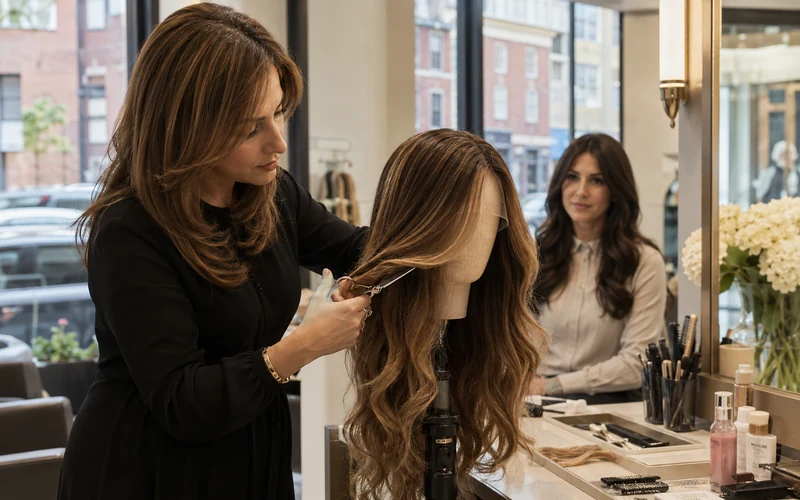
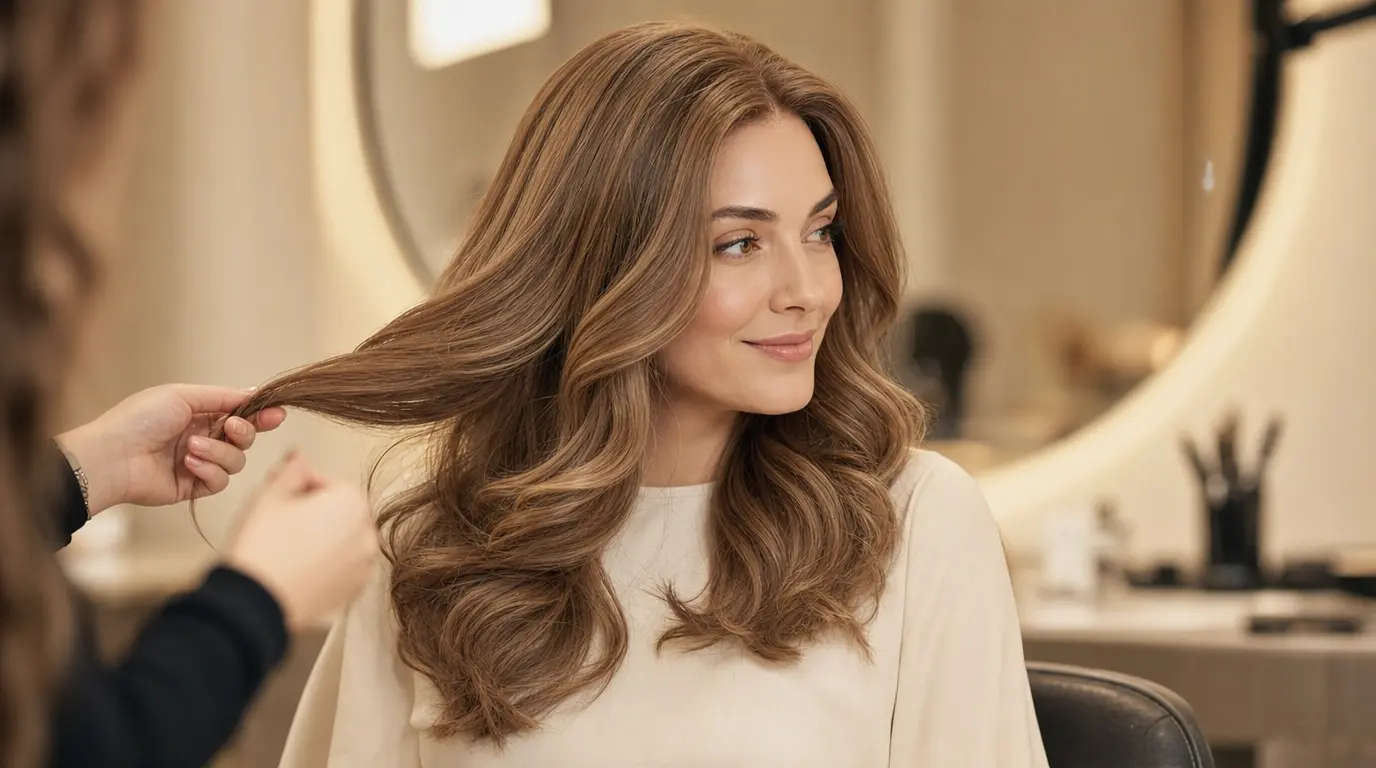
Natural-looking movement is a frequent styling goal. Beachy texture, loose barrel curls, gentle bends, and sleek finishes can all look realistic when they match the hair quality, density, cut, and wearer's routine. No single texture is appropriate for every client.
Face-framing layers, curtain bangs, soft wisps, and long internal layers can add movement without sacrificing overall length. However, these details require careful sheitel styling and must work with the hairline, parting area, cap construction, and the wearer's preferred level of coverage.
Color: The Rise of Balayage
Balayage, root shadows, and hand-placed highlights are options for creating dimensional color. The best technique depends on the starting hair, previous processing, target shade, and repair plan. Subtle placement can preserve a natural appearance, but it should be specified from a reference and approved sample rather than a community assumption.
Retailers serving conservative clients often request natural-looking shades, while other clients may be comfortable with stronger contrast or lighter dimensional work. Because color carries personal and communal meaning, the buyer should confirm the acceptable range and provide references under consistent lighting.
Seasonal Shifts
Climate and event calendars can change what a client needs from a sheitel. Warm-weather wear may favor lighter cap construction or easy updos, while formal occasions may call for more structured styling. These are practical considerations, not universal seasonal rules, and should be confirmed in the brief.
Curtain bangs can add softness and styling flexibility when they suit the wearer's face, hairline, and coverage preference. Keeping them long enough to blend or tuck away may increase versatility, but the final cut should be made by an experienced sheitel macher after fitting the piece.
Versatility is a practical requirement for many buyers. A piece may need to work for weekday routines, Shabbat, travel, and events without constant restyling. Therefore, retailers should document the wearer's highest-priority use cases and decide whether one versatile sheitel or multiple purpose-specific pieces is the better solution.
Community Role
The Sheitel Macher's Role
Sheitel machers occupy a unique position in Orthodox communities. Specifically, they are stylists, confidantes, and cultural interpreters. Because the best machers understand both technical hair artistry and the unwritten rules of their community, a woman brings her preferences, her budget, her community — and the macher translates these into a sheitel that works.
Collaboration between manufacturers and sheitel machers strengthens the entire ecosystem. When a retailer or macher provides fit feedback, photographs, and sample notes, the factory can adjust cap depth, stretch, ventilation, density distribution, color placement, and finishing instructions. The feedback should be recorded as an account-specific requirement rather than generalized into a universal community rule.
This collaboration benefits everyone. For manufacturers, it means producing sheitels that actually get purchased and worn. Similarly, machers gain reliable supply chains for quality pieces. Meanwhile, women receive sheitels that align with their lives and communities. Overall, the ecosystem thrives on communication.
If you are a sheitel macher seeking reliable manufacturing partners, our team in Qingdao is ready to collaborate. We offer wholesale pricing, custom specifications, and production lead times that respect your business needs. Contact us to discuss how we can serve your community together.
Production Insights
What Manufacturers Need to Know
Producing sheitels that align with Orthodox community preferences requires understanding both technical requirements and cultural nuances. Consequently, the market rewards manufacturers who pay attention to these details.
At our Qingdao facility, production planning starts with the buyer's written specification. The team reviews cap measurements, wear surface, base construction, hair origin, length, density distribution, color reference, texture, finishing, and packaging before assigning ventilation and color work. This process creates a traceable manufacturing brief without turning a location or community name into a technical shortcut.
Length affects weight distribution, hair yield, end quality, tangling risk, and styling range. Therefore, production planning should connect the requested length to cap support and density rather than treating length as an isolated fashion choice. Longer pieces may need a different balance from shorter layered pieces, but the correct specification comes from the sample and fit review.
Dimensional color can require balayage, hand-placed highlights, root shadows, or controlled lowlights. These techniques depend on the starting hair and target reference, so buyers should approve color under consistent lighting and document acceptable variation. A single-process color may still be the correct choice when uniformity, repairability, or repeat ordering matters most.
Base construction choices affect parting, scalp appearance, durability, ventilation, grip, and repair. Lace tops are a common option for flexible parting, while silk and mono constructions serve different fit and appearance priorities. A diverse catalog is useful only when the retailer can match each base to a documented client need.
Do not assign density from a community label. Confirm whether the cap sits over natural hair or directly on the scalp, then specify crown fullness, hairline softness, parting visibility, cap depth, stretch, grip, length, and intended style. Approve the density gradient on a sample before scaling the order.
Ultimately, the Orthodox Jewish market rewards authenticity. Therefore, manufacturers who take the time to understand community differences, who produce quality pieces that respect modesty standards, and who build genuine relationships with sheitel machers and retailers build sustainable businesses in this space.
FAQ
Frequently Asked Questions
There is no single most popular Orthodox Jewish hairstyle. Common requests include natural movement, face-framing layers, realistic parting, and colors that suit the wearer. Final choices depend on community guidance, daily routine, cap fit, climate, and maintenance preferences, so retailers should confirm the individual brief before recommending a style.
Some Orthodox Jewish women adapt mainstream cuts, color techniques, or texture trends, while others prefer more conservative styling. Community norms can influence the decision, but they are not a product specification. A sheitel macher should confirm the wearer's coverage standard, lifestyle, maintenance routine, and personal preference before translating a trend into a finished piece.
Some Hasidic clients request longer or more conservative-looking sheitels, but this is not universal and should not be treated as a fixed rule. Preferences vary by family, locality, age, occasion, and rabbinic guidance. Retailers should ask for the desired length, density, color, cap construction, and styling range instead of inferring them from a community label.
Human-hair sheitels can often be cut, colored, curled, or reshaped, but the safe options depend on hair condition, previous processing, cap construction, ventilation, and the requested change. Lace bases need especially careful handling. Before a major alteration, have the original manufacturer or an experienced sheitel macher assess the piece and explain any irreversible tradeoffs.
There is no universal best length for a first sheitel. The right choice depends on the wearer's height, climate, daily routine, styling confidence, coverage expectations, and maintenance tolerance. Start with a fit brief and try comparable samples when possible; a local sheitel macher can then recommend a manageable length and cap construction.
Conclusion
Understanding Community Style
Orthodox Jewish hairstyles reflect a balance between religious obligation, local practice, family guidance, and personal expression. Community context matters, but it should open a respectful consultation rather than close it with a stereotype. The most reliable recommendations come from the wearer's stated standard and an accurate technical fit brief.
For manufacturers, retailers, and stylists serving this market, understanding these nuances is not optional — it is essential. Specifically, success comes from recognizing that Orthodox Jewish women are not a monolith. Rather, they are individuals embedded in communities, each with distinct standards and preferences. Consequently, a sheitel that honors both realities is a sheitel that gets worn.
At LEV Wigs, our Qingdao factory produces sheitels designed for this diversity. Specifically, we offer base constructions that support varied styling preferences. In addition, we maintain quality standards that honor the investment women make in these pieces. Moreover, we build relationships with sheitel machers and retailers who understand their communities deeply.
If you are exploring sheitel options for your community or business, we invite you to contact our team. We provide spec sheets, samples, and wholesale pricing tailored to your needs. Together, we can serve Orthodox women with sheitels that honor tradition while embracing authentic individual expression.

Source Trend-Ready Sheitels from LEV Wigs
Whether you serve Lubavitch, Modern Orthodox, or Hasidic communities, our Qingdao factory produces sheitels designed for today's styling trends. Contact our team for wholesale pricing and custom specifications.
Request Wholesale Pricing