Sizing Guide
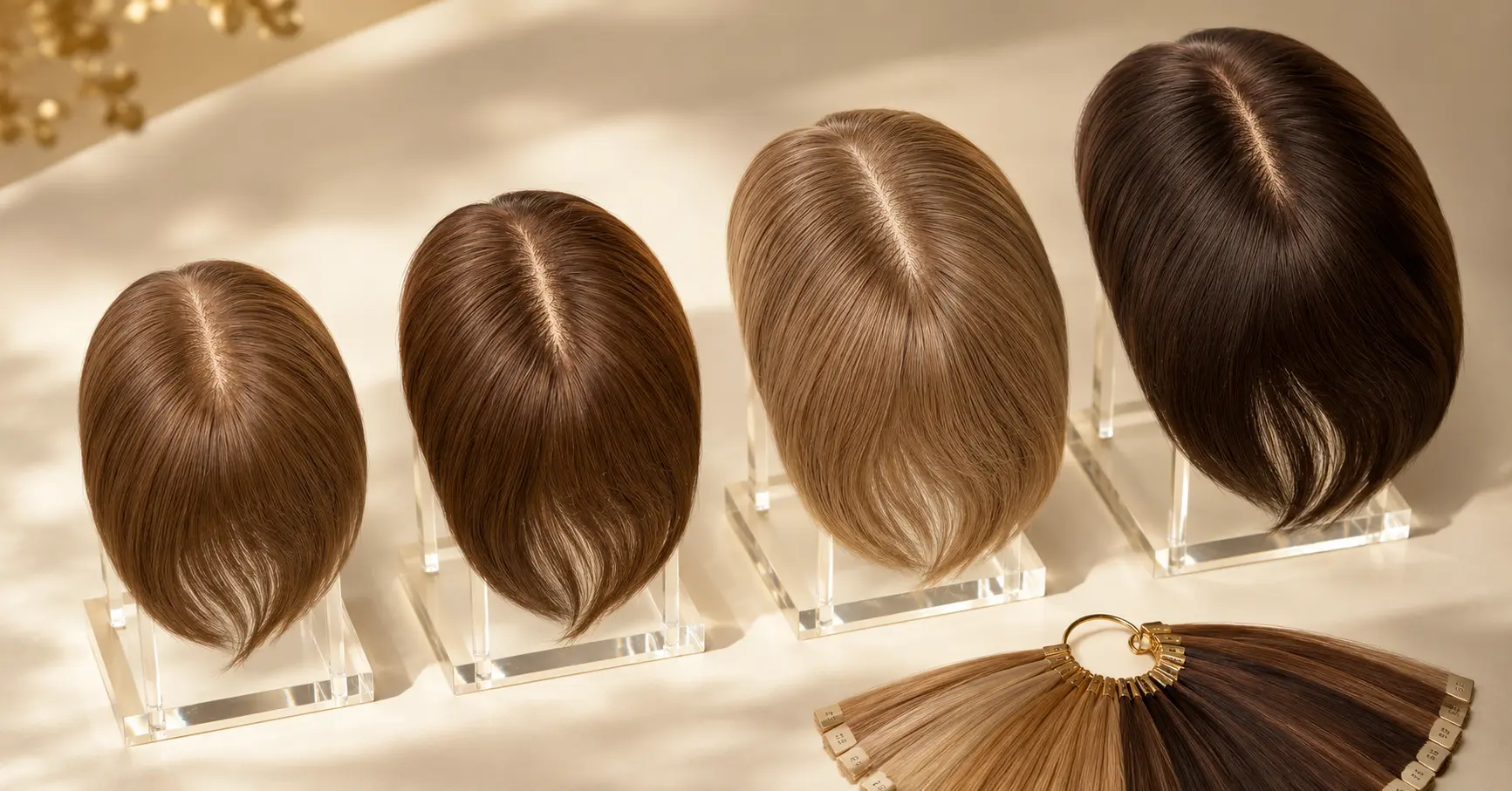
Human Hair Toppers for Thinning Hair: Salon Size Chart
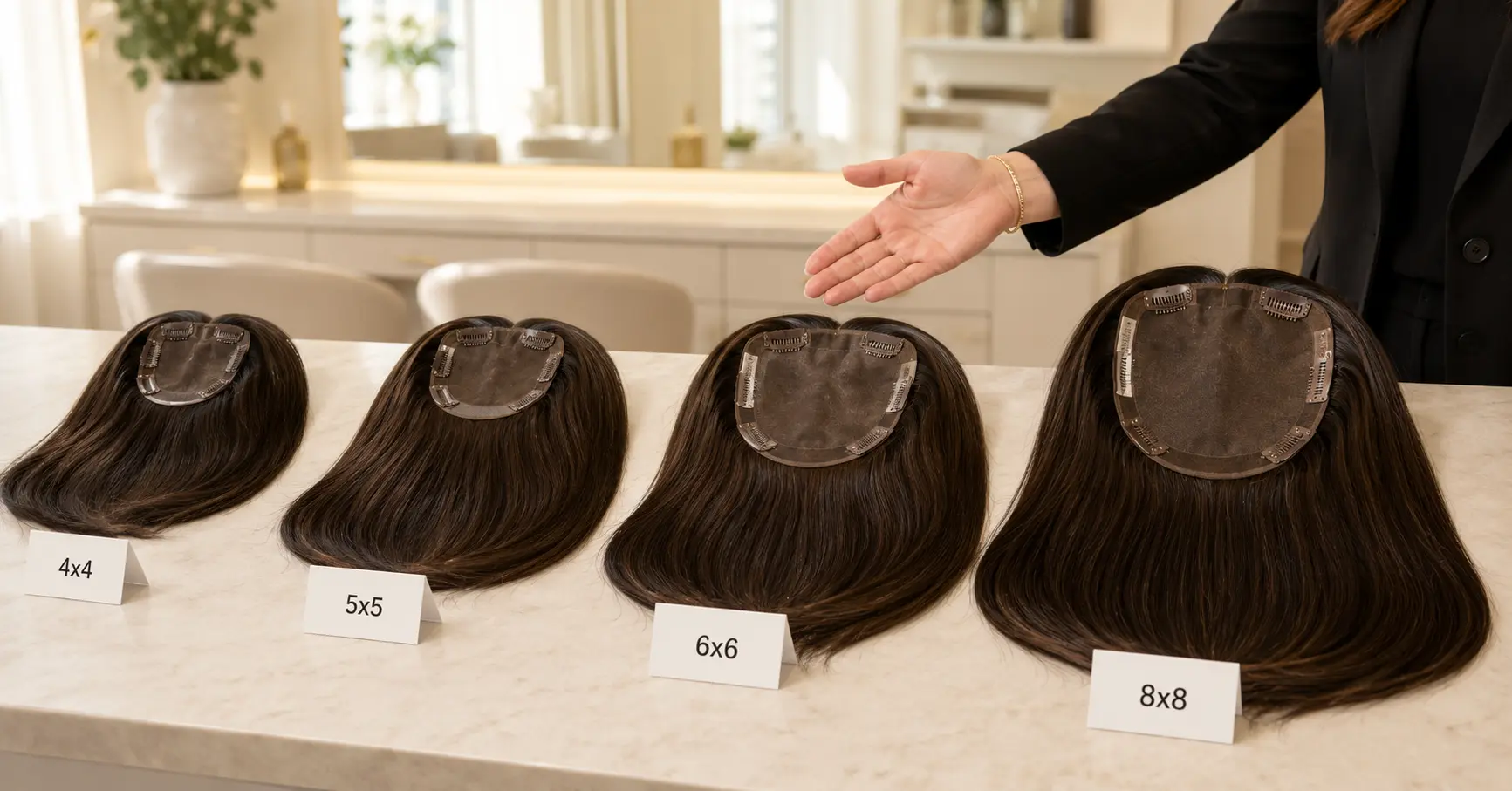
Human hair toppers for thinning hair look simple until a real client sits in the chair. The thinning area is rarely a perfect square. One client has a narrow part line with strong side hair. Another has a weak crown, a cowlick, and very little anchor hair for clips. Because of that, salons that buy only one base size usually end up with fitting problems, returns, or pieces that need heavy alteration.
This guide explains how salons can choose 4x4, 5x5, 6x6, and 8x8 hair topper bases without guessing. At our Qingdao factory, we see the same pattern in wholesale sample orders: buyers often ask for the lowest-cost size first, then reorder a wider base after stylists test it on real clients. That delay costs time. A better plan is to match base size to coverage zone, anchor hair, density, and the type of consultation your team offers.
If you are still building the category, read our hair topper wholesale buyer's guide first. Then compare this size guide with our thinning crown topper guide, because crown loss is where most size mistakes happen.
Size Chart
Hair Topper Size Chart for Common Salon Orders
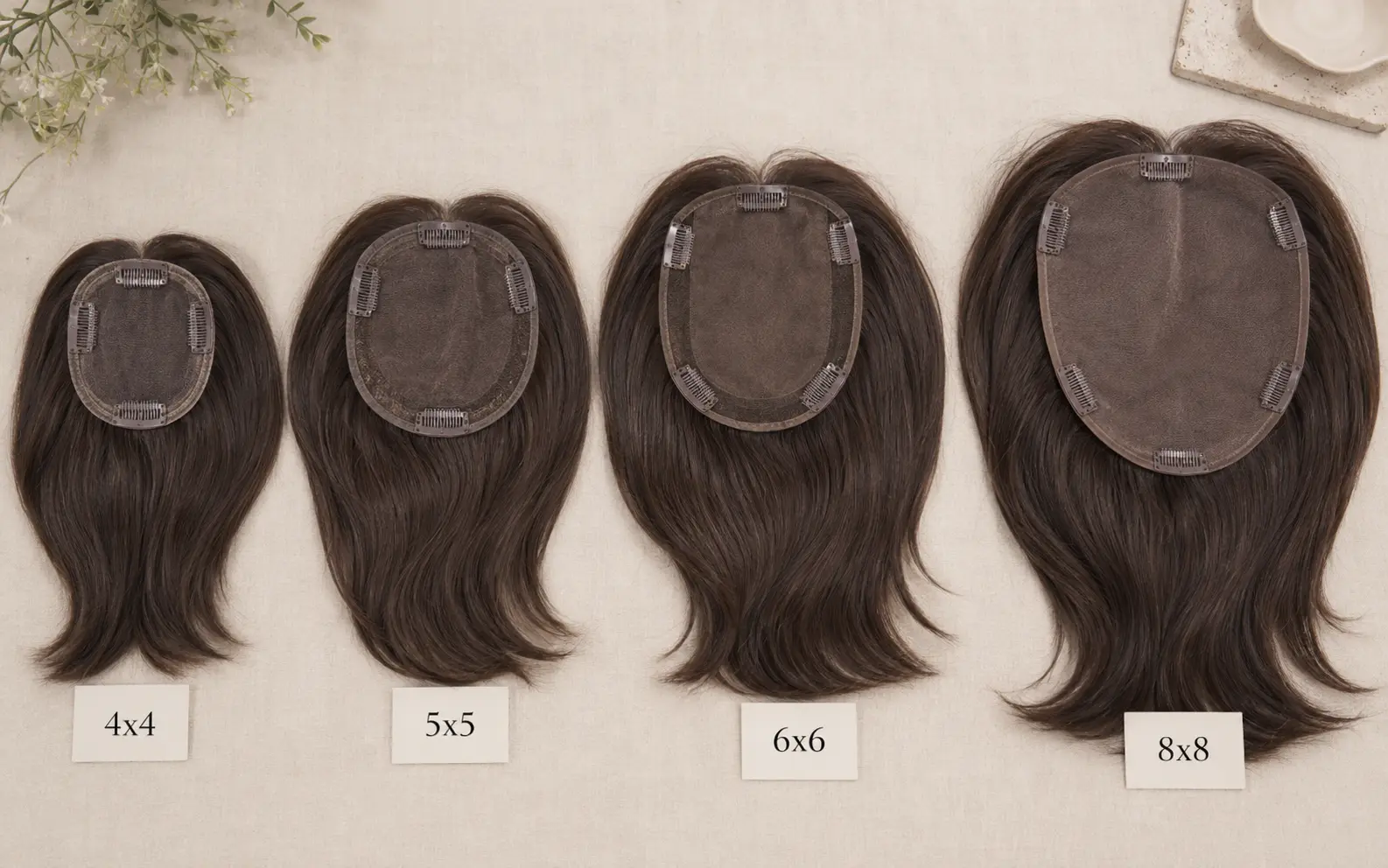
The practical sizing rule is simple: measure the visible thinning area, then add at least 1 inch on each side where healthy hair can support clips or integration points. A base that only covers the thin area may look fine on a mannequin, but it can lift at the edge when the client moves.
| Base size | Best use | Buyer note |
|---|---|---|
| 4x4 | Early part-line thinning | Low stock risk, limited crown coverage |
| 5x5 | Light to moderate crown loss | Strong starter size for salons |
| 6x6 | Moderate crown and top thinning | Better clip stability and coverage |
| 8x8 | Advanced diffuse thinning | Higher cost, fewer but important cases |
A 4x4 topper is not a cheaper version of a 6x6. It serves a different client. For example, a woman with strong surrounding hair and a widening part may love the lighter feel of 4x4. However, the same piece can look undersized on a client whose thinning reaches the upper sides. That is why sample kits should include adjacent sizes rather than only the cheapest base.
Coverage
How Base Size, Density, and Parting Work Together
Base size solves coverage. Density solves visual balance. Parting solves realism. Buyers sometimes raise density to hide an undersized base, but that creates a bulky top and a visible edge. Instead, choose the correct base first, then adjust density to match the client's bio hair.
Density by Size
Small bases often need lower density because the piece sits on a limited area. For 4x4 and 5x5 toppers, 100% to 120% density usually looks natural. Larger 6x6 and 8x8 bases can carry 120% to 130% when the client wants fuller styling. For Jewish wig and sheitel salons, we often recommend realistic density over dramatic volume, especially when clients inspect the part line closely.
Base Construction
Silk top bases hide knots and create the most realistic scalp effect. Lace bases feel lighter and ventilate better. Mono bases are durable for repeated salon handling. As a manufacturer, we match the construction to the size: a large silk top can look beautiful, but it adds weight and cost. Therefore, 5x5 silk top and 6x6 lace or mono are common starter combinations for wholesale buyers.
Consultation
A Salon Fitting Process That Prevents Size Complaints
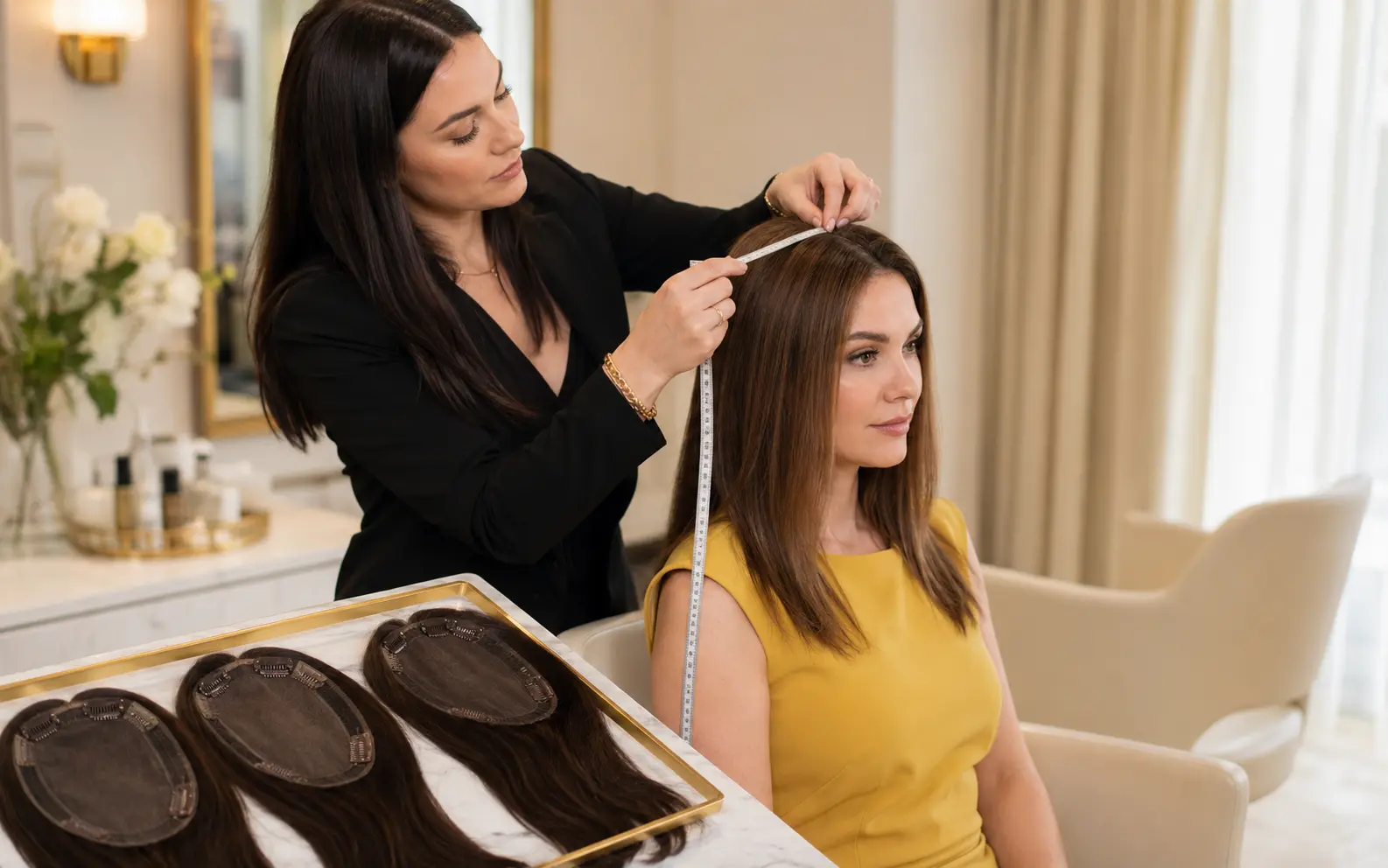
Start by mapping the thinning area with the client's hair dry and parted the way she normally wears it. Wet hair makes thinning look worse and can push a buyer toward an unnecessarily large base. Next, check anchor hair. If the surrounding hair is fragile, clips may not be the right attachment method, even if the base size is correct.
One of our salon buyers in New Jersey changed its consultation form after three clients returned 4x4 pieces. The problem was not manufacturing. Their stylists measured only the center part and ignored weak crown hair behind it. After switching the default consultation sample to 5x5 and 6x6, return requests dropped and the team sold more maintenance appointments.
For wholesale planning, keep a measuring card beside your sample kit. Record thinning width, thinning length, anchor quality, preferred parting, density target, and attachment preference. Over time, that data tells you which sizes deserve deeper stock.
Wholesale
Wholesale Sourcing Notes for Size Runs and Samples
For a first order, avoid a wide matrix of every length, color, density, and base size. A better starter assortment is two colors, two lengths, and four base sizes. Then let salon fittings tell you where to expand. If 6x6 sells fastest, add color depth before adding rare base sizes.
At LEV, we quote base size together with hair length, density, construction, clip count, packaging, lead time, MOQ, and private label needs. That matters because a 6x6 silk top with 16-inch Remy hair is a different production job from a 6x6 lace synthetic topper. Factory planning becomes cleaner when buyers submit size runs in one table rather than scattered messages.
Color planning should stay narrow at the beginning. Many salons want to order every shade because it feels more complete, but slow colors tie up cash faster than slow sizes. Start with the shades that match your current consultation traffic, then add rooted colors, gray blends, or warmer browns after you see demand. For sheitel boutiques, also note whether clients prefer cooler brunettes, soft black, or custom color work before the next production run.
Finally, review packaging and labeling before bulk production. A sample kit that clearly marks base size, density, hair length, and construction helps stylists compare pieces during consultations. It also reduces ordering mistakes when your front desk or purchasing team sends repeat requests to the factory.
Ask for photos of the base laid flat with a ruler before production approval. This small step catches misunderstandings between inch sizing, centimeter sizing, and custom shape requests. It also helps your team confirm whether the supplier measures the full base edge or only the ventilated hair area.
Also check edge finishing. A larger base with rough edges can feel more noticeable than a smaller base with clean ventilation and soft perimeter work. During sample review, ask stylists to test movement, clip tension, and parting under salon lighting before committing to bulk production.
FAQ
Frequently Asked Questions
What is the most popular hair topper size for salons?
For first-time salon inventory, 5x5 and 6x6 bases usually move fastest because they cover common crown thinning without looking oversized. A 4x4 base works for early loss, while 8x8 is better for advanced diffuse thinning. Therefore, sample both mid sizes before ordering deep stock.
How do I choose between a 4x4 and 5x5 topper?
Choose 4x4 when the client needs light crown coverage and wants the smallest possible base. Move to 5x5 when thinning spreads beyond the part line or the client needs stronger clip placement. During consultation, measure the thinning zone and add one inch of stable hair around it.
Do Jewish wig and sheitel salons need different topper sizes?
Many Jewish wig and sheitel salons prefer discreet, realistic parting and secure coverage under daily wear routines. The size logic is the same, but buyers often request silk top or hand-tied bases in 5x5 and 6x6 because scalp realism matters more for close inspection.
Should wholesale buyers order every size at once?
No. Start with a narrow sample set: 4x4, 5x5, 6x6, and one larger 8x8 base in two densities. Track which pieces your stylists fit successfully, then expand colors and lengths after real consultations and fitting notes. This prevents slow-moving inventory from tying up cash.
Does base size change the wholesale price?
Yes. Larger bases use more lace, silk, monofilament, labor time, and hair weight, so the price rises with coverage. However, density and hair length can affect cost even more than base size. Ask the factory to quote size, density, length, and construction together.
Conclusion
Conclusion
Human hair toppers for thinning hair decisions should be made with client comfort, salon workflow, and repeat-order stability in mind. A wholesale order that looks efficient on paper can become expensive when the sample does not fit real consultations.
LEV Wigs supports sample planning, MOQ review, private label packaging, lead time confirmation, and factory quality control for salon and distributor accounts. Send your target client profile, preferred base specs, and expected order quantity, then our Qingdao team can recommend a practical sample set before bulk production.

Ready to Review Samples?
Send your target market, base requirements, density range, and packaging needs. Our factory team can prepare sample recommendations for wholesale review.
Request Samples