Attachment Guide
Clip In Hair Topper vs Tape In: Salon Attachment Guide
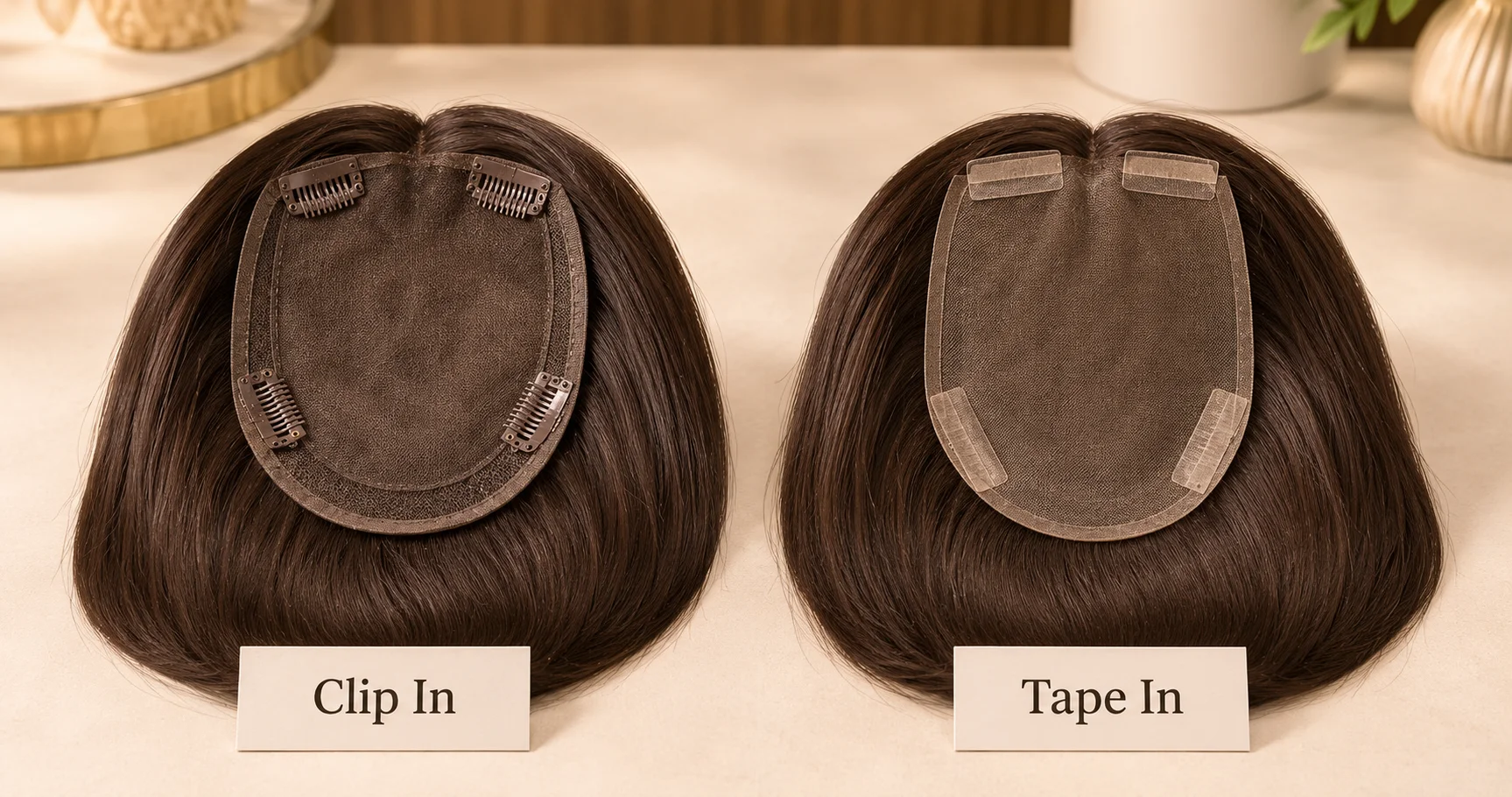
Attachment choice is where many hair topper sales succeed or fail. In fact, the global hair replacement market surpassed 6 billion USD in 2025, and toppers represent its fastest-growing segment. Yet a beautiful topper with the wrong attachment method feels insecure, pulls at the client's hair, or becomes too much work to maintain. Therefore, salons should compare a clip in hair topper with a tape in hair topper before placing wholesale orders, not after samples arrive.
Why This Decision Affects Reorders
However, most online guides discuss attachment methods from the wearer's point of view. Wholesale buyers need a different answer: which systems fit your staff skills, your client base, your appointment model, and your return policy? A clip-in topper can be sold quickly after a consultation. By contrast, a tape-in topper needs salon installation, adhesive education, and follow-up removal. Meanwhile, integration systems require even more service discipline, but they can create loyal repeat clients.
After a decade of manufacturing toppers at our Qingdao workshop, we have seen which attachment choices lead to reorders and which lead to returns. Specifically, this guide compares clip-in, tape-in, and integration systems from a salon sourcing perspective. In addition, for material choice, pair it with our human hair vs synthetic toppers guide. For size selection, use our human hair topper size chart.
Key Takeaways
- First, clip-in toppers fit the widest range of consultations and need the least staff training — start your wholesale sample set here
- Next, tape-in systems create recurring service revenue, but they require adhesive education and strict appointment scheduling
- Finally, integration toppers deliver the highest client loyalty when your salon already books regular maintenance visits
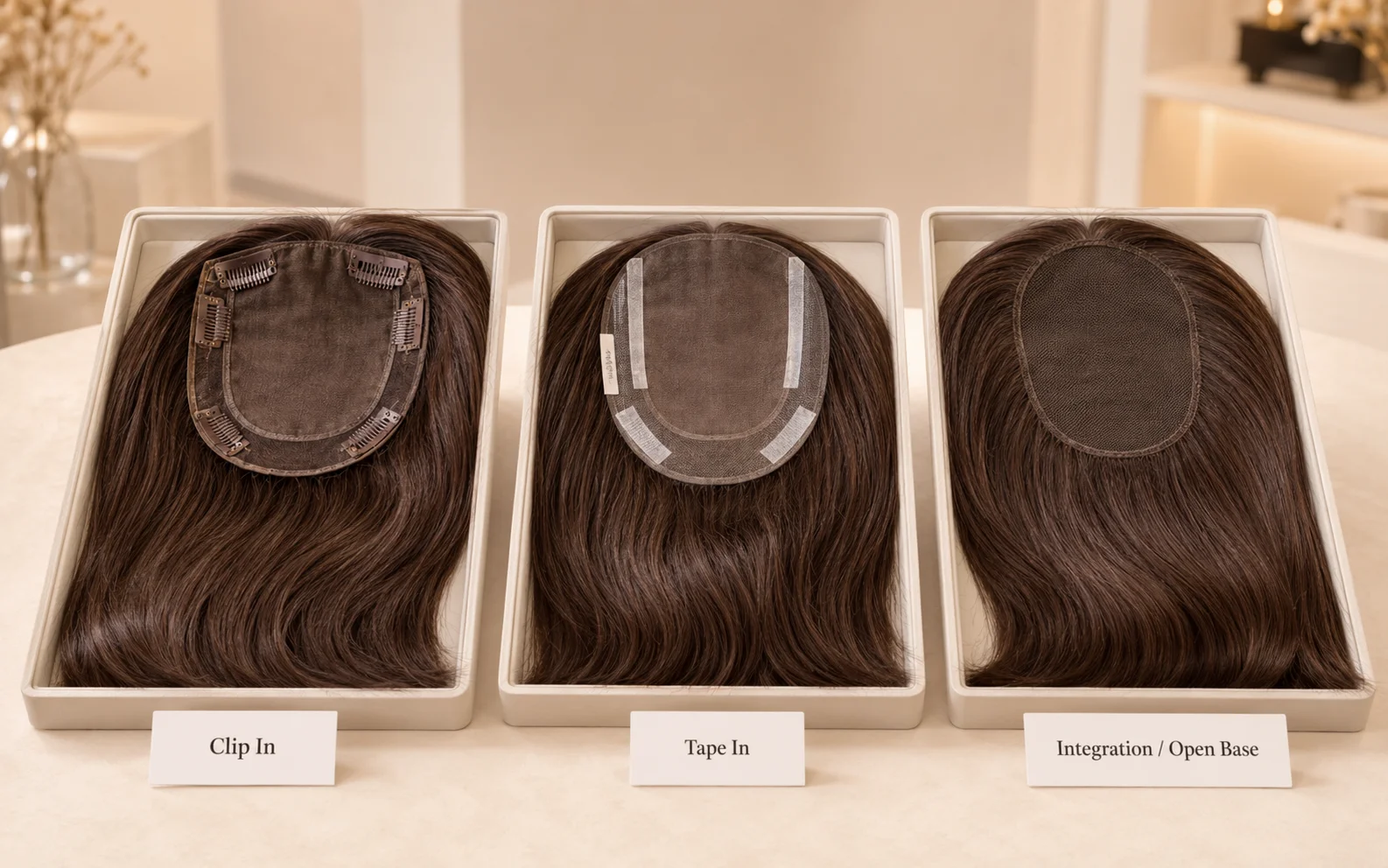
- Overall, a 70/20/10 sample mix (clip-in / tape / integration) is the safest first order ratio for new wholesale accounts
Clip-In
Clip-In Hair Toppers: Fast Sales, Lower Service Burden
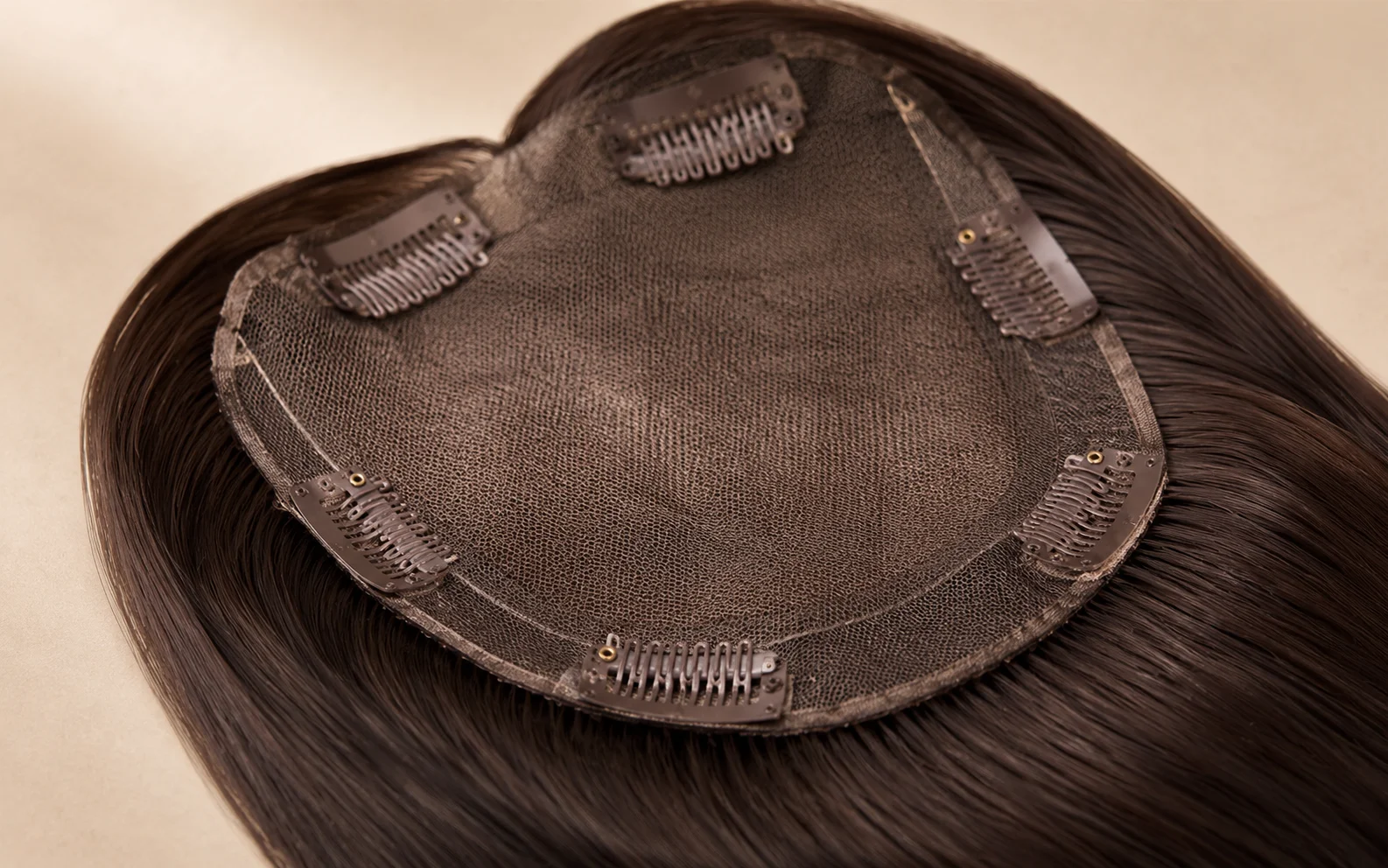
For example, clip-in toppers are the safest starter category for most wholesale buyers because they are easy to demonstrate, easy to remove, and easy for clients to understand. A stylist can place the topper during a consultation, check the blend, and send the client home with a clear care card. In addition, there is no adhesive, no removal appointment, and no long explanation about bond breakdown.
Nevertheless, the weakness is tension. Clips need healthy anchor hair. If the client's surrounding hair is thin, a clip-in piece may feel secure in the salon but uncomfortable after eight hours. For this reason, we recommend softer pressure clips, careful clip placement, and wider bases for clients whose thinning spreads beyond the crown.
Tip
Specifically, ask your client to shake her head, look down at her phone, and walk a few steps while wearing the clip-in sample. If it shifts during these movements, the clip placement needs adjusting — not more clips. In our Qingdao factory, we test every clip-in base with a 30-minute wear trial before approving production.
Best Client Fit
Clip-in works well for women with early to moderate thinning, busy clients who want removable wear, and salons that do not offer adhesive services. It also works well for Jewish wig and sheitel clients who need a removable piece for specific settings. However, daily wearers should be taught to open and close clips gently rather than pulling the piece away from the scalp.
Tape-In
Tape-In Hair Toppers: More Security, More Responsibility
By contrast, tape-in toppers offer a flatter, more secure feeling for clients who dislike clips or worry about movement. For example, they can be useful for active clients, performers, or anyone who wants the topper to feel less removable during the day. For salons, tape systems create service revenue through installation, cleaning, and scheduled removal.
The tradeoff is operational. Specifically, tape requires clean skin or hair prep, adhesive choice, removal solvent, and strict appointment timing. If a client leaves tape on too long, residue builds up and removal becomes harder. If the adhesive is too aggressive, sensitive scalps complain. As a result, tape-in inventory should be sold only when the salon has a repeat-service plan.
Note
Most tape-in adhesive tabs last 4 to 6 weeks between replacements. If a salon cannot book follow-up visits within that window, clip-in is the safer attachment for their client base. Our manufacturer specification sheets list adhesive compatibility and expected wear duration for every tape-ready base we produce.
Factory Details Buyers Should Check
Specifically, ask whether the base has reinforced tape areas, what edge material is used, and how cleaning affects the knots or ventilation. A tape-ready base should not collapse after solvent exposure. At our factory, we review tape placement during sample development because a small change in tab position can change comfort and durability.
Attachment is not just hardware. It is the service promise attached to the piece.
LEV sample room note for wholesale topper buyersIntegration
Integration Toppers for Advanced Salon Services
Meanwhile, integration systems use the client's bio hair pulled through an open base or attached through a service method. In practice, they can look very natural because the client's own hair blends through the topper. However, they also require the highest level of stylist training. A poorly installed integration piece can tangle, pull, or take too long to maintain.
Therefore, integration is not a casual add-on for wholesale buyers. Specifically, it belongs in salons that already book maintenance appointments and can educate clients before purchase. The upside is loyalty. As a result, a client who trusts your team with an integration system often returns for tightening, cleaning, and replacement planning.
Tip
Before ordering integration inventory, time your stylists during a sample fitting. If installation takes more than 45 minutes per client, the system may be too complex for your appointment schedule. Our workshop provides installation guides with every integration base we ship to wholesale accounts.
For example, one European salon partner asked our manufacturer team for a broad integration order before testing samples. We pushed them to trial three bases first. Two failed their appointment timing target because installation took too long. The third became their standard option. As a result, that small sample stage prevented a bulk order of slow-moving bases.
Selection
How to Choose the Right Attachment Mix for Wholesale Stock
Overall, the best attachment mix follows your service model. If you sell mostly retail pieces with short consultations, clip-in should dominate. When your business depends on appointments and maintenance packages, tape-in and integration can raise client lifetime value. However, higher service revenue comes with higher training demand.
Sample Order Planning
Service Model Comparison
| Factor | Clip-In | Tape-In | Integration |
|---|---|---|---|
| Client fit | First choice for early to moderate thinning | Meanwhile, useful for active lifestyle and secure feel | Finally, better for advanced thinning and custom blend |
| Service revenue | Usually low through one consultation | However, medium through install and removal cycle | Therefore, high through maintenance packages |
| Staff training | First, minimal training | Next, moderate adhesive handling | Finally, extensive ventilation technique |
| Return risk | Overall, low risk | However, medium risk from adhesive sensitivity | Meanwhile, higher risk from fit complaints |
Attachment Risk Summary
| Attachment | Best for | Wholesale risk |
|---|---|---|
| First, clip-in | Best for fast consultations and removable wear | However, it needs strong anchor hair |
| Next, tape-in | Best for secure salon-managed wear | Therefore, it needs adhesive education |
| Finally, integration | Best for advanced custom service | Meanwhile, it needs trained stylists |
Review Before Scaling MOQ
Specifically, for first orders, we usually recommend 70% clip-in samples, 20% tape-ready bases, and 10% integration samples if the salon has trained staff. Next, include two base sizes and two densities. Then evaluate comfort feedback, installation time, and complaint patterns before expanding MOQ.
Training materials should be part of the purchase decision. If a client damages a tape-in piece during home removal, she usually blames the salon first, not the adhesive. Therefore, prepare care cards, removal timing, and service notes before offering adhesive systems. For clip-in pieces, teach stylists to check tension after the client turns her head, looks down, and moves naturally. A topper that feels secure only while the client sits still is not ready for daily wear.
In addition, private label buyers should standardize attachment terminology across packaging and invoices. Otherwise, mixed wording like clips, combs, tape tabs, and bonding strips can confuse staff when reordering. A consistent spec sheet reduces factory questions and makes repeat production faster.
Finally, during sample review, ask two stylists to fit the same topper independently. If both choose the same attachment placement and report similar comfort notes, the design is easier to train across your team. If their feedback differs sharply, the base may need clearer markings, different clip positions, or a simpler service protocol.
FAQ
Frequently Asked Questions
What clip-in topper specs should wholesalers request for daily-wear clients?
For daily-wear clients, request soft pressure clips, reinforced stitching, a base wide enough to spread tension, and a clip-positioning guide for stylists. Clip-in toppers suit daily wear only when the client has enough anchor hair. In addition, ask the manufacturer to confirm clip count, placement, and replacement hardware before bulk production.
When should salons stock tape-in toppers instead of clip-in samples?
Stock tape-in toppers when your salon partners offer installation, removal, adhesive education, and scheduled follow-up visits. Although tape systems create service revenue, they also create responsibility. If a salon cannot manage 4 to 6 week maintenance cycles, clip-in samples are usually safer for first orders.
Which attachment mix fits Jewish wig and sheitel salon buyers?
Many Jewish wig and sheitel salon clients need secure wear, realistic parting, and predictable maintenance. Therefore, a practical wholesale set starts with clip-in pieces for removable daily use, then adds tape-ready or integration bases for salon-managed clients. Meanwhile, keep consultation notes on observance needs, comfort, and appointment frequency.
What MOQ or sample ratio should a new wholesale account start with?
For a first sample order, use a 70/20/10 ratio: 70% clip-in, 20% tape-ready, and 10% integration only if trained stylists are available. Next, include two base sizes and two densities. After testing, review comfort feedback and installation time before expanding MOQ or private label packaging.
Can wholesale toppers be ordered with convertible clip and tape hardware?
Yes, some lace or mono bases can be planned with removable clips and reinforced tape zones. However, convertible hardware must be specified before production because tension points, edge material, and cleaning routines change. Before modifying finished stock, ask for manufacturer confirmation on base compatibility.
Conclusion
Which Attachment Should You Stock First?
| Decision Factor | Clip-In Works If... | Tape-In Works If... | Integration Works If... |
|---|---|---|---|
| Salon service model | First option for retail-focused, short visits | Next option for booked appointments and adhesive-trained staff | Finally, best for full maintenance packages |
| Client base | Overall fit for early thinning and removable preference | However, better for active lifestyle and security priority | Meanwhile, stronger for advanced thinning and custom needs |
| Training capacity | First, minimal training needed | Next, moderate adhesive handling | Finally, extensive ventilation method |
| Recommended first order | Therefore, 70% of sample set | In addition, 20% of sample set | Finally, 10% if staff is trained |
Ultimately, clip in hair topper vs tape in decisions should be made with client comfort, salon workflow, and repeat-order stability in mind. A wholesale order that looks efficient on paper can become expensive when the sample does not fit real consultations.
As a manufacturer based in Qingdao, LEV Wigs supports sample planning, MOQ review, private label packaging, lead time confirmation, and factory quality control for salon and distributor accounts. Therefore, send your target client profile, preferred base specs, and expected order quantity — our workshop team will recommend a practical sample set before bulk production.

Ready to Review Samples?
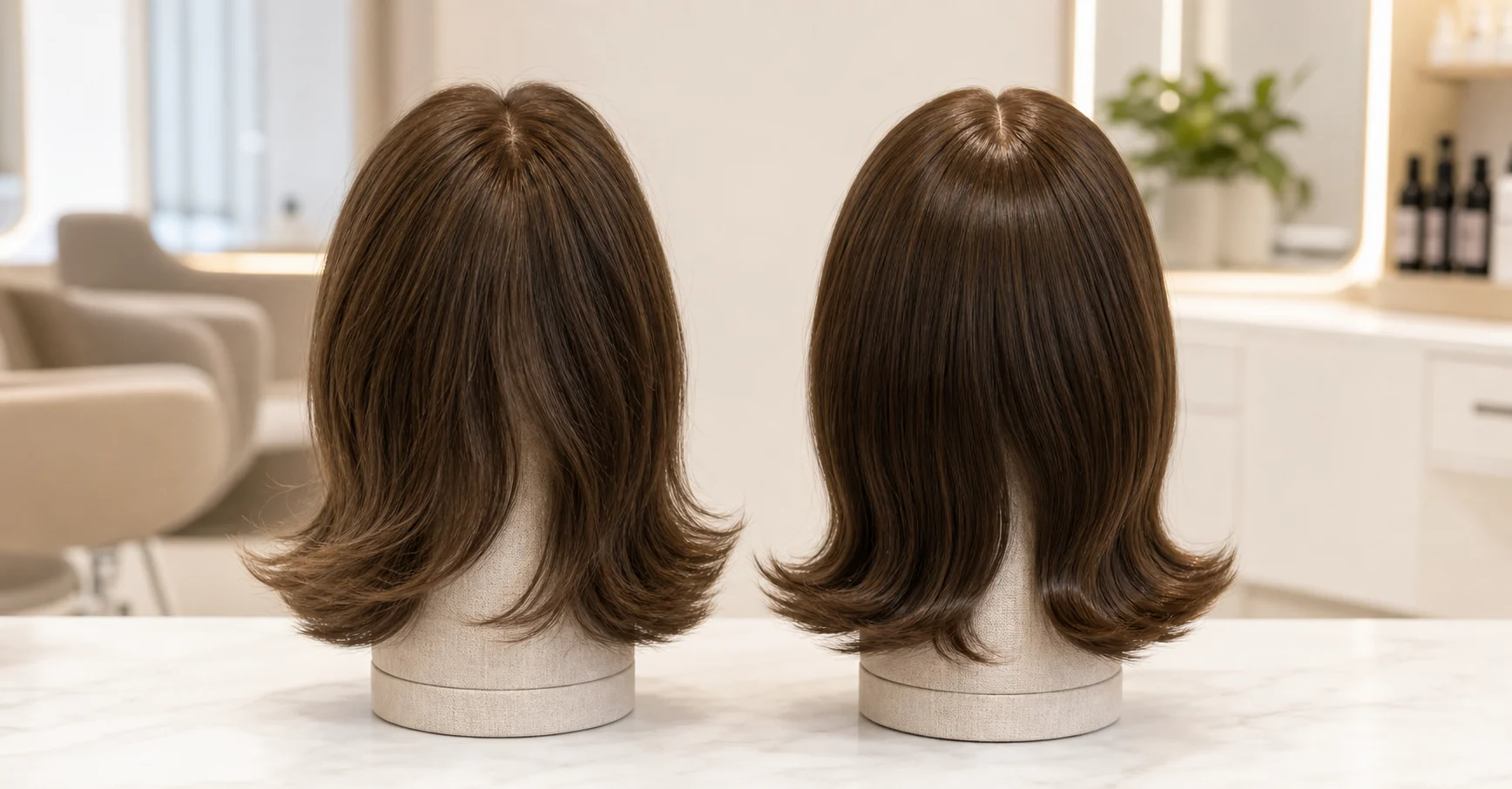
Send your target market, base requirements, density range, and packaging needs. Our factory team can prepare sample recommendations for wholesale review.
Request Samples