Head Coverings
What Is a Shpitzel? The Hasidic Head Covering Explained

The shpitzel head covering is one of the most searched-for and least well documented objects in the Jewish covering wardrobe. Ask for a definition and you will usually hear a sentence like this: it is a partial head covering, worn mainly in Hasidic communities, that covers the hair at the front of the head while the rest is covered by something else. That sentence is correct — but it leaves the buyer with nothing to act on. What is the band actually made of? How does it differ from a fall or a wide headband? What should a boutique check before stocking one?
This guide answers those questions in working detail. It sits inside our wider guide to Jewish head coverings, which maps the whole landscape — sheitel, tichel, snood, fall, and shpitzel — in overview. Here we take the shpitzel on its own: what it is, who wears it, how it is constructed, and what to verify when buying.
Definition
What Is a Shpitzel?
As a shpitzel head covering, it is a band-style partial covering that sits across the front and crown of a married woman's head. It is designed to cover the hairline and front section of the hair, and it is normally worn as one layer in a combination — under a scarf, under or over a hat, or paired with a fall at the back — rather than as a complete covering on its own.
Two construction families cover most of what you will see. Fabric shpitzels are shaped from silk or a smooth synthetic into a slightly peaked band, which is where the name lives: the Yiddish root points to a pointed or tapered form. Hair-wrapped shpitzels wrap real human hair around the band so that any hair visible at the edge reads as the wearer's own. Both families fasten at the back — ties, soft closures, or grips — and both are measured by band width and head size like any fitted accessory.
What the shpitzel is not: it is not a wig, not a half-wig, and not merely a wide headband. The distinction matters commercially, because buyers who search for one of these objects often need a different product, and a boutique that conflates them stocks the wrong thing.
Communities
Which Communities Wear the Shpitzel
The shpitzel is strongly associated with specific Hasidic communities — Belz and Satmar are the names most often raised, along with some Jerusalem-based groups. Within those communities, the shpitzel is one accepted way among several to satisfy the practice of covering a married woman's hair, and the specific combination — shpitzel alone, shpitzel under a tichel, shpitzel with a hat over a fall — follows local custom, or minhag, and personal guidance.
That last point deserves emphasis, because our workshop serves buyers across the Orthodox spectrum and the same caution applies everywhere: never assume a covering from a community label. Two women in the same community may wear different combinations for reasons of family custom, comfort, or rabbinic direction. The reliable path — for a wearer and for a boutique serving one — is to ask what the standard is, then specify the product to match. Our guide to Hasidic hair covering traditions covers the layered-covering logic in more depth.
For readers researching from outside the community, one more framing helps: the shpitzel is a modest, deliberately low-profile object. It exists to cover convincingly without drawing attention, and its design choices — matte fabrics, smooth wraps, minimal profile — all serve that goal.
Comparison
Shpitzel vs Tichel, Snood, Fall, and Sheitel
These five coverings solve the same religious requirement in different ways, and buyers mix them constantly. The table below is the comparison we use when a boutique asks what to stock next to what.
| Covering | What It Is | Coverage |
|---|---|---|
| Shpitzel | Fabric or hair-wrapped band, slightly peaked | Front and crown only; worn in combination |
| Tichel / mitpachat | A tied headscarf in cotton, modal, or silk blends | Full or partial, depending on wrap and size |
| Snood | A soft knit or crocheted pouch | Back of head and length of hair |
| Fall | A half-wig of human or synthetic hair | Back and length; front covered by hat or band |
| Sheitel | A full wig built for daily religious wear | Complete, including hairline and part |
Read the table as a system rather than a menu. A shpitzel plus a fall covers front and back with no full wig; a tichel alone can be a complete covering; a sheitel can stand entirely on its own. If you are weighing the two most compared options, our sheitel vs tichel guide works through that decision in detail.
Construction
How a Shpitzel Is Built
Small object, short specification list — but every line decides whether the piece is wearable daily or ends up in a drawer. This is the construction checklist as a covering-adjacent manufacturer reads it.
- The base band. The band carries the shape. A well-made band holds its slight peak through wearing without collapsing, keeps its edges finished so nothing scratches the forehead, and recovers its form after removal. Cheaper bands lose shape within weeks, and a collapsed shpitzel covers nothing convincingly.
- The surface material. Fabric versions use silk or synthetic weaves chosen for a matte, natural reading under daylight. Hair-wrapped versions specify the hair itself — origin, color match to the wearer, and direction of the wrap — because a mismatched wrap defeats its own purpose.
- The closure. Ties, soft hooks, or grip bands at the rear set the fit. The closure should hold through a full day without pressure points, and it should suit the layer it sits under: a bulky closure under a fine tichel shows.
- The sizing. Bands are sized like fitted headwear, not one-size scarves. Width matters as much as circumference — the coverage standard the wearer follows decides how wide the band must be.
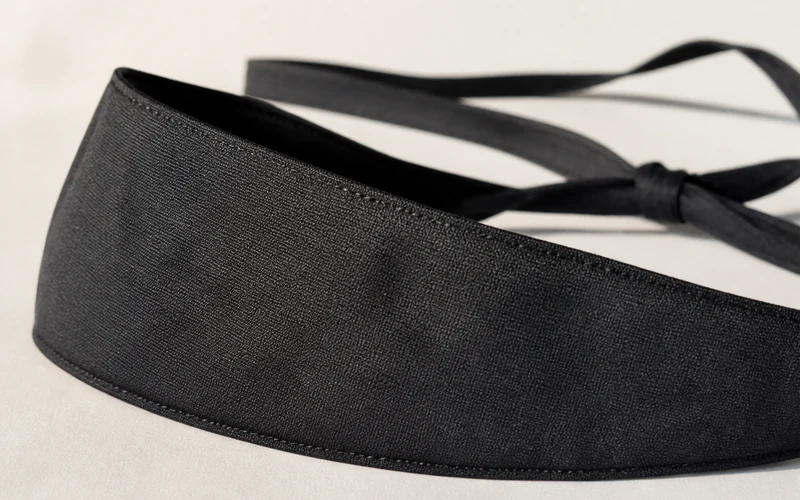
The same logic governs every product family we build — cap, surface, closure, size — and the shpitzel simply compresses it into a band. Treat the four lines above as the order sheet, and a supplier conversation about shpitzels becomes as concrete as one about sheitels.
Wearing
How a Shpitzel Is Worn
Putting one on takes seconds once the sequence is familiar. Position the band so its upper edge sits at the hairline you need covered, smooth the surface flat so no ridge shows, then secure the closure at the back beneath wherever the next layer will sit. The covering that follows — tichel, hat, or fall — is arranged over it, and the shpitzel's job is to make that outer layer read clean.
Three wearing habits separate a good experience from a frustrating one. First, seat the band before tightening, not after; a dragged-into-place band wrinkles and shows. Second, match the closure's position to the outer layer, so nothing bulges under a tied scarf. Third, remove it the same way it went on — lifted, not pulled — because the wrapped surface and finished edges are the first casualties of rough handling.
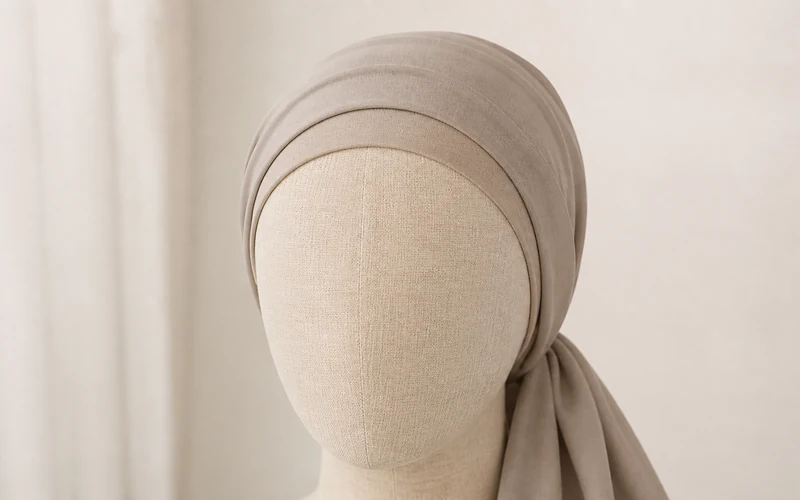
Care is minimal by design. Fabric bands are refreshed according to their material; hair-wrapped versions follow the gentle brushing and storage habits of any hair product — rested on a form, not crushed in a drawer. Daily-wear pieces deserve the same rotation logic as sheitels: two alternating units outlast one unit worn to death.
Buying
What to Check When Buying a Shpitzel
Whether you are buying one to wear or a run to stock, the checklist is the same, and it takes two minutes against the construction section above.
- Edge finishing. Run a fingertip along both edges. Anything scratchy or unfinished will be unwearable against a forehead within a week.
- Shape memory. Flex the band gently and release. It should return to form immediately; a slow recovery means a base that will sag.
- Color and finish match. Under neutral daylight, not shop lighting, confirm the band's tone works beneath the layers it will be worn with — this is where hair-wrapped versions succeed or fail.
- Closure quality. Work the closure ten times. It should operate smoothly and hold without slipping, because it carries the fit all day.
- Sizing honesty. For boutique orders, confirm the size range and the band widths available, and agree the specification in writing before production — the same discipline our wholesale buyers apply to sheitel orders.
One commercial note for shop owners: the shpitzel belongs to the accessories wall, not the wig case, but its buyer overlaps completely with your sheitel customer. Stocking both sides of that customer's routine — with honest guidance on each — is what a head-covering section is for.
FAQ
Shpitzel Questions, Answered
A shpitzel is a partial, band-style head covering worn by some married women in Hasidic communities. It sits across the front and crown of the head, covering the hairline area, and it is usually made from silk or a smooth synthetic fabric — sometimes wrapped with hair. It is typically worn together with another covering rather than alone.
The shpitzel is associated with particular Hasidic communities, including Belz and Satmar and some Jerusalem-based groups. Whether a woman wears one, and how she combines it with a scarf, hat, or other covering, follows community custom and personal rabbinic guidance — it is never safe to assume from a community name alone.
No. A fall is a half-wig made of hair that adds length and volume at the back while the front is covered by a hat, band, or scarf. A shpitzel is a band-style covering in its own right, usually fabric-based and much smaller. The two can be worn in layered combinations, but they solve different parts of the covering.
Some are, some are not. Fabric-only shpitzels use silk or synthetic materials shaped into a smooth band. Hair-wrapped versions wrap real hair around the band so the covered area reads naturally under or beside a scarf. The choice follows community custom and the desired final appearance.
Shpitzels are sold through community head-covering stores and the accessories side of sheitel boutiques. When ordering, specify the band width, the fabric, whether you need a hair-wrapped version, and the closure type — and for boutique buyers, confirm sizing ranges with the supplier before stocking.
Closing
A Small Covering With a Specific Job
The shpitzel earns its place in the head-covering system by doing one job exactly: covering the front convincingly so the layers above it can do theirs. Define it by that job, check it by the four-line construction spec, and respect the community customs that choose it — and the object stops being obscure and starts being simple.
To see the shpitzel in its full context, continue with our overview of every Jewish head covering explained, or move straight to the comparison buyers ask for most: sheitel vs tichel.


Building a Head-Covering Assortment?
LEV Wigs manufactures sheitels and specification-grade coverings for boutiques serving Orthodox communities. Tell us the community standards your clients follow and we will help you plan the full range — from full sheitels to the accessory layers beside them.
Discuss Your AssortmentRequest Wholesale Terms