Wholesale Guide
Kosher Wigs Wholesale: How to Vet a B2B Factory Supplier
Kosher wig wholesale is a specialized procurement category. Before an order is placed, a buyer needs a repeatable way to check three things: whether a supplier can meet the supervision expectations of the community being served, whether it can reproduce an approved specification, and whether communication during the order is clear. This guide focuses on that verification work — what to ask for, what to record, and what to settle in writing — rather than on generic wig-industry claims.
If you are newer to the product side, our sheitel cost guide offers further reading on prices, and the fall versus full wig comparison covers coverage formats. This page stays on one task: how to vet the supplier behind the quotation.
Key Takeaways
- Start with your community’s supervision requirement — ask your own qualified rabbinic authority what evidence applies, then write it into the supplier brief.
- Compare like-for-like quotations — cap construction, hair specification, density, colour work, and included responsibilities belong in the same written brief.
- Decide the sample stage explicitly — where the negotiated order allows one, approve a sample against a written specification; where it does not, agree in writing what replaces that approval.
- Confirm responsibilities and milestones in writing — who is named for production approval, inspection, freight, customs and defects, and when updates are due, before payment.
Kosher Requirements
What Makes a Wig Kosher — and Why It Matters for Wholesale
Do not use this guide to decide whether a wig meets your community’s requirements. Ask your own qualified rabbinic authority which requirements apply to your intended use, then include those instructions in the supplier brief and purchase documentation. For further reading on the hair-origin debate, STAR-K’s published overview records differing positions and directs readers to ask their own rav; it is not a ruling for your order.
Hair Origin Questions
Ask how the supplier documents hair provenance: which records exist for the batch your order would draw from, what those records say about origin and processing, and how the material for your order is identified through production. Ask your own qualified rabbinic authority which provenance evidence is required for the intended use. Write down whatever your authority asks for and request exactly that.
Rabbinic Supervision
Where supervision matters to your buyers, request the supplier’s current written supervision documentation and read what it actually says: who issued it, what it covers, how it relates to hair sourcing, and whether it applies to the construction you plan to order. Confirming validity and applicability — with the issuing body where that is possible, and always through your own rabbinic authority — is more useful than collecting certificate images. A generic certificate is not a substitute for your community’s own requirements.
Buyer brief
Record the supervision requirement, the provenance evidence your authority asked for, the construction specification, and the named approval owner in one document. That gives the factory a clear standard and gives your team a traceable basis for accepting or rejecting an order.
Selection Criteria
7 Criteria for Evaluating a Kosher Wig Supplier
Whether you are opening your first sheitel store or expanding an existing wholesale operation, these seven review areas form a practical framework you can adapt to the order you are actually negotiating. They are a proposed buyer checklist, not an industry standard — use them to structure your questions, your records, and what you ask to have settled in writing.
1. Documentation and Certification Review
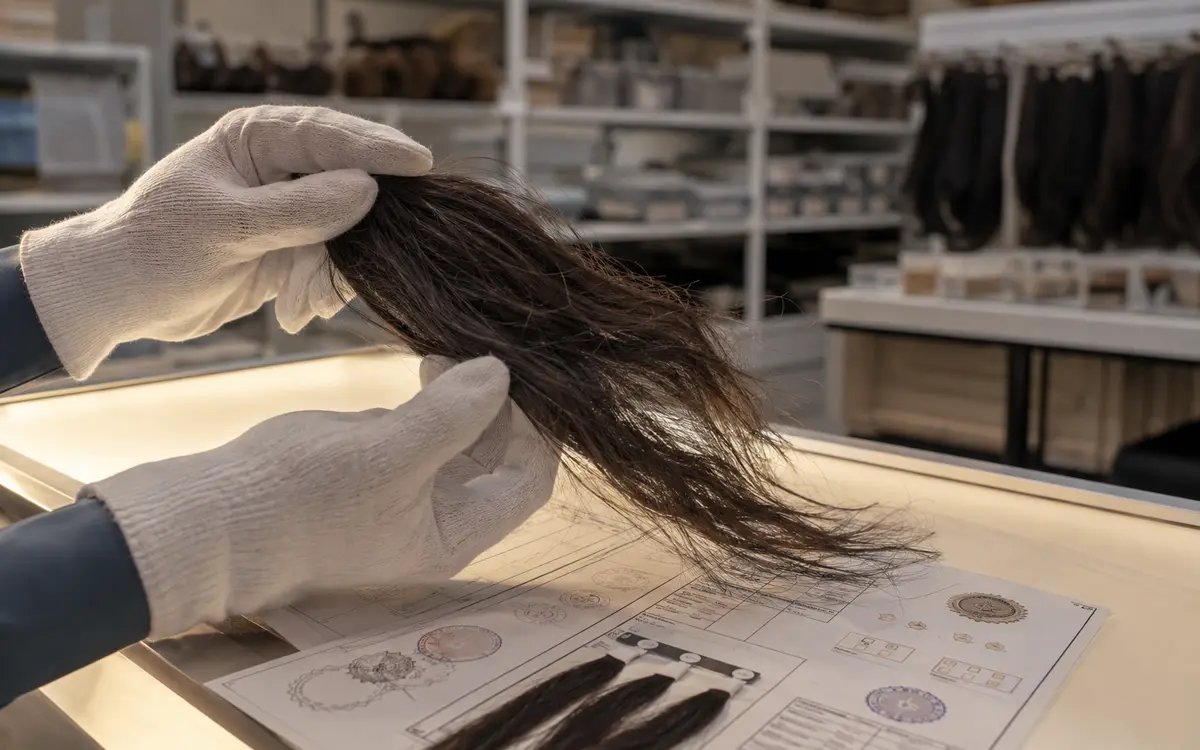
Ask for the factory’s rabbinic supervision letter and read what it names: the supervising authority or rabbi, the certifying organization if there is one, what the documentation covers, and whether it is current for the order you are placing. How such documentation can be verified varies — ask the issuing body how it confirms its own documentation, and ask your own authority what your community accepts as proof. If a supplier does not provide the documentation you have asked for, treat that as an open, unresolved item for this purchase decision: pause and resolve it before committing, rather than reading the silence as a religious verdict either way.
Tip
Ask whether the supplier can arrange a verification contact with the authority named in its documentation, and whether the documentation can be reviewed by your own rabbinic authority before you commit. Whether that satisfies your community’s standard is a question for that authority, not for the supplier.
2. Factory vs. Trading Company
A trading company is not automatically unsuitable, but you should know who controls production and quality. A live video view shows what the camera shows; it does not by itself establish ownership or capability. Ask for the name of the facility responsible for the order, the role each party plays, and a written escalation route for defects. If a supplier cannot explain where and by whom the product is made, settle that question in writing before you commit.
3. Sample Quality
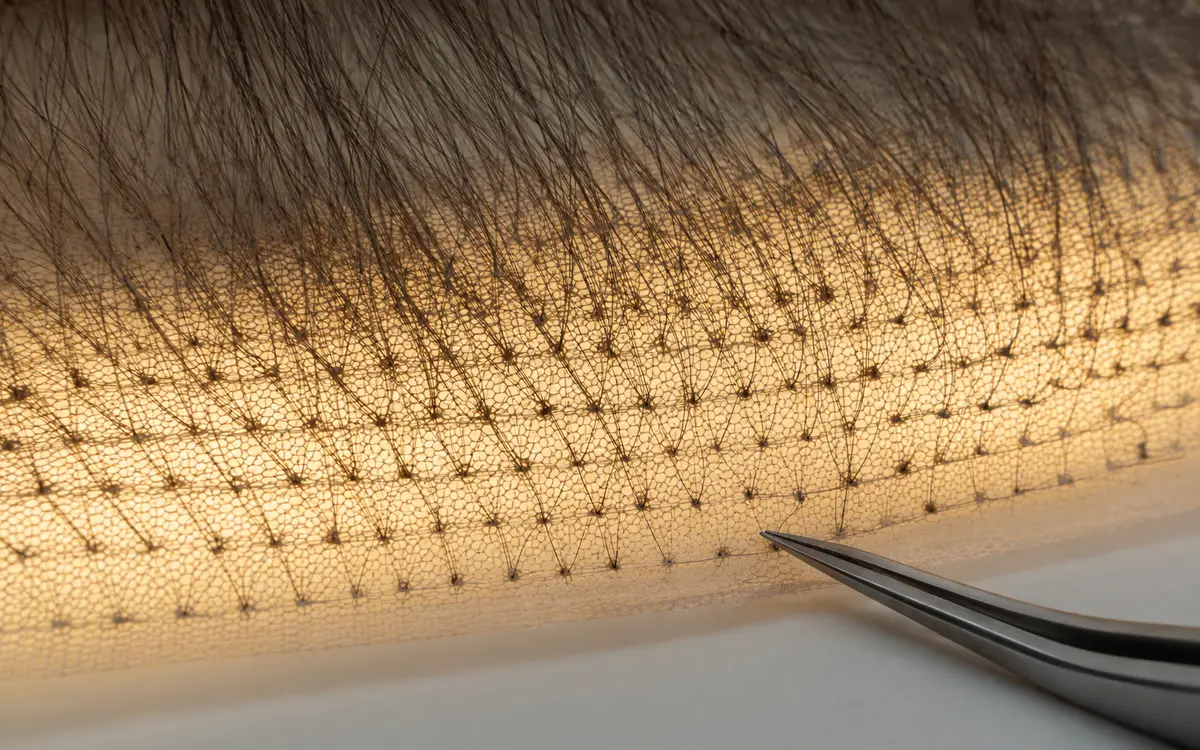
Where the negotiated order allows a sample stage, use the same written brief you will use for production. Check what can be observed — the appearance of knots, hair direction at the hairline, cap fit, and colour consistency under neutral lighting — and record what you see against the written specification, noting any exception in the approval notes so the factory has a measurable production reference. Record visible observations separately from claims about hair origin or cuticle alignment, and ask what evidence supports those claims. Agree in advance which physical sample, photographs, written specifications, and approval records will form the production reference for this order.
4. Pricing Transparency
Ask for a quotation tied to one written specification: hair type, length, density, cap construction, colour work, packaging, payment milestones, the delivery term the price assumes, and any custom-work charges, stated in a single document. Unexplained differences between two quotations are a reason to pause and clarify what each price includes. The table below lists quote fields to hold constant so that two quotations are actually comparable — it is a comparison aid, not a grading system, and a more expensive specification does not by itself indicate better quality or traceability.
| Quote field | What to record | What to ask |
|---|---|---|
| Hair specification | The hair specification stated in this quotation. | Which hair specification does this price assume, stated in writing? |
| Cap construction | The specified cap zones, materials, and construction. | Which zones are hand-tied and which are wefted? |
| Length and density | The quoted length and density. | What length and density does the price include? |
| Colour and custom work | Included colour work and separately quoted extras. | Which custom charges are included and which are extra? |
| Included responsibilities | The packing, delivery, insurance, and inspection scope. | Which delivery term and which inspection scope does this quotation assume? |
| After-sales terms | The written remedies offered for this order. | What after-sales remedy does the quotation include, in writing? |
5. Minimum Order Quantity
Ask the supplier to confirm the minimum order quantity and whether the proposed specification is available for your order. Ask whether the supplier can support a paid sample stage, how an approved sample becomes the production brief, and which specification changes would require a new approval. A clear answer for your order is more useful than a headline number.
6. Lead Times and Communication
Confirm the proposed lead time, its conditions, and the approval milestones for this order. Ask the supplier to map the production stages, define the approval checkpoints, and name the person responsible for updates. A documented plan you can check progress against is more useful than a delivery promise without milestones.
7. After-Sales Support and Warranty
Quality issues can appear after client wear. For orders where after-sales remedies matter to you, negotiate the reporting path before payment: how knot shedding, lace defects, colour variance, or construction issues are reported against the approved reference, what evidence is required, and what remedy the supplier offers. Ask the supplier to provide the remedies offered for this order in writing, including any limits and exclusions.
Note
Get the after-sales terms in writing as part of the negotiated agreement. A verbal assurance is difficult to act on months later; the written terms — remedy, evidence required, and who owns the response — are what both sides can actually refer to.
Pricing Breakdown
Factory-Direct Pricing Reality Check
The kosher wig supply chain can include a factory, a distributor, and a retail business. Each model allocates responsibilities differently — and the allocation is decided by the agreement you sign, not by the label on the channel. Your quotation should make clear who is named for production approval, inspection, packing, freight, insurance, customs, and defect remedies.
Buying factory-direct changes who you coordinate with; it does not by itself guarantee a lower landed cost, and it does not decide who inspects or who clears customs. For international orders, ask which delivery terms apply, including the agreed Incoterms rule where incorporated into the contract. Confirm who arranges and pays for transport, insurance, clearance, and duties under the agreement and applicable destination law; identify the relevant importer or other responsible party with a qualified local adviser where needed. Compare quotations only after aligning the material specification, construction, quality checks, packing, delivery term, and remedy for defects. The lowest unit figure is not a reliable measure of landed cost or risk.
| Responsibility | What to settle in writing | Common assumption to avoid |
|---|---|---|
| Production approval | Which facility produces the order; who approves the specification and the reference sample. | An unnamed intermediary “handles it”. |
| Inspection | Who inspects, at which stages, against which written standard, and who pays for re-inspection. | Assuming the other side checks. |
| Packing | The packing standard and who provides packaging and labels. | Vague “export packing” wording. |
| Freight and insurance | The named delivery term, carrier arrangements, and who is responsible for insurance and its cost. | Comparing quotations that assume different terms. |
| Customs and duties | Who is the importer of record, who handles clearance formalities, and who pays duties in the destination country. | Assuming a distributor necessarily clears customs. |
| Defects and remedies | Reporting window, evidence required, the remedy, and who owns the response. | No named owner for claims. |

Common Pitfalls
5 Mistakes New Kosher Wig Buyers Make
These five review gaps can appear in any kosher wig sourcing project. Each one is a mismatch between what was assumed and what was agreed — and each should be addressed explicitly in the written order.
1. Skipping supervision verification — Do not rely on a certificate image alone. Check who issued the documentation, what it covers, and whether it meets your community’s requirements; where appropriate, verify directly with the issuing authority before committing.
2. Choosing on unit price alone — A low quotation may omit material details, inspection, freight, or after-sales support. A low price is not proof of substituted hair, and a high price is not proof of quality; compare complete written specifications and responsibilities instead of a single number.
3. Leaving the sample question undecided — Where a sample stage is possible, approve a sample against a written brief and use that document to govern production. Where it is not, define precisely what replaces the approval — for example an approved reference unit, a pre-shipment inspection, or staged approvals. Agree in advance whether photographs form part of the approval record and what else is required.
4. Ignoring lead-time structure — Custom work needs a documented sequence for materials, colour approval, construction, inspection, and freight. Build the plan with the supplier rather than accepting a promise that omits approval checkpoints.
5. Not budgeting the full landed cost — Freight, insurance, duties, and handling can materially change the final cost. Request the applicable terms and build a landed-cost model before finalizing the purchase order.
| Review gap | What it leaves unresolved | Prevention |
|---|---|---|
| No supervision documentation review | You cannot show your community what, if anything, was documented. | Request the documentation and review it with your authority. |
| Unit-price-only comparison | Unspecified material or omitted responsibilities behind the number. | Compare full written quotations on one specification. |
| No decided sample or inspection stage | No agreed reference for judging production. | Approve a sample or define what replaces the approval. |
| No milestone plan | Approvals squeezed and decisions undocumented. | Set written checkpoints before production. |
| No landed-cost model | Freight, insurance, and duties surface after commitment. | Request the terms and compute landed cost first. |
FAQ
Frequently Asked Questions
Ask for current written documentation that identifies the issuing authority and what it covers. Check whether it is current for your order and, where appropriate, confirm it with that authority or with your own qualified rabbinic authority, who decides whether it meets your community’s requirements. Keep the reviewed documentation with the purchase file.
Ask the supplier to confirm the minimum order quantity and whether the proposed specification is available for your order. Ask whether a paid sample stage is possible, how an approved sample becomes the production brief, and which specification changes need a new approval.
That depends on the supplier and the specification. Build a written specification covering target colour, length, density, cap construction, and acceptable variation, then ask the supplier you are evaluating to confirm feasibility, approval points, and how the quotation reflects the request. Do not assume every custom combination is available from every supplier.
Specify the order first, then settle shipping in writing: the named delivery term, who arranges freight and insurance, who is the importer of record, who handles customs formalities and duties, and the expected milestones. Fold those costs and responsibilities into your landed-cost model rather than comparing factory quotations in isolation.
That depends on the standards of the community you serve, and the answer belongs to your own qualified rabbinic authority, not to a supplier or to this guide. Ask that authority what supervision evidence and inspection, if any, the community requires, then ask the supplier which records and access it can provide for your authority to review.
Conclusion
Choosing Your Factory Partner
The right supplier for a kosher wig wholesale program is not the cheapest one, and not the one with the most confident marketing. It is the one whose supervision documentation you have actually reviewed with the right authority, whose reference sample or agreed standard matches your written specification, whose quotation is comparable line by line, and whose named responsibilities match the agreement you signed.
Start with the documentation and the specification, then run the same comparison against every supplier you are considering. A supplier that answers your questions in writing gives you something to work with; one that cannot gives you a decision to make about risk — and either way, the record you kept is what lets you explain the choice to your community and your team.
If LEV Wigs is one of the suppliers on your list, you are welcome to put these questions to us through the contact page — including which documentation and specification answers we can provide for your review and that of your authority.



Evaluating Kosher Wig Suppliers?
Write down the supervision evidence, specification, and named responsibilities your order needs — then put the same questions to every supplier you consider, including LEV Wigs.
Contact LEV Wigs