Fixation Guide
Silicone Strips vs Velvet Grip in Silk Top Sheitels
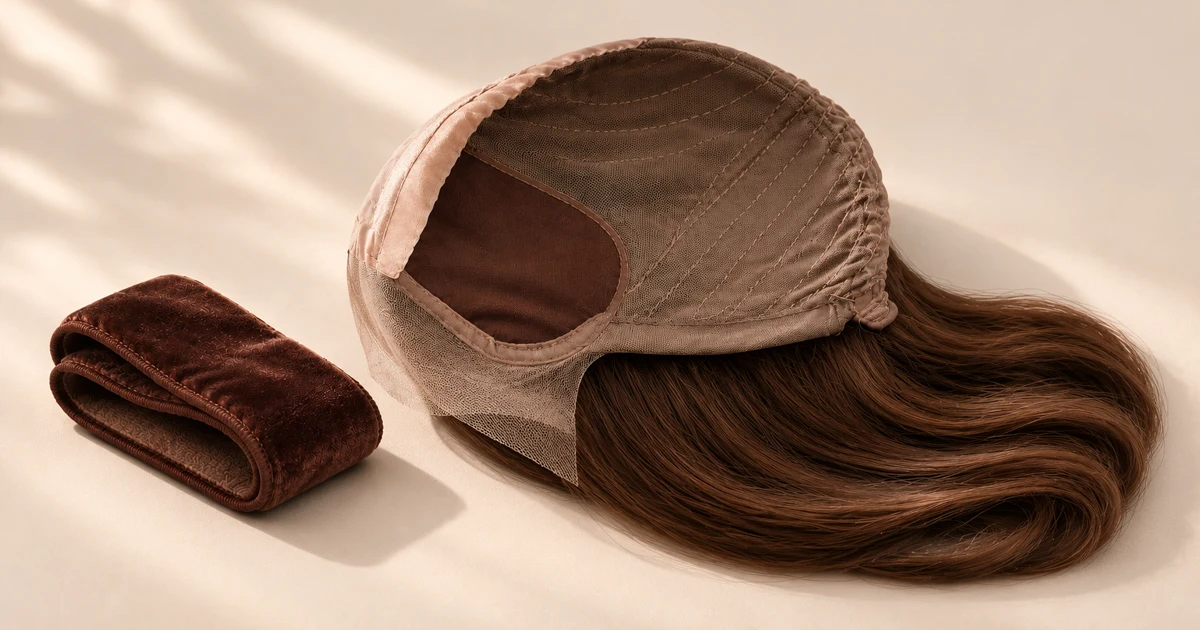
A silk top sheitel grip decision can arrive twice in one order: once as silicone strips built into the cap, and once as a velvet band listed alongside it. On the Fine Lace Wigs sheitel listing opened for this guide, both lines appear on the same silk top unit — “Silicone Strips” and “Complimentary Velvet Wig Grip.” What the same pages do not publish is when either system is needed on its own. Below, this guide compares the two by their contact points, reads the three checked sources, and closes with the written fields and sample checks that settle the choice on a real unit. For what each fixation material is, the sheitel cap construction guide holds the definitions in its section “How a Cap Grips Without Glue”; this page compares the two systems without restating them.
The Two Systems
Two Systems, Two Contact Points
The two systems differ first in where they live. Built-in silicone is part of the cap. On the Ouxun kosher wig listing opened for this guide, the maker describes silicone at the perimeter and crown, a top silicone cap design, and PU on the earbars as anti-slip.
A velvet grip band is not part of the cap — on the Fine Lace listing it is a listed extra. Milano Collection runs a Grip Line of separate grip bands, sold alongside its caps and liners, and a band is worn between head and cap rather than sewn into one.
That difference drives the selection. A strip answers where the cap grips by itself. A band answers what sits between head and cap underneath it. One checked listing lists both together, which makes the pair a configuration to verify — not a choice the listing makes for the buyer.
Where Each Grip Sits
| Aspect | Built-in silicone strips | Separate velvet grip band |
|---|---|---|
| Where it sits, as listed | Fixed inside the cap — silicone at the perimeter and crown (PU anti-slip on the earbars), per the Ouxun description | Worn between head and cap, per the accessories seller |
| How it reaches the buyer | Built in by the maker as cap construction | Listed as a separate accessories line; listed complimentary on one checked listing |
| What the listing publishes | Zone positions on one listing; a bare “Silicone Strips” line on the other | Seller wording; no zone data |
| Question it answers | Which zones the cap grips by itself | What is worn under the cap in addition |
The table compares descriptions, not performance. No page opened for this guide measured hold, comfort, or wear over time for either system. Which configuration suits a given client stays a sample-level question.
If the question is not selection but a cap that already slips, that diagnosis has its own article — Why a Sheitel Slips — with a five-area checklist. This page stays before the order: which fixation to specify, and how to check it.
The Evidence
What the Checked Listings Show
Three sources carry this guide. Each was opened on November 17, 2026. The set covers the Fine Lace Wigs and Ouxun Hair sheitel listings and Milano Collection’s Grip Line accessories feed. Together they show two sales channels for fixation — built into the cap, or worn as a separate product.
A Listing That Names Both
Fine Lace Wigs lists a silk top sheitel without lace. Its feature lines include “Silk top Sheitel Wig Without Lace,” “Silicone Strips,” and “Complimentary Velvet Wig Grip,” alongside “100% Human Hair Wig.” The grip copy reads: “If you want a comfortable option for wearing your wig without using glue or tape, the velvet wig grip band is exactly what you need!” — seller wording, quoted as written.
A Second Listing With Zone Positions
Ouxun Hair’s kosher wig listing, independent of the first brand, publishes zone-level fixation. Three of its feature lines matter here: “Silicone at Perimeter and Crown,” “Top Silicone Cap Design,” and “PU on the Earbars – Anti-Slip.” Each is the maker’s own description of its own cap. The product name on the same page carries medical and allergy wording. This guide does not adopt that wording, and no claim here rests on it.
An Accessories Line Sold Separately
Milano Collection sells its Grip Line as a separate accessories collection — grip bands offered alongside caps and liners. The channel is the point: a buyer can add a grip band to a cap without ordering a new construction.
What the three pages do not contain is a threshold. No page states when built-in silicone alone is sufficient. None compares the two systems’ contact points or publishes a security test to run before purchase. That gap is what the rest of this guide works in.
Compatibility
Silk Tops, Lace Fronts, and the Fixation Layer
Both checked sheitel listings pair built-in silicone with a silk top. The Fine Lace unit is a silk top sheitel without lace. The Ouxun listing combines a silk top front with its anti-slip silicone description. At listing level, silk top and silicone fixation appear together on both pages, and one pairs the zone with a front lace as well.
What the listings do not describe is the interaction. No page states how a worn band behaves against a silk top panel, whether a band changes how the front edge sits, or what order the layers take. Those stay open fields — and they are the fields worth writing down before a bulk order.
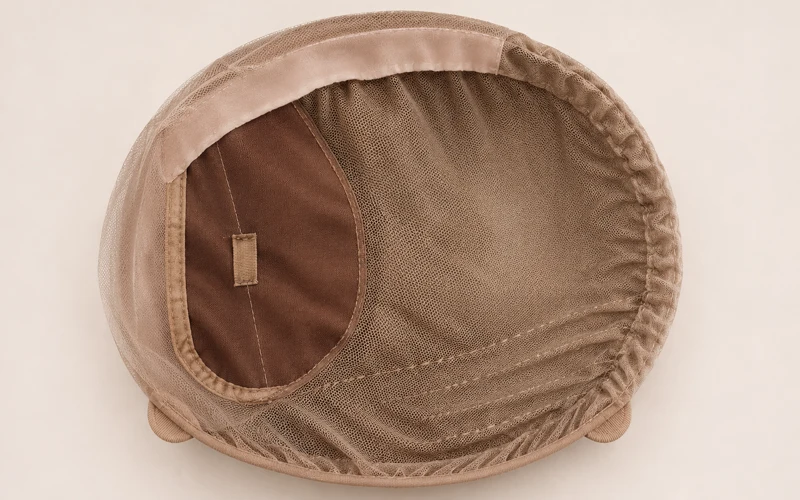
For the silk top zone itself, the silk top scalp tone guide is the background read on how the panel reads as a scalp.
The Sample Check
Testing Grip Security on a Sample
Since no checked page publishes a threshold, the sample carries the decision — for any silk top sheitel grip configuration: strips alone, a band alone, or both. The sequence below is advice for a B2B sample check. It is not a standard; adapt it to the boutique’s own process and the supplier’s written terms.
- Confirm the fields in writing first. Before the sample is reviewed, collect the answers in the checklist below. The written responses are the baseline the sample is checked against.
- Seat the cap without the band. Place the unit as the supplier specifies. Map where it contacts, against the written zone answers — whether those name perimeter, crown, or earbar zones. Note contact, lift, and movement at each zone.
- Repeat with the band. Add the velvet band, re-seat the cap, and note what changed: where contact increased, and how the front edge behaved.
- Move through a normal wearing sequence. A short walk, sitting, bending — the wearer’s ordinary day is the test. Record what shifts, if anything, and at which zone.
- Approve against the sample, not the label. Compare each observation to the written answers. A configuration verified on the sample is the deliverable; a feature list is not.
Two limits keep the check honest. Security observed on one sample is an observation of that sample — not a prediction about the rest of a bulk run. And one fitting session says nothing about months of wear; that is a re-check question for later, not a listing question.

The Fields
Specification Fields to Confirm in Writing
Five fields turn the listing gap into a verifiable specification. Ask the supplier to answer each in its own words:
- Strip material and build. What the strips are made of and how they are finished — not a generic “silicone” line.
- Zone positions. Which zones carry strips: perimeter, crown, earbar, or others. Where the earbar treatment is a different anti-slip material, ask for that name too.
- Band inclusion and build. Whether a grip band is included, and its material, width, and adjustability.
- Layer order. What sits between the silk top panel, the strips, and a worn band, described from the skin side out.
- Terms. Whether strips or bands can be changed on later orders, and on what terms.
Written answers to these five fields, plus the sample observations above, make the configuration verifiable. The feature lines on their own do not.
FAQ
Silk Top Sheitel Grip: Common Questions
No checked source sets that rule. One checked listing lists both together — Fine Lace Wigs pairs “Silicone Strips” with a “Complimentary Velvet Wig Grip” on the same silk top unit — so that seller treats the two as complementary. When built-in silicone alone is sufficient is not stated on any page opened for this guide. Treat it as a sample-level question and confirm the intended configuration in writing.
On the pages checked, zone positions appear on one listing: Ouxun’s kosher wig page describes silicone at the perimeter and crown, a top silicone cap design, and PU on the earbars as anti-slip. The Fine Lace listing says “Silicone Strips” without publishing positions. Placement is therefore a field to confirm in writing rather than assume from a feature line.
Grip Compatibility and Sample Testing
The checked listings pair the two: the Fine Lace page is a silk top sheitel that lists a velvet grip band alongside it, and the Ouxun listing combines a silk top front with built-in anti-slip silicone. How a worn band behaves against a silk top panel is not described on any page checked. Confirm the layer order with the supplier in writing and check it on the sample.
Collect the fixation fields in writing first — strip material, zone positions, and whether a band is included. Then on the physical sample: seat the cap without the band and note each contact point against the written answers, repeat with the band, move through a normal wearing sequence, and record what shifts. If a unit already slips, use the diagnosis checklist in Why a Sheitel Slips rather than adding parts first.
Conclusion
Decide by Contact Points, Then Verify on the Sample
A silk top sheitel grip order can carry both fixation systems, and the checked sources present them differently: built into the cap on two listings, or as a separate accessories collection. The selection axis is contact — where the cap grips by itself, and what is worn beneath it. No checked page sets a threshold for when strips alone suffice, and none publishes the layer behavior over a silk top panel. Both gaps close the same way: five written fields, a sample checked against them, and approval based on observation. Confirm the configuration in writing before the bulk order.



Sampling a Sheitel With Both Fixation Systems?
Take the five fields above — strip material and build, zone positions, band inclusion and build, layer order, and replacement terms — and have each one confirmed in writing before the sample is approved.
Contact LEV Wigs