Construction Guide
Full Lace vs Lace Top Sheitels: Comparing Whole-Cap Coverage
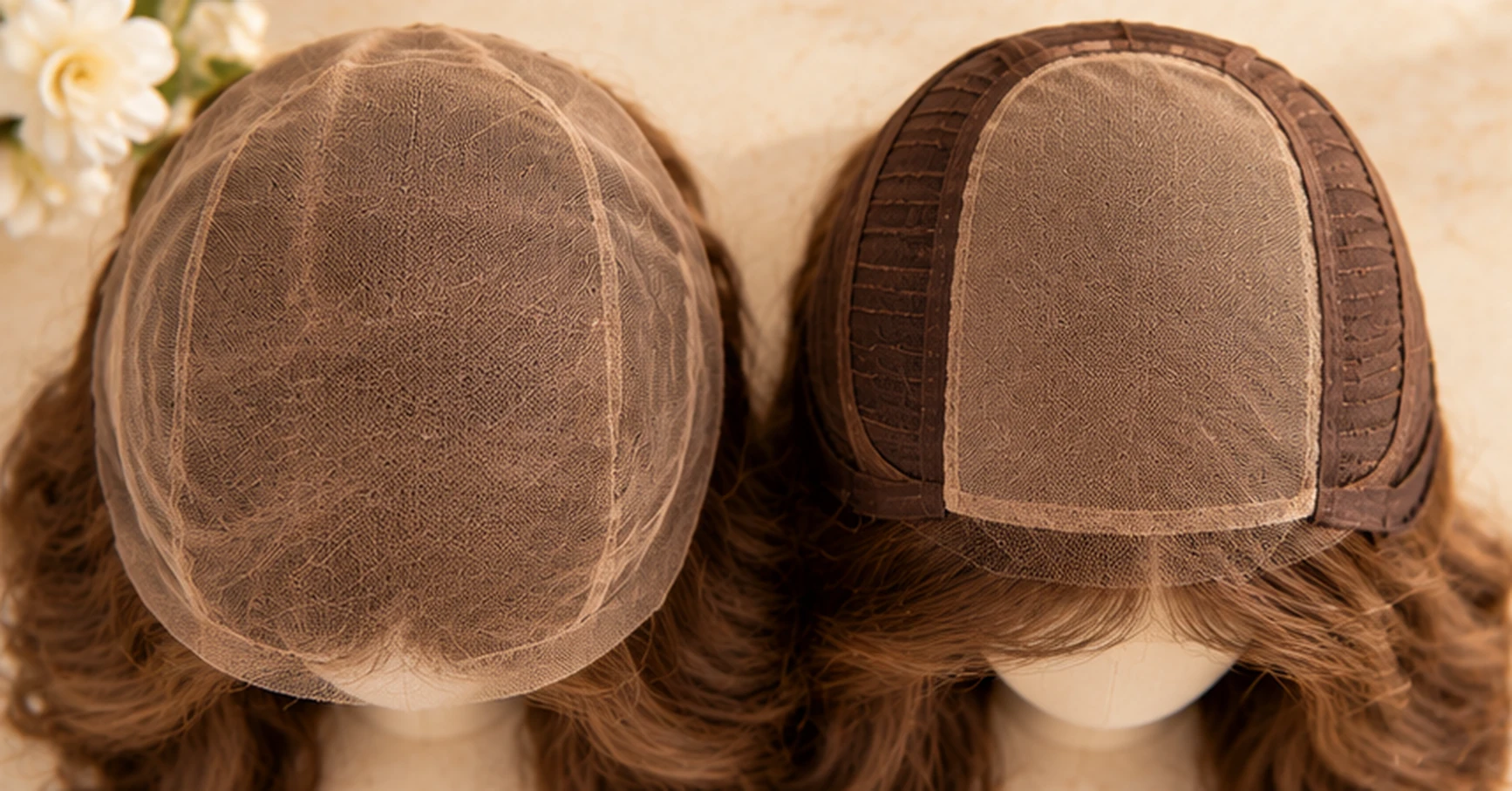
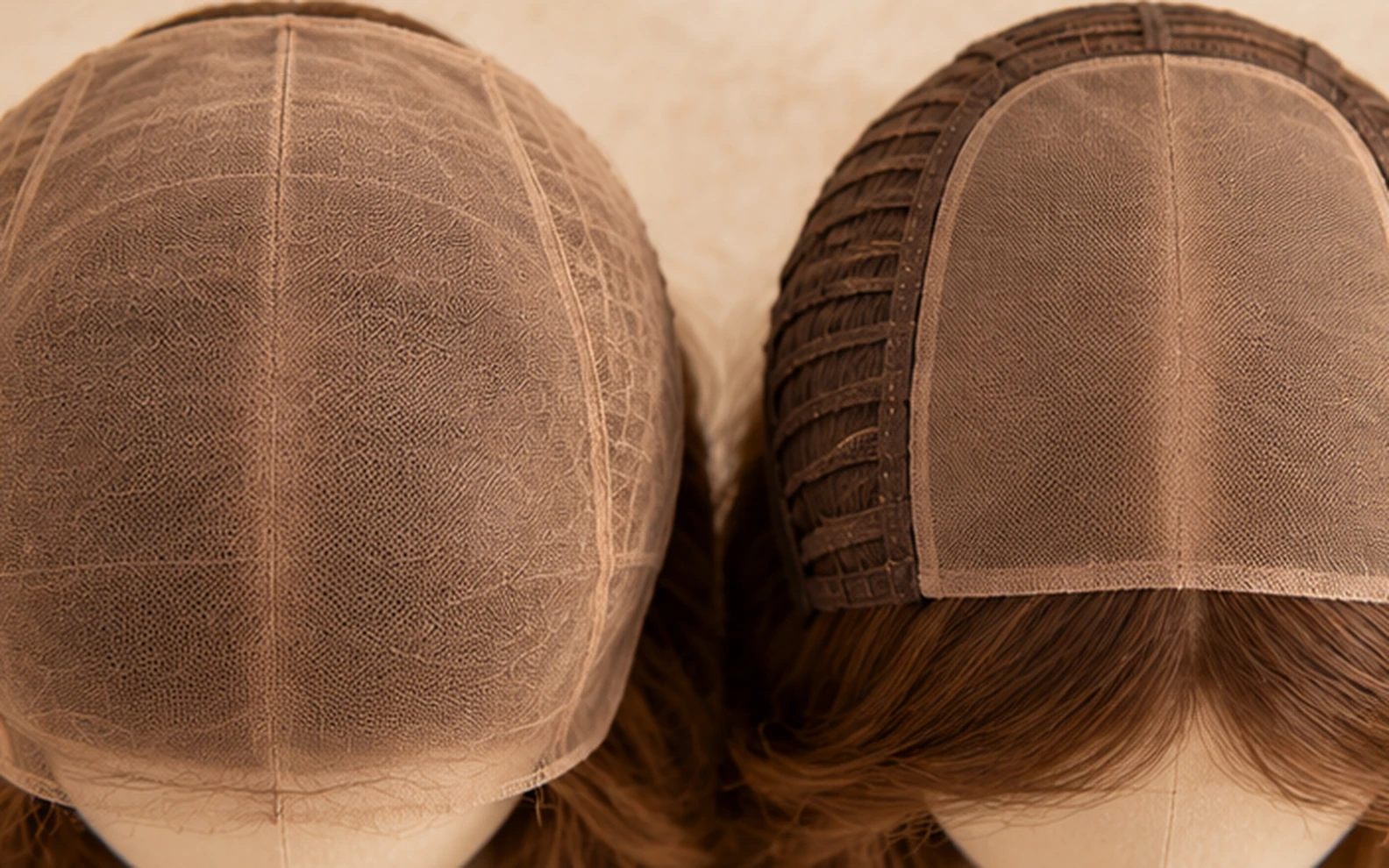
“Lace” shows up in two very different amounts on a sheitel cap. A full lace cap uses lace as the base across the whole head; a lace top confines it to a crown panel and builds the rest of the cap from other materials. The difference shapes coverage, parting, styling freedom, and what sits against the head — this guide compares the two constructions and closes with the fields a salon should confirm on the order.
Coverage
Whole-Cap Lace vs a Lace Crown Panel
Haneway’s full-lace page defines the construction directly: the cap base is lace across the entire head, with the hair tied individually, and Emeda’s Jewish-wig guide describes full lace bases in the same general terms — typically Swiss lace. Haneway’s Jewish wig program page lists a Full Lace Wig option alongside a Full Lace Wigs With Silk Top variant, and that variant’s own page pairs the full lace cap with a silk top area for a more scalp-like top; Haneway’s selection table associates full lace with flexible styling and updos.
A lace top sheitel keeps the exposed-top idea but shrinks the lace territory: the lace exists as a crown panel intended for the exposed top and parting. What carries the rest of the cap varies by maker — the lace top complete guide defines the crown panel while the surrounding construction can be several materials, so the zones around the panel are a per-listing confirmation, not a standard layout.
On the supply side, AIRAO HAIR’s listing uses “lace front” and “full lace” labels with supporting wig-net wording in a current export catalog — label and copy usage, not a zone-by-zone construction diagram, so what sits in each zone of that cap is a question for the maker.
Parting
Parting and Styling Freedom
Parting scope follows the lace coverage. On a whole-cap lace base — lace across the head with individually tied hair, as Haneway’s full-lace page defines it — the parting territory follows the lace, and Haneway’s selection table associates full lace with flexible styling and updos. The scalp look at the part is available across that territory, with a silk-top area as an optional variant on some listings.
On a lace top sheitel, the natural-looking part lives inside the crown panel. A part pushed outside the panel crosses into construction that was not made to display a scalp — whatever material carries it. That is a practical boundary for daily styling, not a quality ranking — a client who never parts outside the crown loses none of that daily territory, and a narrower lace territory leaves less lace surface to handle day to day.
The styling question for the salon is concrete: which part placements and updo styles will this client actually wear? Match the construction territory to that answer, then confirm the panel size in centimeters on the order.
Fixation
Fixation and What Sits Under the Lace
Lace coverage and fixation should be recorded separately. AIRAO’s listing mentions supporting wig nets alongside its lace labels, but that wording does not identify a grip system. Ask the selected supplier to list any clips, bands, combs, or adjustable straps and show their positions; do not infer them from the amount of lace.
What differs with coverage is territory, not a fixed layer count: how many layers or reinforcements sit under the lace, how the zones meet, and where the fixation hardware anchors are maker decisions to confirm item by item. Neither layout is inherently more secure — security comes from the grip plan, the fit, and what the client wears under the cap.
Ask the same question for both constructions: where does this cap grip, with what hardware, and what does the maker recommend wearing underneath it?
Selection Table
The Salon Selection Table
For a retail conversation, the two constructions compare like this:
| Decision point | Full lace sheitel | Lace top sheitel |
|---|---|---|
| Lace territory | Whole cap; scalp effect across the base | Crown panel; scalp effect at the exposed top |
| Parting | Anywhere the cap is laced; suited to varied parts and updos | Within the crown panel; boundary confirmed in cm |
| Layers under the lace | Not fixed by the label — confirm layers and reinforcement for the piece | Not fixed by the label — confirm the surrounding construction |
| Variant naming | Silk-top area appears as a listed upgrade variant on some full-lace pages | Panel size and surrounding zones named per listing |
| Confirm on the order | Lace type, net structure, grip hardware, parting expectations | Panel size, surrounding construction, grip hardware |
Ask the supplier you actually intend to order from for current sample conditions and turnaround, in writing — program pages and marketplace tables are not a delivery promise, and order-table fields can cover more product types than the piece you are buying.
Before You Order
What to Confirm on the Order
Whichever territory the client chooses, the order fields are the same shape:
- Lace territory in numbers: whole cap, or crown panel with dimensions.
- Lace type: the material named — Swiss and French lace are the names that appear across supplier pages — with the care sheet that comes with it.
- Surrounding construction: what carries each non-lace zone — named explicitly, not assumed to be wefts — and how the zones meet.
- Grip plan: hardware and placement, plus what the maker recommends wearing under the cap.
- Variant clarity: if the page mentions a silk-top full-lace variant, confirm which areas are silk and which remain lace; give the variant its own written line.

That the cap's base is lace across the whole head rather than only at a crown panel or front strip — Haneway's full-lace page defines it that way, with the hair tied individually, and Emeda's guide describes the bases as typically Swiss lace. How many layers or reinforcements sit under the lace, and the grip hardware, vary by maker and are fields to confirm.
Within the lace-covered, hand-tied territory of the cap — which on a whole-cap build means most of the head. Haneway's selection table associates full lace with flexible styling and updos for exactly this reason. Confirm the panel or coverage dimensions in writing, because 'full lace' pages do not always state how every zone is ventilated.
Neither is better across the board. Full lace maximizes the lace territory; a lace top concentrates the lace in a crown panel, with the surrounding construction varying by maker. The right choice depends on how the client parts and styles her hair, and what grip and care routine she will keep.
The lace territory in numbers (whole cap or panel dimensions), the lace material named, the construction carrying each non-lace zone, the grip hardware and its placement, and — on any silk-top full-lace variant — which areas are silk and which remain lace. Ask the supplier you intend to order from for current sample conditions and turnaround in writing; program pages are not a delivery promise.
Conclusion
Buy the Territory, Not the Word
The central comparison is where lace is used: across the cap or in a top panel. Record that coverage separately from the layers and reinforcement, the confirmed parting area, and the fixation components. Ask for each field on the selected cap in writing rather than deriving feel or grip from its coverage label.


Choosing Between Lace Constructions for Your Salon?
Use the order fields above — lace territory, lace type, surrounding construction, and grip plan — to make the next supplier conversation a specification, not a comparison of labels.
Contact LEV Wigs