Top Materials Guide
Mono Top Sheitels: What to Compare With the Lace Top

On sheitel listings, two words keep appearing at the crown: mono top and lace top. They name materials, not quality grades. A monofilament top is a fine, sheer mesh built to make the part read like hair growing from the scalp. A lace top is a lace crown panel doing related work with a different surface. Because both words describe the same zone, a boutique comparing them needs a fixed set of surfaces to compare on, and that is what this guide sets out.
The sections below cover the mono top material itself, the four surfaces where it differs from a lace top panel, the hairline options that combine with it, and the checks to run on a physical sample before ordering.
The Material
What a Mono Top Is on a Sheitel
A mono top sheitel is a sheitel whose part zone is built from monofilament. In general wig-market education, UniWigs' cap construction guide describes the mono top as a cap whose top portion is made from “a very fine, sheer material called monofilament,” creating “an illusion of natural hair growth” with natural movement (opened 2026-11-17; a general-market source, not a sheitel-specific one). The definition is about the material and the effect it stages at the part. It says nothing about the rest of the cap, which is why the rest of the cap is a specification question rather than something the word carries.
The Jewish market places the term in the same column as its alternatives. RemyPatra Hair Group, a B2B supplier page for Jewish wigs and toppers, lists “Silk top, lace top, mono top and fully hand-tied cap construction” as parallel options (opened 2026-11-17). Read together, the two sources set the boundaries of the word: mono top names a crown material that competes with lace top, not a whole-cap design and not a front-edge finish. Where lace covers the cap — the whole-cap-versus-crown-panel question — is a separate axis, and the full lace vs lace top guide owns it.
The Comparison
Mono Top and Lace Top as Top Materials
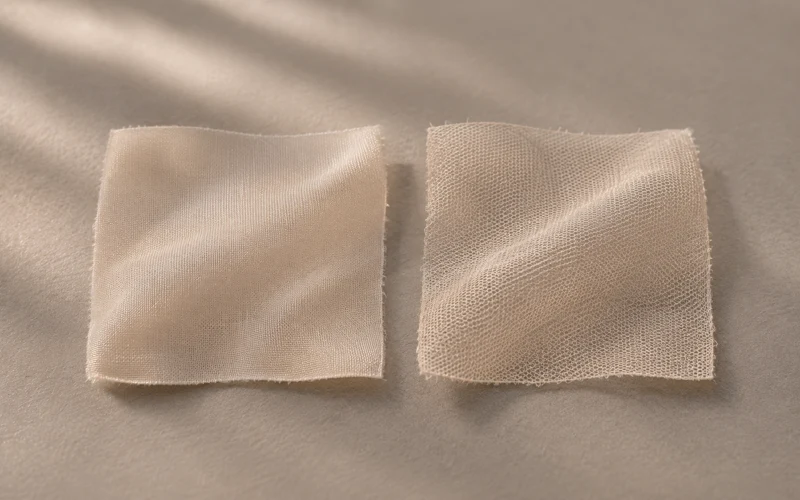
In a mono top vs lace top comparison, the two crown materials differ on four surfaces a client notices in wear: how the part reads, how sheer the material is against the skin, what the tied knots look like close up, and how the underside feels across a day. None of the pages checked measures one material against the other on any of these.
Sellers describe their own materials instead — UniWigs credits the mono top with the growth illusion quoted above, and Hair Queen LA describes its silk mono top cover as replicating “the look of real scalp” — so the comparison has to run on samples of the exact caps being considered, not on listing copy.
| Surface to compare | What to put to the sample |
|---|---|
| Parting realism | Read the part in daylight on both materials, and note which surface stages the scalp area on each. |
| Sheerness against skin | Check each top over the client's own coloring rather than over the block or the photo background. |
| Knot visibility | Look close up where the hair enters the top on each material, and ask the seller how their knots finish. |
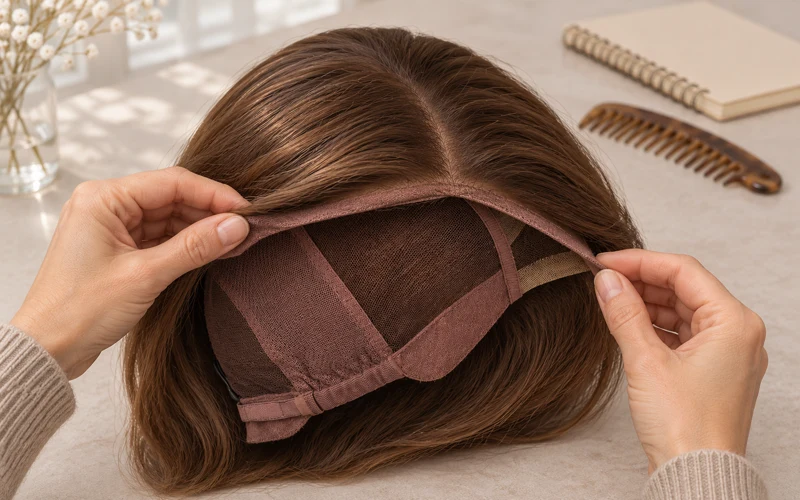
| Interior feel | Turn each cap over, feel the underside, and have the client wear it through a try-on. |
Two boundaries keep this comparison honest. Silk tops sit outside it entirely — the silk-versus-lace decision belongs to the lace top vs silk top guide, which checked sources place in its own lane. And the four surfaces above describe what differs at the part zone, not where the part can travel; directions and measured areas belong to parting mechanics, which the fixed vs free part guide covers with its own measuring fields.
The Combination
Where the Hairline Fits In
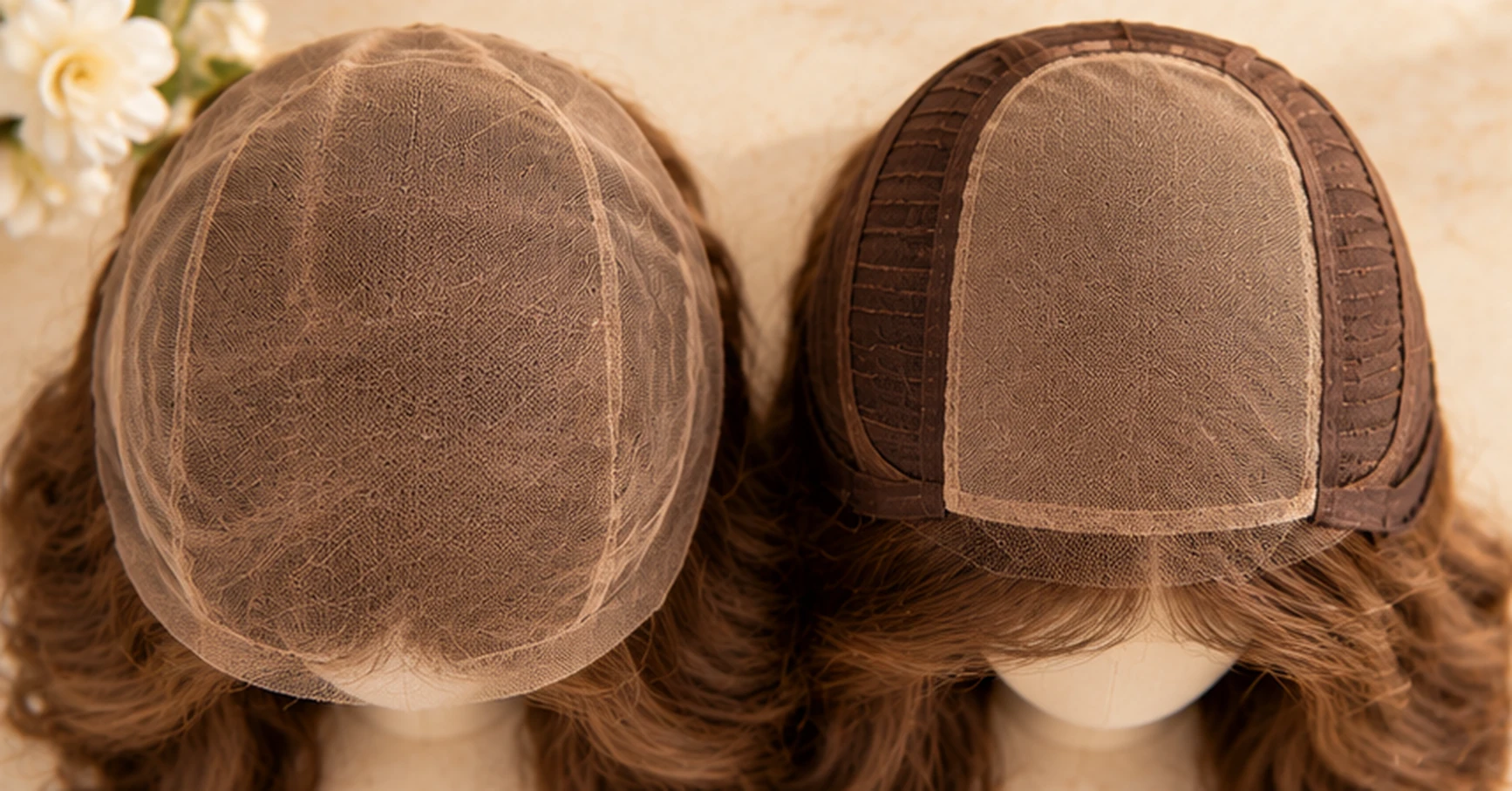
Three labels do three different jobs on a listing, and keeping them separate is the first check on any order form. The mono top is the crown material this article compares. At the front edge, a lace front names a strip at the hairline — UniWigs' general-market guide describes the lace front cap as “lace in the front and traditional wefts in the back,” which is a hairline layer rather than a crown material. The lace top, meanwhile, is the lace crown panel sitting on the other side of this article's comparison. These words are not interchangeable, and a cap can carry more than one of them at once.
The checked listings treat the crown and the hairline as separate fields. In the Headcovers sheitel category, checked 2026-11-17, the Monofilament Top and Lace Front filters sit in the same category, and product cards pair the two labels on single units — one Jon Renau card reads “Remy Human Hair, Lace Front, Monofilament, Hand Tied.” A filter view from one retailer on one day is an observation about that category, not an industry statistic.
A Listing That Combines Both
“Construction: Monofilament top, French lace”
Hair Queen LA, sheitel product specifications, opened 2026-11-17
Hair Queen LA, a Los Angeles-based Jewish wig salon brand, prints the combination as one spec line on a sheitel listing — the product’s own title names it a Jewish wig sheitel — quoted above. The same page describes the build in the seller's own words: a “French lace front for an undetectable hairline and a silk mono top cover that replicates the look of real scalp.”
One listing, two zones, two named materials — the crown handled by a mono-family top and the hairline handled by a lace front. That is the pattern to carry onto an order form: name the crown material and the front finish as two fields, and let neither word stand in for the other.
The Checklist
What to Check on a Mono Top Sample
A mono top label carries no measurable content by itself. None of the pages checked states how sheer the mesh is, how the knots finish, or what the underside feels like in wear. The answers live in the sample, and the four comparison surfaces become the checks:
- Read the part in daylight, on both materials when the decision is mono-versus-lace, and record which surface stages the scalp area better for this client.
- Check sheerness over the client's own coloring, the surface the top reads against in wear.
- Inspect the knots close up where the hair enters the top, and ask the seller in writing how their knots finish on the exact cap quoted.
- Turn the cap over and feel the underside, then have the client wear it through a try-on long enough to judge comfort.
After the checks, write the cap line. Name the crown material and the front finish separately — “mono top, lace front” style, in the spec line's own vocabulary — and ask in writing for anything the label leaves open, such as mesh tone, knot finish, or panel size. Keep the written reply beside the sample when it arrives, so the check has something to verify against. For the parting zone itself, the fixed vs free part guide lists the direction and measured-area fields to confirm on the same order.
Common Questions
Mono Top Sheitels: Common Questions
On the sources checked for this article, a mono top sheitel is a sheitel whose crown zone is built from monofilament, the fine, sheer top material that UniWigs' general-market cap guide describes as creating an illusion of natural hair growth. The name covers the top material, not the front edge and not the whole cap. RemyPatra, a Jewish-wig supplier, lists mono top as one cap construction beside silk top and lace top. How any one maker's mono top looks and feels is a sample question, not a label question.
This article does not rank the two materials. The checked sources describe them as parallel options: RemyPatra lists silk top, lace top, mono top, and fully hand-tied construction side by side. No page checked measures one material against the other on parting realism, sheerness, knot visibility, or interior feel. Those four surfaces vary by maker, so the comparison runs on samples of the exact caps a boutique intends to order. Comparative evidence on durability, comfort, or price was not established by this review.
Lace Fronts and Sample Checks
Yes, on the listings checked, because the two labels describe different zones and combine on single caps. In the Headcovers sheitel category, checked 2026-11-17, the Monofilament Top and Lace Front filters sit in the same category, and cards pair the two labels on single units. Hair Queen LA prints the combination as one spec line on a sheitel listing: “Construction: Monofilament top, French lace.” On an order, name both fields separately, the crown material and the front finish.
Put the four comparison surfaces to the physical sample: read the part in daylight, check the sheerness against the client's own coloring, inspect the knots where the hair enters the top, and feel the underside across a wear-length try-on. Then write the cap line with the crown material and the front finish named separately, and ask in writing for anything the label leaves open, such as mesh tone, knot finish, or panel size. For the parting zone, the fixed vs free part guide lists the direction and measured-area fields to confirm.
Conclusion
Compare the Materials, Then Write the Two Zones
Mono top and lace top are two crown materials doing related work, and the checked listings list them as parallel options rather than ranking them. The hairline is a separate zone with its own label, and caps combine the zones routinely. Nothing in the pages checked turns the vocabulary into a decision — the decision runs through samples and written specifications. Read the four surfaces on the sample, name the crown material and the front finish as two fields on the order, and keep the seller's written reply beside the sample when it arrives.


Specifying the Top on Your Next Sheitel Order?
Use the fields above to put the crown material and the front finish in writing before samples are approved.
Contact LEV Wigs