Wholesale Guide
Wholesale Hair Toppers: What Is a Hair Topper?

Overview
Introduction
Most salon owners have been there. A client sits down, parting her hair with trembling fingers, pointing to a widening patch at the crown. She doesn't want a full wig — not yet. She wants something that covers the thinning area without hiding the healthy hair she still has. That's exactly where wholesale hair toppers come in — partial hairpieces that salon owners and retailers stock to solve this exact problem for their clients.
So, what is a hair topper? At its simplest, it's a partial hairpiece designed to cover specific areas of thinning or loss while blending with the client's natural hair. Unlike a full wig, a topper integrates with the bio hair on the sides and back, adding volume and coverage only where it's needed.
At our Qingdao workshop, we manufacture thousands of these pieces monthly, and honestly, we learned the hard way that most wholesale buyers don't fully understand the product they're ordering. Early on, a salon chain in California returned an entire batch because the base sizes were too large for their clients' thinning patterns. They assumed one standard size would fit most women. It doesn't. Consequently, we now include a measurement guide with every wholesale sample order and quote MOQ, lead time, and customization limits before production starts.
In this guide, you'll learn what separates a quality topper from a mediocre one, which clients are actually good candidates, and how to avoid the inventory mistakes that cost salons money. Furthermore, we'll walk through base construction, attachment methods, factory direct ordering, and the difference between the various hair types available on the wholesale market.
Fundamentals
Wholesale Hair Toppers: What Exactly Are They?
The Basic Definition
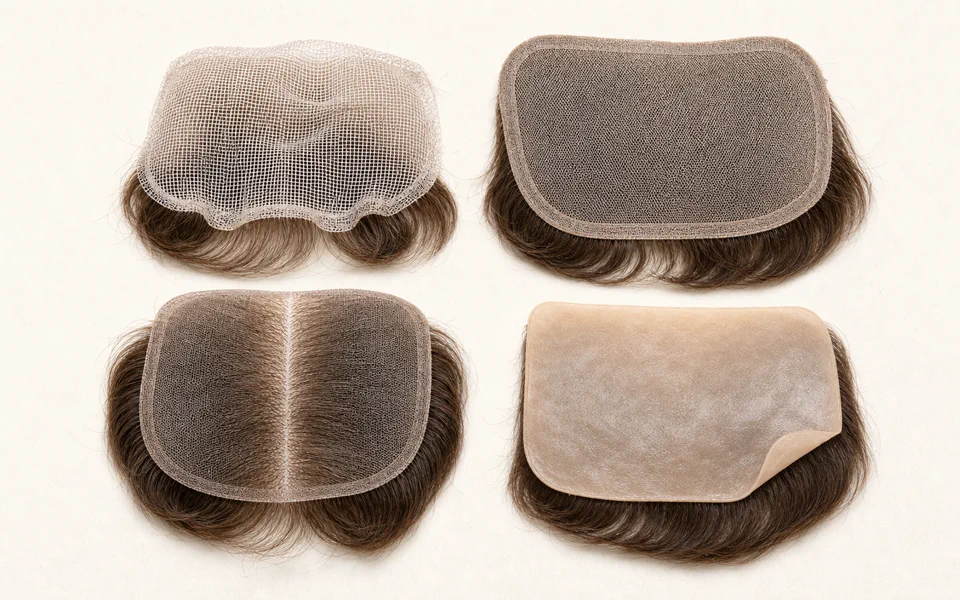
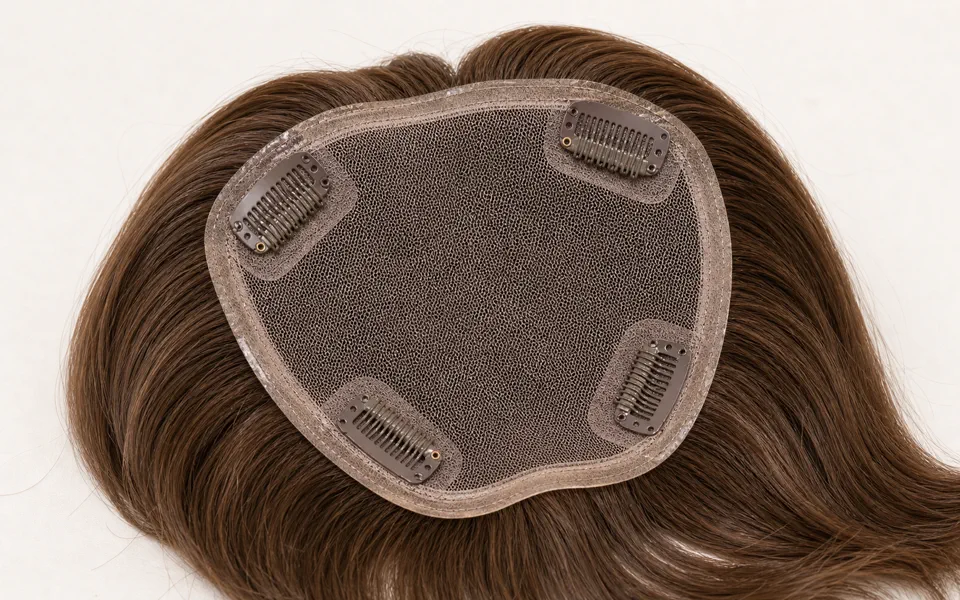
A hair topper is essentially a patch of hair attached to a base material — typically silk, lace, monofilament, or a polyurethane skin base. The base is shaped to match the client's thinning area, and the hair is knotted, injected, or ventilated into that base. Clips, tape, or an integration band secure the piece to the client's existing hair. For salons sourcing wholesale hair toppers, understanding these construction basics determines which pieces will satisfy clients and which will come back as returns.
The size varies dramatically. A small crown topper might measure just 2 by 3 inches, while a larger piece for diffuse top thinning can reach 7 by 7 inches. In our factory, the most commonly requested wholesale size falls between 5 by 5 inches and 6 by 6 inches. However, the wrong size is the number one reason salon clients feel dissatisfied with their purchase. A base that's too small leaves visible edges; one that's too large creates bulk where the client's natural hair meets the piece.
How Toppers Differ from Full Wigs
This distinction matters because many wholesale buyers — and their clients — confuse the two. A full wig covers the entire scalp. It requires either complete hair loss or a wig cap to hold everything in place. By contrast, a topper leaves the client's perimeter hair exposed and free. That means less heat buildup, lighter weight, and a more natural appearance from every angle. Understanding this difference is fundamental for anyone buying wholesale hair toppers for clients experiencing thinning.
Furthermore, the emotional hurdle is lower. A client wearing a topper can still feel her own hair at the nape and temples. She hasn't "given up" on her bio hair entirely. For salon owners, this translates into higher conversion rates among women who aren't ready for a full wig. In fact, our wholesale partners consistently report that first-time topper clients are significantly more likely to return for color services and maintenance products than first-time wig clients.
Common Coverage Areas
Not all thinning happens at the crown. Toppers can address several distinct patterns:
- Crown thinning: The classic use case. A circular or oval topper sits at the top of the head, covering the area visible from above.
- Widening part: A narrow, rectangular piece placed along the center or side part line restores density where the scalp is becoming visible.
- Temple recession: Smaller pieces with a lace front edge blend into the hairline, framing the face naturally.
- Diffuse top thinning: A larger base covers the entire top of the head from front to back, ideal for clients with widespread but not total loss.
Each pattern demands a different base shape and attachment strategy. A temple piece, for example, needs a lace front or silk top edge to disappear at the hairline. A crown piece doesn't need that feature but requires enough surface area to anchor securely without pulling on fragile surrounding hair.
Client Profiles
Who Needs Wholesale Hair Toppers?
Understanding Your Client's Hair Loss Pattern
Before you stock wholesale hair toppers in your salon, you need to know who will actually buy them. Crown thinning from androgenic alopecia is the most common pattern we see in reorders from our salon partners. It typically presents as a circular or oval area of reduced density at the top of the head, often widening over three to five years before the client seeks a solution. Postpartum shedding, on the other hand, tends to be more diffuse — the entire top layer looks thinner, not just one spot. Then there's traction-related loss, usually along the part line or edges, caused by years of tight braids or extensions.
Each pattern calls for a different base shape and hair density. A client with postpartum diffuse thinning needs a larger base — usually 6 by 6 inches or more — to cover the broad area without creating a visible edge. Meanwhile, someone with early-stage crown thinning can start with a 4 by 4 inch piece. Getting this wrong means an unhappy client and a returned product.
When to Recommend a Topper Instead of a Wig
There's a simple rule we share with our wholesale accounts. If the client still has healthy perimeter hair — meaning the sides and back are thick enough to anchor clips or tape — a topper is almost always the better first recommendation. It's lighter, more breathable, and less of a psychological leap.
But what if the thinning has progressed beyond the crown? If the loss has reached the temples and the nape is visibly sparse, a full wig becomes the more practical choice. The client's own hair simply can't support the attachment anymore. Similarly, clients undergoing chemotherapy-related total hair loss need a full wig, not a topper. The key is assessing anchor hair. Without it, the topper has nothing to grip.
The Emotional Side of the Conversation
Most wholesale buyers overlook this entirely. They're focused on specs — base size, hair length, color chart. But the client's emotional state determines whether she'll actually wear the piece you sell her.
Women choosing their first topper are often grieving their hair. They've tried volumizing shampoos, scalp treatments, maybe even PRP injections. The topper represents acceptance. Therefore, the language you and your stylists use matters enormously. Don't frame it as "hiding" something. Instead, present it as a styling option — like extensions, but for coverage. We noticed a sharp uptick in repeat orders from one Florida salon after they stopped using words like "hair loss" and "thinning" during fittings. They simply asked, "Where would you like more volume?" The clients relaxed immediately.
This emotional shift doesn't just improve the fitting experience. It also reduces returns. Clients who feel empowered by their choice wear the piece daily. Clients who feel defeated by it leave it in the drawer.
Buying Criteria
Key Features to Evaluate in Wholesale Hair Toppers
Base Size and Construction
This is where most wholesale hair toppers orders go sideways. A buyer sees "medium" on a spec sheet and assumes it means one thing. In reality, medium can range from 4 by 4 inches to 5 by 5 inches, depending on the manufacturer. At our Qingdao facility, we define small as 2 by 3 to 3 by 4 inches, medium as 4 by 4 to 5 by 5 inches, and large as 6 by 6 to 7 by 7 inches. But not every factory uses the same definitions. Therefore, always request a base dimension sheet before placing bulk orders.
The construction material matters just as much. Silk top bases hide knots completely, creating the most realistic scalp appearance. Monofilament mesh is more durable and breathable, making it ideal for clients in warm climates. Lace fronts disappear at the hairline but require gentler handling. For wholesale buyers, we typically recommend starting with a mixed inventory: 60% silk top for premium clients, 30% mono for everyday wearers, and 10% lace front for clients who style their hair back.
Hair Type and Texture Matching
A topper that doesn't blend is a topper that gets returned. The hair type determines everything from styling flexibility to longevity. Remy human hair — with cuticles aligned in the same direction — tangles less and lasts one to three years with proper care. Non-Remy hair, often collected from brushes and salon floors, tangles within months. The price difference is substantial, sometimes 40% or more per unit, but the return rate on non-Remy stock is punishing.
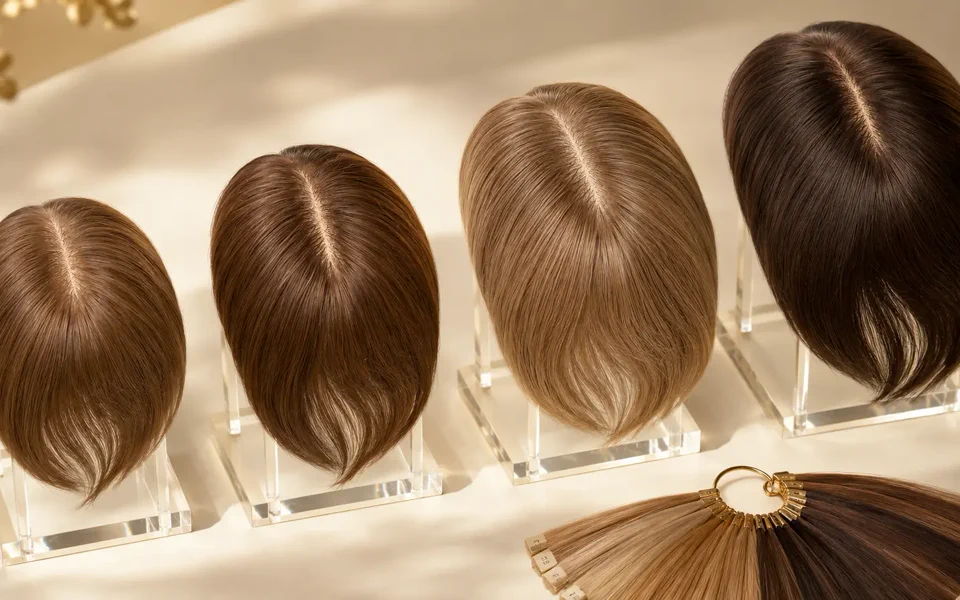
Texture matching is equally critical. A client with fine, straight bio hair can't suddenly wear a coarse, wavy topper without looking obvious. Most wholesale catalogs offer straight, body wave, and loose curl options. In addition, we always advise ordering color rings with actual hair samples rather than relying on digital swatches. Screen colors lie. The difference between a warm brown and an ash brown can cost you a reorder.
Attachment Methods
How the topper stays on the head affects both comfort and client retention. Clip-in attachments are the most common. They're fast to apply, easy to remove, and don't require adhesives. However, they need enough anchor hair to grip. For clients with very fine or fragile hair, pressure-sensitive clips can cause traction damage over time.
Tape and glue methods offer more security for active clients but require a learning curve. The adhesive needs replacement every two to four weeks, and not all clients want that maintenance commitment. Integration bands — essentially adjustable elastic straps that wrap around the head — work well for clients with minimal anchor hair. They're less secure than tape but far gentler on fragile strands.
When we consult with new wholesale accounts, we ask about their typical client's lifestyle. A salon serving older women with age-related thinning usually needs more clip-in inventory. A boutique catering to younger clients with active lifestyles needs more tape-compatible pieces. Getting this mix wrong leaves inventory sitting on shelves.
Pitfalls
Common Mistakes Wholesale Buyers Make
Ordering one-size-fits-all inventory is the fastest way to tie up cash. We saw a Texas distributor lose nearly $15,000 on a bulk order of standard 5-by-5 silk tops because their market was primarily African American women with tighter curl patterns who needed larger bases and textured hair. The pieces were beautifully made. They were also unsellable.
Another frequent error is ignoring texture diversity. Salons often stock straight hair in ten colors and forget that wavy and curly clients exist. Meanwhile, they can't move the straight inventory because their client base doesn't match it. Similarly, many buyers overestimate how many clients want human hair and underestimate synthetic demand. Heat-friendly synthetic fibers have improved dramatically in the past five years. For clients who want a wash-and-wear piece without styling effort, synthetic is genuinely the better fit.
Finally, overlooking attachment compatibility creates fitting headaches. A salon buys thirty clip-in pieces, then discovers half their clients don't have enough anchor hair to support them. The clips slip, the client is frustrated, and the piece comes back. Testing attachment methods with a small sample batch before committing to volume prevents this entirely. Before a bulk run, ask the manufacturer for QC photos, base measurements, density notes, and estimated lead time so your launch calendar matches the factory schedule.
FAQ
Frequently Asked Questions
A hair topper covers scalp-level thinning by sitting on top of the head and integrating with existing hair. Extensions add length and volume but require enough density at the roots to hide the attachment points. They don't solve the problem of a visible scalp. A client with crown thinning needs a topper, not extensions.
MOQ depends on base type, hair grade, and customization level. For first orders, most buyers should request a small sample order before committing to bulk inventory. As a factory direct manufacturer, LEV can quote mixed specifications so salons can test demand before scaling.
Yes. Wholesale orders can specify base dimensions, density, length, color blend, part direction, clip placement, and packaging. Custom color matching works best when buyers send a physical swatch or approve a hair ring sample first. For private label programs, packaging details should be confirmed before production.
Sample pieces are typically faster than custom bulk orders. Lead time depends on hair availability, knotting method, color work, and packaging requirements. For seasonal inventory planning, salons should confirm production slots before launching promotions. Rush requests are easier when specs match existing base templates.
Both. Human hair offers styling flexibility and longevity, appealing to clients who heat-style daily. Synthetic appeals to clients who want low maintenance and a lower price point. Most successful wholesale accounts carry a 70-to-30 human-to-synthetic ratio, adjusted for their local market. When sourcing wholesale hair toppers, ordering a mixed sample batch is the safest way to test demand before committing to volume.
Takeaways
Conclusion
Hair toppers occupy a unique space in the hair replacement market. For salon owners and distributors, wholesale hair toppers offer strong margins, high reorder potential, and a product category that continues to grow year over year. They're less intimidating than full wigs, more effective than volumizing products, and — when fitted correctly — virtually undetectable. For wholesale buyers, they represent a growing category with strong margins and high reorder potential.
The key is understanding what you're actually buying. Base size, construction material, hair quality, and attachment method all determine whether a piece sells or sits. Get these fundamentals right, and your clients get a solution that restores their confidence. Get them wrong, and you're managing returns instead of building relationships.
At our Qingdao workshop, we've manufactured toppers for wholesale partners across North America, Europe, and Australia. If you're evaluating inventory for your salon or boutique, we can provide sample pieces, spec sheets, and fitting guidance tailored to your client demographic. Reach out through our wholesale inquiry form to discuss minimum orders and custom specifications.


Ready to Stock Quality Hair Toppers?
Request wholesale samples from our Qingdao workshop.
Request Samples