Supplier Vetting
Vetting a Human Hair Wig Manufacturer: A Document Map
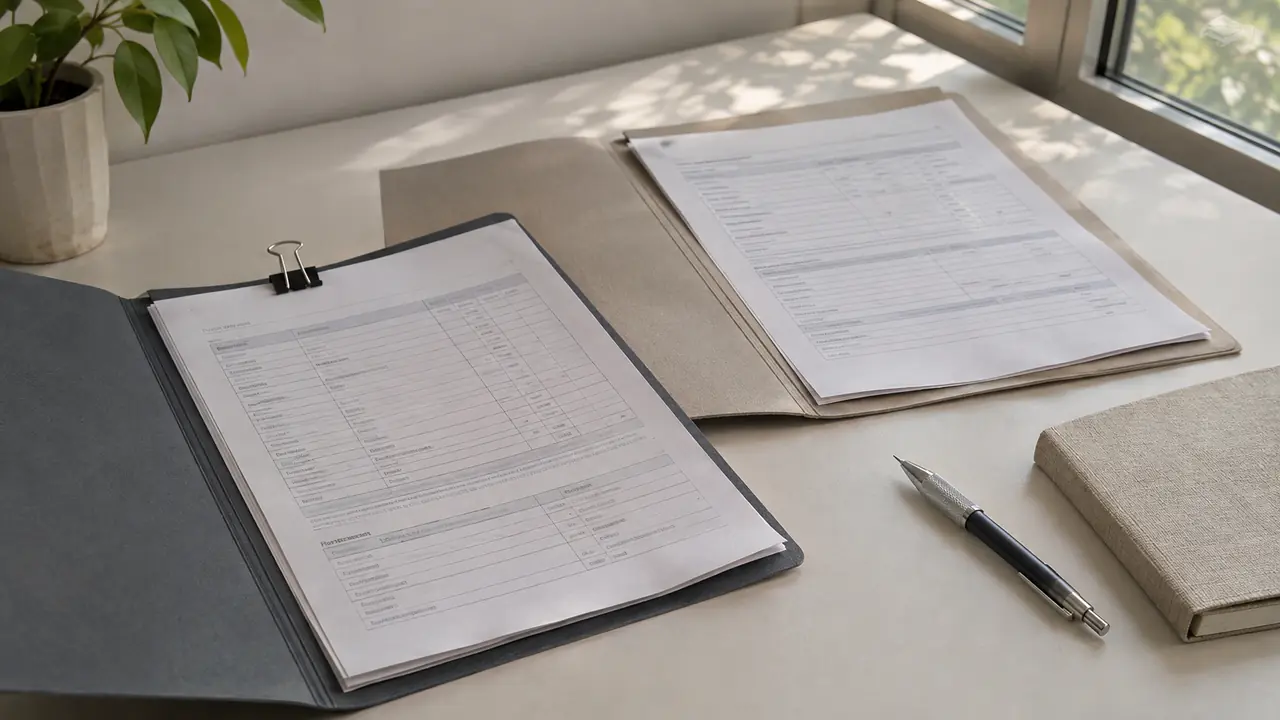
A factory can send you a certificate, a video of a workshop, a stack of dispatch photos and ten references, and still leave the one question you actually care about unanswered: can this supplier build my specification, repeatably, on my timeline? That is not because suppliers lie. It is because evidence gets asked for in a lump and read in a lump. This guide does the opposite: it takes the items a manufacturer of full human hair wigs — complete wigs covering the whole head, not toppers or partial pieces — may provide and asks three questions of each — what does this show, what does it not show, and how would I check it. The output is a verification table you can work through for two or three suppliers. It separates what to settle in writing before you pay for a sample — your specification, the supplier's written hair statement, and the sample terms — from what gates a trial order: a sample accepted against your written specification.
Step 1
Write the product scope before you judge the supplier
Evaluating a supplier against an unwritten product is a conversation about impressions. Write the scope first, short enough to fit on one page.
- Construction: which cap types you are buying — the focus here is full wigs, in constructions such as lace front, lace top, or silk top — and for which price band.
- Hair statement: what you need the supplier to declare — origin, tier, processed or unprocessed — in their own words.
- Specification depth: the fields you will hold them to at approval (length, density basis, colour, hairline treatment, tolerance).
- Volume shape: your first order, your plausible reorder, and the minimum per model and per colour you can live with.
- Market: who wears it, and what your customer will judge first — hairline, colour, density, movement, or the price.
Only then does a supplier's answer become comparable, because two suppliers describing "European hair wigs" against different scopes are not describing the same product. If you have not written the specification yet, that is the earlier task; the wholesale specification guide shows how granular those fields can get.
Step 2
Hair source and processing: what a disclosure shows
Origin and processing statements are hard to verify and easy to quote. The honest reading is narrow, and it is worth stating plainly: a disclosure shows that the supplier has a position. It does not show that the position is true.
That distinction is not cynicism. It is the difference between two usable outcomes. A supplier who will state, in writing, how they describe their hair tier and processing has given you a claim on record. Your sample and batch checks can show whether delivered units match the observable parts of that description. For each origin or processing claim, ask which records link it to this batch. If a test is proposed, ask which claim it addresses, what was sampled and what the result can support. Mark any part of the claim that lacks support as unverified. A supplier who will only say "best quality" has given you nothing to test.
Three practical consequences:
- Write the statement down verbatim. Their words, not your summary — a paraphrase invites later disagreement about what was meant.
- Ask what they would accept as a contradiction. If the answer is "nothing, it is guaranteed", you have learned that the claim is unfalsifiable, which is a risk signal, not a reassurance. For origin and processing, ask which traceable records support that specific claim, and what each record or method can and cannot show.
- Separate the claim from the price. Better-sounding hair vocabulary is not a pricing justification on its own; the sample and the specification are.
Apply the same discipline to any single quality term — for example, one used as a quality adjective: ask the supplier what it means in their usage and what they do not claim, and record the wording. A disclosure that only asserts the term has told you nothing yet.
Step 3
Cap and construction evidence
Cap evidence is the easiest to check, which makes it the easiest to misread. Three evidence types, three different scopes:
| Evidence | What it can establish | What it cannot establish |
|---|---|---|
| Photos of the interior cap | Which construction the photographed unit shows — for example lace area, silk top, wefts, or other cap components — and how its interior is finished | Whether that unit is from the line that will produce yours, when it was made, or who made it |
| A live or recorded walk-through of a construction step | What the supplier presents about that step, and whom they name as performing it | That your units pass through that step, or that the presentation matches daily production — confirming that takes identity, time, and place on record |
| A physical sample | How one unit of the described construction behaves in the hand, and whether it matches your written specification | Whether the sample was made on the line intended for your order, or who made it — ask in writing if that matters to you |
Where buyers get this wrong is treating the third item as redundant once the first two are supplied. The sample is the only one of the three that you can hold, cut, photograph and compare with the next one. The other two tell you what the supplier presents about capability; what you are buying is delivered units. If knowing who physically makes your units matters to you, ask for it in writing and verify it the way you would verify any representation — for example through an inspection you commission — rather than from a photograph or a recording.
Step 4
Order records, certificates, and their limits
This is where evidence is easiest to over-weight.
References. A reference is only worth what the reference will tell you. Ask whether you may contact two buyers who ordered a comparable construction at a comparable volume, and ask them about the boring things: did the batch match the approved sample, how were deviations handled, was the delivery date the date that was stated. A buyer who will not discuss those is a reference in name only.
Certificates. Ask for the certificate number, the issuing body and the stated scope. Verify current status with the issuer. Check whether the certificate and any associated site list cover the actual production site and the activities relevant to your order. Use the agreed specification and inspection record to assess your batch.
Dispatch and export records. Order history and shipping volumes establish that goods moved. They do not establish that the goods matched a specification — only that they left. Treat them as evidence of activity, not of conformity.
Sampling and inspection. If inspection is part of the arrangement, understand what sampling can and cannot conclude before you rely on it. Acceptance sampling — judging a lot from a sample — is a defined statistical procedure with stated risks, not a guarantee about the units nobody opened (NIST/SEMATECH handbook). Stages, standards and conclusions differ by arrangement — confirm with the inspector or the supplier in writing which stage a given check covers, what standard or criteria it works against, what coverage of the lot it has, and what the report will and will not conclude.
Step 5
Sample terms: where the risk actually sits
Sample terms can read like a courtesy at the end of the conversation. They are in fact the part of the deal that states what happens when something does not match; settle them in writing before you pay for the sample.
Eight things to settle:
- Who pays for the sample, and how much, stated as a number rather than "sample cost applies".
- Sample freight: who pays shipping, and which service level.
- Whether the sample charge is credited against the bulk order, and against what minimum.
- Sample lead time, and when it starts — on payment received, on specification confirmed, or on materials sourced.
- How many revision rounds are included, what they cost after that, and when a revised sample's lead time restarts.
- Whether the approved sample becomes the reference for the bulk order — the golden sample — and where it is kept.
- Who owns the specification and the photographs taken of the approved sample.
- What the supplier's process is when a production unit differs from the approved sample: rework, replacement, or credit, and on whose evidence.
An answer of "we will sort it out" to any of these eight is an answer, and you should record it as one. The full method for what happens after the sample is approved — tolerances, records, escalation — is in our batch quality control guide.
The Table
The manufacturer verification table
Work through this table supplier by supplier before you commit to a sample order. The last column groups the rows by stage. Before you pay rows are the written items to settle before sample money moves: your specification, the supplier's written hair statement, and the sample terms. The before a trial order row is the sample itself, accepted against the written specification. Supporting rows inform the comparison without gating either step.
| Evidence item | What it can establish | What it cannot establish | How to check | Stage |
|---|---|---|---|---|
| Written product scope matched to yours | They read your scope, and can state capability in your terms | That they will hold it at scale | Ask them to restate your scope back in their words | Before you pay — in writing |
| Hair statement, verbatim, in writing | A stated position whose observable parts can be checked against deliveries | That the position is accurate on origin or complete processing history — record which parts of the claim remain unverified | Check delivered units against the observable parts; ask for traceable records specific to the claim and note what each method cannot show | Before you pay — in writing |
| Cap interior photos | The construction the photographed unit shows, and how it is finished | Which line or operator makes yours | Ask for the same shot of your sample when it arrives | Supporting — request during the comparison |
| Construction walk-through | What the supplier presents about the step, and whom they name as performing it | That your units pass through it, or that it matches daily production | Ask to see the same step on your sample's revision round | Supporting — request during the comparison |
| Two contactable references at comparable volume | Someone else bought, and will talk | That your order will match theirs | Contact them; ask about batch match and deviations | Supporting — request during the comparison |
| Quality-management certificate | The activities and sites within the verified scope | Whether this batch meets your specification | Verify the certificate number and status with the issuer. Check the actual production site and relevant activities against the certificate and any associated site list. | Supporting — informative when present |
| Dispatch or export history | Goods have moved before | That they matched a specification | Ask what the shipment contained and to what spec | Supporting — informative when present |
| Sample against written spec | One delivered unit matches your written description | Batch consistency, colour hold, repeatability, or who made it | Inspect against the specification, not against taste | Before a trial order — sample accepted |
| Sample terms in writing (all eight) | The arrangement is stated in one written version | That the terms will be honoured | Reference them in the order confirmation | Before you pay — in writing |
| Named process for deviation | There is a route when a unit differs | That the route is fast or fair | Ask for a worked example from a past order | Supporting — request during the comparison |
Worked through per supplier, the table leaves a written record: what was settled before payment, what the sample showed against the specification, and what remains open.
Step 6
Shortlist, trial order, then commit
The sequence that keeps the risk bounded is unglamorous:
- Shortlist two or three suppliers who have the three before-payment items in writing: your scope restated, the hair statement, and the eight sample terms.
- Order one sample from each against the same written scope, so the samples are comparable.
- Inspect each against the specification, using a fixed protocol for the part you care most about — for hairlines, the sample evaluation record sets out the viewing conditions, the appearance fields to agree, and the tolerance to record.
- Run a small trial order with the winner — placed only after a sample has been accepted against the specification — at the smallest volume that still tests the real production path.
- Only then move to the volume order, with the approved sample, the tolerance and the eight terms attached to the order confirmation.
Before you pay, and before a trial order
None of these evidence items is worthless, and none is decisive. Before sample money moves, three things should exist in writing: your product scope, the supplier's written hair statement, and the eight sample terms. Before a trial order is placed, the gate is the sample itself: accepted against your written specification, with any deviations recorded. If an item is not yet in writing, the written gap — not an impression — is what you take back to the supplier.
Questions
Manufacturer questions buyers ask
Ask what happens to your unit at each production step and who performs it, then ask for the same answer in a second form — a photo of the step with your sample's identifier, or a short live call. A trader can relay answers; the question is whether the answers stay consistent when the same question is asked twice, from two directions. This is a signal about transparency, not a verdict about quality: the useful output is knowing who you are actually buying from.
That a quality-management system within a stated scope was audited at a point in time. It may not name your construction, your operator or your batch. Verify the certificate number and status, and read the scope, with the issuing body; rely on the sample, the tolerance and the inspection for the parts of the promise a certificate cannot carry.
Two buyers who ordered a comparable construction at a comparable volume, who are willing to discuss how a deviation was handled. A logo wall is marketing; a buyer who will describe a rework is evidence.
The eight sample terms above — cost, freight, credit, lead time and its starting point, revision rounds, golden-sample status, ownership of the specification and photographs, and the deviation process. Settle them in writing before you pay, so both sides work from one written version of the arrangement if the sample is not what you expected. The gate before a trial order is separate: the sample itself, accepted against your written specification.
Before you pay for a sample, and before a trial order
Settle your specification, the written hair statement, and the eight sample terms before you pay for a sample, and accept the sample against the specification before a trial order. Contacting us about a new wholesale business? Include “Full Human Hair Wig Wholesale” in your message with your product specification, your estimated quantity, and the documents you would like verified.
Contact LEV Wigs