Bridal Guide
Kallah Sheitel Guide: Choosing a Jewish Wedding Wig
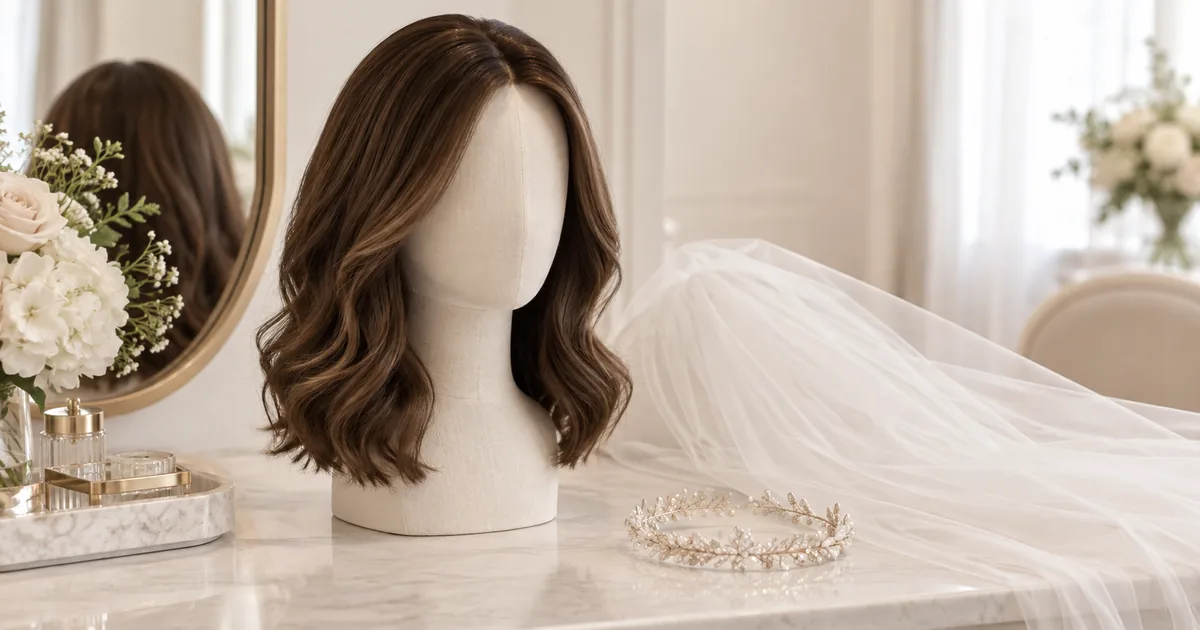
A kallah sheitel may need to serve two different settings: the wedding celebration and ordinary wear afterward. Planning both uses before purchase makes the tradeoffs in styling, comfort, maintenance, and budget easier to state.
Timing deserves respect too. Halachic opinions and communal and family practices vary on when a bride begins covering her hair — some cover from the chuppah itself, others beginning after the wedding. Torat Har Etzion's halachic overview of brides and head covering documents the differing stages and opinions behind those practices. The personal question belongs to your rabbi or the halachic authority you rely on, not to a wig seller. What this guide covers is the practical decision that follows: choosing a wig for Jewish wedding celebrations that also serves the year after.
Kallahs and their families can read it as a decision framework, and salons as a service blueprint. For general buying groundwork — hair types, caps, sizing, suppliers — see the Orthodox buyer's guide to Jewish wigs first.
Kallah Basics
What Makes a Kallah Sheitel Different
Every sheitel purchase balances realism, comfort, and budget. A kallah purchase adds a fourth consideration: ceremony. The wig will appear in many photographs and stay on the head from early preparations until the last dance. Families weigh that differently — some consider more length, more density, or a more polished front than they would choose for daily wear, and others prefer a piece that translates directly to everyday life.
If the same purchase will be used after the wedding, two routes can structure the discussion:
- One sheitel, two stages. Choose one construction for the wedding, then have a stylist assess whether and how it can be cut and restyled for everyday use.
- A wedding set plus an everyday piece. A dramatic piece is reserved for the wedding and later simchas, paired with a simpler, lighter sheitel for daily wear.
Neither route is wrong. The one-sheitel route concentrates the whole budget on one construction. The two-piece route accepts a second purchase for a daily piece that is lighter and easier to wash. Which route fits is a decision for the wearer and family, ideally with input from the stylist or sheitel macher who will service the piece.
Wedding Day
The Wedding Day Priorities
Four priorities help decide how a kallah sheitel performs on the day itself, and each can be checked before the wedding.
Compatibility with headpieces and veils
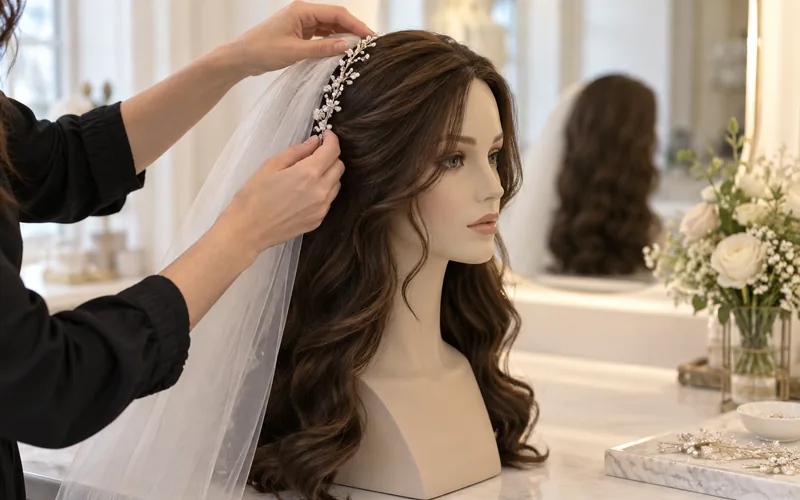
A kallah may wear a veil, a jeweled or floral headpiece, or a tichel arrangement during the celebration. How pins, combs, and headpieces interact with the cap and the front hairline is exactly what a fitting is for. Bring the headpiece to every fitting and choose it together with the wig.
Comfort across a very long day
Comfort in a short fitting may not predict comfort through a long event, and added length or density may add weight. Agree on a security and comfort plan with the stylist and ask how to test the candidate safely before committing.
Hairline and parting under photography
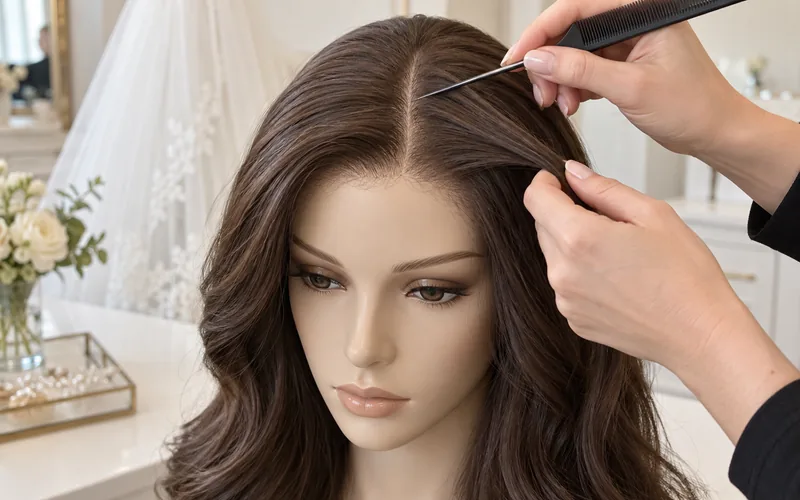
If close photography matters to the wearer, include the front hairline and parting in the fitting and photo review. Record the preferred front construction and parting behavior rather than relying on a verbal request for a “natural” look.
Security through movement
Celebrations involve hours of dancing, lifting, embracing, and bending. Agree on a security plan with the stylist — band placement, grip points, whether pins may touch the base — and rehearse it at the final fitting instead of on the dance floor.
After the Wedding
Planning for the Day After
A smart kallah purchase is planned backwards from the morning after. If the sheitel will be cut into an everyday style, keep enough length and healthy weight to allow it. If the wedding piece will be reserved for simchas, give it a storage and care routine from day one, because formal pieces still need washing, conditioning, and occasional restyling.
The conversion itself is a salon appointment, not a home decision. Cutting a long piece shorter can change how it balances and styles, so have a stylist familiar with the piece assess it and plan the transition before it is ever needed. For the vocabulary to bring, the sheitel styles and cuts guide walks through the common everyday cuts and who each one suits.
Families choosing the two-piece route still have a transition to plan: the everyday piece will need its own fitting, wash schedule, and first cut — ask the salon or supplier what that involves.
Timeline
Timeline: When to Start
Start earlier than feels necessary. A kallah sheitel is selected, fitted, adjusted, and styled before the wedding, and each step needs calendar room. Custom work takes longer still; the bespoke sheitel ordering process is its own topic.
Fittings take time even for stock pieces. One salon's process may include a selection appointment, a confirmation fitting, and a styling session near the wedding; another may structure it differently, so ask the specific salon how many visits to plan for. Compressing the timeline leaves no room for a piece that arrives wrong or a front that needs work.
Ask each salon how far ahead it schedules kallah appointments and each supplier for the applicable lead time. Start early enough to preserve time for fitting, written acceptance, and any approved adjustment.
Budget
Budget and Priorities
Wedding budgets stretch every line, so decide as a family where the money works hardest. Questions worth answering: how important is front realism, given that the hairline and parting appear in every portrait? How much length, and what will it be used for after the wedding? How much density, and what weight is comfortable for a long day? What maintenance schedule is realistic? Is a second piece part of the plan?
Length is its own decision. Ask how added length changes the quoted price, weight, maintenance, and transition-cut options for the specific unit. If a later cut is planned, have the stylist confirm how much usable length is needed.
And the second piece is a question to settle before the budget is committed. If the plan is one sheitel worn long and then cut short, the budget concentrates on one construction. If a separate everyday piece is planned, the formal piece can be chosen purely for the wedding. Salons can walk through both routes; the decision belongs to the family.
For Salons
For Salons: Serving Kallah Clients
A salon may choose to structure kallah appointments separately when the fixed event date, headpiece coordination, or additional fittings require it.
One optional workflow is a kallah package: a consultation covering expectations and headpiece plans, fittings with the headpiece present, wedding-day styling in salon or on location, and a scheduled after-wedding appointment for the transition cut or second piece. Adapt the parts to the services your salon actually provides, and price whatever you include with clear inclusions.
Define who attends, how long each appointment is, what the salon will deliver, and what happens if the unit or headpiece changes. Dedicated slots are one optional scheduling method, not a universal requirement.
On the supply side, communicate bridal orders to your manufacturer early and specifically. Record the wedding date, the required delivery date, and an acceptance window in the order, and ask the supplier to confirm feasibility in writing. Share that the piece is for a wedding and will be photographed closely, and ask for an honest answer about what can be delivered in time.
FAQ
Frequently Asked Questions
Halachic opinions and communal and family practices vary. Some brides cover their hair from the chuppah itself; others begin after the wedding, and poskim differ on the timing. Ask your rabbi or the halachic authority you rely on about your own practice.
Both routes can work. One high-quality sheitel worn long for the wedding and cut into an everyday style afterward concentrates the budget on one construction. A separate wedding piece plus a lighter everyday piece is the other option. Decide before buying, with input from your stylist or macher, because the front, length, and density choices differ between the plans.
Earlier than feels necessary. Selection, fittings, adjustments, and styling each need calendar room, and custom work adds a longer production timeline. Ask the salons and suppliers you are considering how far ahead they schedule. Starting early preserves the option to order custom if stock pieces do not fit.
The differences are choices, not rules. A bridal piece may be chosen with more length or density, styled for photography, and fitted to stay secure through hours of dancing, often alongside a veil or headpiece. An everyday piece prioritizes weight, washability, and low-maintenance wear. The wearer decides where each piece sits on that spectrum.
One optional workflow is a package covering consultation, fittings with the headpiece present, wedding-day styling, and a scheduled after-wedding transition appointment — adapted to the services the salon provides. Send bridal orders to the manufacturer early, with the wedding date, required delivery date, and front, density, length, and color specifications, and ask for written confirmation of feasibility.
Conclusion
Conclusion
A kallah sheitel is a two-act purchase. Decide where the budget works hardest, plan the second life before buying, start early, and choose a salon that treats the wedding as a service. Families who make those calls calmly are better placed to end up with a sheitel that looks right in the albums and feels right every day after.
If you supply kallah clients, send prospective suppliers the front constructions, lengths, densities, required delivery dates, and acceptance window you need confirmed in writing.



Planning Kallah Orders?
Prepare the fronts, lengths, density ranges, and timelines your kallah clients require, then request written feasibility and sampling terms.
Request Bridal Specs