Men's Hair Systems
Custom Hair Systems for Men: How to Build the Brief
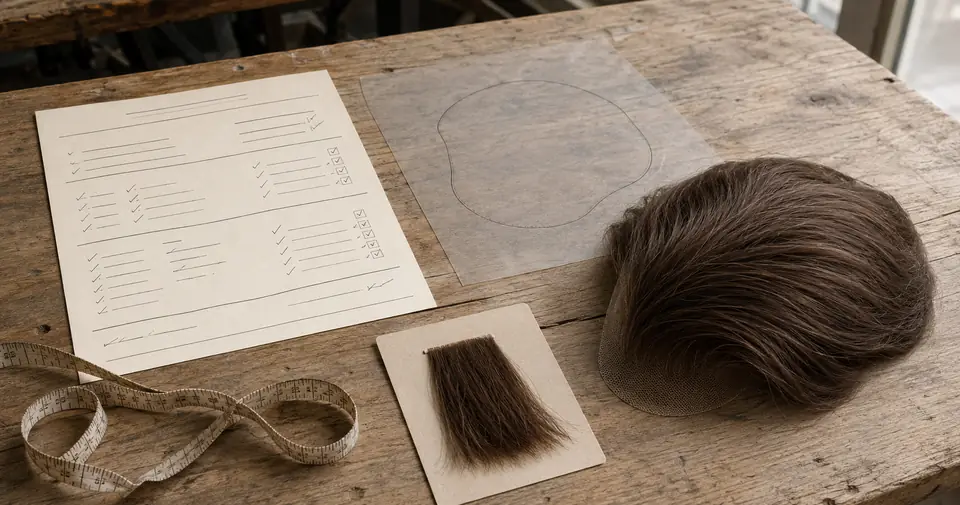
Short answer: a custom men's hair system brief is a structured document that turns what you learned about a client during consultation into the exact fields a manufacturer needs — coverage area and front-hairline exposure, outline shape, density by zone and hair direction, hair texture and wave, the attachment routine the client will actually use, and the notes that make reorders consistent. It is not an online configurator, and it is not a do-it-yourself self-measurement tutorial. This guide is for buyers, studios, and retailers who commission custom men's hair systems in volume, so you can prepare a custom men's hair system brief that holds up across reorders instead of drifting every cycle.
At LEV we do not start manufacturing until the brief confirms the client's front-hairline exposure, outline, density direction, attachment method, and maintenance routine. Those five inputs decide the spec; without them, "custom" is just a guess wearing a premium label.
Decision rule
A brief is a record a manufacturer can rebuild from, not a set of dropdown choices. If a second factory could not reproduce the approved unit from your document alone, the brief is not finished.
What a Brief Is
A Brief Is Not a Configurator
Online configurators and DIY measurement guides are built for a single end wearer picking options from dropdowns after tracing their head in cling film. A professional brief is different in kind, and confusing the two is where most reorder problems begin.
It is a record, not a selection. A configurator captures a choice; a brief captures a specification, with the photos, template, and reference swatches that prove what "done" looked like on the approved sample.
It is repeatable. The whole point of a brief is that the fourth reorder matches the first unit. That only happens if every variable that affects appearance is written down in a form someone else can read a year later.
It separates what the client wants from what the manufacturer needs. A client says "natural front, medium density, my usual style." The manufacturer needs a traced outline, a density-by-zone map, a hair-direction and parting spec, a wave reference, and a stated attachment routine. The brief is the translation layer between those two vocabularies.
It travels with the client, not the order. When a reorder lands months later, the person who wrote the original brief is often not the person checking it in. A brief a new team member can read and verify — photos, template, zone map, swatch code, attachment notes — is what stops quiet drift from becoming a return.
The Brief Structure
The Three Blocks Every Brief Must Contain
Strip any custom men's hair system brief down and three blocks remain. Skip one and the reorder drifts; the unit arrives looking close but wrong.
Block 1 — Coverage, outline, and front-hairline exposure
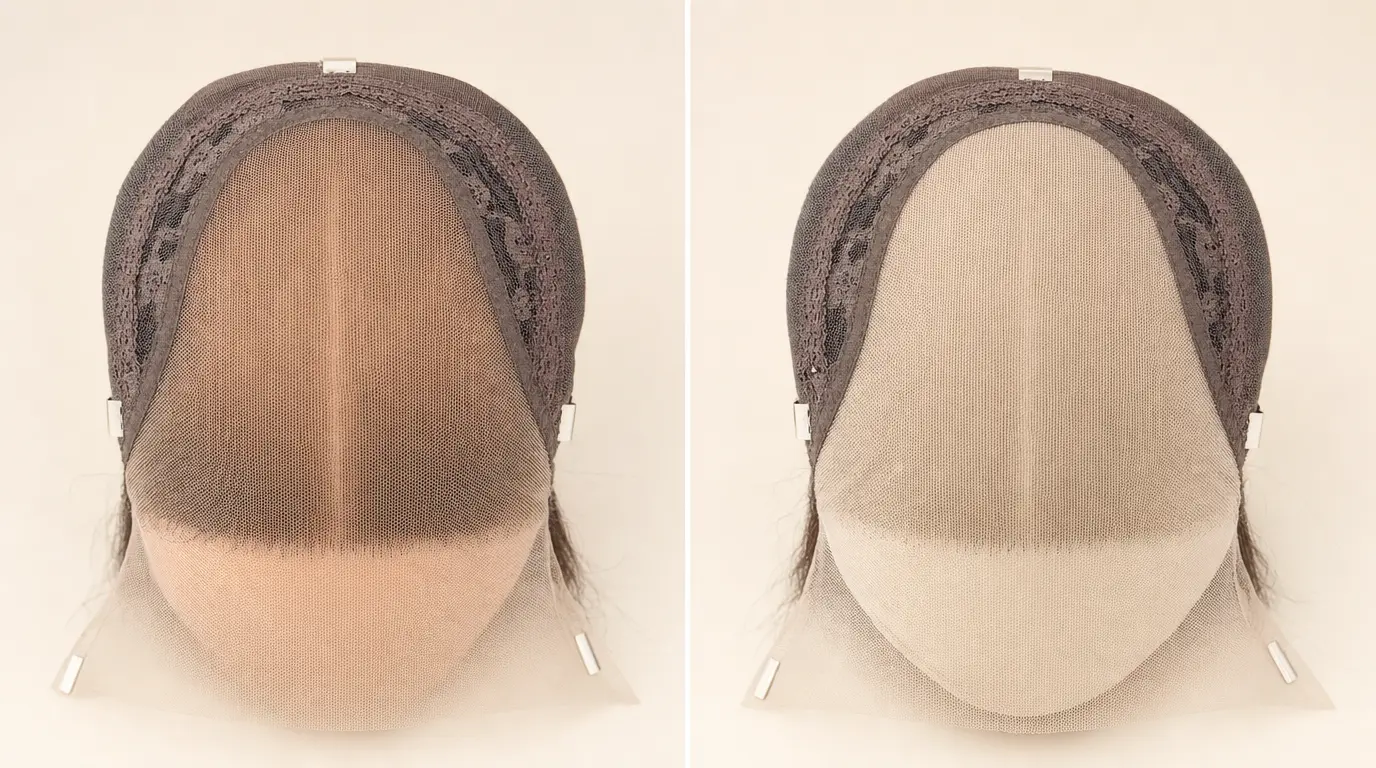
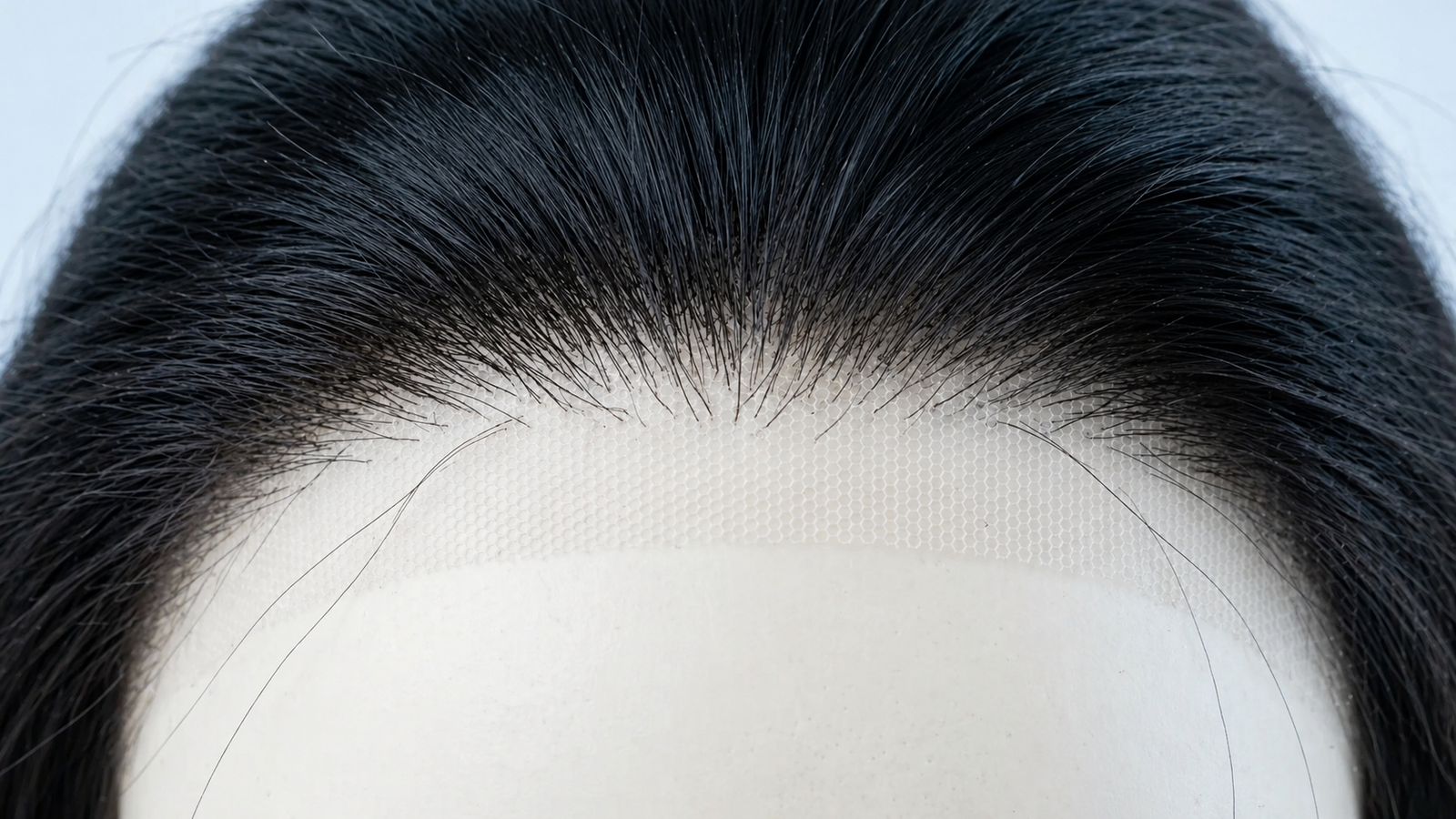
Capture the shape and size of the area the unit covers, traced onto a template rather than described in words. More important than the outline itself is front-hairline exposure: how far forward the client wears the unit and how much forehead they show in their intended style. Exposure drives the base decision — a fully exposed hairline pulls toward a lace front, a covered one frees you toward a skin base — so it belongs in the brief before the base is ever chosen. Document it with the traced template plus front and side photos of the client's target style, not a single dimension.
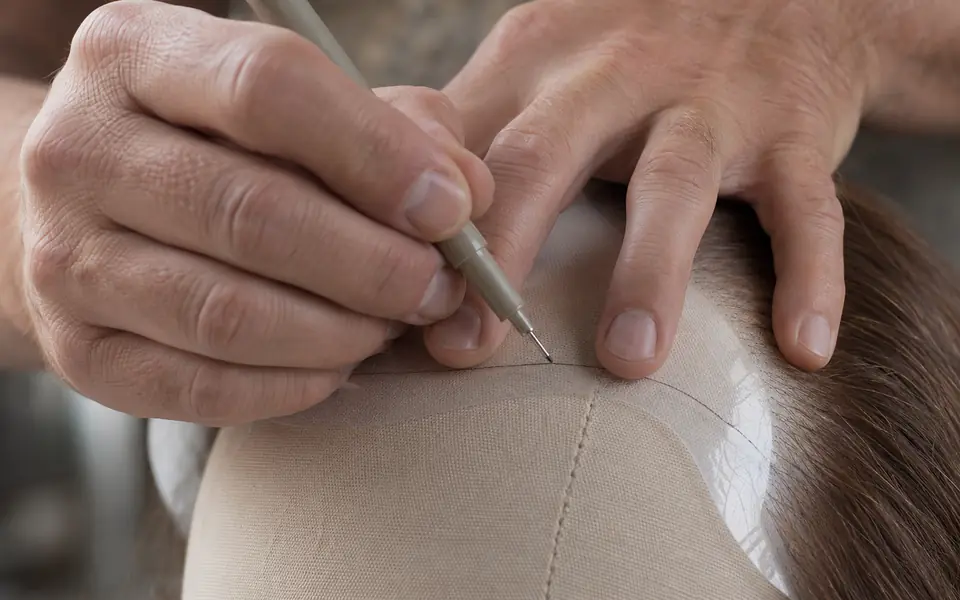
Once exposure is documented, it points directly at the base trade-off. Our lace vs skin base comparison walks through how to judge that choice against the client's exposure and attachment routine.
Block 2 — Density by zone and hair direction
Density stated as one number is the most common reason a custom unit looks off. Hair does not sit at one density across a head; the front hairline is lighter, the crown is fuller, the parting area often needs a small bump so the base does not show through. Specify density by zone, and keep that map identical on every reorder.
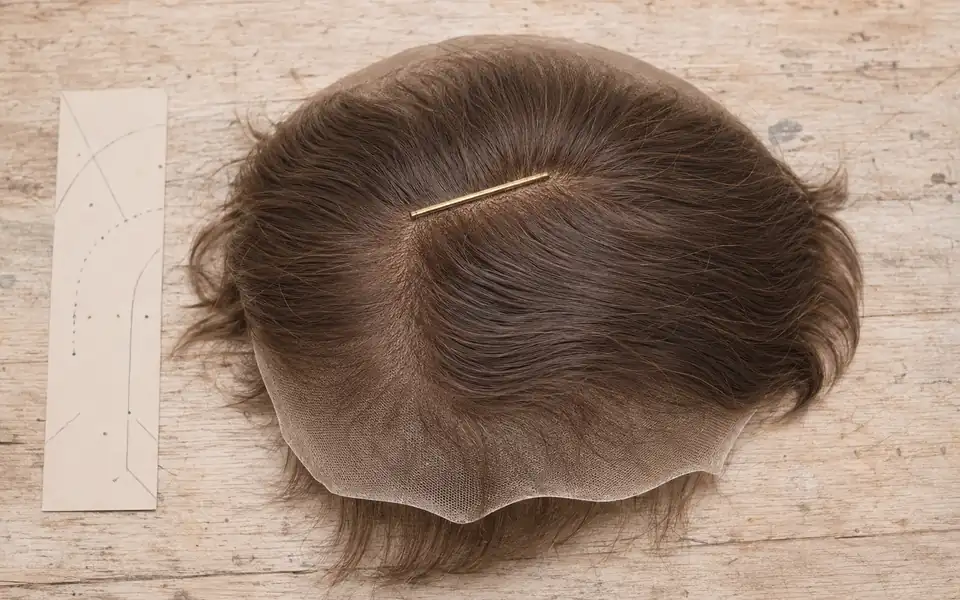
Hair direction is the field competitors under-document and the one that drifts first. Record whether the hair is freestyle, set to a left or right part, pulled to a crown, or laid flat back — and mark where the parting sits. Direction and density together decide whether the part reads natural, and a reorder that shifts either one will look like a different person's hair.
Record the parting-area density as its own line item, slightly higher than the surrounding zone, because the part is where the base is most likely to show through under direct light. Note the part width too — a narrow part reads differently from a wide one, and a reorder that widens the part by a few millimeters will look subtly wrong even when every other field matches. These are small details, but small details are what separate a reorder that passes from one that comes back.
Block 3 — Texture, wave, and the attachment routine
Match the hair texture and wave to the client's own side and back hair, and reference a retained swatch rather than a color name, because names drift between batches. State whether the hair is Remy and cuticle-aligned, since that affects how it behaves over the wear cycle. Then record the attachment routine the client will actually use — perimeter tape or full-surface liquid adhesive, how long each wear lasts, and how the unit is removed and cleaned. The routine constrains the base, so it belongs in the brief, not in a later conversation.
The join between the client's own hair and the system is where the eye catches a mismatch first. If the side and back hair is fine and slightly wavy, a straight, coarse system telegraphs itself at that boundary no matter how clean the front reads, so the brief should describe the boundary hair too, not only the unit. Keep a small physical swatch card for each client profile and reference it by code on every reorder; a color name that a later batch shades differently is exactly the kind of quiet drift that turns into a return.
Reorder Consistency
Five Fields That Make Reorders Consistent
The biggest hidden cost in custom men's hair systems is reorder drift — the second unit looks different from the first because nobody wrote the spec down in a form that survived. These five fields are what keep a reorder identical to the approved original.
| Brief field | What to capture | Why manufacturing needs it |
|---|---|---|
| Approved sample code | A unique code on the physical sample plus archived photos and measurements | Gives every reorder a single anchor instead of a color name or verbal description |
| Density-by-zone map | Front, crown, sides, and parting density stated separately | Stops the unit from arriving uniformly dense and unnatural on a reorder |
| Hair direction and parting | Freestyle, left or right part, crown, or flat back, with the parting location marked | The first field that drifts; locking it keeps the style recognizable |
| Wave, texture, and color reference | A retained physical swatch, not a color name | Color names shift between batches; a swatch does not |
| Attachment routine | Tape or liquid adhesive, wear length, removal and cleaning method | Constrains the base and tells the factory how the unit will be stressed |
Before Production
What to Confirm With the Manufacturer Before Production
- The outline is traced and photographed, not described.
- Density is stated by zone, with the parting-area bump noted.
- Hair direction and the parting location are specified, not left as "natural."
- Wave, texture, and color are matched to a retained physical swatch.
- The attachment routine is stated, because it constrains the base.
- The approved sample carries a code, and the reorder references that code.
- Front-hairline exposure is documented with front and side photos of the target style.
If you are still building the intake behind these fields, it helps to start from the consultation framework, so the brief pulls from a consistent set of client questions rather than ad-hoc notes.
FAQ
Frequently Asked Questions
A usable brief captures coverage and front-hairline exposure, outline shape, density by zone, hair direction and parting, hair texture and wave, and the client's attachment routine. With those fields fixed, the manufacturer can translate the client profile into a repeatable spec instead of improvising each order.
Photograph the client's intended style from the front and side in consistent light, and trace the hairline position on the template relative to fixed landmarks such as wrinkles, moles, or the crown. Pair the photos and template with an approved sample code so a reorder references the same exposure rather than a verbal description.
Yes. Density is how much hair sits in each zone, while direction is which way it lays and where the part sits. Combining them into one number hides the parting, and the parting is usually the first thing to drift on a reorder. State density by zone and the direction plus parting location as separate fields.
The structure can be reused, but the values cannot. Keep the brief template identical across your roster so your team captures the same fields every time, yet fill each client's values, photos, and sample code individually. Reusing values across clients is what produces units that fit no one.
Conclusion
A Good Brief Is a Repeatable Reorder
Custom only stays custom if the spec survives the first order. A brief that captures coverage, density by zone, direction, texture, and attachment turns a one-off commission into a consistent product line, and it protects the margin you would otherwise lose to reorder drift. From here, two adjacent reads: once the brief names an attachment routine, weigh the lace vs skin base trade-offs, or if you are still systematizing intake, start from the consultation framework.

Commission Custom Units That Reorder Cleanly
LEV Wigs manufactures custom men's hair systems in Qingdao. We confirm each client's front exposure, density direction, and attachment routine before production and retain the brief so reorders match the approved original. Prepare a custom men's hair system brief against our manufacturing intake.
Request a Custom Quote