Private Label Wig Packaging: SKU Cross-Check Before Sign-Off
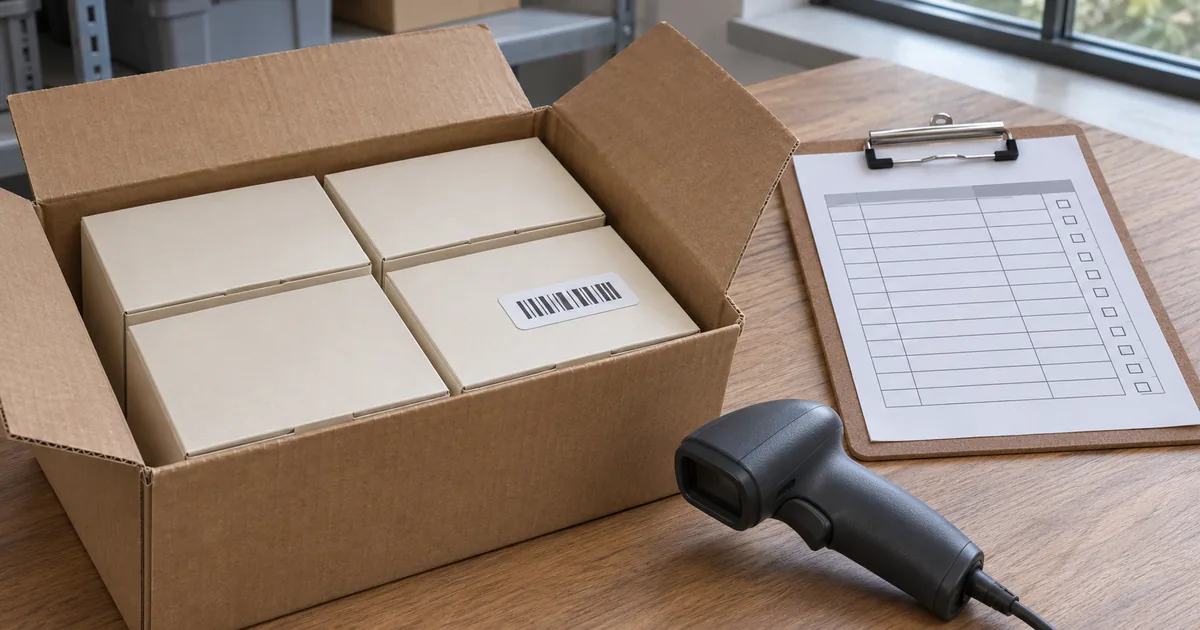
Packaging Sign-Off Guide
Approving the artwork is not the same as approving the shipment. Between those two moments sit four documents that must agree — the packaging sample, the unit label, the SKU master record, and the packing list — and private-label mismatches are born in the gaps between them: the same color printed for the wrong cap size, the right label on the wrong carton, a packing list that uses words the purchase order does not. This guide gives new wig brands and distributors a cross-check that catches those gaps before goods ship, plus the four-step routine for when a field disagrees anyway.
It is a verification workflow for full-top human hair wig orders. How packaging and labels are written into the order specification is the upstream subject — covered in the site’s wholesale packaging guide — and how to inspect goods on arrival has its own receiving checklist. This article is the sign-off gate between them.
The Gate
Why Private-Label Wig Packaging Needs a Cross-Check, Not Just an Approval
Approval answers one question: do we like this design? The cross-check answers a different one: do these four documents describe the same product? Supplier-side checklists make the same distinction — approve the artwork, then verify the actual packed product (VAYORA packaging-label QC checklist, accessed 2026-11-20) — because the failure mode is rarely ugly printing; it is accurate printing of inaccurate data.
The four documents the cross-check ties together:
- Packaging sample — the physical box, insert, and printed artwork.
- Unit label — what each individual wig carries.
- SKU master — the record naming what this SKU actually is.
- Packing list — what each carton claims to contain.
U.S. Labeling and Country-of-Origin Marking
One legal note before the field checks, because new brands ask it first — stated with its exact scope, current as of 2026-11-20. In the United States, the FTC’s business guidance lists “Wigs” explicitly in the Textile Act’s not-covered list, so wigs sit outside the Textile Act’s fiber-labeling requirements (FTC, “Threading Your Way Through the Labeling Requirements Under the Textile and Wool Acts”). That finding is limited to the Textile Act labeling rules as the guidance states them — it is not a review of the Wool Act or of any other law.
Import origin marking is a separate rule: under 19 U.S.C. § 1304, articles of foreign origin — or their containers, as the statute provides — imported into the United States must be marked in a conspicuous place with the English name of the country of origin, and U.S. Customs and Border Protection implements the marking rules, methods, and locations in 19 CFR part 134, including the exceptions CBP administers. Whether a given shipment marks the article or a qualifying container, and whether an exception applies, is determined by CBP and your customs broker — not by this checklist.
Most label fields below are therefore business traceability fields — powerful because both sides agree to them, not because a statute mandates them.
Deliverable 1
Unit Label Fields: What to Check Line by Line
Check the label against its source of truth, line by line:
| Field | Source of truth | Compare against |
|---|---|---|
| SKU / style code | SKU master record | Card, packing list, carton mark |
| Color code | Agreed ring/bundle system | SKU master + physical bundle |
| Cap type & size | SKU master | The physical unit in hand |
| Batch / lot | Supplier’s production record | Packing list row |
| PO reference | The purchase order | Packing list + invoice |
| Country of origin | Import documents (19 U.S.C. 1304) | Label as printed |
Each row is a two-minute check and a one-line record. A label that passes all six rows is not “probably fine” — it is consistent, on the record, with the documents that will govern the shipment.
Mismatch Patterns
Color and Cap Mapping: Where Same-Color Orders Split
The two classic mismatches both live in the mapping between color and cap:
- Same color, different cap size. The label prints color correctly but carries cap M where the SKU master says cap L — possible whenever one color code spans several cap sizes.
- Same style, different color. A reorder of the pale blonde in cap L picks up a label batch printed for the brunette run — possible whenever one style ships in several colors from one production window.
(Both examples are illustrative; the pattern is what matters.) The check that catches both: pull, at random, units from different cap sizes of the same color and different colors of the same style, and verify each unit’s full label row against the master — not just the color line. Mapping errors hide in the field you didn’t re-check.
Physical Sample
Approve the Packaging Sample Against the Same Master
The packaging sample — physical box, insert, printed panels — passes when it matches the SKU master, not when it looks good:
- Color codes and text match the master exactly (character for character, not “close enough”).
- Font sizes survive the printing method — small codes must stay scannable on the real material.
- Attachment method (tag, sticker, printed panel) matches what was agreed and survives handling.
- The sample carries the same version identifier as the approved artwork — and any revision restarts the sample, not just the file.
Keep the signed-off sample alongside the SKU master; the packing-list check below compares against both.
Deliverable 2
Cross-Checking the Packing List, Carton by Carton
The packing list is where document errors become shipment errors, so it gets its own pass:
| Check line | Against | If different |
|---|---|---|
| Carton count + SKUs per carton | PO + SKU master | Hold that carton’s row; do not guess |
| Color × cap size × quantity per carton | SKU master mapping | Flag the mapping, not the counter |
| Carton marks readable + match list | Physical cartons | Re-mark before anything ships |
| Packing list location (in/at carton) | Agreed placement | Confirm placement in writing |
One supplier B2B buying guide states the principle directly: the packing list should mirror your PO language exactly, so warehouse checks are comparisons rather than translations (Helene Hair B2B guide, accessed 2026-11-11).
Four-Step Routine
When Fields Disagree: Hold, Locate, Revise, Recheck
A mismatch is a stopped clock, not a broken one. Four steps, in order:
- Hold. Freeze every unit tied to the mismatched SKU-color-cap combination — not just the unit in hand. Nothing from the affected rows ships while the check runs.
- Locate. Return to the field’s own approved source of truth: the SKU code and cap size to the latest approved version of the SKU master, color to the agreed ring system, batch to the production record, PO fields to the purchase order, origin marking to the import documents. There is one approved source per field, not one master file for everything — the mismatch is whichever document deviates from that field’s approved source and version.
- Revise. Fix the wrong document through a version change (new artwork version or new master version), leaving the old version on record — the approved-sample-to-SKU guide covers handing the new version to production. Never correct in place.
- Recheck. Re-run the cross-check on every SKU the same mismatch pattern could touch — all cap sizes of that color, all colors of that style — and record the re-check like the first one.
Who bears relabeling cost, and who authored the error, are contract questions answered by your terms — the cross-check’s job is to make the error undeniable and its scope bounded before anyone asks.
Private Label Packaging: Common Questions
FTC guidance lists wigs as outside Textile Act labeling requirements — the guidance's Textile Act not-covered list names wigs explicitly. U.S. country-of-origin marking is a separate rule: imported articles of foreign origin, or a qualifying container as the statute provides, are marked under 19 U.S.C. § 1304 with CBP's implementing rules in 19 CFR part 134; which applies to a shipment, and whether an exception applies, is confirmed with your customs broker.
At minimum the fields both sides rely on for traceability: SKU/style code, color code, cap type and size, batch/lot, PO reference, and country of origin — each checked against its written source of truth.
That is decided by your written terms, not by this checklist. The cross-check's locate step tells you which document was wrong — which is the input your contract needs.
Yes — the artwork is the file, the sample is the printed object, and the packed product is the shipment. One supplier's QC guidance separates artwork approval from packed-product verification for exactly this reason (VAYORA packaging-label QC checklist, accessed 2026-11-20).
Next Step
Next Step
Private label succeeds on boring consistency: four documents, one product, zero gaps. Run the line-by-line check, pull the mapping samples, and when a field disagrees — hold, locate, revise, recheck. The brand that ships what its master record says is the brand stores reorder from, and the wholesale human hair wigs page is the supply entry point for setting those terms on a first program.



Signing Off a Private Label Run?
Run the line-by-line label check and the carton pass before goods move. If you want a second pair of eyes on the routine, you are welcome to share your SKU revision, packaging or PO reference, and the fields you need checked — the conversation starts here.
Contact LEV Wigs