Compare Two Human Hair Wig Caps Before You Order Samples
Wholesale buyers can compare human hair wig caps with two model numbers, a breakdown of the cap zones, and a list of checks for the physical samples. A single cap label can hide the very feature you need to evaluate. Compare the front, top and back separately, then carry the selected sample ID and specification into the purchase order.
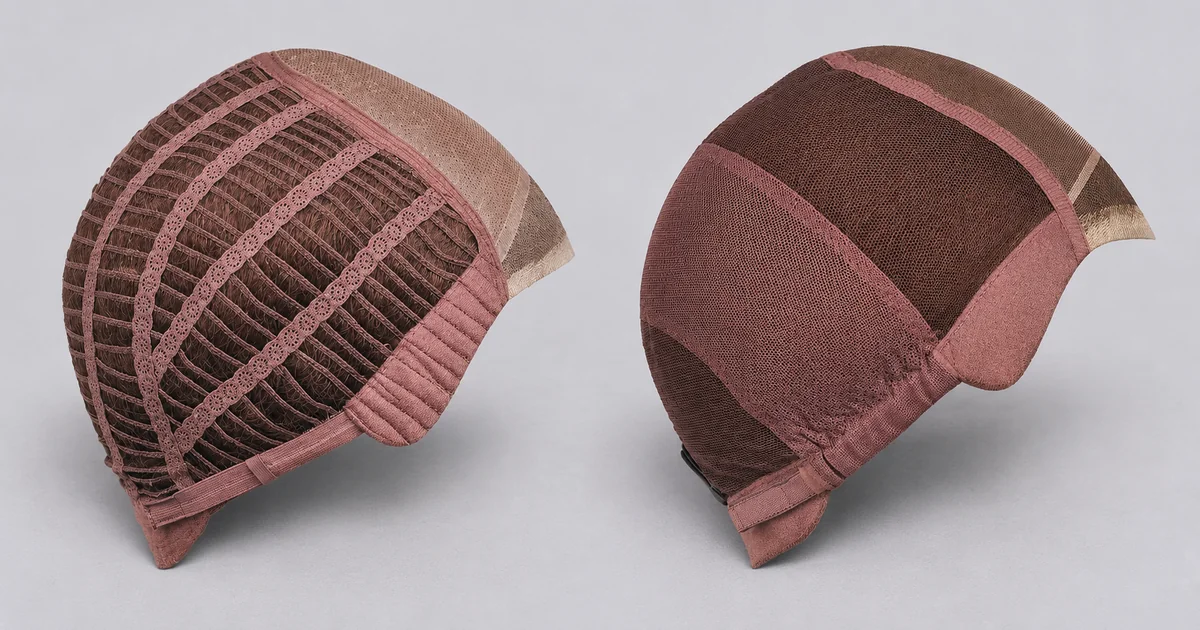
A catalog comparison of two Jon Renau styles
The rows below compare public specifications for the average-cap Carrie and Carrie Hand Tied. Both come from Jon Renau's SmartLace Human Hair range. This is a comparison of published specifications. The two units were not physically inspected for this article.
| Field | Carrie | Carrie Hand Tied |
|---|---|---|
| Item numbers | 708 / 708A | 760 / 760A |
| Size listed | Average | Average |
| Front and top | Lace front and single monofilament | Lace front and single monofilament |
| Back or cap body described | Machine-wefted back | Hand-tied cap with a stretch section |
| Hair description | Human hair | Remy human hair |
Sources: Carrie product specifications and Carrie Hand Tied product specifications.
The two listings share a front and top description but name different structures behind the top. That makes the back and cap body the first zones to document on arrival. The catalog also uses different hair descriptions, so record the actual hair specification on each sample before attributing a difference in handling to the cap. Compare against your own assortment requirements; a product listing does not establish comparative fit, airflow or comfort. A difference in catalog wording alone does not establish whether the standard version uses Remy hair.
Turn the catalog differences into a sample request
Request one comparable size and, where available, matching color, length and density. Ask for interior crown and back photos and a written description of the perimeter and adjustment range. Identify which exact model and version each photo represents. Record any mismatch in the comparison conditions.
| Check on the units | What to record |
|---|---|
| Parting | Panel boundaries, directions tested, a crown photo with scale |
| Cap body | Where wefts or hand-tied zones begin and end, seam positions, photos |
| Holding and fit | Adjustment setting, ear-tab and nape position, identical test setup where possible |
| Purchase record | Chosen sample ID, specification revision and any agreed exceptions |
Use the same light, backdrop, camera position and scale reference for corresponding views. For a separate size test, use the wholesale cap-fit sample guide. For a LEV sample inquiry, send the zones and acceptance fields you need verified through the wholesale inquiry page.