Construction Guide
Hatfall Sheitel Construction: Choosing a Cap for Hats
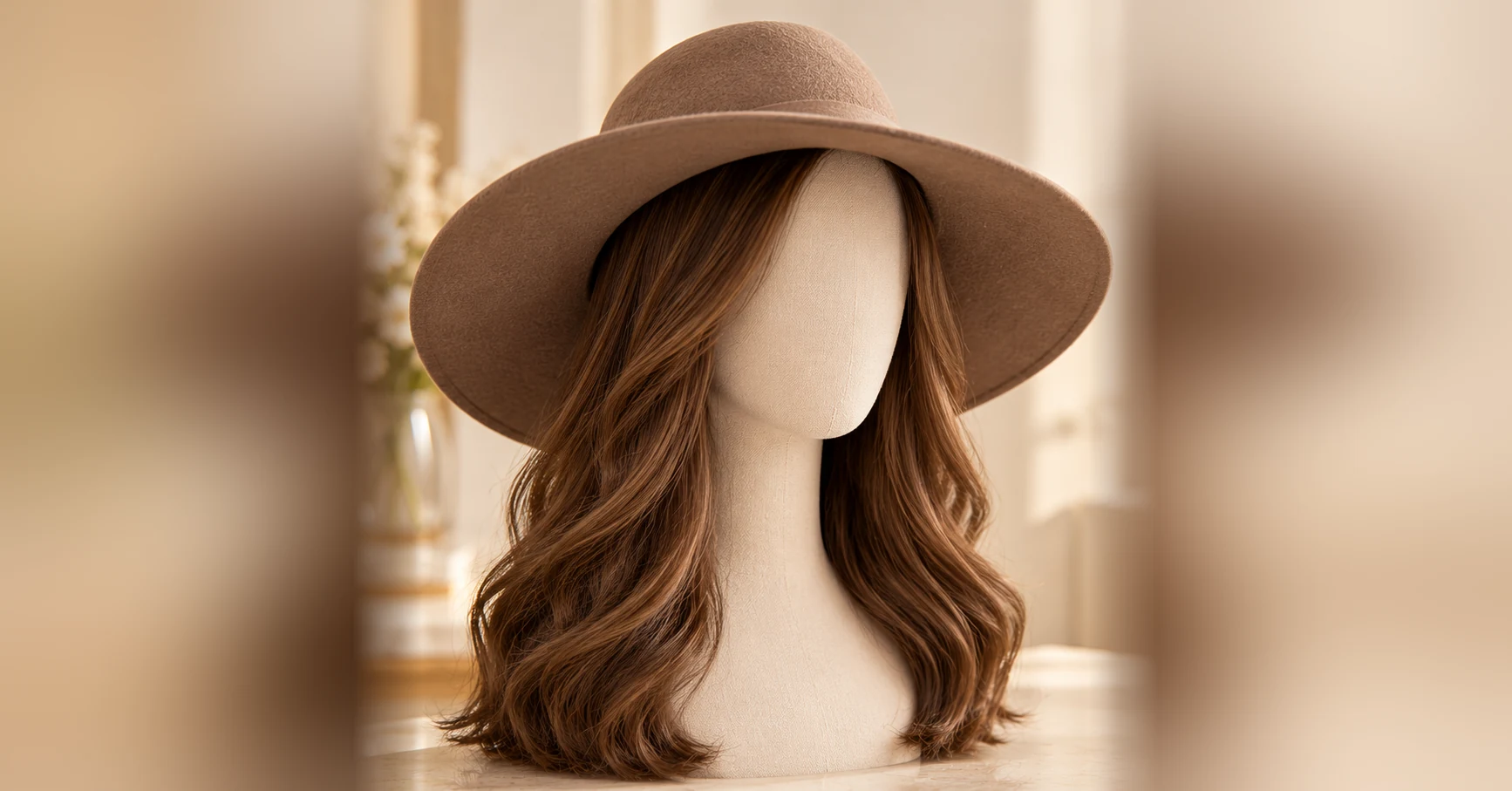
A hatfall is a sheitel built to be worn under a hat. The hat covers the top of the piece, and the hair that stays visible below the brim does the visual work. That single fact changes the whole construction brief — the top does not need to imitate a scalp, and the cap is designed around coverage, breathability, and staying put under headwear. This guide walks the construction zone by zone and ends with the checks to run before ordering.
Why the Top Differs
Why a Hatfall Top Is Not a Lace Top or Silk Top
Aeria Hair defines the category plainly: a hatfall sheitel is “designed to be worn together with a hat or suitable head covering,” and “unlike a conventional full wig, a Hatfall focuses on the hair that remains visible beneath the hat.”
Because the hat hides the upper cap, “its construction and styling priorities may differ from those of a traditional lace top or silk top sheitel” — Aeria’s own wording. A lace top exists to show an exposed, natural-looking top and parting; a hatfall top exists to sit comfortably under a brim. Spending the budget on an exposed-part construction makes less sense when the top stays covered under the brim, and breathability under a hat becomes the more useful property.
For the choice between a hatfall and a full sheitel in general, the fall vs full wig comparison covers that decision; this article stays inside the hatfall’s own construction.
Top Materials
Top Materials: From Bamboo-Cotton to Simple Crowns
There is no single standard hatfall top — current listings show at least three approaches, which is itself the finding:
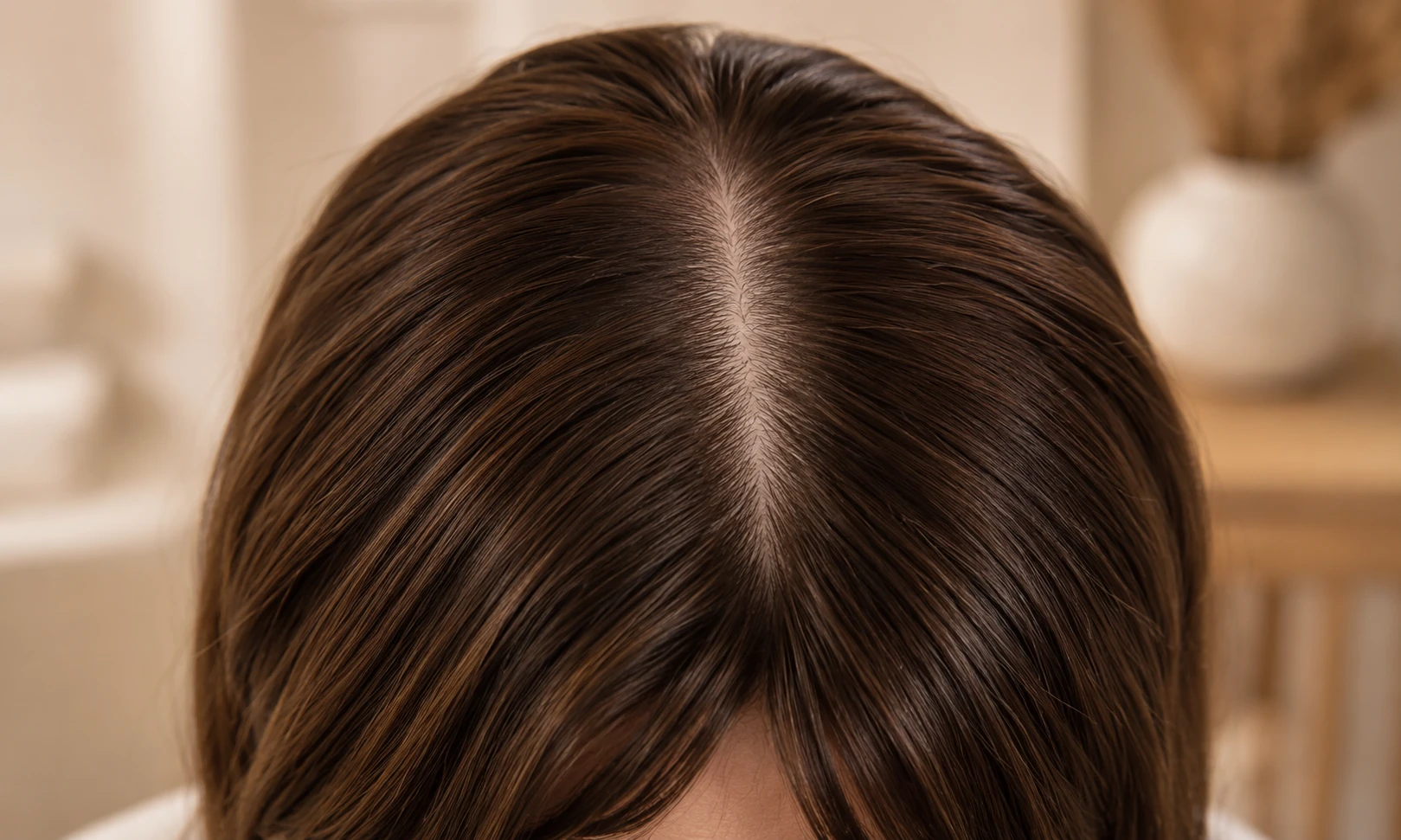
- Bamboo-cotton tops. Milano Wigs builds its HatFall line on “bamboo top construction,” which it describes as allowing “a comfortable breathable top,” with a “GripCap bamboo-cotton top with a WiGrip band edge” on the collection page. Note that “bamboo top” is the naming Milano uses on this series — the other pages checked for this guide use different wording or none — so treat the phrase as that maker’s naming and ask each supplier what the top is actually made of.
- No-cap constructions. Wonderful Wigs, a UK general wig maker outside the Jewish wig market, builds its hatfalls without a wig cap at all, gripping with a four-inch silicone band at the nape and silicone-covered ear tabs, on adjustable straps fitting heads between 46 and 56 cm.
- Simple hair pieces. Yaffa Wigs USA sells a virgin European hair hat fall “designed to be worn with a hat, scarf or beanie,” with the length measured from the top of the crown — and no lace, silk, or weft terminology on the page at all. The listing does not describe the construction itself, so what the piece is actually built from is a question for the supplier, not something the page shows.
Different disclosures, one recurring theme: the sellers who describe their tops talk about comfort under headwear rather than a visible part. Ask each supplier what the top of their hatfall is made of and how it grips — the answers vary widely between makers.
The Back
The Back: Open or Closed Wefting
Milano offers its hatfalls with a choice of “Open Wefted” or “Closed Wefted” backs, and describes the open wefted back as creating “a lightweight look.” A verified buyer on the same line notes the practical side: “open wefted so your head can breathe,” in a review that also confirms the piece came with no extended nape.
What open or closed wefting looks and feels like on a specific piece is a sample observation, not something to generalize from the option name: check the sample for how the rows read from the outside, how the piece wears under the client’s actual hat, and how the back looks at the nape and sides below the brim. Record the stated option and what the sample shows in the order notes.
One more real-order note from the same line’s reviews: a buyer of the wavy version reported it arrived with beach waves she did not remember ordering, though she rated the texture itself highly. On any wavy or textured hatfall, confirm the curl pattern and length in writing before the batch runs.
Hat Depth
Hat Depth, Volume, and Where the Piece Sits
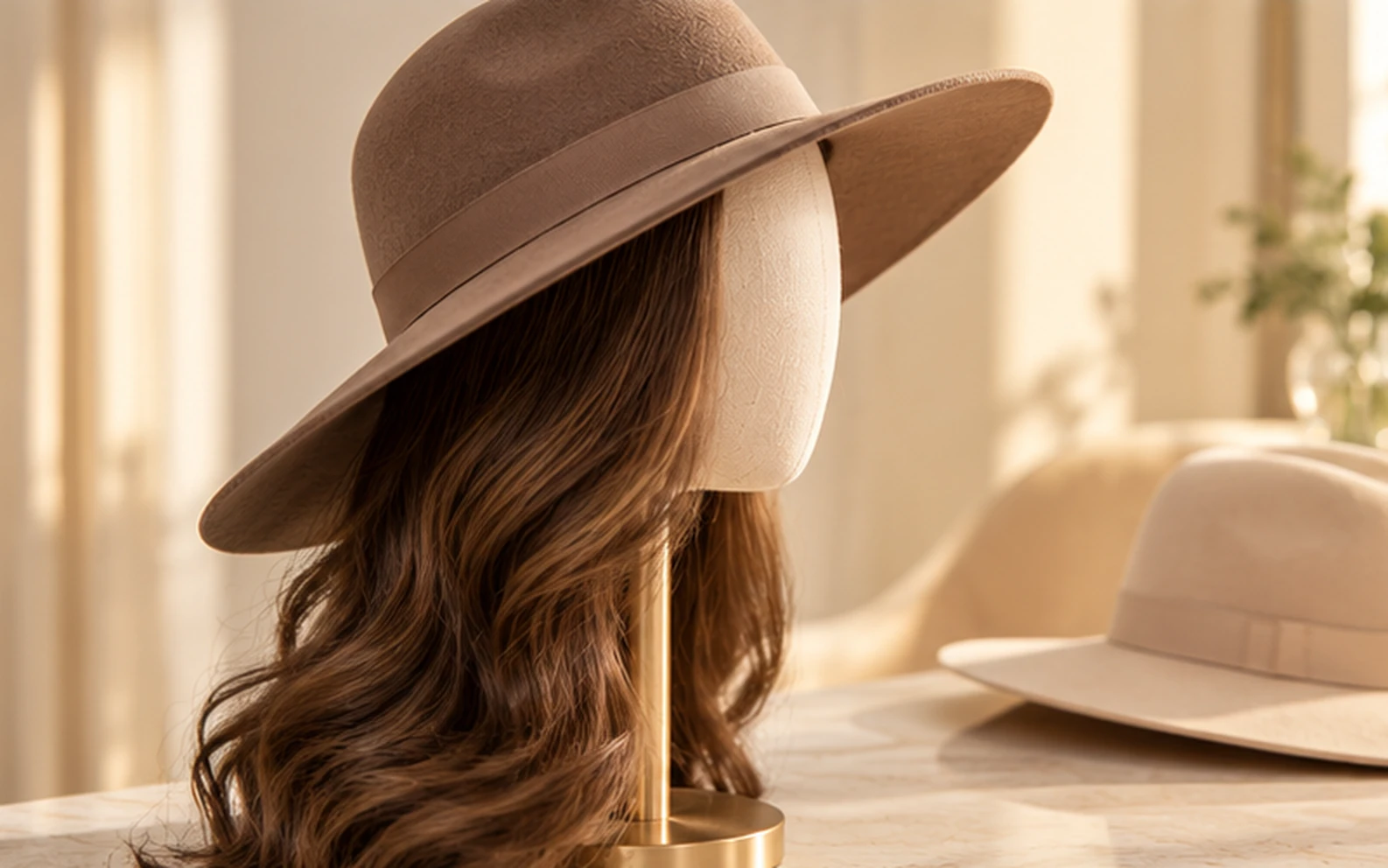
The hat is half of the construction decision. Aeria states it directly: “the shape, depth and positioning of the hat can influence how much hair remains visible and where the wig sits,” and its product guidance adds “choose a hat that comfortably covers the upper cap area.”
Milano gives the wear rationale from the other side: “when wearing a hat on top of a wig there is extra bulk, and hats can sometime cause additional wear and tear to your wig” — the rationale it gives for a purpose-built hatfall. How much room any specific top leaves inside a specific brim, and whether it rubs, is not stated on any page checked: try the piece under the actual hat and record the space and contact points you observe.
Practically, the check is to fit the piece with the actual hat the client will wear:
- Where does the brim line fall — how much hair shows below it, at the sides and the nape?
- Does the hat sit flat over the top, or does the piece’s volume push it out of shape? Note the clearance between the piece’s top and the hat’s crown while fitting.
- Where does the piece settle after a wearing session, and does the grip hold under the hat’s own band?
Before You Order
The Fit Checks and Fields to Confirm
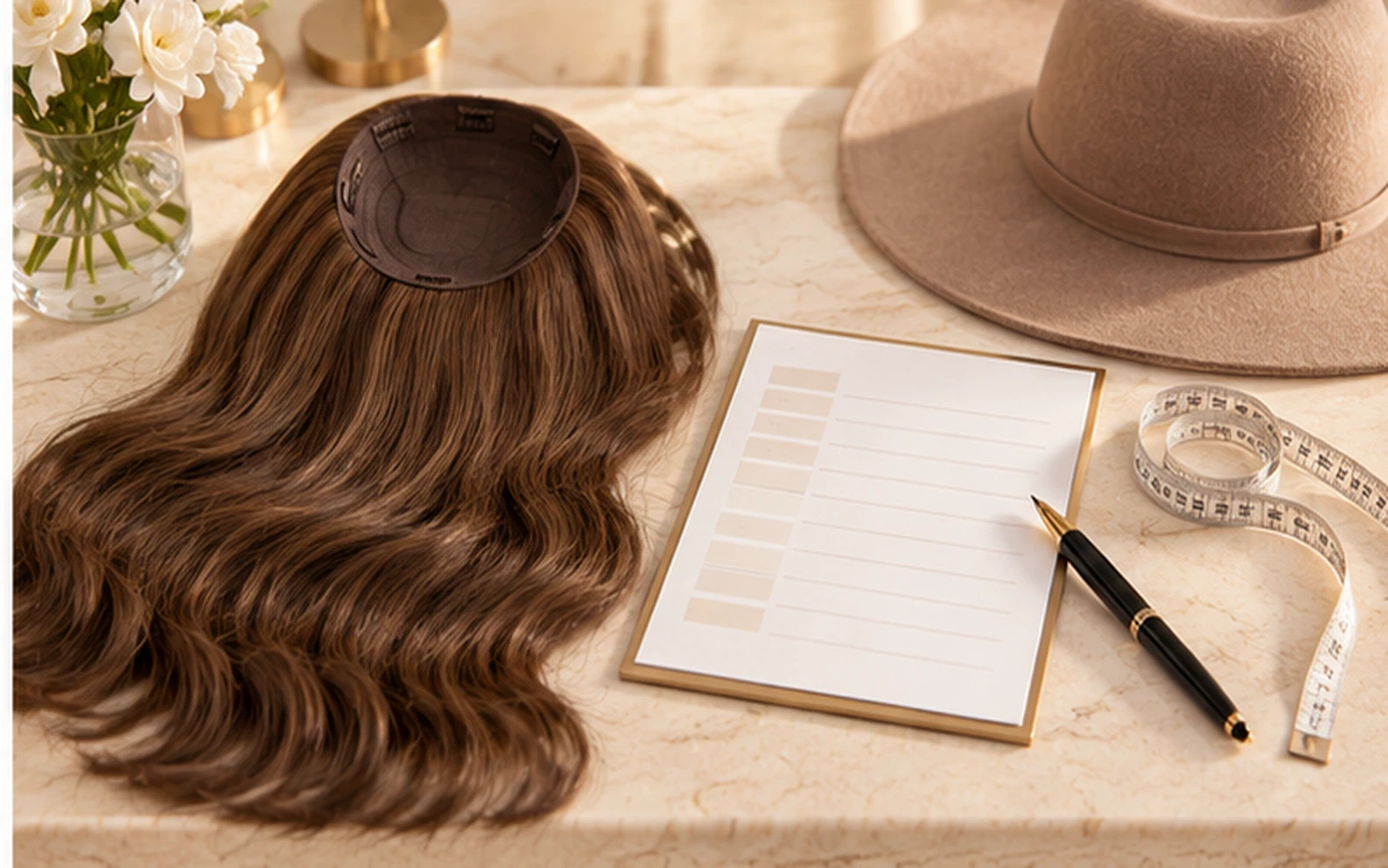
Run the checks above on the sample with the client’s own hat, then record the order fields that hatfall pages often leave vague:
| Field to confirm | What a specific answer looks like |
|---|---|
| Top construction | The material named — bamboo-cotton, another fabric, or no cap design — and how it grips |
| Back construction | Open or closed wefting, stated for this piece |
| Length measured from | From the top of the crown or from the nape — makers differ, and the numbers are not comparable until the reference point matches |
| Texture | The exact wave or curl pattern, confirmed in writing on any textured unit |
| Hat reference | The hat style and depth used for the fitting, noted with the order |
A human hair piece designed to be worn together with a hat or suitable head covering. The hat covers the upper cap, and the visible hair at the sides and nape does the visual work — so the top is built for comfort and grip under headwear rather than for an exposed, natural-looking parting.
A top construction used by Milano Wigs on its HatFall line, described as allowing a comfortable, breathable top, with the collection page naming a GripCap bamboo-cotton top and a band edge. That is the naming Milano uses on this series — the other pages checked for this guide use different or no top-material naming — so confirm the top material with each supplier in writing.
Often yes, but the result depends on the hat. Seller guidance notes that hat shape, depth, size, and positioning all affect how much hair remains visible and where the piece sits. Fit the sample with the hat the client will actually wear before ordering.
The top material and grip method, the back construction (open or closed wefting), the reference point for the stated length, the exact texture on any wavy unit, and the hat style used at the fitting. One verified buyer on a current line reported unrequested beach waves on a wavy unit, so texture belongs in the written order.
Conclusion
Fit the Hat, Then Specify the Piece
A hatfall is engineered around a brim: a top chosen for comfort and grip rather than display, a back chosen for airflow or finish, and a fit that only means something under the client’s actual hat. Run the fitting checks, then put the top, back, length reference, and texture into the written order fields.


Specifying Hatfalls for Your Assortment?
Use the confirmation fields above — top material, back construction, length reference, texture, and the fitting hat — to prepare your supplier conversation before approving a sample.
Contact LEV Wigs