Rooted Wig Color Specification for Blonde and Brunette
A rooted wig color specification records the darker shade at the roots, its length, and its transition into the blonde or brunette base. A product photo helps explain the look. For a wholesale order, add measurements, placement notes and an agreed physical color reference.
Quick answer: To brief a rooted color for sampling, record the root shade and length, where the blend should end, the base shade and tone, and where the highlights should sit. Use the color approval sheet to log both viewing lights and the physical sample ID. Ask the supplier to confirm the details in writing before production.
This guide helps boutique buyers, brand product teams and distributors prepare sample orders. The sheitel color matching guide explains level and tone. Use the fields below to describe your selected combination and ask the supplier to confirm what is achievable.
What to Include in a Rooted Color Order
A color name helps you find a style in a supplier’s range. The order record should describe what you want to see on the finished wig.
- Shade and placement. Identify the root and base shades, the darker root length, the end of the blend, and the areas carrying highlights.
- Approval reference. Record the physical sample ID, measurement method, viewing conditions and version agreed for the order.
Wigs.com’s rooted color collection describes darker roots that blend into lighter lengths. Record the shade, length and placement you want your supplier to check on the sample.
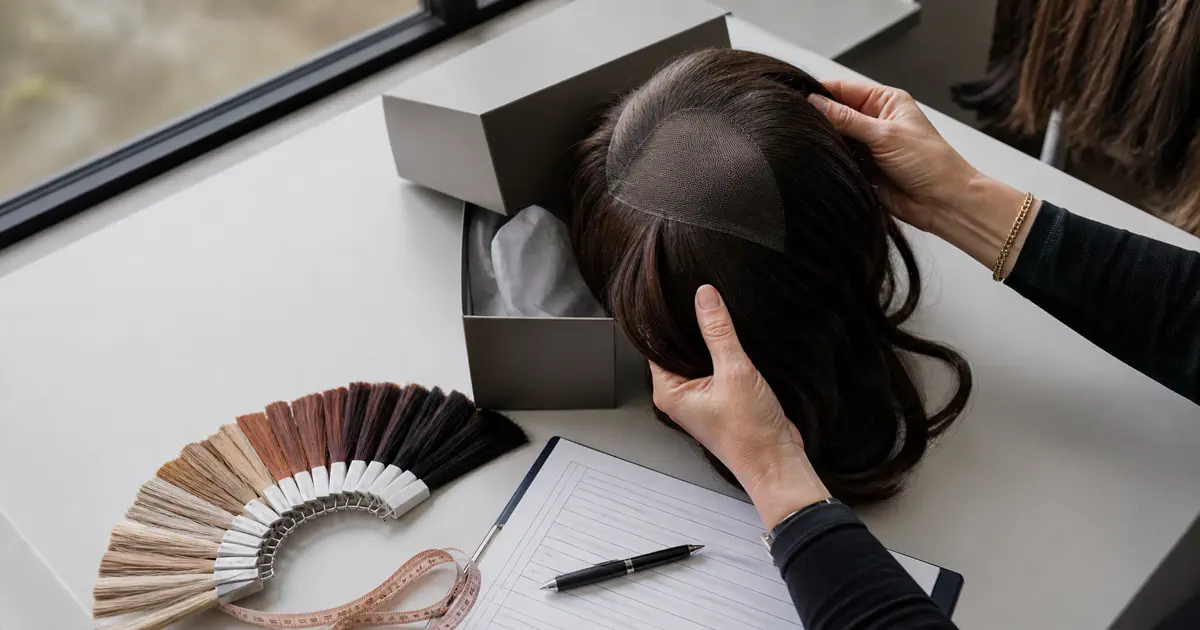
Use the supplier’s own color system and record which ring or swatch set you used. Confirm the physical shade when moving between manufacturers, because their codes and shade references can differ.
Start From a Reference: What a Usable Color Reference Contains
Ask which reference the supplier will retain and use when checking production. These materials serve different purposes.
- Approved hair swatch. Identify the physical swatch showing the color you have agreed on. Record its ID, owner and approval date.
- Supplier color ring. Use its shade codes to narrow the selection. Ask whether the ring represents the material and finish proposed for your order.
- Reference photographs. Send an overall view and close views of the root blend, with the light source recorded. Keep the original files.
- Inspiration photographs. Mark the details you want to reproduce, such as root length or face-framing placement. Ask the supplier to confirm what is achievable.
WinningWigs describes checking color against a standard color ring under inspection lighting during production and before dispatch. For your order, agree on the physical color sample and viewing conditions before production.
Specify the Root: Depth, Length and Where the Gradient Ends
Separate the root shade from the two length measurements. This helps describe a sample whose shade is right but whose transition sits too far down the hair.
- Root shade. Give the selected code on the supplier’s scale and describe its contrast with the base. Use a physical reference to show the intended depth and tone.
- Solid root length. State the distance along the strand from the attachment point to the start of the blend. Confirm how the supplier measures it and which areas of the wig it applies to.
- Fade end. State the distance from that same attachment point to where the blend finishes. The span between the two measurements describes the transition.
Add a close reference photo or marked sketch if the front hairline and crown need different root lengths. Ask the supplier to confirm its measurement method and available placement options.
Specify the Base: Mid-Lengths, Ends and Overall Level
The base is the color the root fades into, and it has its own fields:
- Level and tone. Give the supplier’s code and the relevant light, medium or dark description. The color matching guide explains the vocabulary.
- Mid-lengths and ends. State whether the selected shade continues to the ends or changes along the length. Mark the transition on the reference if needed.
- Distribution. Record whether the base is uniform or varies by zone.
Rooted brunette colors can use a darker root over a lighter brown base. For example, Jon Renau’s Cool Ash Brunettes includes a medium-brown blend with a dark-brown root. Select the contrast from your supplier’s actual samples and confirm the combination for the proposed hair and cap.
Place the Highlights: Zones Before Percentages
Mark where you want highlights or lowlights before agreeing on their amount. Use front, side and parting views to show the intended placement.
- Face-framing zone. Mark the strands and width of the sections around the face.
- Crown and parting zone. Show the intended placement in a top view with the agreed part.
- Overall distribution. State whether highlights continue through the lengths or remain in selected areas.
Terms such as light or moderate need a shared reference. Point to the selected sample or marked photo, and ask the supplier to confirm the placement available on the proposed construction.
Agree on Viewing and Photo Conditions
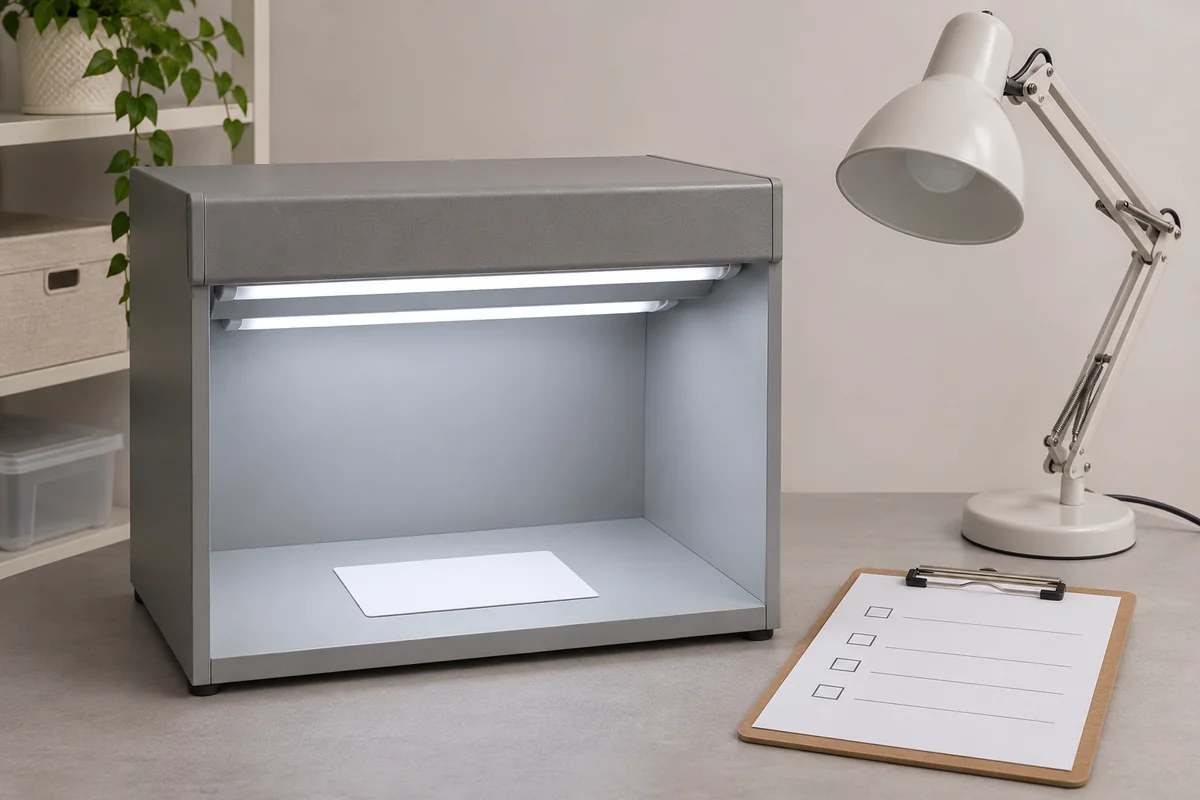
Agree on a repeatable primary viewing setup and a secondary light for checking the appearance in use. Datacolor’s guidance on color evaluation explains why controlled lighting matters and why daylight through a window varies.
| Viewing setup | What to record | Purpose |
|---|---|---|
| Agreed inspection light | Lamp or booth identifier, setting and background | Primary comparison of the physical reference and sample |
| Secondary indoor light or daylight | Source and location, plus time for daylight | Record appearance under a second condition |
| Reference photography | Light, camera settings, distance and unedited files | Document visible differences for discussion |
Place the reference and sample beside one another when possible. Photograph both in one frame, use a plain background and turn off beauty filters. Keep the light and camera settings consistent between views. Record any differences you still see when inspecting the physical samples.
The Color Approval Sheet: Fields to Send With Your Order
Use this blank template to prepare the color brief. Complete the fields with your supplier and retain the agreed version with the sample record.
| Field | What to write |
|---|---|
| Reference system | Supplier’s color ring or swatch set |
| Root shade | Selected code, tone and contrast with the base |
| Solid root length | cm or inches along the strand from its attachment point to the start of the blend; record the measurement method and zone |
| Fade end | Distance from the same attachment point to the end of the blend |
| Base color | Supplier’s code and tone; any change between mid-lengths and ends |
| Highlight zones | Marked views and selected sample, or “none” |
| Viewing conditions | Primary light and secondary check, background and camera settings |
| Approved sample | Physical reference ID and who retains it |
| Observer and date | Who checked the sample, when and under which light |
| Approval version | The specification agreed for this order and any earlier version it replaces |
Illustrative example. Solid root length: 3 cm along the hair from the attachment point. Blend: from 3 cm to 6 cm. Base: a selected shade from the supplier’s ring. Highlights: as marked in the attached views. These are example entries. Use the measurements and reference IDs agreed with your supplier for the actual order.
Resolve a Color Difference Against the Approved Sample
When photographs disagree, locate the difference by zone, root measurement and light source. Then arrange a comparison against the retained physical reference.
- Name the disagreement precisely — which zones, under which named light, measured against which reference.
- Compare samples together. Ask the party holding the retained reference to place it beside the production sample under the agreed light and photograph both in one frame. If they are held in different locations, arrange a physical comparison or agree on matched retained references.
- Check the physical result. Consider whether the visible difference remains when viewing the actual samples together. Two independently photographed swatches alone may leave the question unresolved.
- Agree on the action. Record whether to approve, obtain another comparison or request a revised sample under the terms of your order.
Keep the comparison photographs with the decision. If the approved color changes, identify the replacement sample and the earlier version it supersedes.
Rooted Color Orders: Common Questions
A rooted wig has a darker shade at the roots that blends into lighter lengths. The base can be blonde or brunette. For a sample order, identify the root shade, solid root length, fade end and base shade using the supplier's references.
Give the supplier's root shade code, the solid root length and the fade-end measurement. Define where each measurement starts along the hair and which zones it covers. Attach the selected physical color reference and record the agreed viewing conditions.
For repeat wholesale orders, we recommend checking a physical sample before confirming color. Photos help communicate placement and visible differences, but lighting and camera settings can change their appearance. Agree which physical reference and viewing conditions will be used for the final decision.
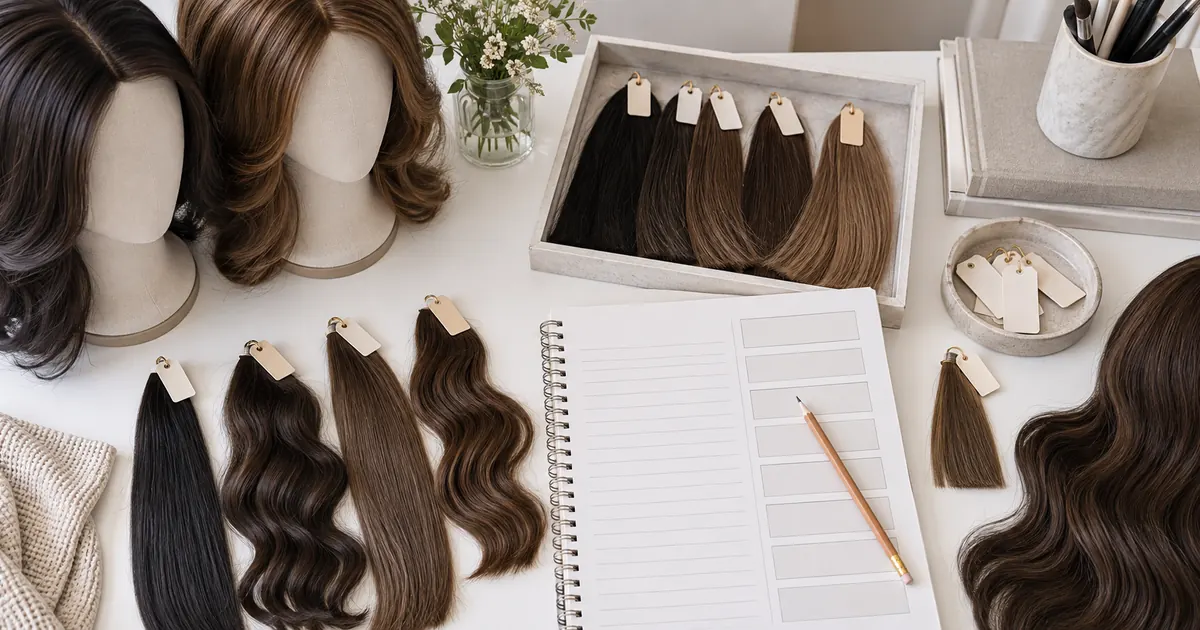
A color ring contains a supplier's selection of shade swatches. A color bundle is a physical hair swatch that can serve as an order reference. Record which sample you approved, its ID and who retains it, using the supplier's own terminology.
Send the Reference With the Order
Send the completed sheet, marked placement views and physical sample ID together. Ask the supplier to flag any unconfirmed color or processing request before sampling. Keep the accepted version available when you discuss a reorder.

Discuss a Rooted Color Sample
Send your selected shades, root measurements and placement references with your inquiry so the available options can be confirmed.
Contact LEV Wigs