Construction Guide
Folded Lace Front Sheitels: The Edge Construction Compared

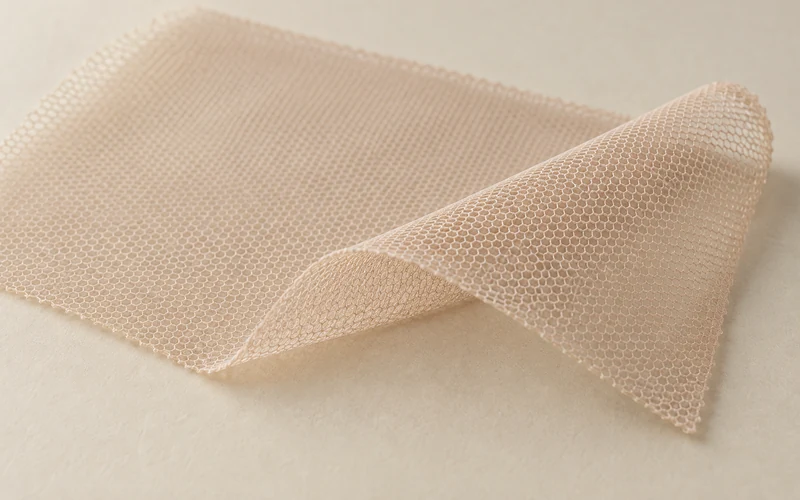
A folded lace front sheitel carries a front edge named in the listing’s specification line — “Front: Folded Lace Front,” in Hair Queen LA’s wording for its JW23. One brand has published an explanation under the same name. Milano’s lace guide asks “What is Folded Lace?” Its answer is a purpose statement and a comparison illustration. What no page opened for this guide publishes is the build method — how the fold is made and what sits under it. Below, this guide reads the brand definition and the seller spec lines. It sets them beside the conventional knotted lace edge that maker education documents. It closes with the questions worth asking before sample approval.
The Term
What Is a Folded Lace Front?
The one published definition opened for this guide comes from Milano’s own lace guide, on the brand’s site. Under the heading “What is Folded Lace?”, the page states (observed October 29, 2026): “Folding the lace is the ideal option when you are blending your front hairline with the wig/topper. It eliminates the zig zag front which is meant to be sitting on your forehead.” The same page pairs the term with a “Folded vs Zig-Zag Lace” illustration.
As a brand definition, that wording covers purpose — blending the front hairline, removing the zig-zag front edge. It does not cover the build method: no fold direction, layer count, or attachment steps appear. That wording is also the brand’s own explanation of its own construction choice. It is not a styling recommendation for how any sheitel wearer should handle her own hairline.
By contrast, in the Jewish-wig listing opened for this guide, the term arrives as a spec-line noun. Hair Queen LA’s JW23 reads “Hair: Chinese Remy Hair; Top: Silk Top; Front: Folded Lace Front” under the field “Type: Jewish Wig,” and its benefit copy says the Folded Lace Front “provides a soft, natural-looking hairline for a seamless finish.” The page attaches no inch figure, no layer count, and no method to the term.
Definition and Spec Line: What Each Publishes
The brand definition and the spec line therefore differ in kind. Milano explains purpose, Hair Queen LA names a component, and neither publishes a process. On every page opened, the fold method, the material under the fold, and the finished edge’s behavior stay unpublished. That gap is why this guide closes with a verification checklist instead of a single definition. For the broader zone vocabulary around lace fronts, the lace front sheitel buyers guide is the background read.
The Comparison
Folded Edges and Conventional Lace Edges
The conventional lace front has documented maker education to compare against. Lord Hair’s knotting guide states that “wig knotting, or hair knotting, refers to the ventilation method of applying the hair to the base material”; it places single split knots at the front of lace systems “because it results in a more natural, gradual hairline”; and it notes bleached knots “can provide a natural looking root area on a lace base.” Those are that guide’s own statements — quoted here as one maker’s education, not as an industry rule.
By contrast, the folded edge, as printed, offers no parallel process chain. Milano’s wording covers purpose, and Hair Queen LA’s line names the component with benefit copy. No knot statement, no fold direction, and no finishing treatment appear with the term on any page opened.
What the Documentation Comparison Shows
| Aspect | Folded lace front (as listed) | Conventional lace front (as documented) |
|---|---|---|
| Where the term appears | Spec-line noun (Hair Queen LA) plus a brand purpose statement (Milano’s guide) | Maker education: knotting as the ventilation method applying hair to the base |
| Process description | Not defined on any page opened for this guide | Hair tied to the base by hand, per Lord Hair’s guide |
| Hairline wording | Seller benefit copy: “a soft, natural-looking hairline for a seamless finish” | Single split knots at the front for a “more natural, gradual hairline” (guide’s wording) |
| Finishing treatment | Not addressed on the listing | Bleached knots described for a lace base (guide’s wording) |
The table compares documentation, not quality. No page opened for this guide measured worn appearance or skin behavior over time for either edge. Therefore which edge suits a given client stays a sample-level question.
Wear and Fit
Hairline Appearance and Cap Fit
On appearance, the checked material supports two attributed statements. Hair Queen LA describes its Folded Lace Front as providing “a soft, natural-looking hairline for a seamless finish” — benefit copy, in the seller’s words. Meanwhile, Lord Hair’s guide describes the conventional side: split knots at the front for “a more natural, gradual hairline.” Both are statements of design intent. The pages do not compare the two edges worn on a head. So how either edge reads on a client is a question the listing cannot settle.
The pages opened for this guide document cap fit only in ordinary size fields. The JW23 page lists its own size options, and the edge itself goes undescribed on the pages opened. Therefore the sample-check questions go to the maker: how thick the folded band sits, what is under the fold, and how the front edge behaves against the skin in wear. The listings answer none of them.
Two working habits follow. First, treat hairline wording as design intent to check against a physical edge, not as a measurement. Second, when the front zone changes — folded lace, a coating, a silk top — record the zones together. Then take fit questions to the sample, because the edge is one layer among several on the cap. The sheitel cap construction guide maps those zones in depth. For the silk-top zone the JW23 line names, the lace top sheitel guide is the background read.
The Checklist
Questions to Verify on a Physical Sample
The fold method stays unpublished on the pages checked. So the sample — and the written specification behind it — carries the weight. Five fields cover the edge:
- How is the edge folded? Ask the maker to describe the fold in its own words. Cover direction, layers, and how hair is held at the fold line. The answer becomes the definition the listing lacks.
- What material sits under the fold? A fold creates an underside. Ask what is there — lace, coating, tape tab, weft — and in what order from the skin side out.
- Is a coating or stiffener present, and where? No page opened for this guide attaches a coating figure to a folded lace front. Ask for the material and position of any coating at the front band, with figures if the maker uses them.
- How does the edge sit against the skin? Check the edge on the sample in normal light. Note contact, lift, and any sensation at the fold line. Record what the sample does, not what the label promises.
- What trim guidance comes with it? Ask whether the edge may be trimmed, by whom, and what the maker says about the edge afterward.
From Written Answers to Sample Approval
Take the answers in writing, then compare the physical sample against them before approval. A spec line that says “Folded Lace” plus written answers to these five fields is a verifiable package. The spec line on its own is not.

A front edge with a documented brand purpose and an undocumented build method. Milano’s lace guide answers “What is Folded Lace?” with: “Folding the lace is the ideal option when you are blending your front hairline with the wig/topper. It eliminates the zig zag front which is meant to be sitting on your forehead.” In the Jewish-wig listing opened for this guide, Hair Queen LA’s JW23 carries “Front: Folded Lace Front” with benefit copy about “a soft, natural-looking hairline for a seamless finish.” How the fold is made, and what sits under it, is not published on any page checked — so treat the method as a specification to confirm in writing, not a documented construction.
At the documentation level. The conventional front is described in maker education: Lord Hair’s guide defines knotting as the ventilation method of applying hair to the base, places single split knots at the front “because it results in a more natural, gradual hairline,” and describes bleached knots as providing “a natural looking root area on a lace base.” The folded edge comes with a brand purpose statement and a spec-line noun with benefit copy, but no process description. Any further difference — knot treatment, edge thickness, worn appearance — is unverified from the pages checked and belongs in a sample check.
The pages opened for this guide do not say. No page checked attaches a coating — or its thickness or position — to a folded lace front, and no page states an adhesion, hold, or wear effect for a front-edge coating. Whether a coating is present on a given cap, and what it does there, is a question to put to the supplier in writing.
Ask five fields in writing: how the edge is folded, what material sits under the fold, whether a coating is present and where, how the edge sits against the skin, and what trim guidance the supplier provides. Then compare the physical edge against the written answers before the sample is approved.
Conclusion
Read the Spec Line, Then Verify the Edge
A spec line identifies a folded lace front sheitel. On the evidence opened for this guide, the process behind it stops there. One brand publishes the purpose, the seller line names the component, and neither describes the build. The conventional knotted edge has documented maker-education wording to compare against. The working method follows from the gap. Quote the seller’s wording and collect written answers to the five edge fields. Then approve the edge against the sample — not the label.


Ordering or Sampling a Folded Lace Front?
Take the five sample-check fields above to your supplier: fold method, material under the fold, coating and its position, edge behavior against the skin, and trim guidance — confirmed in writing before the sample is approved.
Contact LEV Wigs