Specification Guide
Silk Top Sheitel Scalp Color: Match the Base, Not Hair
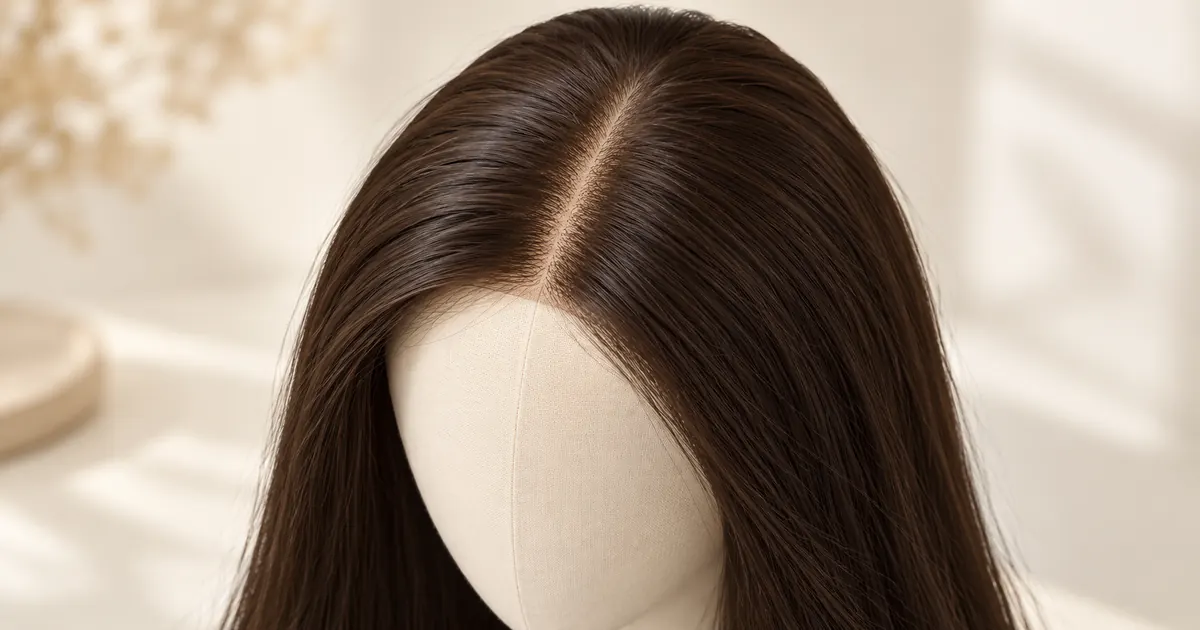
Base tone is the color visible through the part of a silk-top sheitel. Compare it with the wearer’s preferred skin-tone reference separately from the hair shade, then confirm the actual sample in consistent lighting. The wearer’s own scalp is an optional reference, not a requirement.
Two Different Colors
Why Base Tone Is Not Hair Color
Hair shade and visible base tone are separate choices. The hair color matching guide covers strand shade, roots, and blending. Here, the focus is the base visible at the part.
SPARX describes a color-corrected base on its sheitel page. In the adjacent medical-wig market, Silkopulence offers its own scalp-tone shades. These are descriptions of each brand’s products, rather than a shared shade scale. For an order, record the selected base tone separately from the hair shade.
How Silk Presents It
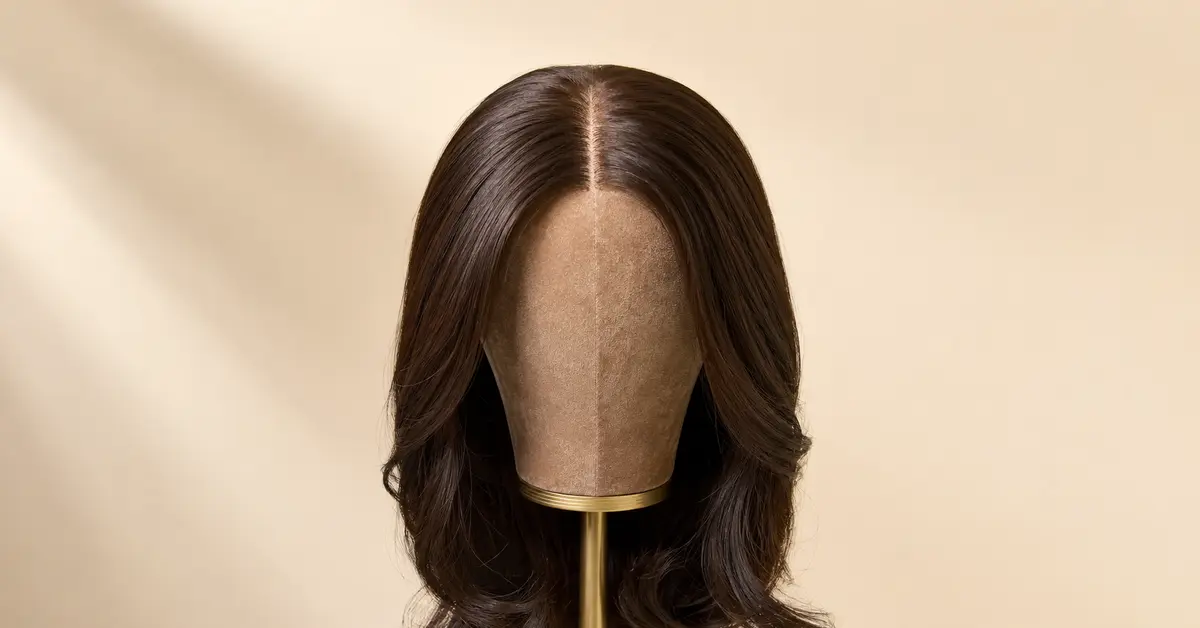
How a Silk Top Presents Scalp Color
Check the base with the parting the wearer plans to use. Compare the visible area on the actual piece rather than relying only on a catalogue photo.
Ask the supplier to confirm the material and construction if those details matter to the order. The silk-top construction guide covers the separate construction questions.
The Matching Check
Matching Tone to the Wearer
Compare the visible base with an agreed skin-tone reference under similar lighting. Photos can help communication, but confirm the choice on the sample where available.
Keep the reference and the lighting notes together. Camera settings and display differences can affect a photo’s appearance, so a photo alone is not an exact color standard.
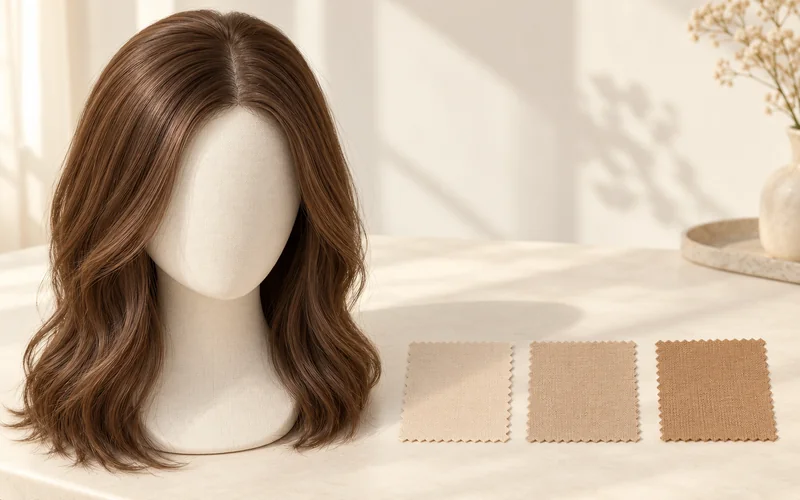
- Choose a reference. Use the supplier’s labeled swatch or approved sample. Use personal reference photos only with the wearer’s permission.
- Compare in similar lighting. Look at the sample and reference together in the light where the piece will be worn.
- Describe the difference. Note whether the sample looks warmer, cooler, pinker, or greyer than the reference, where those descriptions are useful.
- Keep a record. Photograph the sample and reference together when helpful, and note the lighting. Confirm the actual sample where available.
Order & Sample
Ordering and Sampling: Getting Tone Confirmed
Use the supplier’s shade name or code where available, and keep an approved sample or photo with the order notes. Confirm which visible base areas and parting style the reference covers.
Ask what options, if any, are available if the delivered base tone differs from the approved sample, and how the supplier reviews it. Do not assume that recoloring or a remake is available.
| Field | What a specific answer looks like |
|---|---|
| Base tone reference | A named shade from the supplier's own scale, or an approved comparison photo — not "natural" or "skin tone" alone |
| Tint placement | Which zones are visible — top only, or blended toward the parting edges the style will expose |
| Sample check | Whether the supplier provides an actual parting sample to check in daylight before approval, and what that approval process looks like |
| Correction path | Ask what options, if any, are available if the delivered base tone differs from the approved sample, and how the supplier reviews it |
Repeat Orders
What to Record for Repeat Orders
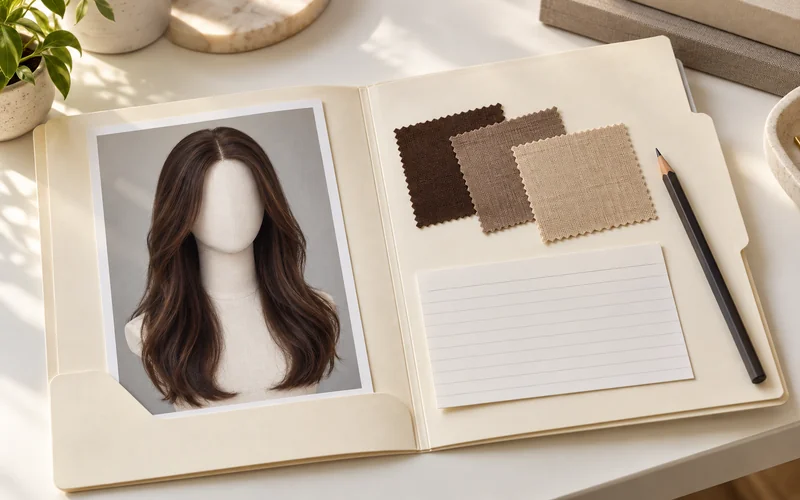
For a repeat order, keep a reference for both the hair shade and the visible base tone. Ask the supplier to identify the approved reference rather than relying on a description such as "match the last one."
Keep the approved comparison photo or physical sample, any supplier shade code, the areas being compared, and the approval date with the order record. This gives the next discussion a reference; it does not guarantee an identical match. If the construction or supplier changes, compare a new sample. The custom measurements guide covers the separate cap-fit record.
FAQ
Silk Top Scalp Color: Common Questions
Scalp tone here means the base color visible through the part. It is separate from the hair shade; assess both on the actual piece.
Compare the base with the agreed skin-tone reference and choose the hair shade separately. Confirm which appearance the wearer prefers in the intended lighting. The wearer’s own scalp is an optional reference where appropriate.
Ask for the supplier’s labeled swatch or a sample, compare it with the agreed reference in similar lighting, and record the shade name or code if one is provided. Use personal reference photos only with the wearer’s permission. Confirm the appearance on the actual piece where possible.
It depends on the piece and the supplier’s available options. Ask before ordering; do not assume the base can be recolored after delivery.
Conclusion
Two Colors, Two Approvals
Keep separate references for the hair shade and visible base tone. Confirm the wearer’s preferred appearance on the sample in the intended lighting, then retain the reference for future discussions. A record helps communication but does not guarantee that a repeat piece will match exactly.


Choosing a Silk-Top Base Tone?
Prepare the wearer’s preferred reference and ask what swatches or samples are available before confirming a base-tone selection.
Contact LEV Wigs