Specification
Sheitel Density: Length, Cap, and Natural Movement

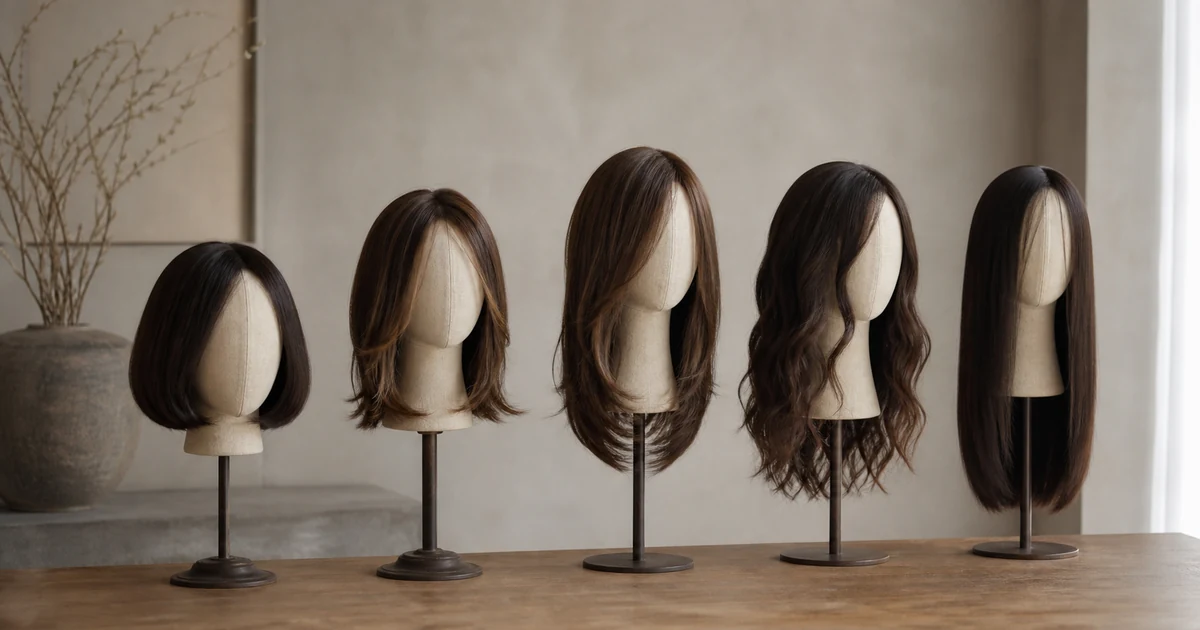
Density is the most under-specified decision in sheitel buying. Buyers obsess over hair origin and cap construction — and then let density default to whatever the factory chose that week. The failure modes are familiar to any macher: a helmet look, a front that stands like a brush, a crown that sits hot by noon. Sheitel density deserves the same deliberate treatment as every other field on the order sheet, because it shapes how convincingly a unit reads as hair.
Density is the whole subject here: what the numbers mean, how they distribute across the cap, how they interact with length and construction, and how to write them into an order so the workshop builds what you pictured. If you are choosing a cut or a style, the styles guide is the better first stop; for the procurement spec-sheet view, our hair specification guide covers density as one field among many.
Fundamentals
What Density Actually Measures
The Definition
Sheitel density is how much hair is knotted or sewn into the cap, expressed as a percentage — shorthand whose baseline is set per supplier, not certified centrally. Within any given supplier’s scale, higher percentages signal more hair per zone — fuller volume, more weight, more heat, and a look that moves from “her own hair” toward “a lot of hair.”
Three physical consequences follow directly from that definition, and each density decision trades among them. Weight: more hair means more mass resting on the perimeter of the cap. Heat: hair traps warmth, and a dense cap in August is a small personal climate. Read: natural hair sits in a moderate, believable range — the farther a unit's volume sits from that range in either direction, the more it reads as artificial.
Density also constrains what styling can do later. Cuts need hair to build shape — a razor-clean bob wants even density across its line — and styles that live on airy movement lose that airiness as density climbs, however skillfully they are cut. The styles guide makes this pairing explicit per style; the working rule is simply to choose density with the target cut in view, not afterwards.
Vocabulary
The Percentage Language, Translated
The percentage scale arrived in the sheitel trade from the general wig industry, and it rewards skepticism: it is a shared buying vocabulary, not a laboratory standard. Nothing about it is certified centrally — the same figure can sit on different baselines at different workshops, which is why serious orders describe density by look and zone alongside the number. Four example supplier-label formats follow; read them as vocabulary, not as comparable tiers:
None of the rungs above is a fixed LEV tier, and none converts cleanly from one workshop to another. Wherever a target lands, resolve it through that supplier’s sample, the finished weight, and zone-by-zone notes, then write those confirmations on the order next to the percentage itself.
Anatomy
Density Is Not One Number: Zone by Zone
A single percentage on a spec sheet describes the crown, and the crown alone is a poor summary of a whole cap. Natural hair distributes unevenly, and a convincing sheitel copies that unevenness:
- Hairline and front. The lightest zone. Natural fronts graduate from sparse, fine knots at the edge toward fuller density a few centimeters back. This graduation — not the top construction alone — is what lets a front survive close inspection.
- Crown and top. The reference zone, commonly the fullest. Where volume reads most strongly at conversational distance. Suppliers differ on which zone their stated figure actually describes, so ask rather than assume.
- Sides and back. Slightly below crown density in most natural heads, and the zone where excess weight pressures comfort — extra side weight tends to pull a cap backward through the day.
- Nape and perimeter. Trimmed density for a clean edge; heavy nape density can fold, roll, and catch on collars.

On the order sheet this means two density fields, not one: crown density and hairline density. Writing them separately is the simplest way to keep the heavier look at the crown from extending to the front, and it matches how we ask for density on custom orders — the spec-sheet view of these fields lives in the quality specification guide. Suppliers who work from a single figure can still be given both targets as written zone notes.
Interactions
The Density–Length–Cap Triangle
Density does not act alone. It sits in a triangle with length and cap construction, and moving any corner tends to move the others:
| If You… | A Common Starting Point | Why Buyers Give It Weight |
|---|---|---|
| Go longer (past shoulder) | Start light-medium, then confirm by sample | Long hair multiplies visible volume; long and dense can read theatrical and wear hot |
| Go shorter (bob, pixie) | Start medium-full | Short cuts expose their shape; too little hair can read sparse rather than sleek |
| Choose a silk top | Keep crown density moderate | The silk scalp illusion works best when hair does not crowd the part line |
| Choose heavy wefting | Consider trimming density | Wefted volume stacks in rows; combined weight presses on the perimeter |
| Wear in a warm climate | Bias light | Heat is a real constraint, not merely a preference |
| Style with center parts | Watch the part line | Exposed crowns show density honesty — or dishonesty — first |
Length deserves particular attention because the two magnitudes compound: buyers reason "longer is more luxurious, so fuller is more luxurious too," and combinations of both can drift toward units that wear heavy and read theatrical. As a procurement starting point — not a universal rule — when length goes up, bias the density target down, then confirm the pairing by sample. The target itself should be written in terms of the hair texture and cap construction you want (for example, airy movement over a lace top versus a denser, set-style look over a wefted base), because different suppliers and communities read "natural" differently and no single Orthodox standard of naturalness exists.
Context
Reading "Natural" in the Community
Most density guidance online says "choose the most natural density" — and then illustrates it with fashion-wig photography whose natural is a blow-dried campaign look. The sheitel standard is different in kind, not degree: the unit is worn daily, in community, by women whose goal is that the covering read as unremarkably hers. In practice that keeps a daily sheitel well below the fashion-wig aesthetic.
Within that ceiling, communities shade the target. Norms around volume, length, and how styled a daily look should be vary across the Orthodox spectrum and between neighborhoods — a unit can read as natural in one community and conspicuous in the next, so there is no single "Orthodox natural density" to order against. Our community styling guide covers how those norms actually operate; for uncertain buyers, the working heuristic is simply this: when in doubt, lighter reads more natural than fuller, and lighter weight is easier to live under every day.

B2B
Density on the Order Sheet
For boutique and wholesale buyers, density is one of the fields where written specification earns its keep early. The fields we ask for on a production order:
- Crown density — the headline percentage, chosen against length and climate.
- Hairline density — commonly requested lighter than crown; note the graduation extent you want.
- Zone notes — any distribution requests worth writing down (for example lighter side zones or a trimmed nape) so the workshop can weigh them against grip and construction.
- Target style reference — the cut the density must serve, named or attached, so the workshop can sanity-check the pairing before tying knots.
An order carrying these fields is far easier to reproduce later and check on arrival than an order saying only "medium density." When stock units arrive, checking crown and hairline figures against the order is quick work inside our sample evaluation workflow, and it is one of the places where density disagreements can be caught before shipment.
FAQ
Sheitel Density: Common Questions
Most daily-wear requests start from the mid part of the supplier's chart, with the exact figure shaped by length, cap construction, and community norms. Because those inputs vary from wearer to wearer, density belongs on the order sheet alongside samples and zone notes rather than as one universal number.
Treat it as a supplier label, not a standard unit. Each manufacturer sets its own percentage against its own baseline and application method, so figures are not directly comparable across suppliers. The practical route is to check what 130% means to that specific supplier on that specific cap — by sample, by finished weight, and by zone-by-zone notes — before relying on it.
In many cases yes — but confirm rather than assume. Those figures sit at the deliberately full end of the fashion-wig trade, where meaning varies most between suppliers; they can also carry real comfort weight on a daily-wear cap. Agree exactly what such a label means to your supplier — sample, weight, zone notes — before putting it on an order.
In most cases. Natural growth is commonly sparser at the hairline and denser through the crown, so convincing fronts graduate — fewer, finer knots at the edge building toward fuller density behind. A uniformly dense hairline can read artificial under close inspection, which is why the graduation extent deserves its own line in the specification.
Thinning a unit down is routine workshop work — removing knots to lighten an overly heavy zone. Adding density is far harder and often impractical, since it means re-ventilating hair into a finished cap. That asymmetry is why it pays to specify density as correctly as possible at order time instead of correcting afterward.
Closing
Specify It, Don't Default It
Density shapes how the rest of a specification reads: premium hair, a silk top, a precise cut — each shows to better effect when the volume suits its wearer. Choose it by person and climate, note it by zone, pair it deliberately with length, and write it down. Done well, the hair simply reads as hers.
Two files round out the picture from either side: the styles guide shows the cuts each density has to serve, and the hair specification guide places density among the full order fields.

Ordering Density-Conscious Sheitels?
LEV Wigs specifies sheitel density by zone — crown and hairline written separately — and reviews length-density pairings before production. Tell us your target styles and community profile, and our team will help put numbers to them.
Discuss Density SpecsRequest Wholesale Terms