Sheitel Education
Lace Top vs Silk Top Sheitels: Complete Buyer's Guide

The difference between a lace top and a silk top sheitel is the crown construction: a lace top hand-ties hair through an open mesh, so it is lighter and more breathable, while a silk top injects hair between two silk layers that hide the knots, so the part looks more like a real scalp but the cap traps more heat. Buyers can compare the two by airflow, part appearance, styling range, weight, care, and repair options.
In practice, the cap is the foundation of every sheitel. A beautiful European hair wig on the wrong cap construction is like a luxury car with a broken chassis. It doesn't matter how premium the hair is if the client can't wear it comfortably through a full day.
This guide explains how lace top sheitels and silk top sheitels are constructed and which specifications a boutique should confirm before ordering.
After reading this, you'll know which cap construction to recommend to which client — and why salons that can explain both options serve a wider range of wearers.
Cap Construction
Lace Top Construction: Open Mesh, Airflow, and Hairline
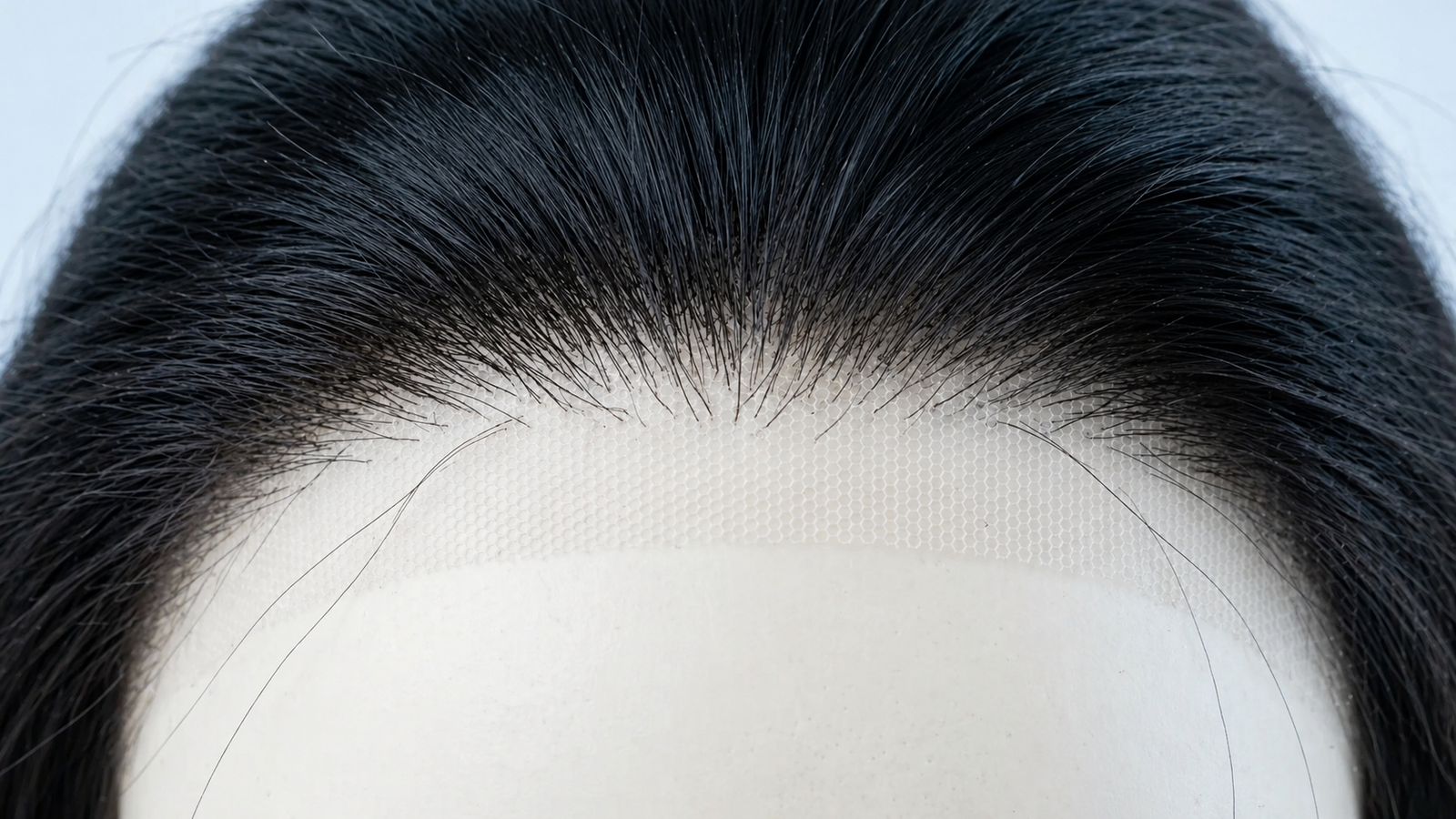
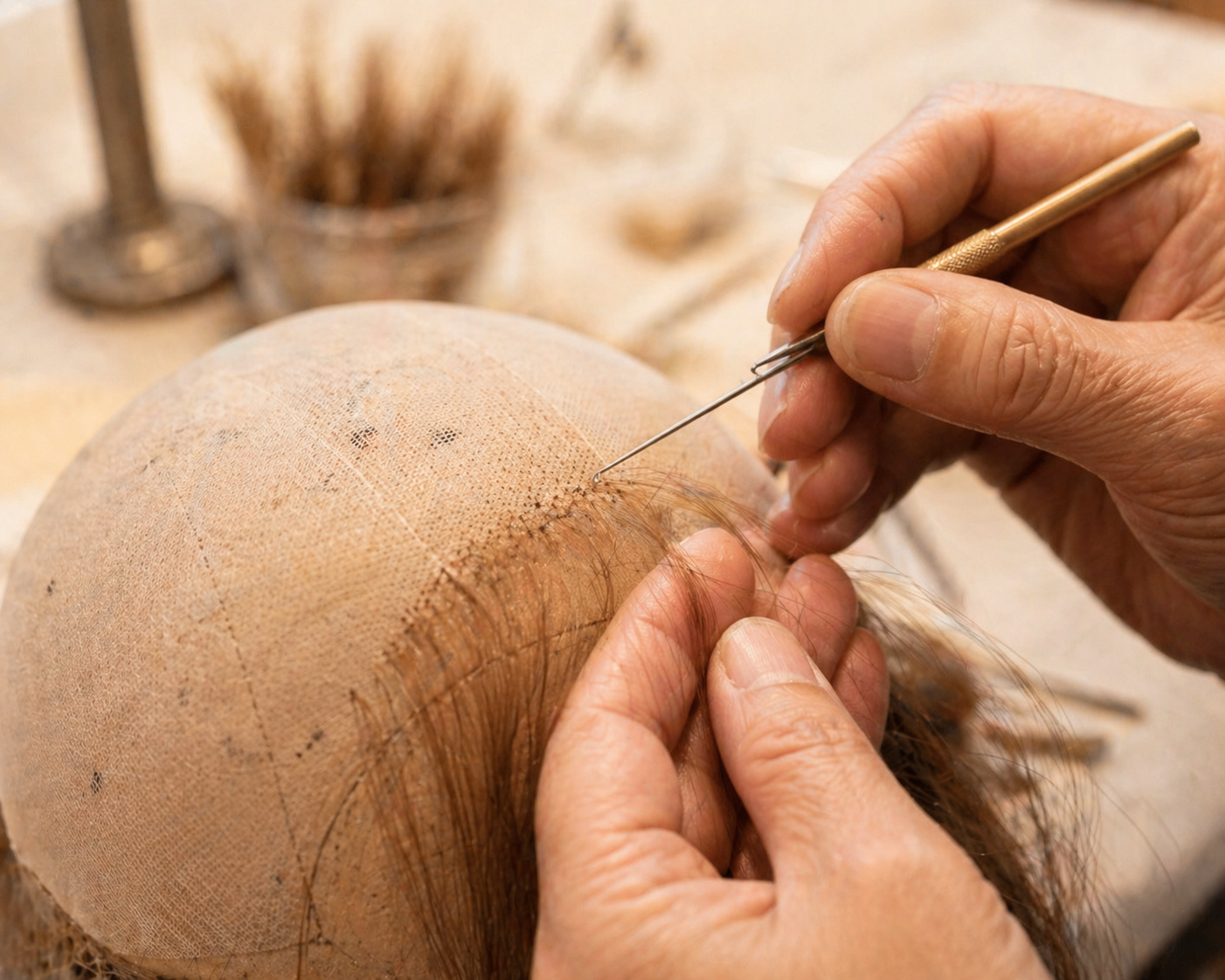
A lace top sheitel uses a fine mesh lace base as the foundation of the wig cap. Each individual hair strand is hand-tied to this mesh using a technique called ventilating — a single knot per strand, passed through the lace hole and secured on the underside.
Breathability: The Lace Top's Superpower
The open mesh structure allows airflow through the crown and can make a lace top feel lighter than a comparably sized layered silk base. Swiss and French lace are common options; compare actual samples because softness, visibility, and robustness vary by specification.
Natural Hairline: Where Lace Truly Shines
The lace mesh extends to the front hairline, creating what we call a "floating hairline" — the hairs appear to grow directly from the skin rather than from a solid cap edge. In addition, our factory pre-plucks the hairline to a graduated density and adds fine baby hairs along the perimeter. As a result, when the client pulls her sheitel back into a ponytail or tucks it behind her ears, there's no visible cap line. Just skin and hair.
Lace tops are often considered when a wearer wants a flexible hairline or more styling options, including ponytails, half-up styles, and side parts. The result still depends on cap design, fit, density, and attachment. If you're weighing this construction against silk for a specific client, our lace top sheitel construction guide breaks down base materials, ventilating density, and customization in more depth.
Cap Construction
Silk Top Construction: Layered Base and Scalp Effect
A silk top sheitel replaces the lace mesh with a double-layered silk base; see our silk top wig construction overview. The top layer is a fine silk fabric with individual hair strands injected through it. Beneath that sits a second silk layer that hides the knots completely. The result is what industry insiders call a "scalp illusion" — when you part a silk top sheitel, you see what looks like a real scalp with hair growing from it. No grid pattern. No visible knots. Just seamless realism.
For construction, material, and purchase-order details, review our custom silk top kosher sheitels specification page.
Scalp Realism: The Silk Top Advantage
This is where silk tops win, and it's not subtle. When a client parts her sheitel down the middle — especially with lighter colors or highlighted European hair — the part line on a lace top reveals a faint grid pattern where the knots sit. It's not ugly, but it's there. By contrast, on a silk top, the part line looks like... a scalp. Pale, slightly textured, completely natural.
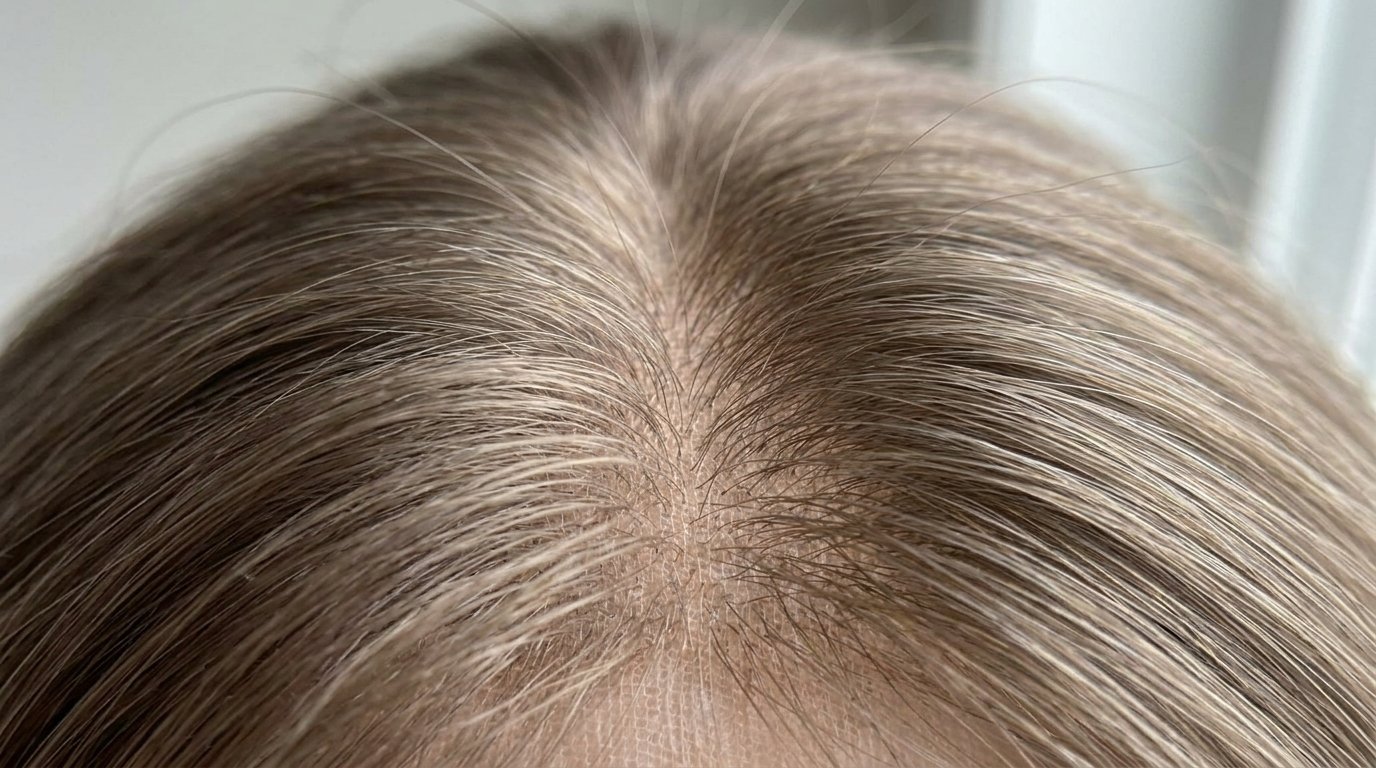
We see this matter most with clients who wear their sheitel in a consistent center or side part — particularly women in more traditional communities where the sheitel is worn daily with minimal restyling. They don't need ponytail flexibility. They need the part to look flawless under synagogue lighting, under office fluorescents, under a sheitel hat on Shabbos.
Durability: Silk Outlasts Lace
Silk is simply tougher than lace mesh, and in workshop handling the silk top holds up better at the crown over long daily wear. However, the trade-off is weight and breathability. For clients who rotate between two or three sheitels rather than wearing one piece daily, that durability advantage adds meaningful service life over a lace top used the same way.
One thing we've learned the hard way: silk tops take considerably more hand-tie labor than lace. The double-layer construction means each strand must be injected through silk, knotted, then hidden beneath the second layer, so a silk top generally requires more skilled labor than a comparable lace top. That additional work can affect its wholesale price.
Side-by-Side Comparison
Lace Top vs Silk Top: Which Cap Serves Your Clients Better?
| Factor | Lace Top Sheitel | Silk Top Sheitel |
|---|---|---|
| Breathability | Excellent — open mesh allows airflow | Good — silk is breathable but less ventilated |
| Scalp Realism | Good — natural hairline, slight grid at part | Excellent — no visible knots or grid |
| Weight | Lighter cap | Noticeably heavier cap |
| Durability | Shorter service life | Longer service life |
| Styling Flexibility | High — ponytails, updos, any part | Moderate — best with consistent part |
| Comfort for Sensitive Scalps | High — with Swiss/HD lace | Moderate — silk can trap heat |
| Wholesale Price Point | Lower — less labor-intensive | Higher — more hand-tie labor |
| Ideal Client Type | Active, younger, style-flexible | Traditional, consistent style, longevity-focused |
What this means for your store: The two constructions answer different priorities. Use local fitting and sales records to decide whether to stock both, and which specifications deserve more depth.
B2B Wholesale
Why B2B Buyers Should Care About Cap Construction
A practical consultation avoids guessing which cap a client needs. Start with three questions about wear time, styling routine, and previous comfort issues.
Question 1: How Many Hours Daily?
A client who wears her sheitel only for synagogue and social events can handle either cap. However, a client who wears it from morning through evening — work, school pickup, and events — is far more likely to notice the breathability difference. That's your lace top customer.
Question 2: What's Her Styling Routine?
Does she keep one consistent part, or does she redirect the hair and change styles? A silk top emphasizes the fixed part area, while a lace construction may offer more flexibility depending on the cap design. Confirm the intended styling range on a sample instead of assuming either label guarantees it.
Question 3: Has She Had Comfort Issues Before?
Comfort issues can have several causes, including fit, attachment, base material, adhesives, clips, and styling tension. A lace top may improve airflow, but it is not a guaranteed solution. Compare the fit and materials, test a swatch when available, and recommend professional advice if headaches or skin irritation persist.
Manufacturing
Customization Options From the Manufacturer
Not all lace is created equal. Likewise, not all silk is created equal. When you order wholesale from a manufacturer — not a middleman — you get to specify exactly what goes into the cap.
Lace Type Options
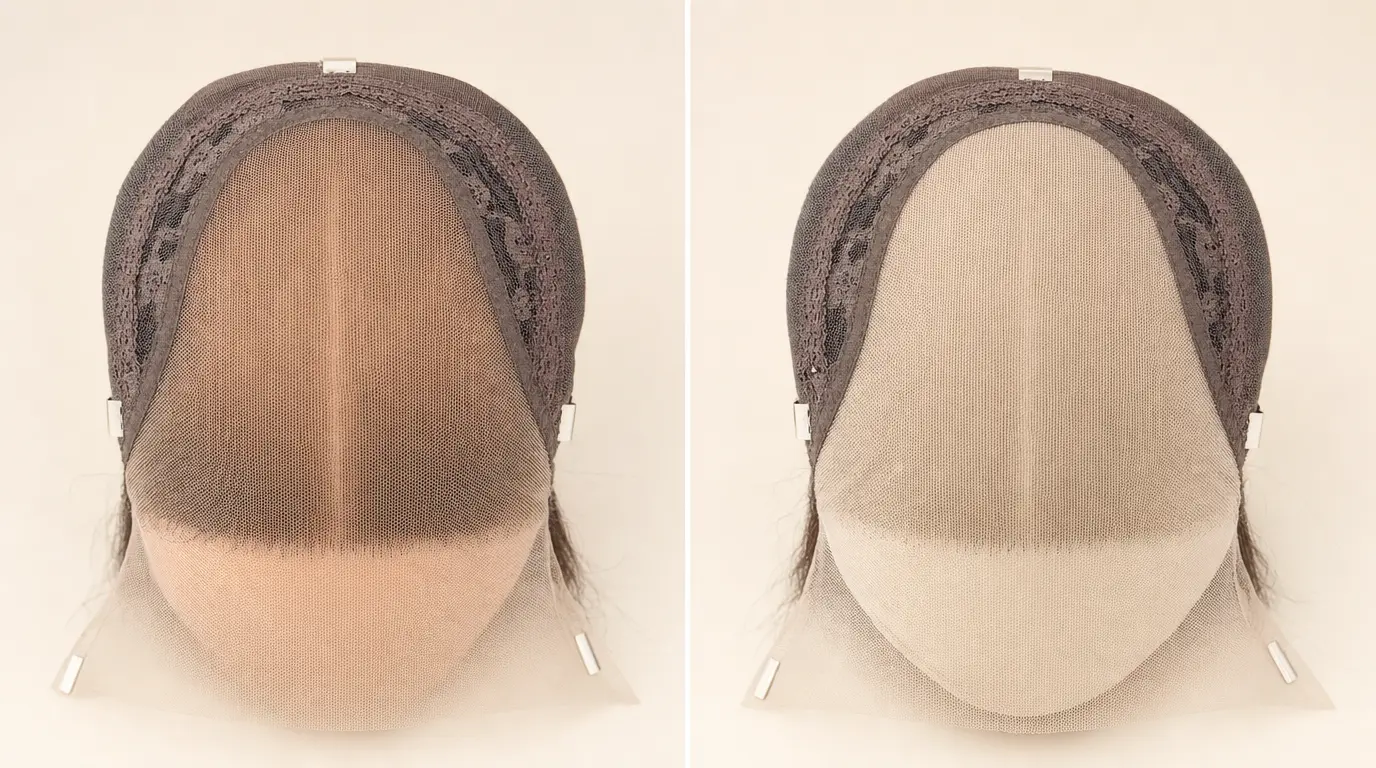
Common lace options include:
- Swiss lace — Often selected for a fine, soft feel and a balance between visibility and robustness.
- HD lace — Very fine and less visible against some skin tones, but usually requires more careful handling.
- French lace — Generally a more robust mesh; confirm color, hole size, edge finish, and weight on the actual sample.
Cap Size and Fit Customization
Suppliers may offer size ranges or custom sizing, so confirm current terms before quoting a client. A fit brief normally records circumference, front-to-nape, ear-to-ear, temple placement, and any asymmetry. Medical hair-loss cases need individual fitting rather than a size assumption.
Density and Length
Density and length are buyer-defined: specify the density that matches your clients' natural volume and the lengths your market actually wears. We don't push fixed menus because your clients don't buy off a rack — they buy what matches their lifestyle. Instead, tell us your target demographic and we recommend a density and length profile for that market.
Retail Strategy
Common Mistakes Retailers Make With Sheitel Cap Construction
Mistake #1: Recommending One Cap to Everyone
One cap type will not answer every combination of fit, part appearance, airflow, styling, care, and budget. Build the assortment from documented client requests and fitting outcomes.
Mistake #2: Ignoring Lace Quality Differences
Not all products labeled "lace top sheitels" use the same mesh or edge finish. Compare actual samples and ask the manufacturer to document lace type, color, hole size, weight, stretch, and edge treatment.
Mistake #3: Skipping Client Education
Clear cap-construction notes help clients compare the options before ordering. Simple point-of-sale cards can summarize airflow, part appearance, styling range, care, and the limits of each construction.
Mistake #4: Not Offering Samples
A material swatch lets a client compare texture and flexibility before ordering. Ask the supplier whether current lace and silk samples are available.
FAQ
FAQ: Choosing Between Lace Top and Silk Top Sheitels
The construction method. Lace tops use an open mesh — each hair is hand-tied through tiny holes. Silk tops use two layers of silk fabric with hair injected between them. That's why lace feels lighter and more breathable, while silk gives a more realistic scalp appearance at the part.
Lace top is generally more breathable because its open mesh allows more airflow. A silk top uses layered material to hide the knots, which improves the scalp effect at the part but can feel warmer, especially in hot weather.
A wig technician may be able to patch a small tear or replace a damaged lace panel. Feasibility and cost depend on the tear location, base condition, and available materials, so the piece should be inspected before a repair is promised. Store it on a suitable stand and avoid pulling the lace edges when adjusting it.
There is no fixed lifespan. Service life depends on wear frequency, lace specification, fit, attachment, washing, heat, storage, and repair history. Gentle handling, moderate heat away from the base, suitable storage, and rotating pieces may reduce stress on the cap.
Some wearers find fine, soft lace with finished edges more comfortable, but sensitivity can also relate to fit, adhesives, clips, products, or another condition. Test a sample when available, stop use if irritation occurs, and seek professional advice for persistent symptoms.
Conclusion
Stock Both. Educate Your Clients. Grow Your Business.
Here's what manufacturing sheitels has taught us: there's no single "best" cap construction. There's only the right cap for the right client.
Lace tops win on breathability, weight, and styling flexibility. Silk tops win on scalp realism, durability, and part-line perfection. The salon partners who thrive are the ones who stock both — and who can explain the difference with confidence.
If you're a retailer or salon owner looking to add sheitels to your product line, start with a mixed cap sample order. Touch the lace. Feel the silk. Show your clients the difference. Trust builds when customers can see and feel what they're buying — and that trust is what keeps them coming back season after season.


Ready to Offer Both Cap Constructions?
LEV Wigs manufactures lace top and silk top sheitels in Qingdao, China. Contact the team to discuss current cap, hair, sample, and trial-order options.
Request Wholesale Pricing