
Home › Silk Top Wigs
The silk top construction, explained
Silk Top Wigs
A silk top wig builds its crown and parting zone on a layered double-silk panel: hair is ventilated through the upper silk and knotted beneath the lower silk, so the part reads like scalp and the knots stay concealed. This guide walks through the construction, its details and how it compares with lace top and lace front.
Ask about a silk top wigConstruction definition
What a silk top wig is — and what it is not.
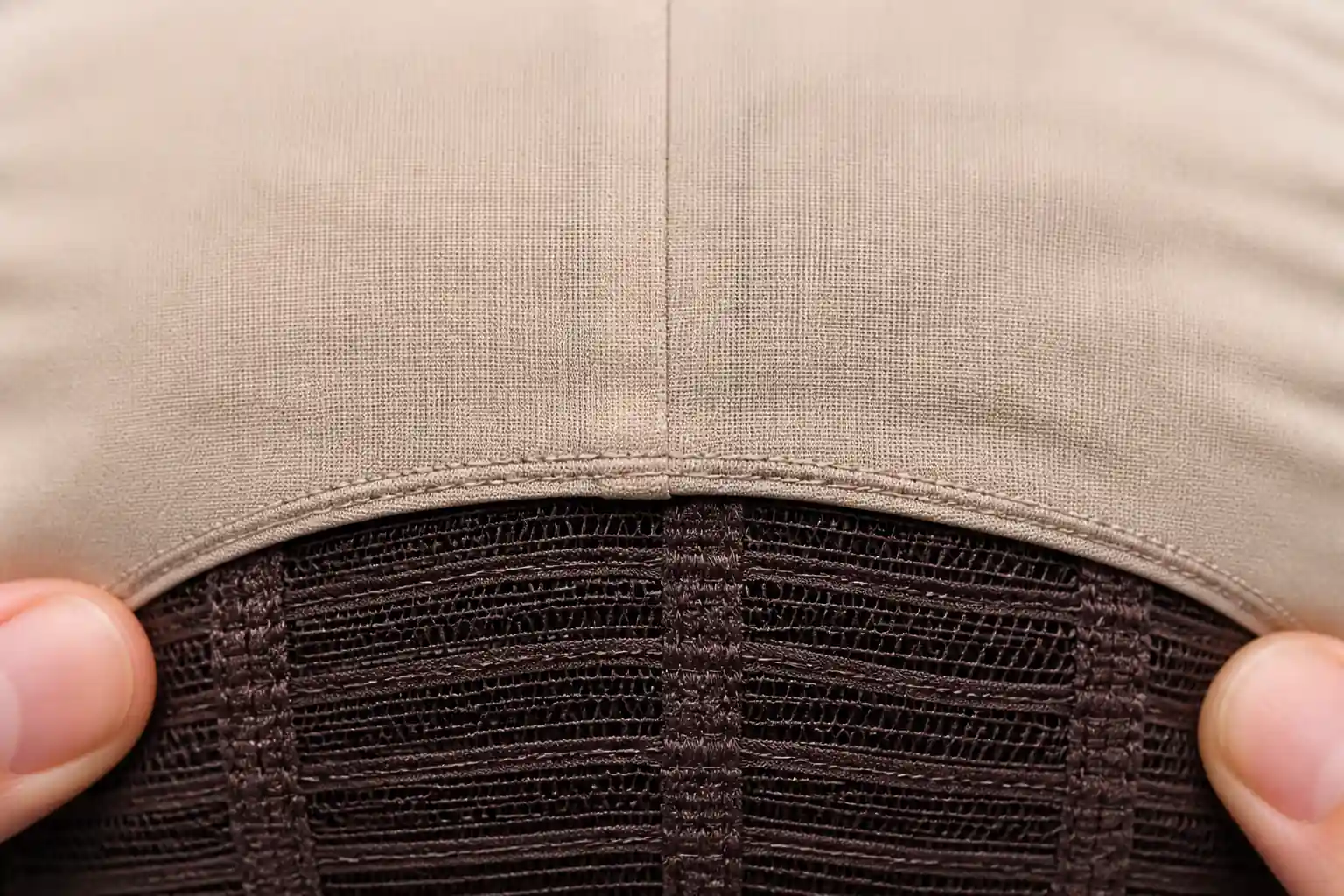
A silk top wig is a wig construction in which the crown and parting zone is built on a layered double-silk panel. Hair is ventilated through the upper silk layer and knotted beneath the lower silk layer, so the knots sit hidden between the two layers and the part reads as scalp. The silk panel covers the crown and parting area only — not the whole cap. The rest of the cap carries fit, comfort, perimeter and attachment.
01
Concealed knots at the part
Hair is ventilated through the upper silk and knotted under the lower silk, so the knots sit between the two layers rather than on the surface of the part. No bleaching is needed to hide them.
02
Crown-scoped silk panel
The double-silk layer covers the crown and parting zone — not the whole cap. The perimeter, nape and attachment areas are engineered to support that panel and carry the fit.
03
One construction among a family
Silk top answers the knot-concealed, scalp-read crown question. Lace top answers free-direction crown parting; lace front answers front-hairline placement. Choosing starts from the construction.
Construction chapter
How the double-silk crown is built.
The double-silk crown is where the silk top is born — the rest of the cap is engineered to carry the fit. Walk through how the two silk layers conceal the knots and form the scalp-read part.
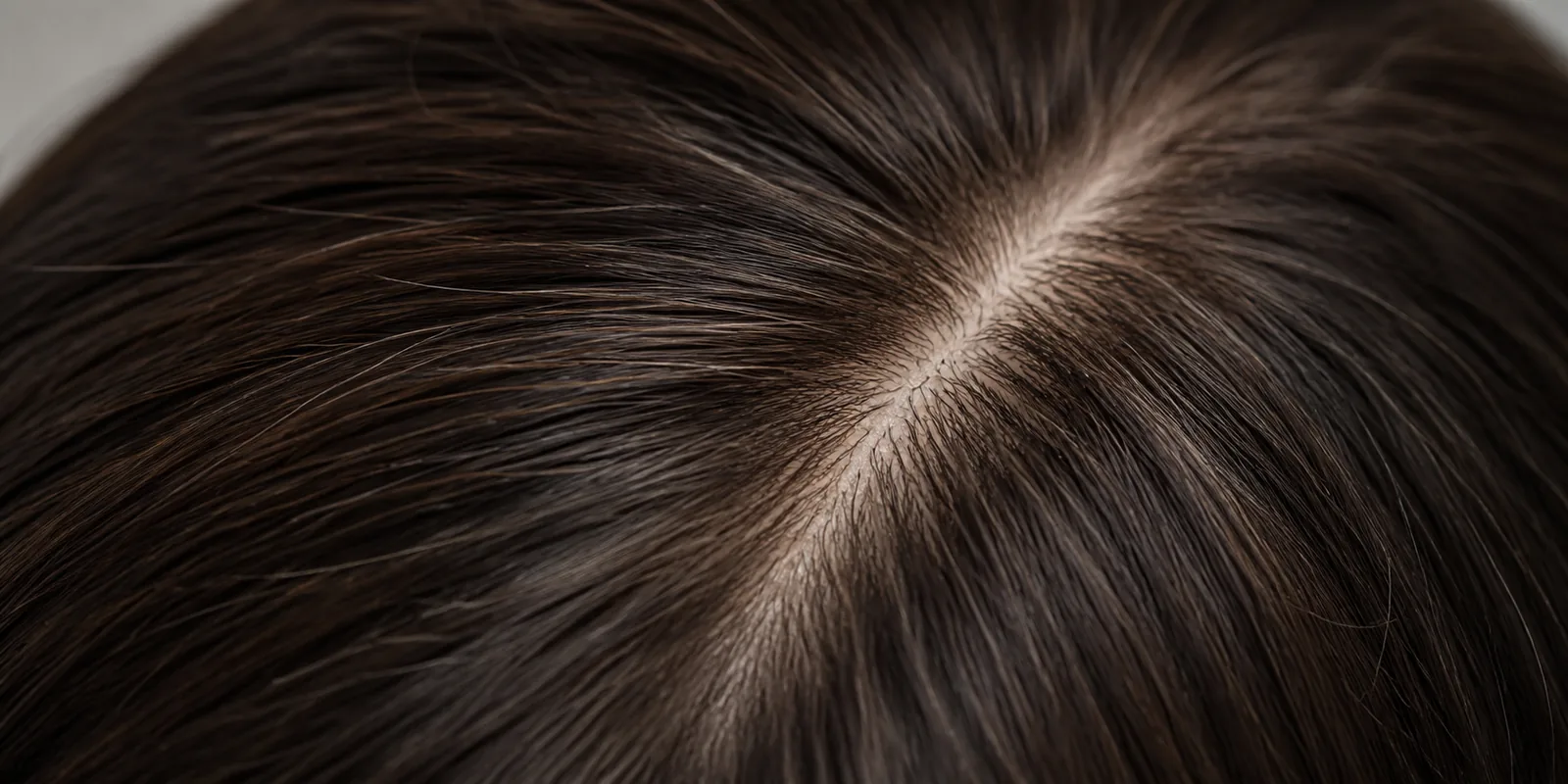
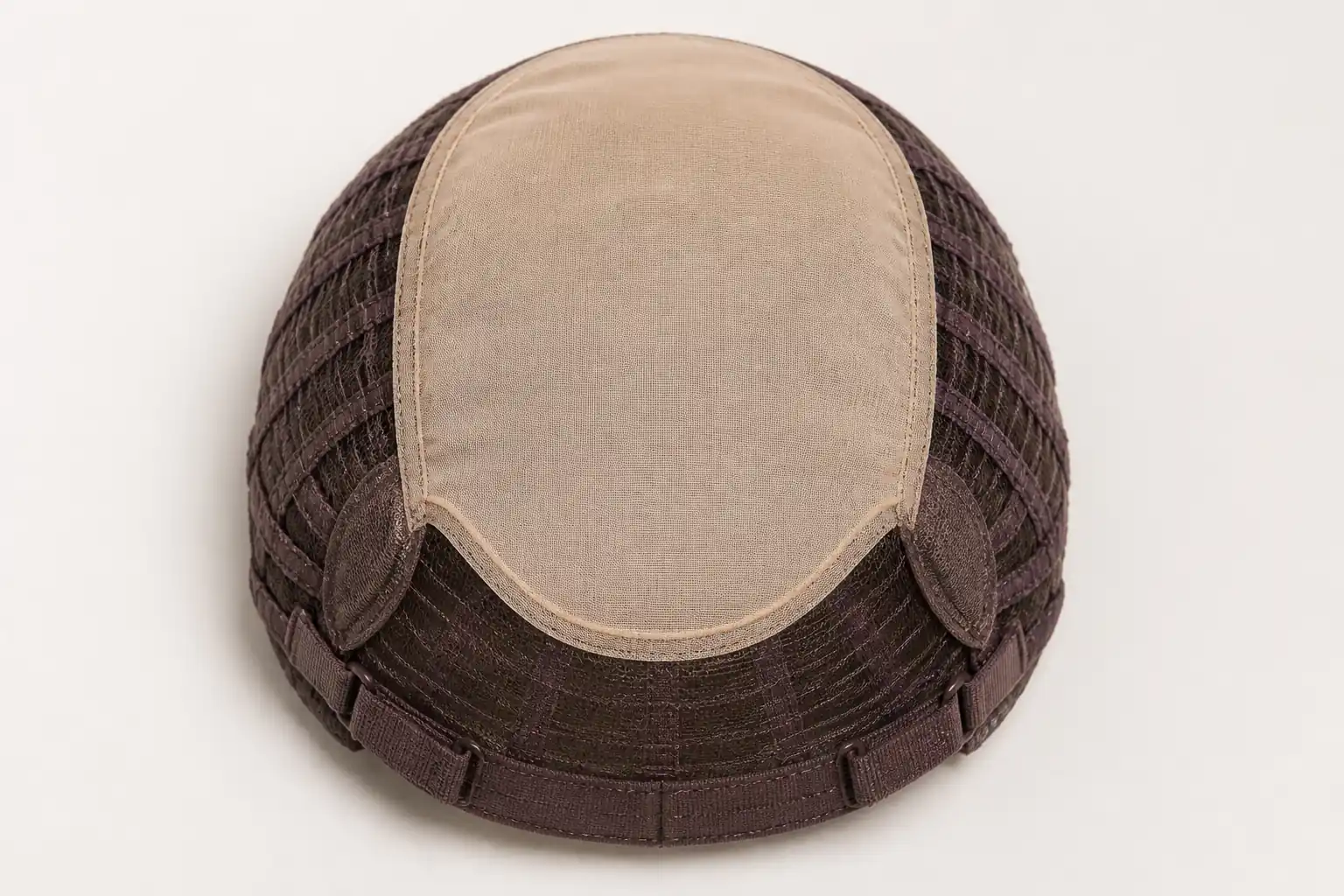
Cap architecture
Silk crown, supported by the cap.
A double-silk panel at the crown creates the knot-concealed parting zone, while the supporting cap carries fit, comfort and attachment details.
-
01
Double-silk crown
Two silk layers form the crown parting zone; knots are hidden between them rather than visible at the part.
-
02
Cap support
Perimeter, nape and attachment areas are built around the silk crown and the way the wig is worn.
-
03
Compare, then choose
The crown panel is the silk top’s signature; whether it fits the brief depends on how it compares with lace top and lace front.
Detail gallery
Four details that define a silk top wig.
On desktop, hover or keyboard-focus each tile to read the construction note. On touch layouts, tap or press Enter / Space to expand one note at a time.
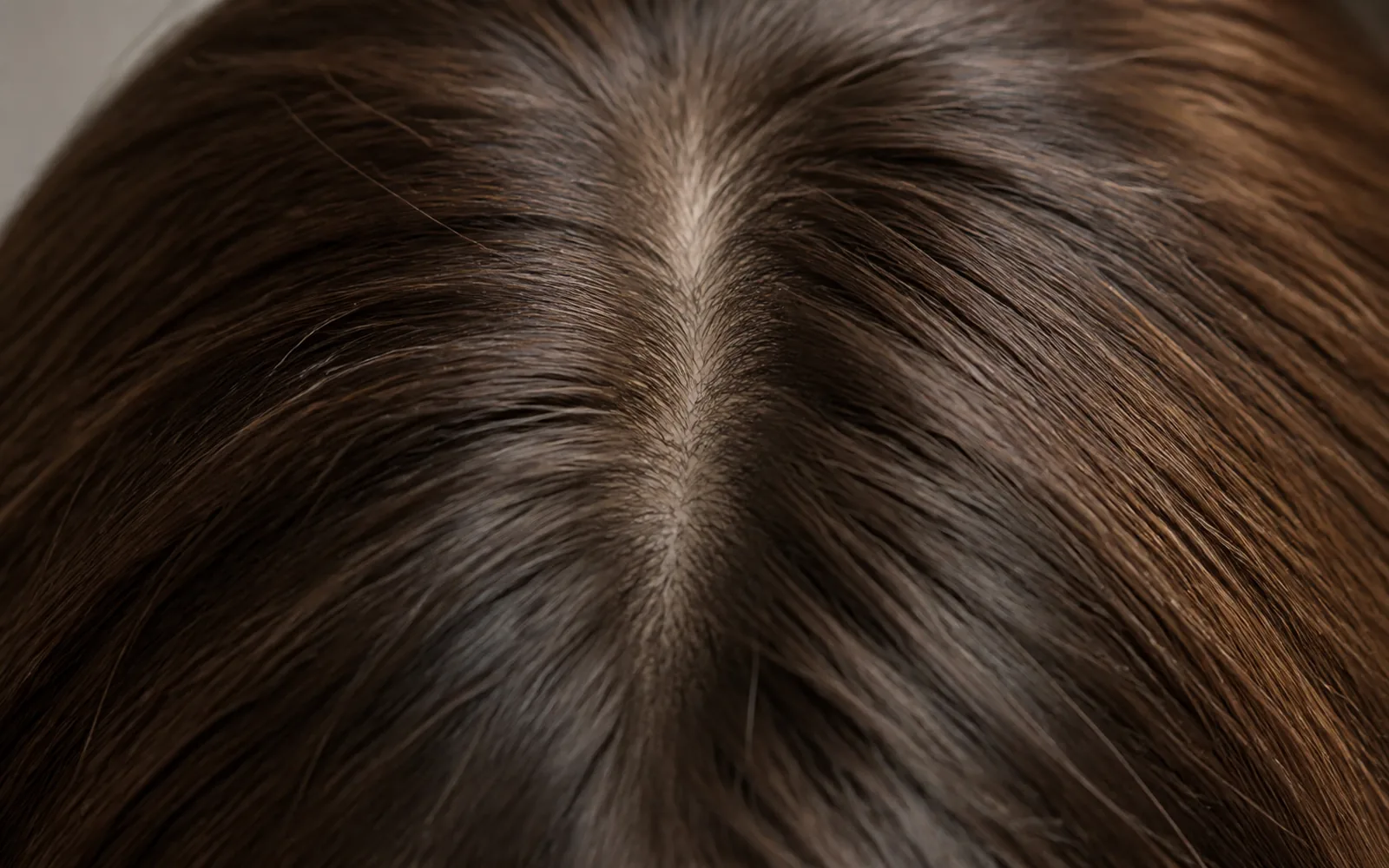
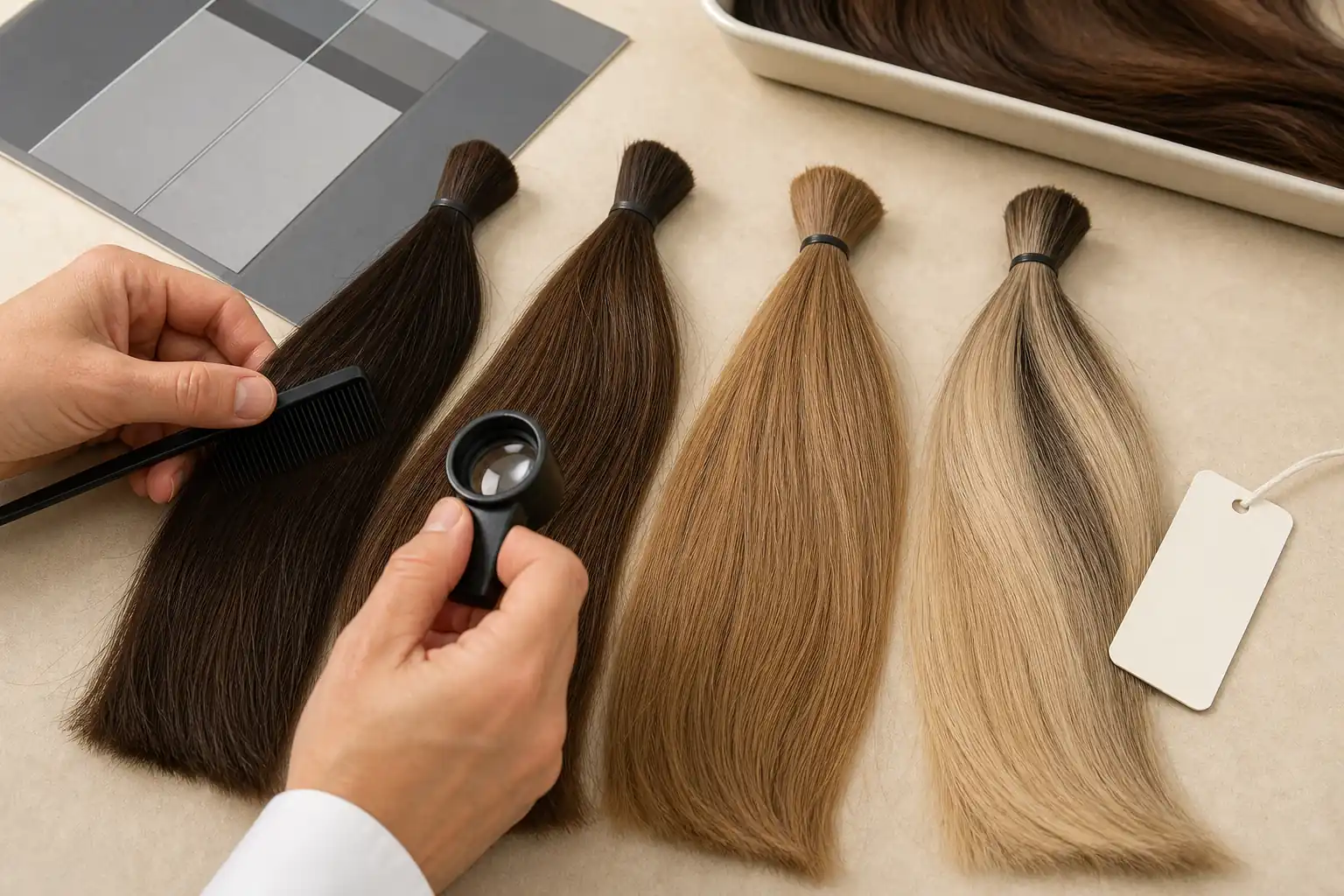

Construction navigation
Choose the construction that matches the brief.
Three common wig cap constructions, each answering a different question. Silk top is the current category; lace top and lace front each have a dedicated page.
Construction placement shown for comparison only. Panel shape, dimensions, supporting cap structure and materials are confirmed in the specification conversation before anything is made.
 Current category
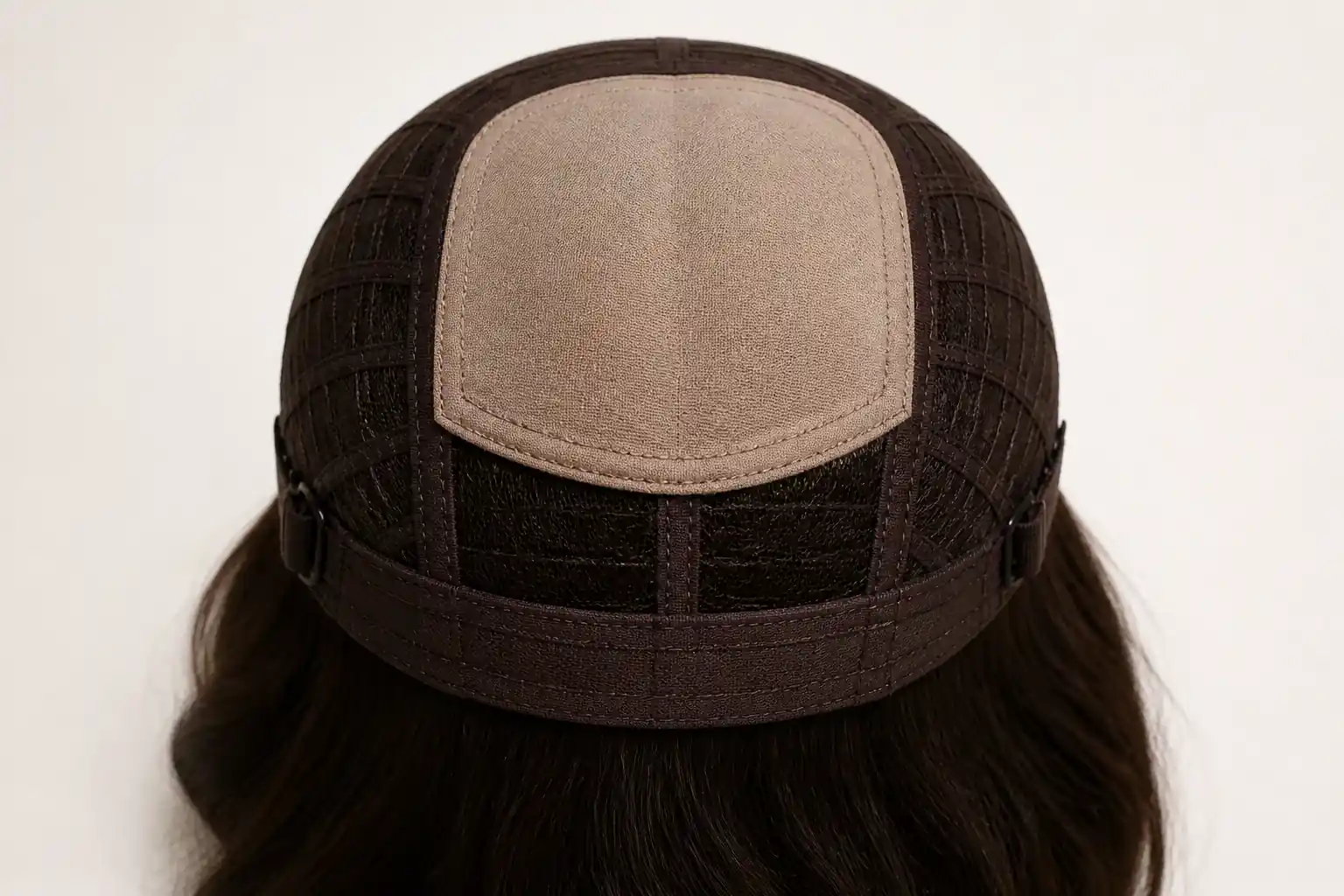
Silk Top
Layered double-silk panel at the crown conceals the knots between two silk layers; the right answer when a knot-concealed, scalp-read part is the point to assess.
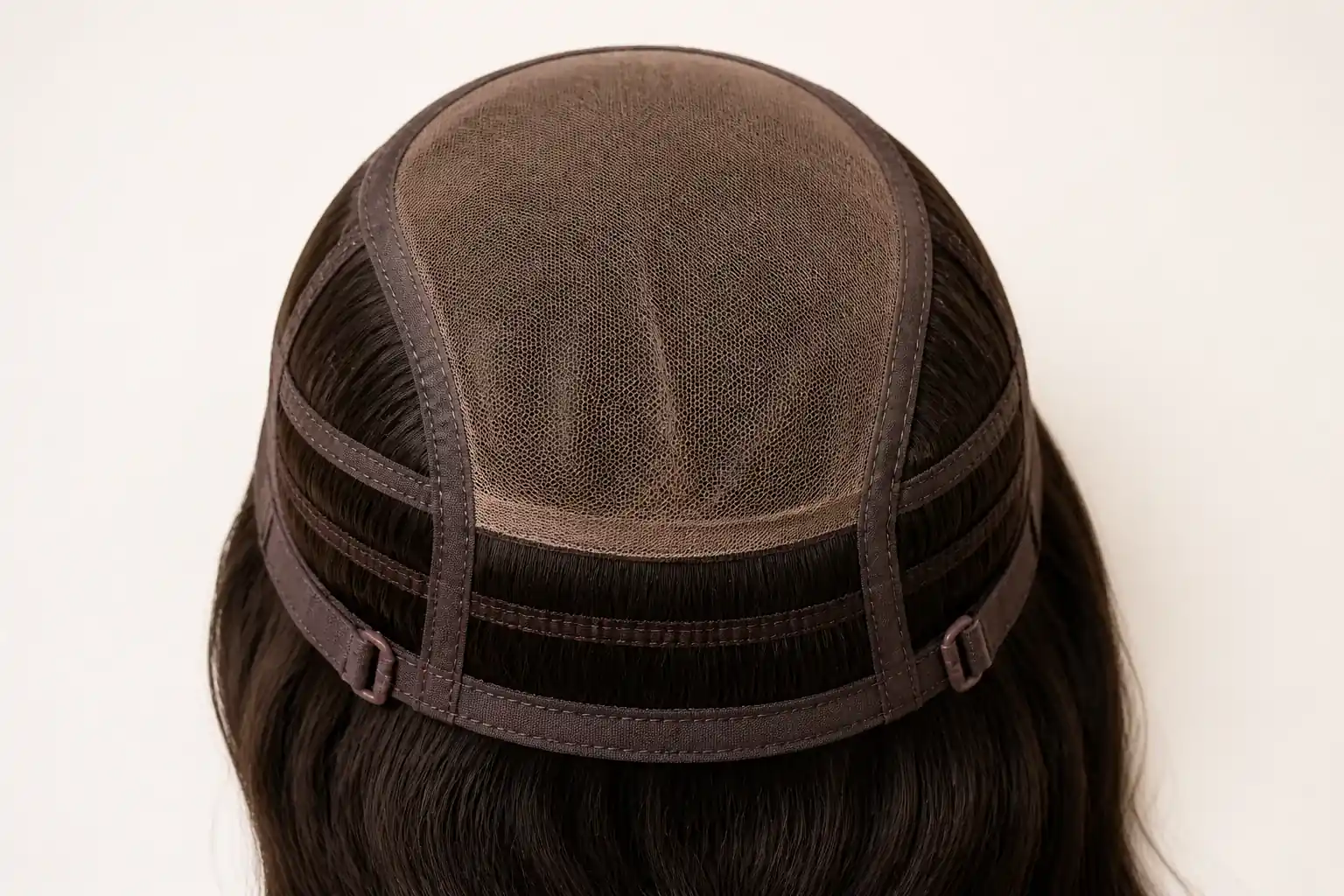
Lace Top
Hand-tied lace layer at the crown carries the part; the right answer when free-direction crown parting is the central construction question.
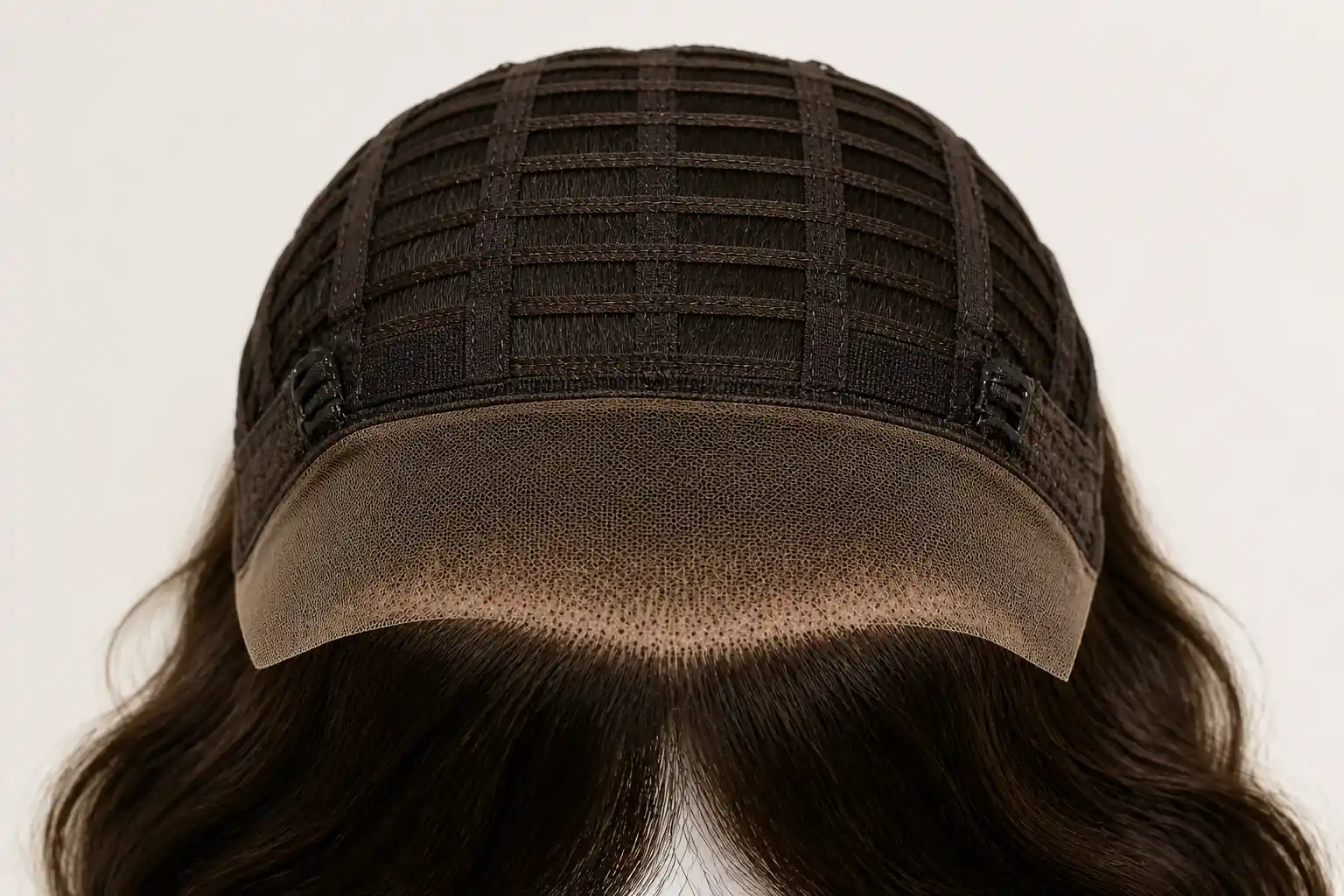
Lace Front
Lace strip along the front hairline; the right answer when front hairline placement is the point to assess.
Continue researching
From category to specification
Chosen silk top? The next step is the specification.
This page covers the silk top construction itself. Confirmed purchase-order details — hair material tier, silk tone, cap measurements, customization scope and order terms — live on the dedicated product page: review the silk top kosher sheitel specifications before moving to an order conversation, or ask directly in the form below.
Illustrative process
From question to finished piece.
A simple, illustrative walkthrough of how a silk top wig conversation typically moves forward. The images are process references; exact checkpoints and terms are confirmed for each order.
01 / 07
-

Inquiry
-

Specification
-
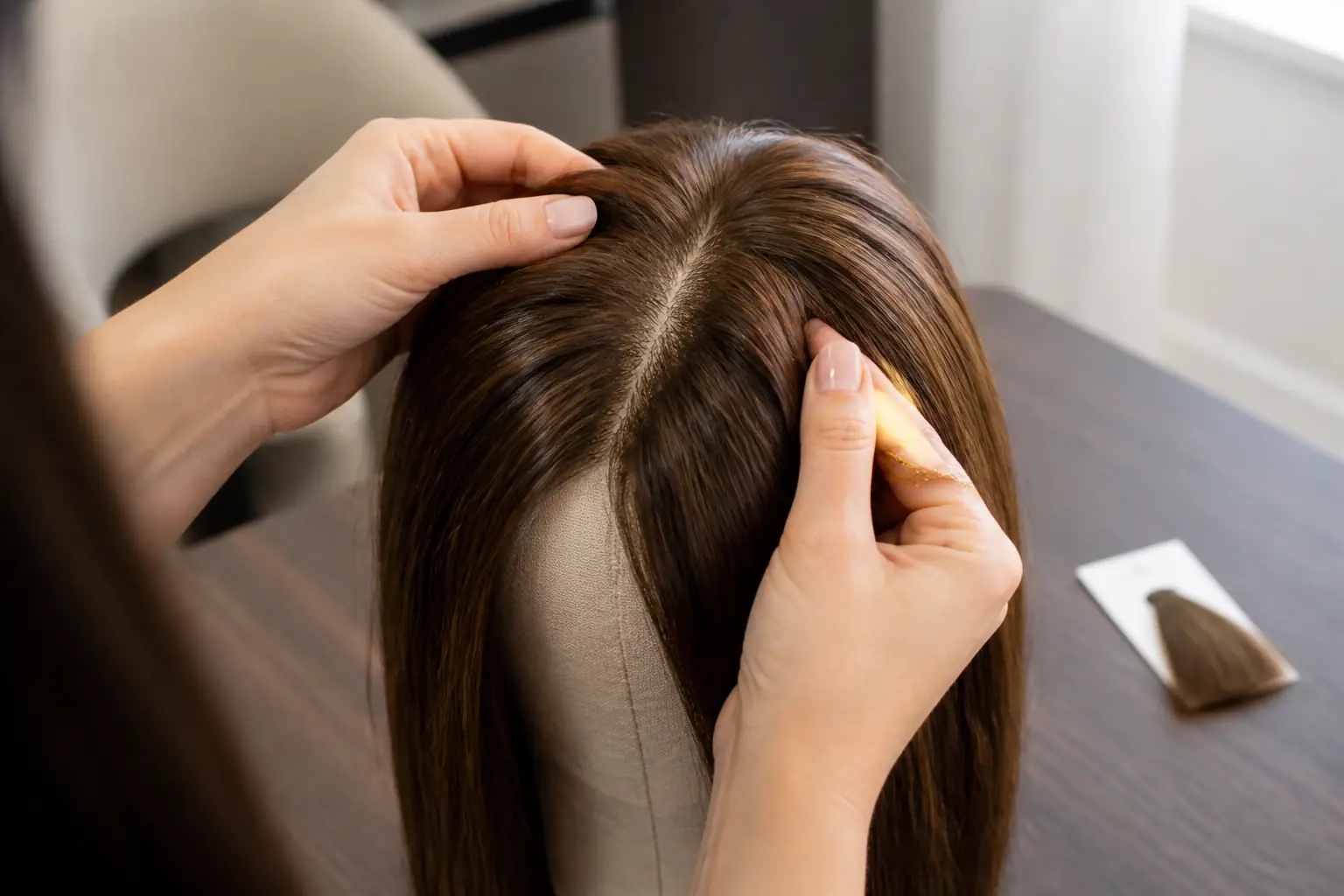
Sample, if applicable
-
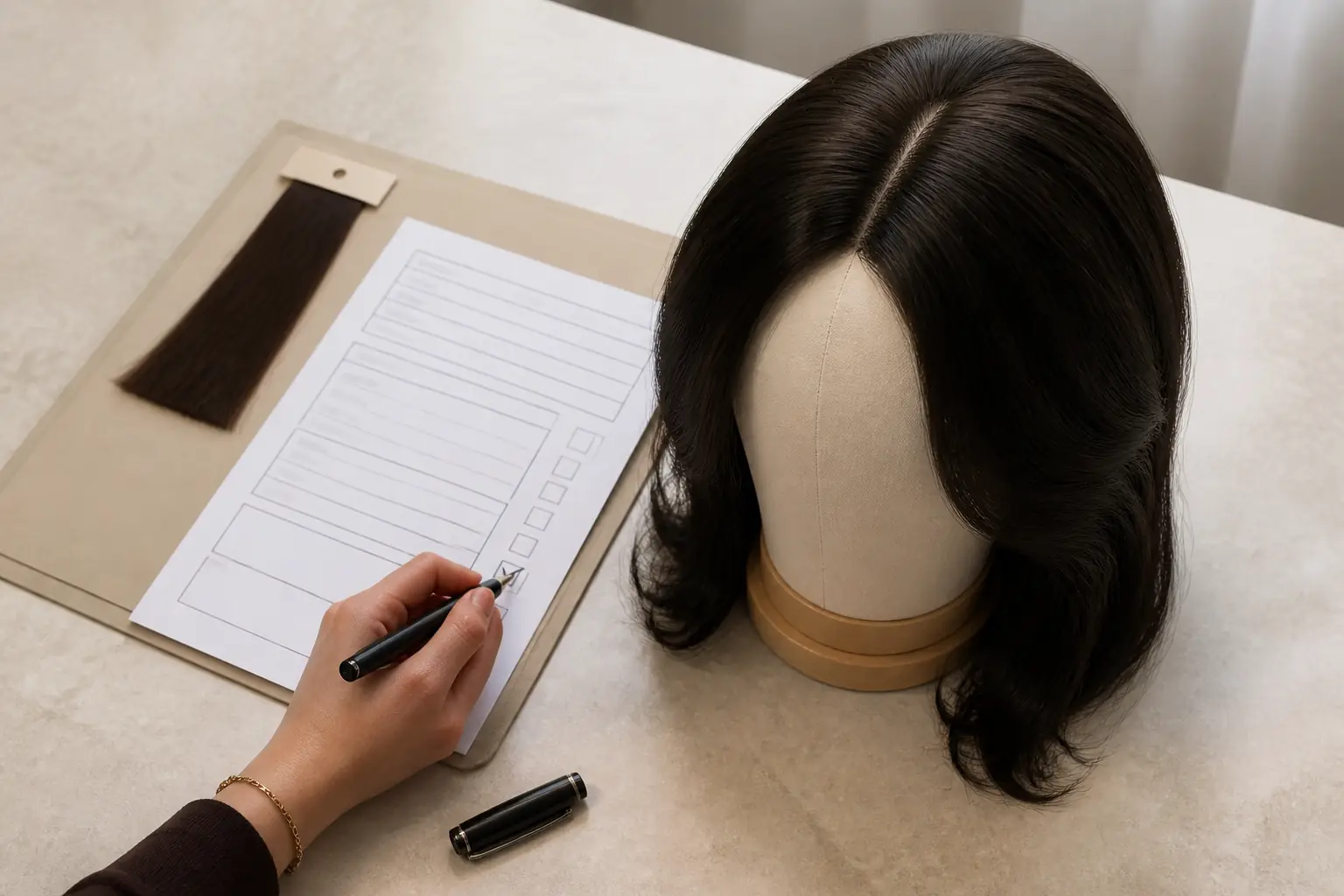
Approval
-
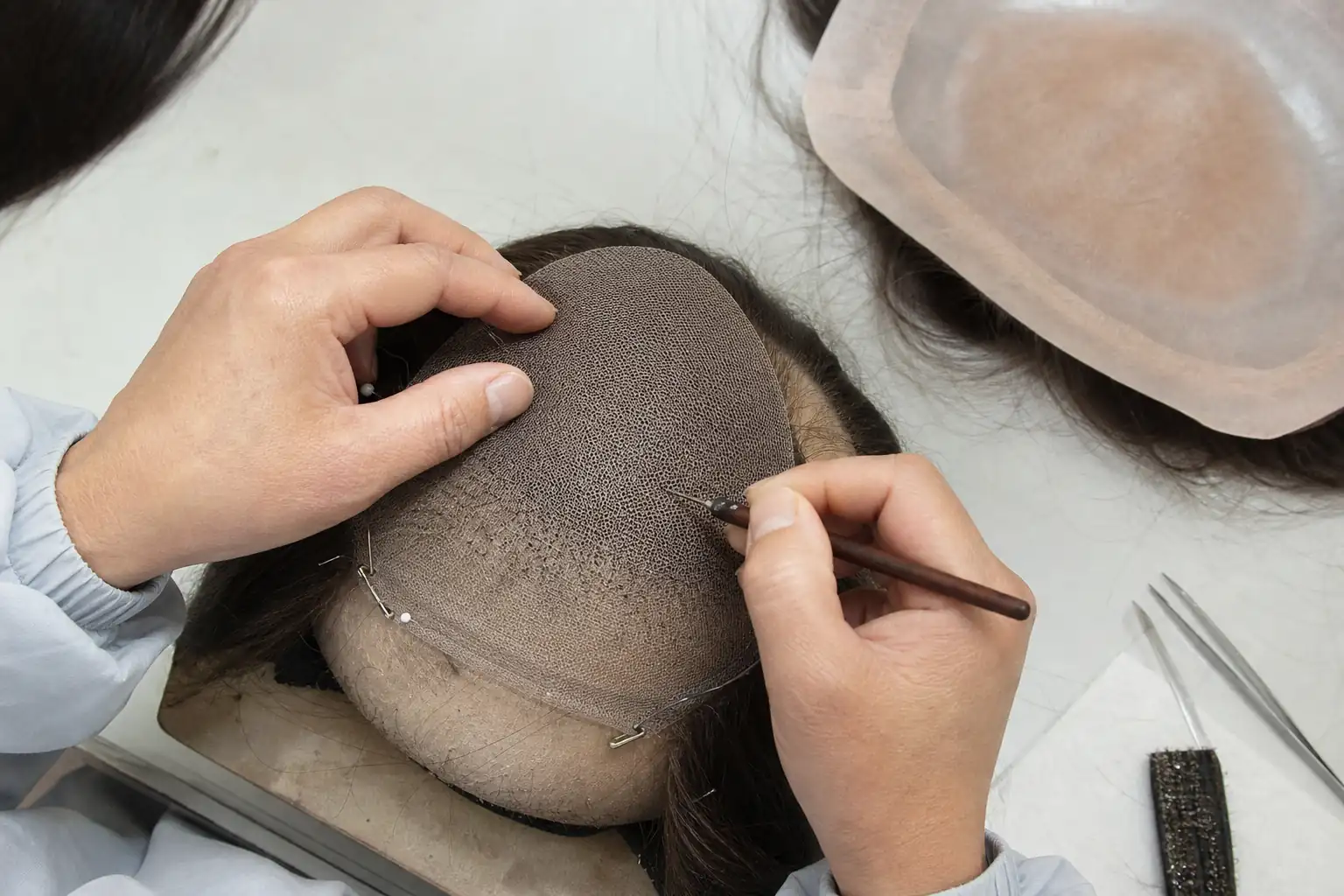
Production
-
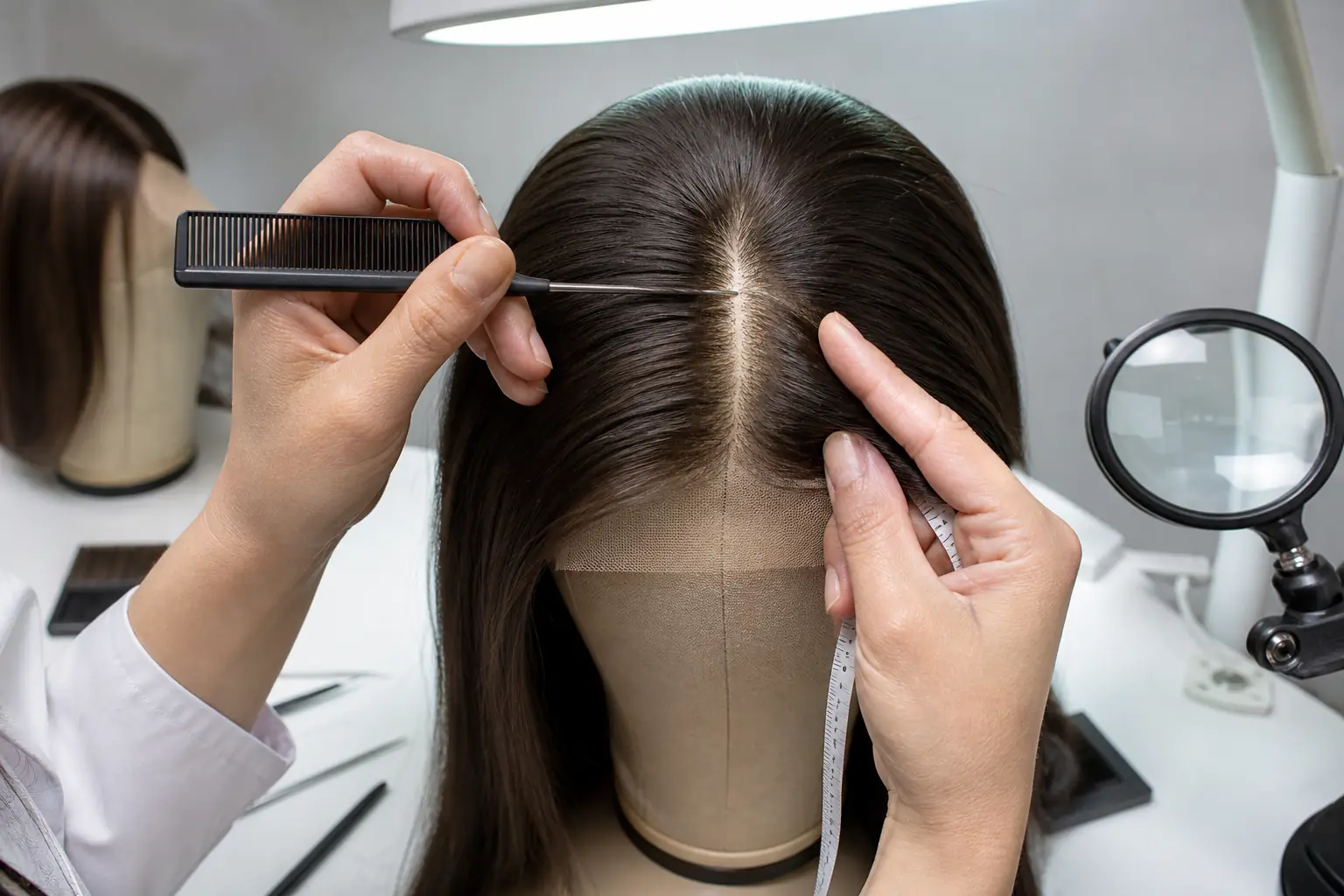
Quality check
-
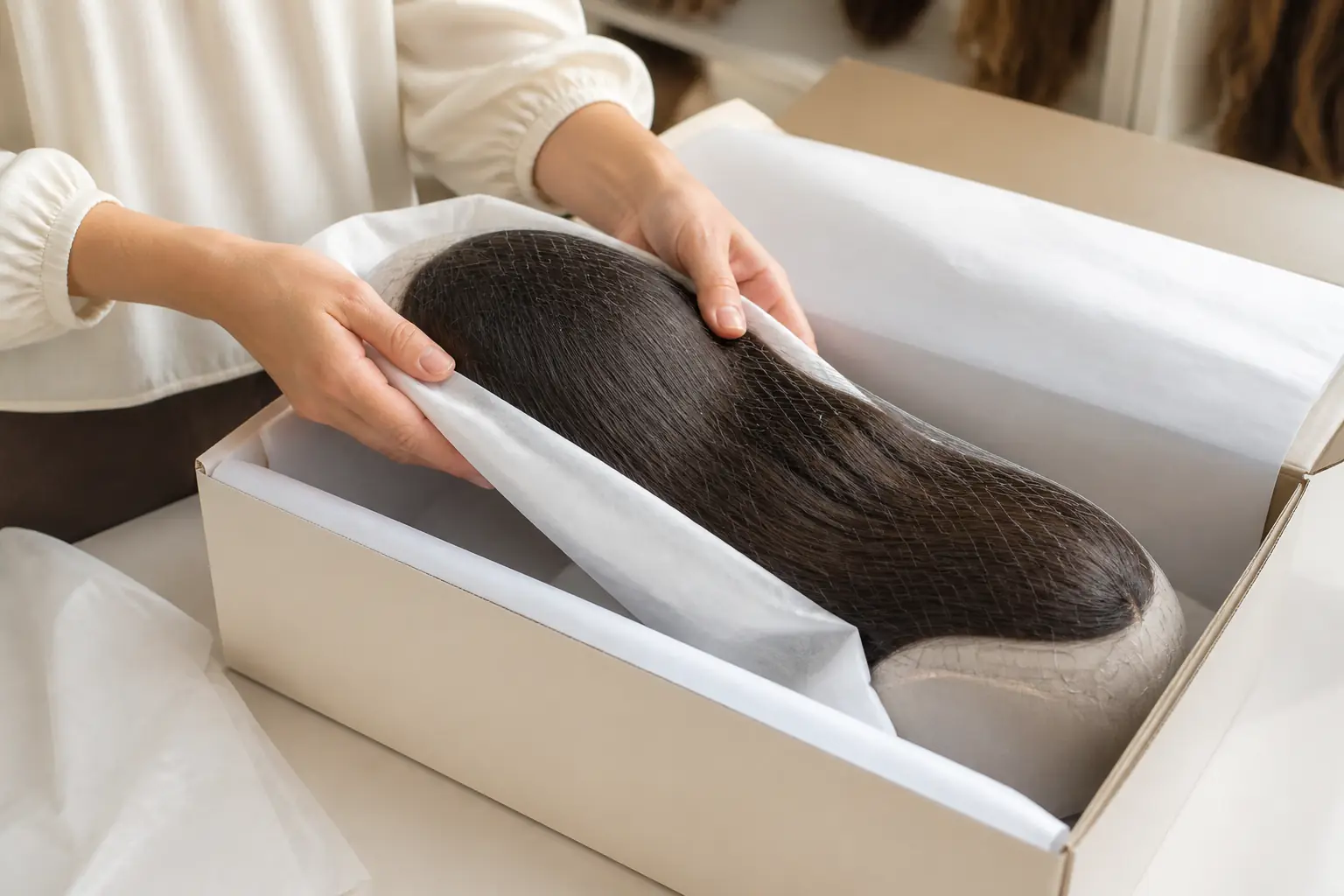
Shipping
Silk top FAQ
Seven questions that follow the construction choice.
Straightforward answers about the silk top construction, how it compares and what to check — no inflated claims.
What is a silk top wig and how is the crown constructed?
A silk top wig is a wig construction in which the crown and parting zone is built on a layered double-silk panel. Hair is ventilated through the upper silk layer and knotted beneath the lower silk layer, so the knots sit hidden between the two layers and the part reads like scalp rather than wig base. The silk panel covers the crown and parting area — not the whole cap — and the rest of the cap carries fit, comfort and attachment.
How does a silk top wig differ from a lace top or a lace front wig?
A silk top places a double-silk panel at the crown so the knots are concealed between two silk layers; a lace top hand-ties the crown onto a single lace layer, so the knots are visible at the part unless bleached; a lace front runs a lace strip along the front hairline only. The construction navigation above compares each path side by side.
Do silk top wigs require knot bleaching?
No. Because the knots in a silk top wig sit beneath the lower silk layer, they are concealed by construction rather than by bleaching. Lace-top constructions, where knots sit at the lace surface, are the ones that commonly rely on bleaching to soften the visible knot line.
Does the silk panel cover the entire wig cap?
No. The double-silk panel covers the crown and parting zone, where the scalp read matters most. The perimeter, nape, sides and attachment area are built from other cap materials chosen to carry fit, comfort and the way the wig is worn. Panel shape and cap structure are confirmed for each order.
Who is a silk top wig a good fit for?
A silk top wig suits wearers who want the part and crown to read as scalp with the knots concealed — for example a fixed center or side part at the crown. It is a common choice within kosher sheitels for that reason. Wearers who need a free-direction crown part or an exposed front hairline often look at lace-top or lace-front constructions instead.
How should a silk top wig be cared for?
Care follows the same routine as other human-hair wigs: gentle washing with wig-appropriate products, air drying away from direct heat, and brushing from the ends upward. Avoid pulling or snagging directly at the silk parting zone, and follow the care guidance confirmed with your piece rather than assumptions from photography.
Where are the confirmed specifications for silk top kosher sheitels reviewed?
Confirmed purchase-order specifications — including hair material tier, silk tone, cap measurements and customization scope — are reviewed on the dedicated silk top kosher sheitels product page rather than on this category page. Follow the link in the category-to-specification section above, or raise the questions directly in the inquiry form below.

Direct inquiry
Ask about a silk top wig
Five fields. Your message goes directly to the LEV advisory team from the same domain — construction questions, comparisons or a specific silk top brief are all welcome.