Sheitel Styling
Sheitel Styles: 12 Popular Cuts and How to Choose
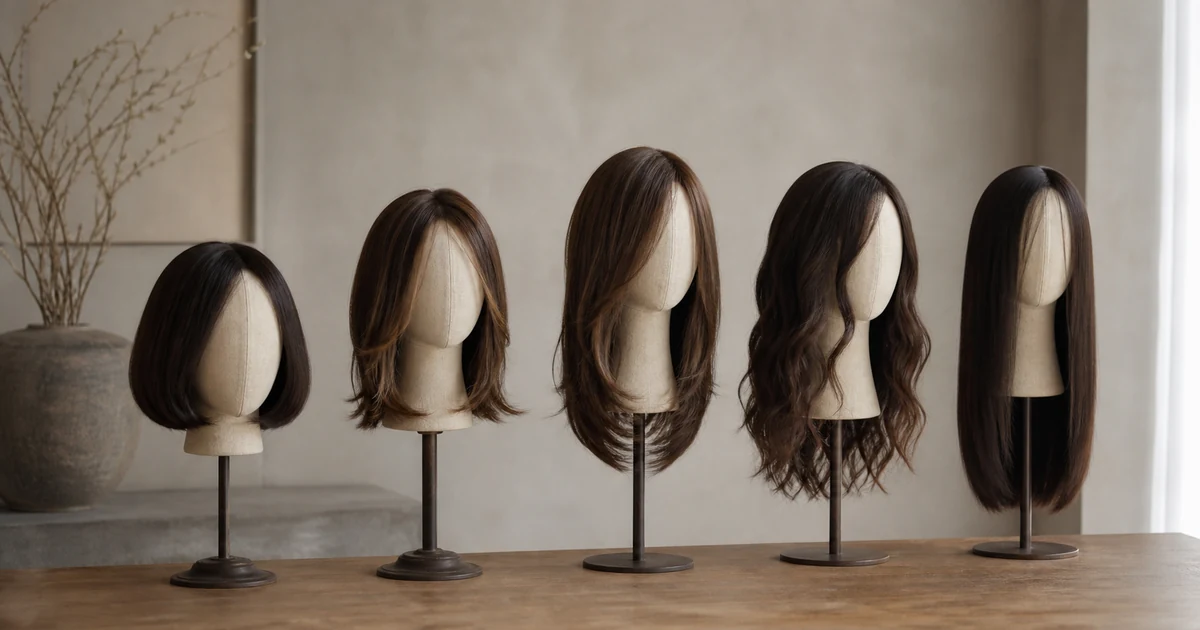
Every sheitel conversation eventually lands on the same question: what cut should it be? The answer is not a single trending style — it is the match between a named cut, the cap it is built on, the density knotted into it, and the mornings of the person who will wear it. This guide lays out twelve popular sheitel styles the way our workshop treats them: as a catalog you choose from with construction in mind, not a scroll of photos you choose from with hope.
One distinction first, because it confuses every new buyer. Types are what the covering is — full sheitel, fall, silk top, lace top, covered in our seven types of Jewish wigs. Styles are what the hair is cut to be — the bob, the layers, the length. Types come first; styles are the second decision, and this page is that second decision.
Before the Cut
Four Decisions Before Any Style
Four inputs decide whether a style will work on a sheitel. Settle them first and the twelve styles below become easy to sort; skip them and even a beautiful cut disappoints.
- Cap construction. Any style with a visible part or off-center sweep needs a lace top or silk top to expose the scalp line honestly. Wefted fronts lock you into styles that wear a fringe of volume at the hairline.
- Density. Density is how much hair the cap carries. Volume-driven styles like long layers need generous density; sleek blunt cuts read better at moderate density because weight lines depend on the hair falling clean.
- Hair behavior. European human hair with intact cuticles holds a blow-out and re-styles for years — the styles below assume it. Lower-grade hair fights precision cuts within months.
- The wearer's real week. School mornings, commute, gym, formal Fridays: a style earns its place by fitting the routine it will actually live in.
The Twelve · 1–3
Short Sheitel Styles
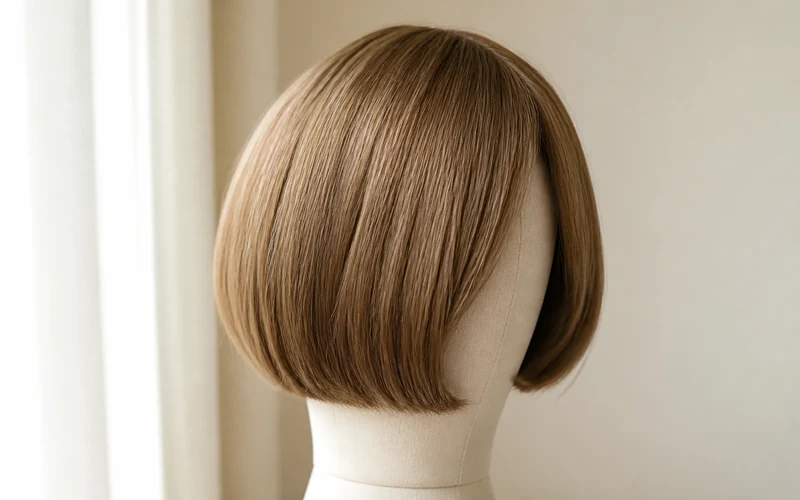
1. The Classic Bob
The workhorse of daily wear. One length around the head, slight tuck at the jaw, minimal layering. It brushes out in a minute, sits under a coat collar without crushing, and reads composed at every density from modest upward. For most wearers it is the honest default.
2. The Blunt Jawline Bob
The precision version — a razor-clean weight line at the jaw with no graduation. It is the most modern-looking short style and the least forgiving: it needs even density across the perimeter and hair with enough body to hold a straight edge. On the right specification it is stunning; on the wrong one it is a straight line that moves.
3. The Pixie Crop
Shortest of the twelve, and the most construction-dependent. A pixie lives or dies on the hairline and crown: it needs a top construction that reads as scalp the moment someone looks down at the wearer. Silk top is the natural pairing. Chosen well, it is the lightest, coolest daily option in the catalog.
The Twelve · 4–7
Shoulder-Length Sheitel Styles
4. The Lob
The long bob, collarbone to shoulder, with soft internal layering. It keeps the bob's low maintenance while adding enough length for a low ponytail or tuck. If a wearer wants one unit that does everything from school run to simcha, the lob is the strongest single answer in the twelve.
5. Face-Framing Layers
Layers concentrated at the front, opening around the face, with the back left fuller. The most-ordered family across our book. It softens every face shape, forgives density variation, and styles in minutes because the cut does the shaping.
6. Curtain Bangs
A fringe split and swept to both sides, framing the forehead. On a sheitel it demands a graduated front — a lace top or silk top edge — because the fringe parts and exposes the hairline as it sweeps. At correct density it reads effortlessly current; at heavy density it reads as a helmet brim.
7. The Soft Shag
Layers throughout, feathered ends, easy movement — the style that looks best slightly imperfect. It suits wearers who will not fuss, because its charm survives a hurried brush. Specify it on hair with natural texture memory rather than glass-smooth hair, which falls too flat for the shag's intent.
The Twelve · 8–12
Long Sheitel Styles
8. Long Blunt
One clean length past the shoulder blades. Maximum polish, minimum hiding place: every strand shows, so hair quality and even density are non-negotiable. It is the style that justifies premium hair origin.
9. Long Layered
Blunt length with internal layers that remove bulk and add movement. The practical long style — it detangles faster than a blunt cut and styles with a brush instead of a round-trip to the macher.
10. Soft Waves
Set-in loose waves through the length. On European human hair the wave re-activates with a quick steam or overnight braid, which is why this style rewards cuticle-intact hair. It is the most requested long finish for formal occasions.
11. Loose Curls
Defined but relaxed curls, mid-length to long. Curls need density specified carefully — too little and the pattern thins at the ends, too much and the silhouette balloons. Our lace top styling guide covers how to refresh curl patterns without washing.
12. Sleek Straight
Ironed smooth, center or side part, no artifice. The quietest style in the twelve and the loudest quality statement: sleek straight shows cap construction, hair alignment, and density honesty with nowhere to hide. It pairs naturally with silk top crowns.
| Style | Family | Construction It Wants |
|---|---|---|
| Classic Bob / Blunt Bob | Short | Moderate density; graduated front |
| Pixie Crop | Short | Silk top; scalp-grade crown |
| Lob | Shoulder | Any front; medium density |
| Face-Framing Layers | Shoulder | Forgiving of all constructions |
| Curtain Bangs | Shoulder | Lace/silk top front essential |
| Soft Shag | Shoulder | Textured-hair specification |
| Long Blunt / Long Layered | Long | Premium hair; even density |
| Soft Waves / Loose Curls | Long | Cuticle-intact hair; density matched to pattern |
| Sleek Straight | Long | Silk top crown; top-grade alignment |
Construction
Why Construction Decides the Cut
A style is not drawn onto a sheitel; it is built into one. When a buyer sends us a reference photo, the first question back is always about the part line in the picture — because a visible part means the top construction must supply a convincing scalp, and that requirement cascades into density, hair grade, and price. The styles that expose construction (pixie, curtain bangs, sleek straight) reward investment in the top; the styles that carry volume at the front (soft shag, long layers) can succeed on humbler caps.
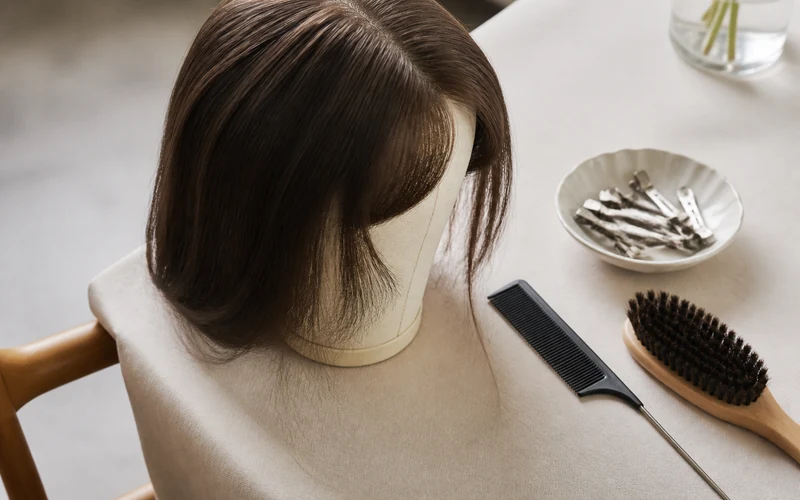
Density deserves the final word because it is the line buyers most often under-specify. Every style in this guide has a density it wants and a density it merely survives. When ordering, agree the density in writing with the target style named — the same specification discipline we apply to every wholesale unit.
Context
Styles and Community Standards
The twelve styles above are tools; communities set the boundaries of their use. Length norms, coverage expectations, and how styled is too styled vary across the Orthodox spectrum, and no responsible supplier assigns a style to a community label. Our community styling trends guide covers how these norms actually move — by consultation and custom, not by stereotype.
The working rule at our bench: the wearer's community standard sets the ceiling, her features set the shape, and her routine sets the length. When all three agree, the style chooses itself.
B2B
What a Boutique Should Stock
For shop owners, twelve styles is a catalog, not a purchase order. The versatile five we see move first: classic bob, lob, face-framing layers, long layered, and soft waves. Together they cover the great majority of walk-in requests at three price points and two construction grades.
Stock the five across your community's density expectations, keep one showpiece outside the five for window conversation, and route every unusual request to bespoke commission rather than forcing a stock unit. A boutique known for honest style guidance sells the second sheitel faster than the first.
FAQ
Sheitel Styles: Common Questions
A human hair sheitel can be cut and styled by a professional, but not casually like growing hair. There is no regrowth to correct a mistake, so cuts are planned against the cap construction and density before scissors move. A sheitel macher who understands wigs should do the work, and major restyles are usually confirmed against a reference photo first.
Across our orders, shoulder-length cuts with face-framing layers and the classic bob are the most requested families. Both read natural at community-appropriate density and stay manageable for daily wear. But popularity is a poor shortcut for an individual order — lifestyle, cap construction, and the wearer's own features decide the right cut.
Chin-to-shoulder lengths are the practical center of daily wear: they brush out quickly, tangle less at the nape, and fit under outerwear in most climates. Longer lengths reward wearers who enjoy maintenance and styling time. Match the length to the morning routine honestly, not to the occasion.
Yes, when the cap construction supports them. Curtain fringes and soft bangs need a lace or silk top front that graduates naturally, and a density that does not push the fringe into a heavy block. On heavily wefted fronts, bangs tend to read as a solid edge, which is why construction comes before cut.
Ideally together with the order. Deciding the target cut at specification stage lets density, cap choice, and hair length be matched to the style, which gives a far better result than cutting down a unit that was built for something else. For stock purchases, buy units whose construction can carry several plausible cuts.
Closing
Choose the Style, Then Build to It
Twelve styles, four decisions, one rule: the cut succeeds when the unit was built for it. Name the style at order time, match it to cap and density honestly, and respect the community standards around it — and any of these twelve will look like it grew there.
Next steps: see how these styles sit inside real community norms in our orthodox Jewish hairstyles guide, or move to the maintenance side with the lace top styling guide.

Ordering Sheitels in a Specific Style?
LEV Wigs builds to a named target cut — construction, density, and hair matched to the style before the first knot is tied. Send us your best-selling styles and we will specify units that deliver them.
Discuss Style SpecificationsRequest Wholesale Terms