Sheitel Basics
Sheitel Meaning: What a Sheitel Is and Who Wears It

The sheitel meaning is simple at its core: a sheitel is a wig. But the word carries a precise social contract that a fashion wig never signs. When English speakers say sheitel, they mean a wig worn as a religious hair covering by married Jewish women — and everything about how the piece is chosen, built, and worn flows from that purpose.
We build sheitels at our workshop bench every day, so this guide answers the definition question the way we would answer it for a buyer who asks across the table: what the word means, where it comes from, who wears the object it names, and how a sheitel differs from the wigs sold in a general boutique. If you want the deeper question — why Jewish women cover their hair at all — our cultural guide to hair covering covers the reasons and history; this page stays on the word and the object.
The Word
What Does "Sheitel" Mean?
Sheitel (pronounced SHAY-tl) is the Yiddish word for a wig. In English the word has narrowed: outside Jewish contexts almost nobody says sheitel, and inside them the word signals a wig worn for the religious purpose of covering a married woman's hair. The plural is sheitels, and the word also appears in community writing as shaytl, shaitel, or sheytl — older transliterations of the same Yiddish term.
One nuance matters for anyone researching the term. In Yiddish itself, shaytl carried no religious meaning; it simply named the object, whether it sat on an actress or a rabbi's wife. The religious weight arrived when the word entered English through Orthodox communities, where the object itself took on a specific role. So when someone asks for the sheitel meaning, the honest answer has two layers: literally, a wig; socially, the wig worn as a married woman's hair covering.
The word also anchors a small vocabulary that community members use without thinking and newcomers hear as jargon. You will meet these terms in every sheitel conversation, so they are worth defining once, plainly, in the glossary near the end of this guide.
The Difference
Is a Sheitel Just a Wig?
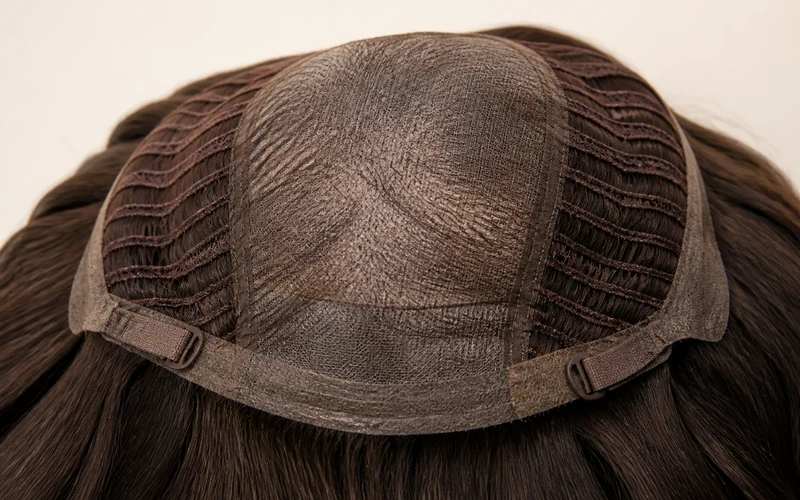
Structurally, a sheitel can be identical to a high-quality human hair wig — same cap, same lace, same hand-tied hairline. The differences live in the specification sheet, because daily religious wear imposes demands that occasional fashion wear does not.
- Purpose defines the spec. A sheitel is worn as a covering, usually for full days, year-round. Buyers specify comfort, breathability, and durability first, and dramatic volume last. Density in particular is a modesty decision as much as an aesthetic one.
- The scalp must read as scalp. Because the hairline and part are visible in normal social interaction at close range, lace top and silk top constructions dominate the sheitel market. A costume-grade cap with an obvious grid fails the moment it has to pass a playground conversation.
- Hair quality is a daily-wear question. Cuticle-aligned European human hair holds up under daily brushing, washing, and re-styling in a way that coated or mixed-origin hair does not. Our lace top sheitels guide breaks down hair origin and construction in depth.
- Community checks apply. Some buyers ask about kosher certification for the hair's provenance. That is a community-standard question a fashion wig never faces, and it belongs to the buyer's rabbi and community, not to the factory.
So the short answer: every sheitel is a wig, but not every wig is a sheitel. The difference is not in the knotwork — it is in the brief the wig was built to fulfill.
The Wearers
Who Wears Sheitels?
Sheitels are worn by married women across Orthodox Jewish communities, but the reliance on wigs versus scarves, snoods, and hats varies — sometimes street by street. The practice of covering a married woman's hair is shared; the chosen covering is a matter of community custom, or minhag, and personal guidance.
- Chabad-Lubavitch communities are strongly associated with sheitels, and the wig is the default covering for most married women.
- Many Hasidic communities also rely on sheitels, often worn under or with a hat, and some groups layer additional coverings such as the shpitzel or a headscarf over or instead of the wig.
- Modern Orthodox women span the full range — sheitel, hat, scarf, or a combination — and the choice often follows family custom and communal norms.
- Sephardi and other communities practice hair covering with widely varying local customs; in many, scarves and wraps are more common than wigs.
Two honest cautions from the workshop side. First, no community assigns one style — a sheitel is specified to the wearer, her community's standards, and her daily life, never to a group label. Second, the reasons behind covering, and the rabbinic debates about wigs specifically, deserve their own treatment; our cultural guide handles that history with the care it requires.
The Object
What a Sheitel Is Made Of
Because we manufacture them, we can describe the object precisely. A sheitel has three specification layers, and every buying conversation eventually walks through all three.
- The cap construction. The cap is the foundation: machine-wefted caps for durability and value, hand-tied lace top caps for an invisible part, and silk top caps for the most convincing scalp appearance at the crown. Each construction answers a different visibility question, and our silk top kosher sheitels page shows the layer we build for the most demanding part lines.
- The hair. European human hair with intact cuticles is the high-end standard for daily wear; remy hair offers a workable middle tier; synthetic fiber serves occasional-wear budgets. Origin claims should always come with a supplier who can specify them — the terms get used loosely at the bottom of the market.
- The density and finish. Density — how much hair is knotted into the cap — decides both the look and the modesty reading. Finishing covers knot treatment, the graduated hairline, and the styling the unit ships with.
Put simply, the sheitel meaning on the object level is: a wig engineered for someone's real life, seven days a week, rather than for an occasion.
Vocabulary
Sheitel Words You Will Hear
These terms appear constantly in sheitel conversations, listings, and community discussions. Each one-liner below is the working definition, not the full story — several have their own guides on this site.
| Term | Plain Meaning |
|---|---|
| Sheitel / shaytl | Yiddish for wig; in English, the wig worn as a married woman's hair covering |
| Sheitel macher | The community wig professional who cuts, fits, styles, and services sheitels |
| Fall | A partial hairpiece or half-wig, often worn with a hat or band covering the front |
| Shpitzel | A partial band-style head covering worn in some Hasidic communities |
| Tichel / mitpachat | A headscarf — Yiddish and Hebrew terms respectively for the same family of coverings |
| Snood | A soft knit or crocheted pouch that covers the hair at the back of the head |
| Tzniut | The modesty framework, of which married hair covering is one practice |
First Sheitel
If You Are Buying Your First Sheitel
Most first-time buyers ask us the same three questions, so here are the short answers we give across the table. First, start with cap fit — a correctly measured cap matters more than any other single choice, because comfort decides whether the sheitel gets worn. Second, choose construction by visibility: the more visible your part and hairline in daily life, the stronger the case for lace top or silk top. Third, be honest about budget and ask what it buys: hair origin, construction hours, and customization are where price actually moves, and our sheitel cost guide maps every layer.
One more thing worth saying plainly. A sheitel is a religious object that is also a craft product, and it deserves both framings: buy it with the seriousness the purpose requires, and evaluate it with the craftsmanship checks any premium wig demands.
FAQ
Sheitel Meaning: Common Questions
Sheitel is the everyday Yiddish word for a wig. It comes into English through Yiddish shaytl, and within Jewish communities the word has narrowed to mean a wig worn specifically to cover a married woman's hair. In Yiddish itself the word carried no religious meaning — a theater wig and a modesty wig were both shaytls — and it is the community context, not the object, that gives the word its religious weight in English.
The object can be structurally identical, but the purpose changes how it is built and worn. A sheitel is worn as a religious hair covering, usually all day, so it is specified for daily comfort, modest density, and durability rather than occasional fashion use. Many sheitels also pass through community-specific checks, such as kosher certification questions, that a fashion wig never faces.
No. Hair covering after marriage is the shared practice, but the covering itself varies by community and by personal custom. Some communities rely heavily on wigs, others prefer scarves, snoods, or hats, and many women combine a partial covering with a hat. Chabad and many Hasidic communities are strongly associated with sheitels, while practices in Modern Orthodox and Sephardi communities differ family by family.
Shaytl is an older transliteration of the same Yiddish word that became sheitel in English. You will see shaytl, shaitel, and sheitel used interchangeably in community writing, with sheitel now the most common spelling in searches and retail contexts.
Prices range widely because hair origin, cap construction, and customization dominate the cost. Human-hair sheitels built for daily wear sit well above synthetic fashion wigs, and fully custom units above ready-to-wear. Our separate sheitel cost guide breaks the price layers down honestly, from hair grades to finishing work.
Closing
One Word, One Purpose, One Craft
The sheitel meaning fits in a sentence — the Jewish wig, worn to cover a married woman's hair — but the object behind the word rewards real understanding: a craft product specified for daily religious life, measured and built and serviced with intention. Know the word, know the purpose, and evaluate the craftsmanship, and every sheitel conversation that follows will make sense.
From here, the natural next reads are the seven types of Jewish wigs for the full landscape of coverings, and the sheitel macher guide for the professional who will keep your sheitel shaped for years.

Specifying Your First Sheitel Order?
LEV Wigs builds sheitels to a confirmed written specification — cap construction, hair origin, density, and finish — for retailers and community boutiques. Tell us what your clients wear and we will quote it precisely.
Start a Sheitel InquiryRequest Wholesale Terms