Sourcing Guide
Remy Hair Topper: Wholesale Human Hair Sourcing Guide
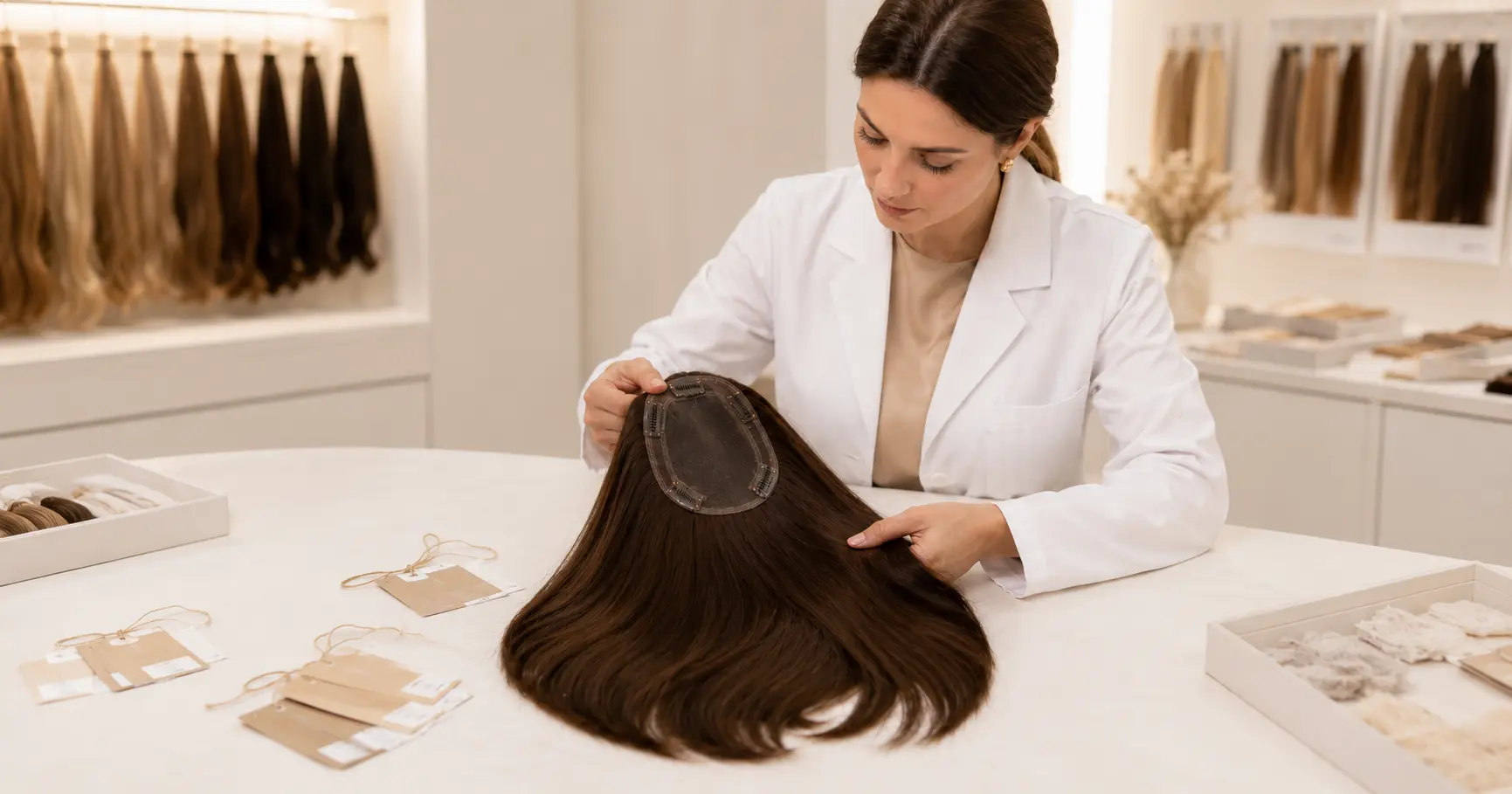
A Remy hair topper is one of the strongest wholesale products in the human hair category, but the label is also one of the most abused. A smooth sample does not prove Remy quality. Silicone coating can make low-grade hair feel soft for the first few touches. The real test appears after washing, styling, and daily movement.
For salons, wig boutiques, and Jewish sheitel retailers, sourcing Remy toppers is less about chasing the lowest price and more about avoiding hidden risk. A topper that tangles after four weeks can damage the client's trust in your store. It can also consume staff time through complaint handling, repairs, and replacement negotiations.
This guide explains what Remy means, how it differs from non-Remy hair, which QC checks matter, and how to plan wholesale samples before committing to MOQ. If you are comparing fiber categories first, use our human hair vs synthetic toppers guide. If your next question is fit, see the human hair topper size chart.
Remy Hair
What Remy Human Hair Actually Means
Remy hair means the cuticles are kept aligned in one direction. This alignment reduces friction, so the hair moves more naturally and tangles less. It does not automatically mean the hair is virgin, European, premium, or unprocessed. Those are separate claims that must be verified separately.
Good Remy topper hair should feel smooth, but softness alone is not enough. During sourcing, check how the hair behaves after washing with mild shampoo and air drying. If the surface becomes rough quickly, the original smoothness may have come from silicone rather than cuticle quality. Also examine ends. Natural tapering usually indicates better collection and sorting. Blunt, identical ends can suggest heavy processing.
Why Cuticle Direction Matters
When cuticles face opposite directions, strands catch like tiny hooks. That friction causes matting near the nape, crown, or clip areas. In a topper, tangling can be even more visible than in a full wig because clients touch and blend the piece throughout the day. For premium salons, consistent Remy quality protects both retail price and reputation.
Non-Remy
Why Non-Remy Hair Creates Wholesale Risk
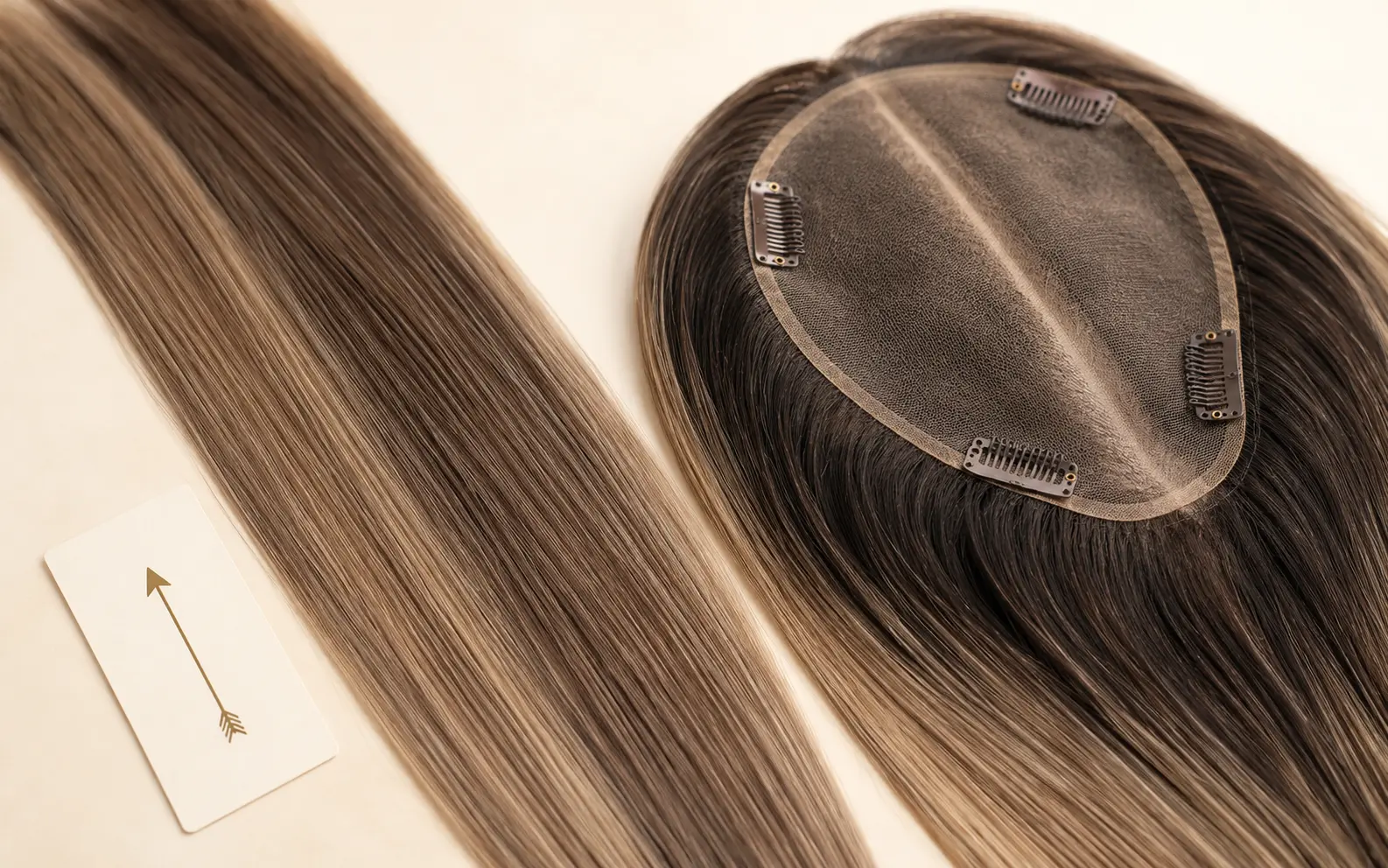
Non-Remy hair is often collected from multiple sources and processed to remove or mask cuticle problems. It can look attractive in product photos. It can even feel acceptable in a sample room. However, the risk appears after repeated washing, heat styling, and client wear.
The usual factory shortcut is acid washing, then silicone coating. Acid reduces cuticle friction by stripping the surface. Silicone restores temporary shine. For a buyer comparing samples in five minutes, the piece may seem like a bargain. After the coating fades, tangling increases and the hair loses movement. That is when returns begin.
We learned this through buyer feedback years ago. A distributor asked for a lower-cost human hair topper line for aggressive pricing. The first shipment sold quickly, but the second month brought complaints about matting and dry ends. Since then, we separate economy experiments from core Remy programs and label processing expectations clearly before production.
Quality Control
Factory QC Checks for Remy Hair Toppers
Wholesale buyers should ask for process evidence, not just adjectives. At LEV, Remy topper QC starts with incoming hair sorting, then moves through color matching, ventilation inspection, knot testing, washing, drying, and final movement checks. A beautiful base cannot compensate for unstable hair quality.
| QC check | What it reveals | Buyer action |
|---|---|---|
| Wash test | Coating loss and tangling | Test samples before bulk |
| Comb test | Shedding and matting | Record strands lost |
| Color consistency | Batch stability | Compare under daylight |
| Knot security | Ventilation quality | Check after gentle brushing |
Ask your supplier to explain what happens when a sample fails. A serious manufacturer should adjust hair batch, density, ventilation, or processing before bulk production. If the answer is only a discount, the risk remains yours.
Wholesale Plan
A Practical Buying Plan for Remy Topper Samples
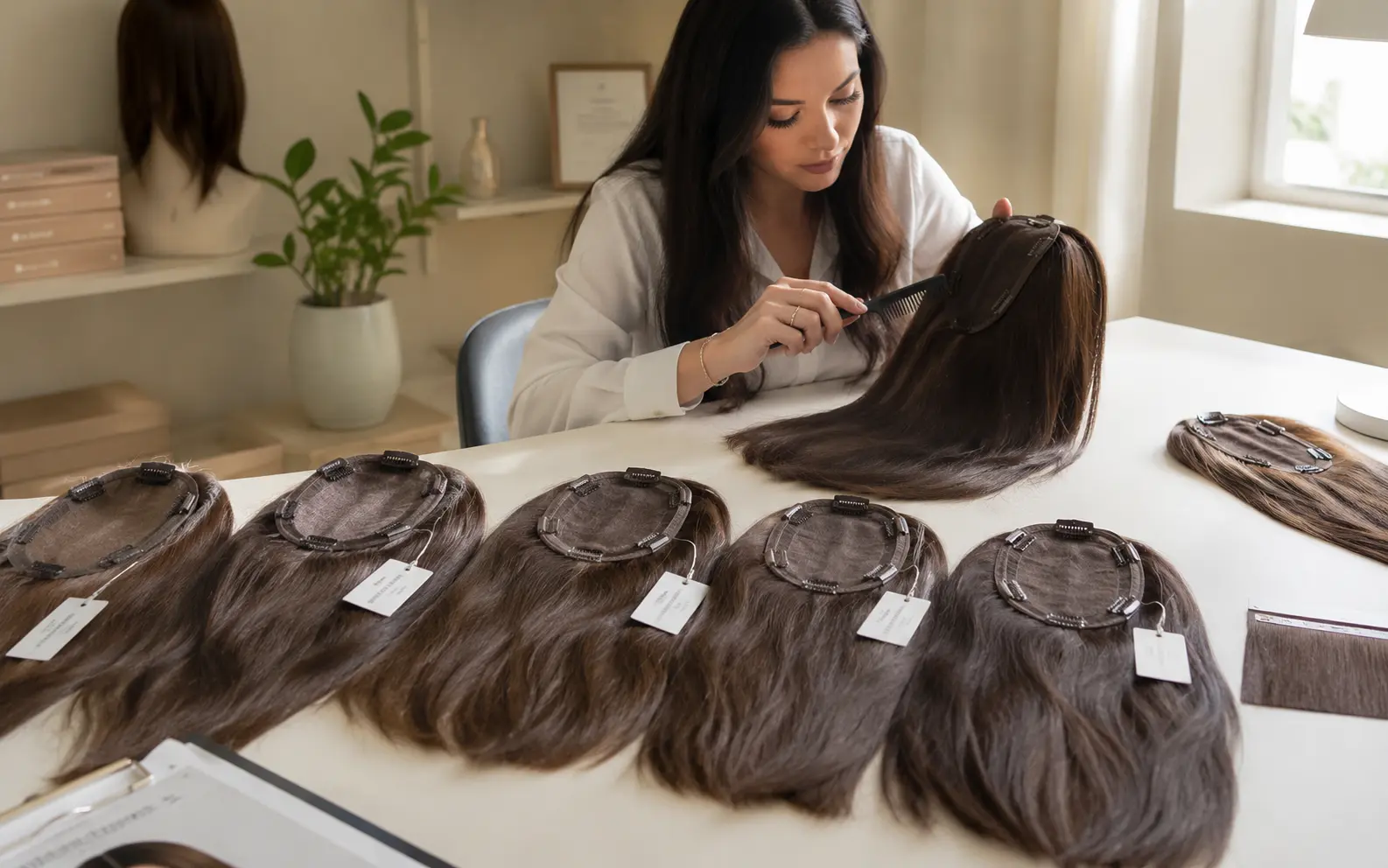
Start with a focused sample set instead of a large mixed order. Choose two base sizes, two lengths, two colors, and one density range. Then test each piece through washing, brushing, salon lighting, and client consultation. Document the result. A simple spreadsheet can save thousands of dollars in the first bulk order.
For pricing, compare the full specification: hair origin, Remy grade, length, density, base construction, knot treatment, clip type, packaging, lead time, MOQ, private label requirements, and shipping regions. A supplier quoting a lower number may be removing value from one of those areas.
Do not judge a Remy topper only by a dry sample in perfect lighting. Wash it, let it air dry, brush it from ends to roots, and check how the ends behave after movement. Then ask a stylist to blend it with real client hair under salon lights. This process takes more time, but it reveals problems before they become returns. It also gives your sales team specific language for consultations instead of vague claims about premium hair.
For repeat orders, keep a retained sample from the approved batch. When the next production run arrives, compare texture, color depth, shedding, and movement against that retained piece. This is especially useful for distributors and sheitel salons that need consistent quality across multiple locations.
Ask the factory how it separates hair lots before ventilation. Mixed lots can create subtle texture differences inside one topper, especially in longer lengths. The issue may not appear in product photos, but clients feel it when one section dries flatter than another. Clear lot control gives your sales team more confidence when presenting higher-priced Remy pieces.
Payment terms and replacement terms also deserve attention. A low deposit may look attractive, but it does not help if the supplier refuses to replace a failed batch. For wholesale buyers, written sample approval, defect tolerance, remake timing, and shipping responsibility are part of the real product cost.
Jewish wig and sheitel buyers should also check parting realism, color modesty preferences, and texture consistency across repeat orders. One sample is only a starting point. The real question is whether the factory can reproduce the same quality in batch production month after month.
FAQ
Frequently Asked Questions
How can buyers verify Remy human hair toppers?
Ask for a sample before bulk ordering, then test smoothness from root to tip and tip to root. Genuine Remy hair should resist roughness because cuticles face one direction. Also wash the sample several times, check shedding, and review the ends under bright light.
Are Remy toppers always virgin hair?
No. Remy describes cuticle alignment, while virgin describes chemical history. A Remy topper may be dyed or lightly processed and still perform well if the cuticles remain aligned. Virgin Remy costs more and is harder to source consistently in long lengths and rare colors.
Why do some cheap human hair toppers tangle quickly?
Many cheap toppers use non-Remy hair that has been acid-washed and silicone-coated to feel smooth at first touch. After several washes, the coating fades and reversed cuticles catch on each other. As a result, that creates matting, dullness, and client complaints.
What should Jewish wig and sheitel buyers ask suppliers?
Ask about hair origin, cuticle direction, kosher-sensitive sourcing requirements if relevant, base construction, density, parting realism, and sample replacement policy. Jewish wig and sheitel buyers often need consistent texture and discreet finishing, so one attractive photo is not enough proof.
Does Remy hair increase wholesale profit?
Usually yes, because clients accept higher retail pricing when the piece lasts longer and styles naturally. The margin only works if the supplier quality is stable. If Remy labeling is unreliable, returns and reputation loss can erase the price advantage quickly.
Conclusion
Conclusion
Remy hair topper decisions should be made with client comfort, salon workflow, and repeat-order stability in mind. A wholesale order that looks efficient on paper can become expensive when the sample does not fit real consultations.
LEV Wigs supports sample planning, MOQ review, private label packaging, lead time confirmation, and factory quality control for salon and distributor accounts. Send your target client profile, preferred base specs, and expected order quantity, then our Qingdao team can recommend a practical sample set before bulk production.

Ready to Review Samples?
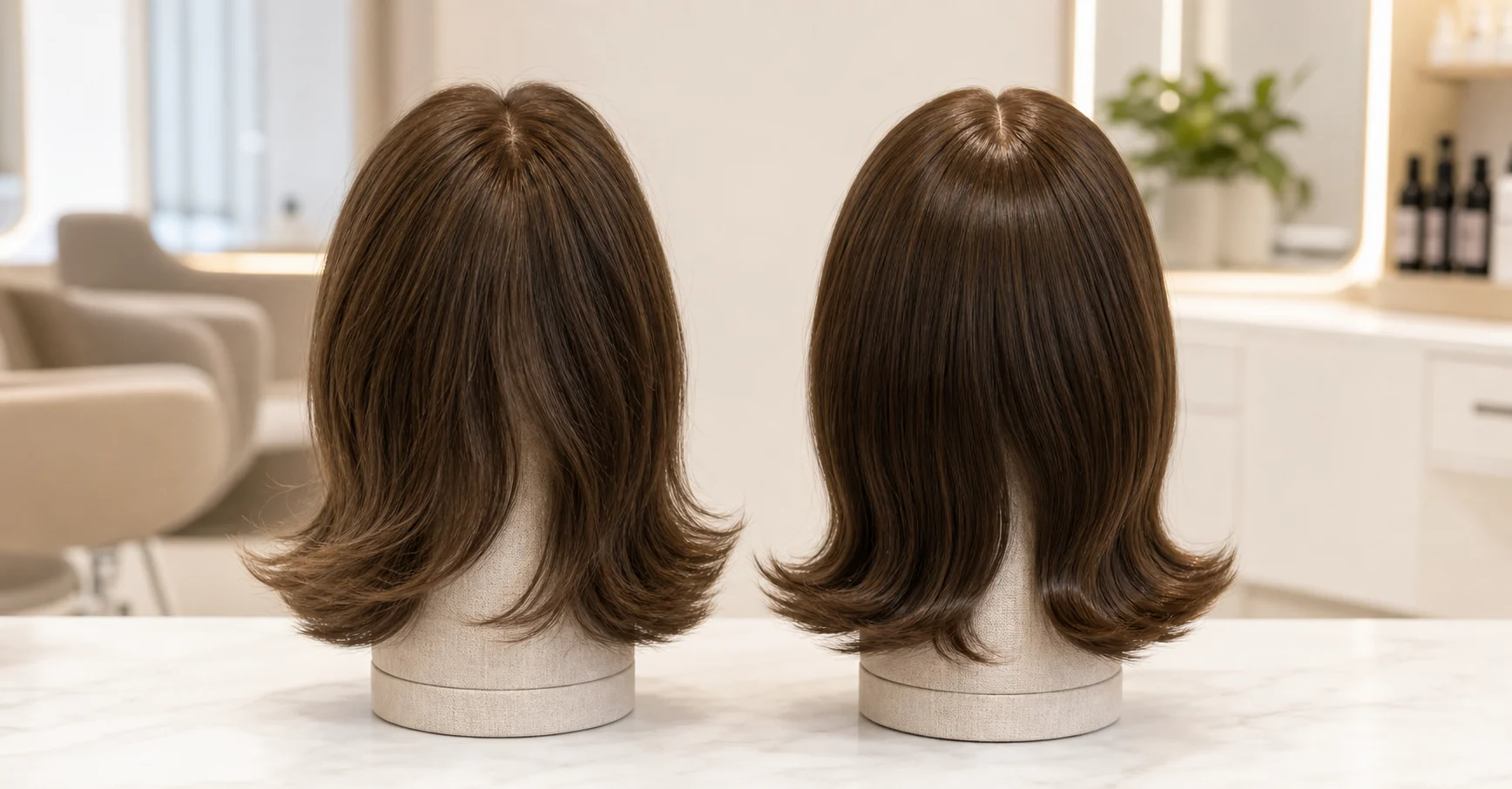
Send your target market, base requirements, density range, and packaging needs. Our factory team can prepare sample recommendations for wholesale review.
Request Samples