Can a Sheitel Be Repaired? Wig Damage vs Replace Guide
A factory-side guide to human hair wig repair — what can be fixed on a damaged sheitel, what cannot, where the DIY line falls, and when replacement is the honest answer.
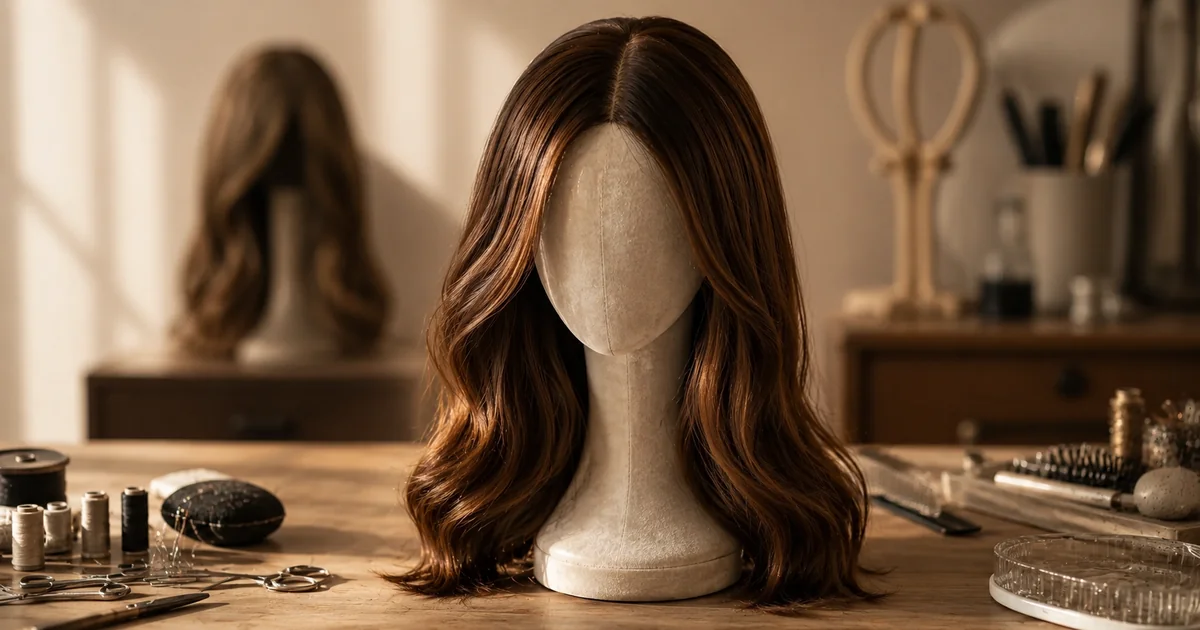
A sheitel is a serious investment, and repair is often worth considering before replacement. When the lace starts thinning or a bald patch appears at the hairline, the first question is rarely where to buy a new one. It is usually whether this one can be fixed.
Damage that looks terminal from the outside can still be repairable after a close inspection. A workshop evaluates lace integrity, hairline density, knot stability, cap shape, and hair condition separately before recommending a repair or replacement. That gap — between what looks ruined and what is actually repairable — is what this human hair wig repair guide is about.
The Short Answer
Can a Sheitel Be Repaired?
Most structural damage on a human hair sheitel can be repaired — but not all of it, and not always for less than a replacement would cost. The dividing line comes down to two things: how much usable hair remains, and whether the cap construction underneath is still sound.
Bald spots, torn lace, loose wefts, frizz, and faded color are all fixable through ventilating, patching, re-tightening, deep conditioning, or recolor. What is usually not fixable is a cap that has gone brittle across the whole unit, or hair loss so widespread there is nothing left to anchor new hair to.
If you are still deciding whether a unit is a candidate for repair or genuinely at end of life, our sheitel lifespan guide walks through the five signals that separate the two.
Damage Types
Five Common Damages and How Each Is Repaired
Not every damaged sheitel needs the same fix. These are the five damage types our workshop sees most often, and the repair method each one calls for.
1. Bald Spots and a Thinning Hairline
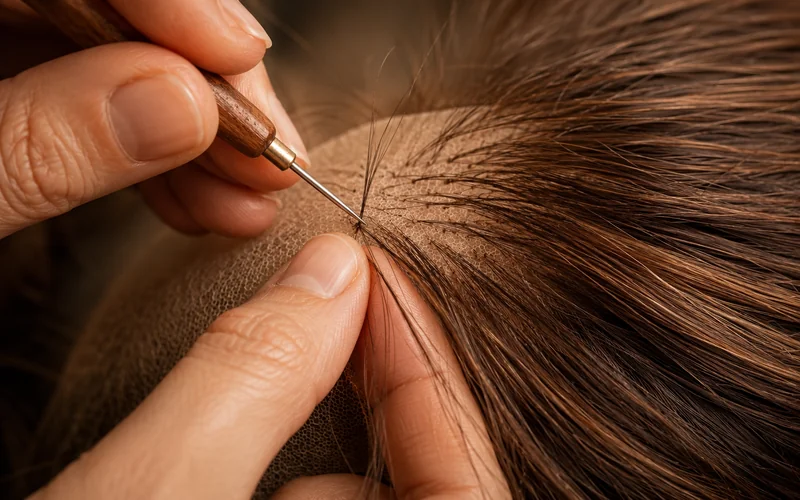
The most common repair request. When hair sheds from the lace edge — usually at the hairline or where the lace meets the wefts — the fix is ventilating. A technician uses a fine hook needle to knot new hair strand by strand back into the bare lace. It is slow, precise work, which is why most salons send it out rather than do it in-house. A wooden ventilation needle is easier on the hand than a metal one over a long session, and it is less likely to enlarge the lace holes.
2. Torn or Ripping Lace
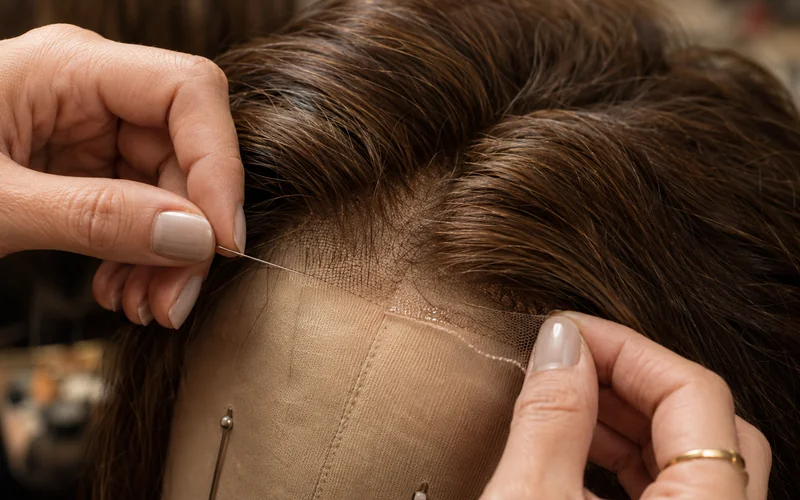
Small tears can be stabilized at home with a thin layer of clear adhesive along the tear — enough to stop it spreading, not so much that the lace goes stiff. A larger rip, or a tear at the hairline, usually needs a lace patch stitched in or a section of the lace front rebuilt professionally. The goal is always to stop the tear before it runs into a load-bearing part of the cap.
3. Loose Wefts and Cap Stretch
With daily wear, the elastic and weft stitching relax, and the cap begins to slip or bag. This is a straightforward workshop fix. Re-tightening the wefts and replacing the elastic restores the fit without touching the hair itself, and it is one of the cheapest repairs that meaningfully extends usable life.
4. Frizz, Dryness, and Matted Hair
Here is where most online wig repair guides stop. A deep conditioning soak and an oil treatment do bring dry hair back. But dryness is a hair condition, not a structural failure. If the hair is intact and the knots are secure, conditioning solves it. If the frizz is paired with heavy shedding, the real problem is the knots — and no amount of oil will fix a loose knot. This is why a proper diagnosis comes before any treatment.
5. Faded or Brassy Color
Color correction — toning down brassiness, reviving a faded shade, or a full recolor — is a standard repair-bench service. It does not fix structure, but it extends the usable life of a unit whose hair is otherwise sound. Our cost guide covers how color service factors into the overall value of a sheitel.
The Honest Limit
What Usually Cannot Be Repaired
Some damage is past what a repair bench can honestly fix, and a good workshop will tell you so rather than charge for work that will not hold. Three cases come up again and again.
The first is a cap that has gone brittle. Lace and silk-top membranes age — they yellow, thin, and lose flexibility across the whole unit, not just at one spot. A local patch holds in one place, but when the material is failing everywhere, the patch simply tears loose at the next edge.
The second is hair loss so widespread that there is not enough density left to anchor new hair to. Ventilating works by knotting into existing lace alongside surviving hair. When the hair has shed out across most of the unit, there is nothing to blend the new hair into, and the result looks sparse and obvious no matter how careful the work.
The third is stacked damage — a brittle cap plus widespread shedding plus torn lace together. At that point the labor to repair each layer separately approaches the cost of a new unit, and the repaired result will still have a shorter remaining life than a fresh piece. For the signals that tell you a sheitel has reached this stage, our lifespan guide walks through the five replacement indicators in detail.
Workshop Note
The repair intake checklist our Qingdao team uses checks lace, knot stability, density loss, cap shape, and hair condition separately — the same inspection points documented in our lifespan guide. A sheitel often needs a local repair even when the rest of the unit remains serviceable, which is why a blanket "replace it" answer is rarely the right one.
Where the Line Falls
DIY vs Professional Repair
Knowing what can be repaired is half the question. The other half is knowing what you should touch yourself and what belongs on a workbench.
Safe to Do at Home
- Stabilizing a small lace tear with a thin layer of clear adhesive, applied sparingly along the tear
- Deep conditioning and gentle detangling to revive dry hair
- Toning mild brassiness with a color-depositing shampoo
- Daily prevention — sealing knots, keeping conditioner off the root area, avoiding direct heat on the lace
Belongs to a Professional
- Ventilating new hair into bald spots — it requires a hook needle and practiced knot tension
- Rebuilding a lace front or stitching in a patch
- Weft re-tightening and elastic replacement inside the cap
- Any recolor beyond a gentle toner
The line is simple. If the fix changes the structure of the cap or the knots, it is not a home job. A ventilating needle in an unpracticed hand tends to enlarge lace holes rather than fill them, and a botched patch makes the eventual professional repair harder and more expensive. When in doubt, a small tear you stabilize today is fine; anything past that is worth sending out.
Finding a Service
Where to Get a Sheitel Repaired
Finding the right repair service depends on the damage type and where you sit in the supply chain.
For an individual wearer, the first stop is usually a sheitel macher — the wig professional who already cuts and styles your unit. Ask whether they handle the specific repair in-house or refer structural work to a specialist. That distinction is useful because ventilation, lace rebuilding, and cap repairs need different tools and experience from routine styling.
For a wholesaler or salon owner, the math is different. Sending each client unit out to a third-party specialist eats margin and adds turnaround time. A growing number of B2B buyers ask whether our workshop can handle repair batches alongside new orders — ventilating, re-tipping, and cap rebuilding on units their clients would otherwise retire. It is one of the more practical ways to extend the value of inventory you have already paid for, and it pairs naturally with a sample or restock order.
Prevention
Preventing the Damage First
Repair is the backup plan. Prevention is the actual strategy, and it costs nothing but habit. Most of the damage above traces back to a few preventable causes.
Shedding usually starts at the knots, so keep heavy conditioner away from the root area — conditioner loosens the knot hold over time. Lace tears come from tension and heat, so avoid direct hot-tool contact with the lace edge and never comb aggressively at the hairline. Frizz and matting come from friction and dryness, which means washing on a buildup schedule rather than a rigid calendar, and air-drying without twisting the cap.
A few structural habits help too. Rotating between two or three sheitels spreads the wear so no single unit takes the full daily load — and as our cost guide notes, two mid-range sheitels in rotation regularly outlast one premium piece worn every day. Storing the unit on a stand rather than crumpled preserves the cap shape that a later repair would otherwise have to restore.
For the full routines that prevent this damage from starting, see our washing guide, storage guide, and styling guide.
Mistakes to Avoid
Common Repair Mistakes
- Over-applying adhesive or nail polish on a tear. A thick layer turns the lace stiff and brittle, and the tear simply jumps to the next edge. Thin is enough.
- Using a ventilating needle without practice. The risk is not the handle material but the technique: inconsistent tension can enlarge lace holes or create knots that do not blend. Leave ventilation work to a trained repair specialist.
- Letting conditioner reach the knots. It feels like care, but it slowly loosens the ventilated knots and accelerates exactly the shedding you are trying to prevent.
- Waiting until the damage spreads. A small bald spot is a local repair. Left alone, the surrounding lace loosens and the same fix becomes a full hairline rebuild. Early intervention is cheaper — every time.
FAQ
Sheitel Repair FAQ
Yes, in most cases. A technician ventilates new hair back into the bare lace using a fine hook needle, knotting strand by strand. It is precise, time-consuming work, so most salons send it to a specialist rather than doing it in-house.
Small tears can be stabilized at home with a thin layer of clear adhesive along the tear — enough to stop it spreading. Larger rips, or any tear at the hairline, need a stitched patch or a rebuilt lace front done professionally.
Start with the wig professional who already knows your sheitel and ask whether they handle the repair in-house or refer structural work to a specialist. For wholesale batches, share clear photos and the damage type with a factory workshop so it can assess ventilation, lace rebuilding, or cap repair before work begins.
It depends on the remaining hair density, cap condition, and the scope of the damage. Localized problems such as a bald spot or small tear may be worth repairing when the surrounding lace and cap remain sound. Widespread shedding, brittle materials, or several structural faults together usually make replacement the more practical option.
Cost varies with the damage type, the amount of replacement hair needed, and the labor time. A small stabilization repair is usually simpler than ventilation or a lace rebuild. Ask for an assessment based on photos of the lace, cap, hairline, and affected area before deciding whether repair is the better value.
Conclusion
A Damaged Sheitel Is Not Always a Dead Sheitel
Bald spots ventilate, torn lace patches, loose wefts re-tighten, and dry hair conditions back — as long as the cap underneath is still sound and there is enough hair left to work with. The repairable cases outnumber the terminal ones, but the difference between them is a judgment call a workshop makes every day.
If you are a wholesaler or salon accumulating units your clients would otherwise retire, our Qingdao workshop handles repair batches — ventilating, re-tipping, and cap rebuilding — alongside new production. Bring the units you think are finished, and we will tell you honestly which ones still have life in them.



Have Sheitels That Look Past Repair?
Our Qingdao workshop evaluates and repairs human hair sheitels alongside new production — ventilating, lace rebuilding, and cap tightening for wholesale and salon buyers.
Contact LEV Factory