Cap Construction
Silk Top Sheitels — Construction, Realism and Sourcing
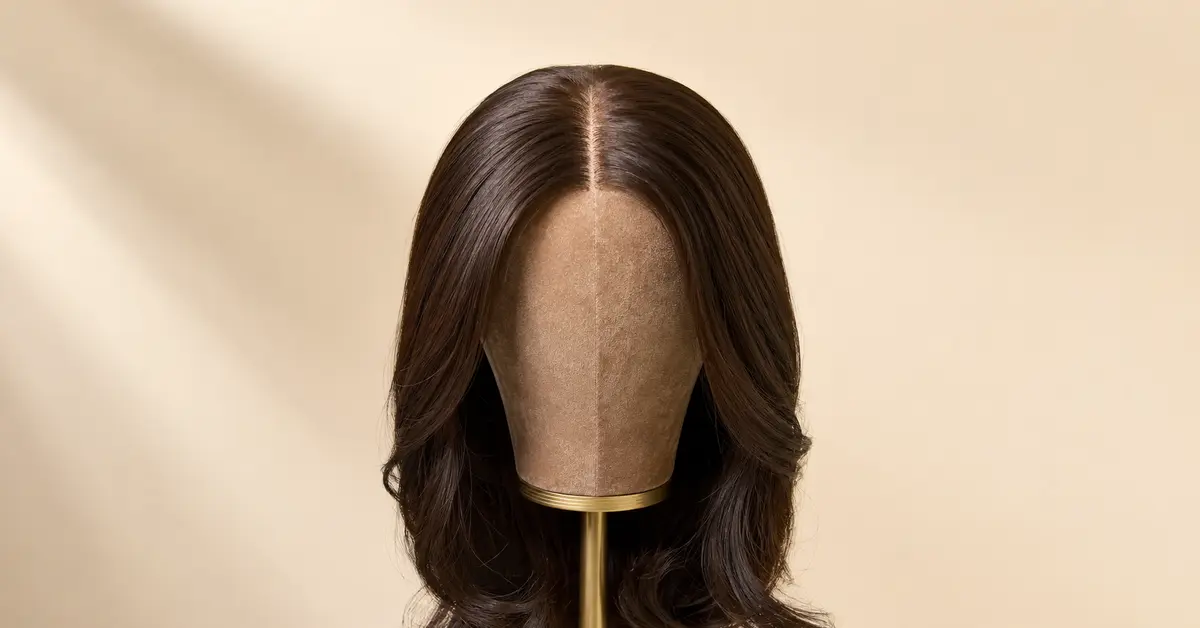
For buyers used to lace-top partings, a silk top can initially look almost too clean. A faint grid at the crown has become familiar; when the knots are concealed between two fabric layers, the uninterrupted parting can feel unfamiliar. That reaction explains why the silk top sheitel divides opinion: it solves a problem many buyers cannot quite name.
The silk top is among the most realistic cap constructions for an Orthodox wig when the brief calls for an invisible part. Yet it is also widely misunderstood. Buyers confuse it with lace grades, order it without specifying the hairline, or place it on clients who would be happier in something lighter.
This guide stays on silk top alone: how the double-layer construction produces that scalp-like part, which clients it genuinely suits, and how US salons and sheitel machers should specify one on a purchase order. For the side-by-side tradeoffs, our lace top vs silk top sheitels comparison covers that ground; we will not repeat it here.
You will leave knowing whether a silk top fits your client — and exactly what to write on the order.
Cap Construction
What Makes a Silk Top Sheitel Different
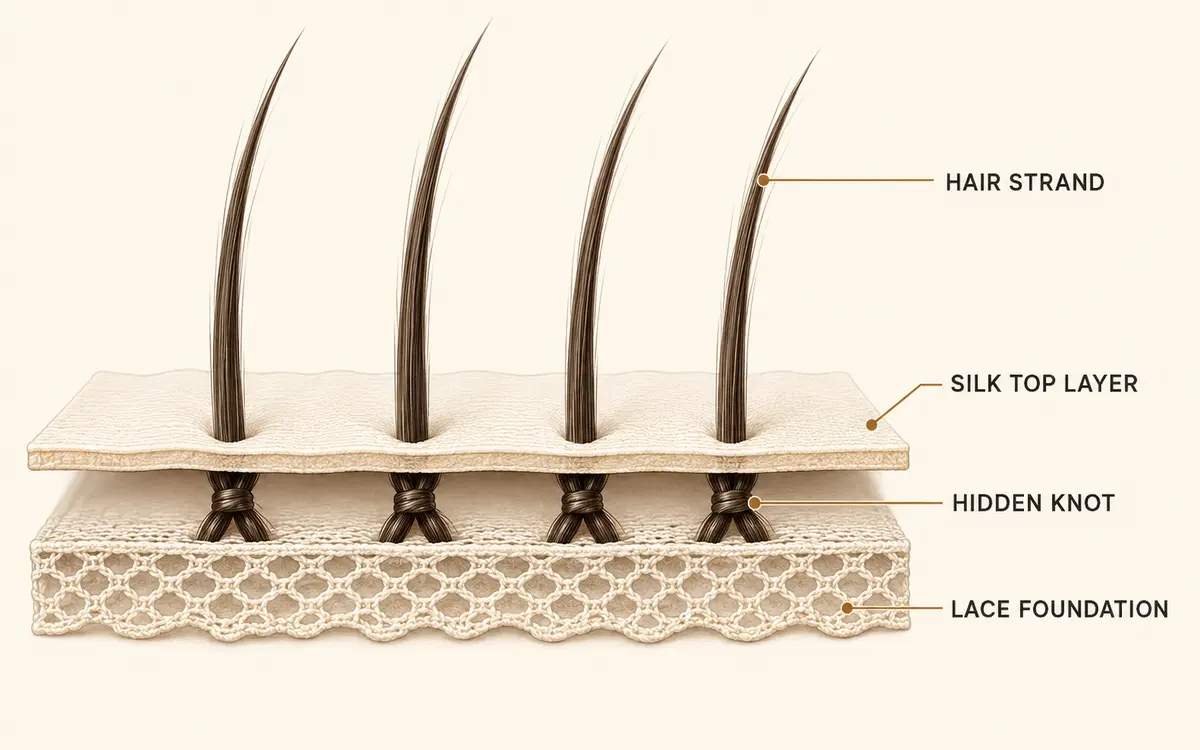
A silk top is built around two layers of fine fabric at the crown. Each hair strand is ventilated down through the top layer, knotted, and then covered by the second layer underneath. The knot sits trapped between the two layers — invisible from above. Part the hair anywhere on the crown and you see what looks like scalp with fibers emerging from it, rather than a grid of tied knots.
That single mechanic — knot concealment between fabric layers — is the entire reason the silk top exists. As a result, every other difference, from weight to breathability to price, follows from it.
The Double-Layer Knot Concealment
On a lace top, each hair is hand-tied to an open mesh, and the knot rests on the underside of a hole. With lighter colors or bright overhead light, those knots and the mesh grid can read through at the part. By contrast, a silk top removes that variable entirely. Its top fabric layer presents a continuous, tinted surface, so the hair appears to grow out of it. Meanwhile, the bottom layer does the structural work of holding the knots.
Because the fabric is tinted to approximate a scalp tone, the part reads as skin rather than as cloth. Get the tint wrong and the illusion breaks; get it right and the part disappears into realism.
Silk Top, Skin Top, and Lace Top at the Crown
Three different crown constructions get confused with each other, and that confusion costs buyers money. A silk top uses two fabric layers with knots hidden between them. By comparison, a skin top (polyurethane, or "PU" top) injects hair into a thin translucent polyurethane sheet that mimics scalp through its sheen and transparency. Lace tops tie hair to an open mesh instead. All three chase a natural part; they arrive by different routes, with different tradeoffs in realism, durability, and cost.
However, skin tops are the option buyers most often forget to weigh. The PU layer can look convincingly scalp-like and bonds well, but it traps more heat than silk and the polyurethane ages differently over the years. These two constructions are not the same product — if a supplier quotes a "silk top" price that looks unusually low, confirm you are getting layered fabric construction and not a PU skin top.
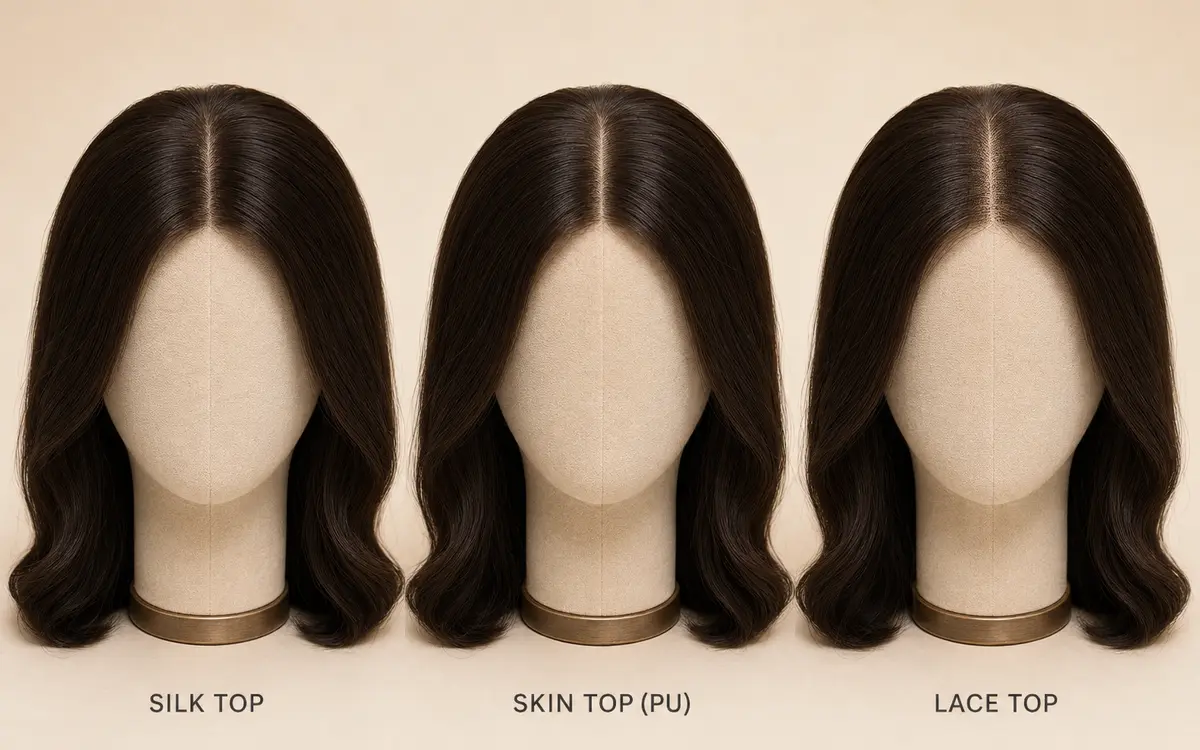
"Silk top" is not a lace grade — and it is not Swiss lace. Swiss lace is a premium grade of lace top construction (a fine mesh, roughly 0.08mm). A silk top is a different cap entirely, built from fabric layers rather than mesh. They sit on different axes. Our lace top sheitels guide breaks down the lace grades; nothing there substitutes for silk, and silk substitutes for nothing there.
Realism Engineering
Why a Silk Top Looks Like Real Scalp
The realism of a silk top is not magic. It is three variables working together — knot concealment, fabric tint, and the density and direction of ventilation at the parting.
The Parting Illusion
Conceal the knots and tint the fabric to scalp, and the part line stops reading as a wig. On a lace top, even a well-blended part shows a faint architecture of holes and ties under raking light. The silk top's continuous fabric surface has no architecture to betray — there is nothing to see but tone and emerging hair. That is why a center part on a silk top holds up under the kinds of light that expose other caps: synagogue sconces, office fluorescents, direct window light.
Ventilation Density and Direction
A convincing part depends on how densely the crown is ventilated and whether the hairs radiate naturally from the part line. In LEV's production we ventilate the crown and immediate parting zone at higher density than the sides, and we vary the angle of the fibers so the part falls the way real growth falls — slightly forward at the front hairline, radiating across the crown. Under-density leaves a see-through part; wrong direction makes the hair lie unnaturally. These are qualitative production standards rather than a single published number, because density is set per hair color and length.
When Silk Out-Photographs Lace
Lighter colors and highlighted European hair are where the silk top earns its premium. Pale tones carry the least pigment to hide a knot or a grid, so the very colors that look most natural on a hand-tied lace top are also the colors most likely to betray the construction underneath. A silk top in a soft blonde or a highlighted brown parts cleanly because there is simply nothing to betray. For clients who keep a fixed center or side part and want it to read as their own scalp in photographs and in person, silk is the construction built for that brief.
In our QC room, finished silk tops are parted under a raking desk lamp before they ship. If an inspector can find a knot or a discontinuity in the parting zone under that light, the unit goes back to the line. The lamp is harsher than any lighting a client will stand in — which is exactly the point.
Client Matching
Who Should Choose a Silk Top — and How to Care for One
A silk top suits a specific wearer: someone who keeps a consistent part, who values part realism over maximum airflow, and whose hair color would otherwise expose knots. Match it to the wrong client and you have paid a premium for a cap they will call warm.
Clients Who Benefit Most
- Wearers who keep a set center or side part and rarely restyle — the parting realism is wasted on someone who changes the part daily.
- Lighter and highlighted colors, where lace knots would read through most.
- Mature clients who want a polished, low-fuss part that holds without daily adjustment.
- Anyone previously told their sheitel "shows the grid" at the crown.
When Lace Is the Better Call
If the client lives in a warm climate, wears her sheitel twelve or more hours a day, or wants to pull it into a ponytail or half-up style, a lace top is usually the kinder choice — lighter and more breathable. The full tradeoff lives in our lace versus silk comparison, so we will not rehash it here.
Silk-Top-Specific Care
General washing and setting technique transfers across cap types — see our sheitel washing guide for the routine. Silk tops add two specific risks worth knowing.
First, the two fabric layers are joined at the crown perimeter, and that join can separate over years if it is picked at or stressed — so clients should never tug at the crown edge when adjusting. Second, the fabric mesh at the parting can trap scalp oils and styling product, which slowly dulls the tint and the realism. Gentle cleansing of the parting zone, without scrubbing, keeps the illusion intact far longer than a rough wash would.
US Procurement
Sourcing Silk Top Sheitels for the US Market
Ordering a silk top wholesale means specifying more than the words "silk top." Four variables decide whether the unit you receive matches the one you imagined: the crown fabric and grade, the lace-front pairing, the hair origin, and the parting density. Leave any of them open and you have handed the decision to the factory.
Specifying the Order
- Crown fabric and grade. "Silk top" names a construction, not a single material. Confirm the fabric type, weight, and tint against your clients' scalp tones.
- Lace-front pairing. Most silk tops pair a silk crown with a lace front so the hairline blends. Specify the lace grade for the front — our lace grades breakdown covers Swiss versus HD versus French.
- Hair origin. Slavic and European hair behave and color differently from processed Remy. State which you want and ask for sourcing documentation, not just a label.
- Parting density. Higher density at the part reads as fuller, more natural growth; too dense looks painted. Set it to the color and the client.
Samples, MOQ, and Lead Time
Treat samples and bulk orders as two different timelines. A paid sample lets you confirm fabric tint, hair origin, and parting density on one unit before committing. Bulk production and custom single-piece orders follow different workflows because a custom crown needs dedicated hand-tying time. If you are timing inventory for a holiday season or a high-volume period, confirm the current schedule for your exact brief rather than relying on one universal lead time.
Verifying Hair Origin and Halacha Certification
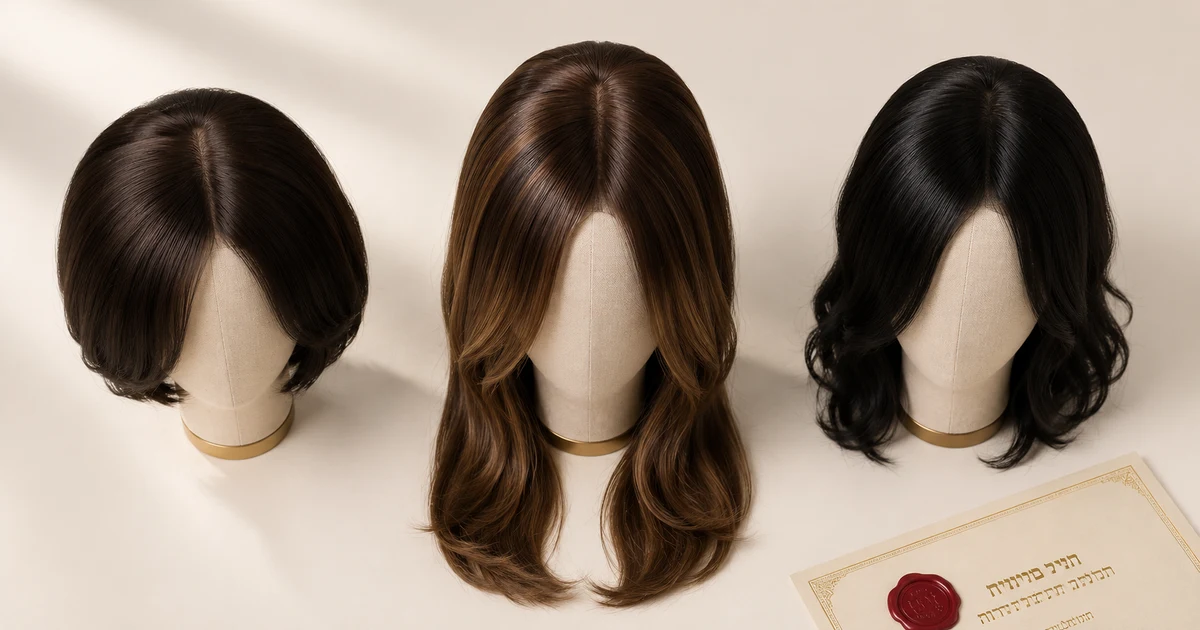
For US buyers sourcing kosher sheitels, two documents matter more than any marketing claim: a hair-origin record and a recognized Halacha certification. Ask for both before you pay. The certification chain — who certified, for which community standard, and whether the cap is lined or unlined — is covered in depth in our kosher wigs wholesale guide, so we point you there rather than repeat it.
On US logistics: budget for duties and brokerage inside your landed cost, not just the unit price. Silk tops are higher-value goods, so the duty line item is proportionally larger and worth calculating before you set retail.
Avoid These
Common Mistakes Buyers Make With Silk Tops
Most silk-top disappointments come from treating it like any other sheitel. It is not.
- Assuming "silk top" means real silk fiber. The name describes the layered construction, and the fabric varies by supplier. Specify the material or accept whatever arrives.
- Ordering without specifying the lace-front pairing. A silk crown with a mismatched or cheap lace front gives away the whole unit at the hairline.
- Neglecting the parting-zone fabric. Oils and product collect in the mesh and slowly kill the realism. A little targeted cleansing prevents it.
- Aggressive washing at the crown. Scrubbing stresses the layer join. Silk tops want gentle handling at the part.
- Mismatching the client. Putting a silk top on a hot-climate, daily-ponytail wearer who would thrive in lace is a recipe for a return.
FAQ
Frequently Asked Questions
A silk top sheitel is a wig whose crown is built from two layers of fine fabric, with each hair knotted between the layers so no knot shows on top. Part the hair and you see a tinted, scalp-like surface with fibers emerging — no grid, no visible ties. It is the most realistic part construction available for an Orthodox wig.
Not better — different. Silk tops win on part realism and crown durability; lace tops win on breathability, weight, and styling flexibility. The right choice depends on the client's climate, parting habits, and color. Our lace top vs silk top sheitels comparison lays out the full tradeoff.
With rotation and proper care, a silk top generally outlasts a lace top because the fabric crown is tougher than lace mesh. Exact lifespan depends on wear frequency, washing, and whether the client rotates between pieces. See our sheitel care routine for the maintenance that extends it.
Sometimes, but not always — and this is a common source of confusion. 'Silk top' names the layered construction, not a guaranteed fiber. The crown fabric varies by manufacturer and grade. If genuine silk fiber matters to you, specify it on the order rather than assuming the name guarantees it.
Yes. A skilled wig technician can re-ventilate thinning zones at the crown and address layer separation at the perimeter before it spreads. Repair is usually far cheaper than replacing the unit, which is one reason the silk top's durability makes sense as a long-term investment for regular wearers.
Conclusion
The Right Silk Top Starts With the Right Spec
A silk top sheitel is the construction you reach for when the brief is an invisible part — nothing else hides the knots the way layered fabric does. Understand the mechanic, match it to a client who will value the realism, and specify the fabric, the lace front, the hair origin, and the density on the order.
If you source for US salons or run a sheitel macher business, the work is in the spec. Browse our silk top kosher sheitels, or request a bespoke commission when a client needs a unit built around a specific part and scalp tone.


Source Silk Top Sheitels Built to Spec
LEV Wigs manufactures silk top kosher sheitels in Qingdao, with Slavic and European hair sourcing, Halacha documentation where required, and crown construction specified per order. Ask for the current sample and production terms for your brief.
Request Wholesale Pricing