Comparison Guide
Human Hair vs Synthetic Toppers: 2026 Wholesale Guide
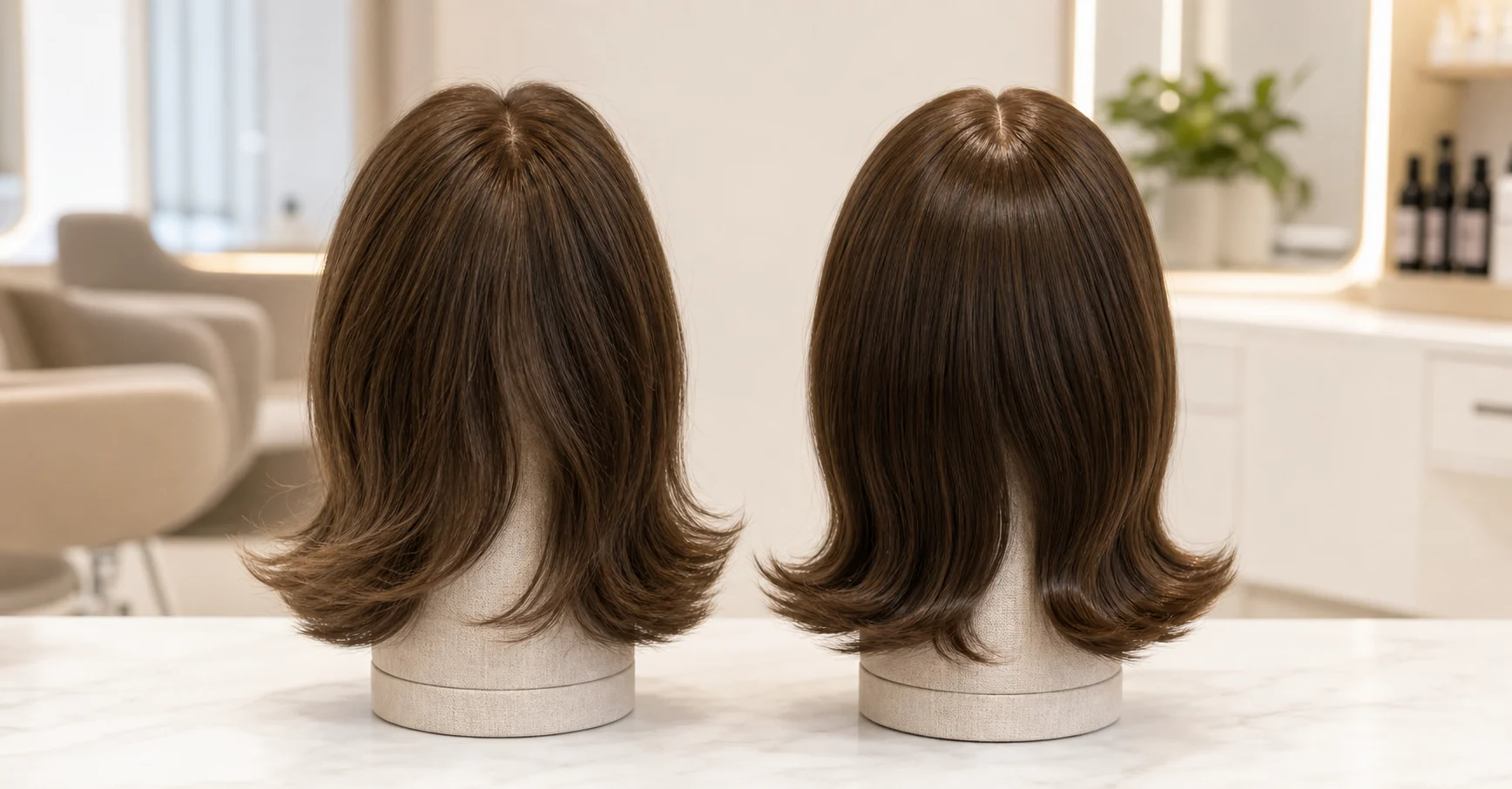
The first question most wholesale buyers ask isn't about quality. It's about price. And that instinct is understandable — margins matter. But the real question that determines your profitability is this: will your clients actually wear what you stock? A cheap synthetic piece that sits in a drawer generates zero repeat revenue. An expensive human hair piece that tangles in three months generates returns and bad reviews.
Human hair vs synthetic toppers isn't a debate with one right answer. It's a decision that depends on your client demographics, their styling habits, and their maintenance willingness. At our Qingdao facility, we produce both materials in significant volume. We've watched wholesale partners thrive with a 50-50 split. We've watched others fail with 100% human hair inventory because their local market couldn't afford the price point or handle the upkeep.
This guide breaks down the practical differences — not the marketing fluff — so you can build a stock portfolio that sells. For category basics, start with our hair topper wholesale buyer's guide. For Jewish wig retailers and sheitel salons comparing scalp realism, our wholesale silk top topper guide explains which base types pair best with each fiber.
Human Hair
What Wholesale Buyers Need to Know About Human Hair Toppers
Human hair toppers are best for salons whose clients want heat styling, color work, and a longer service life. They cost more upfront, but they support premium consultations and stronger per-unit margins when the hair grade is verified.
Sourcing and Quality Grades
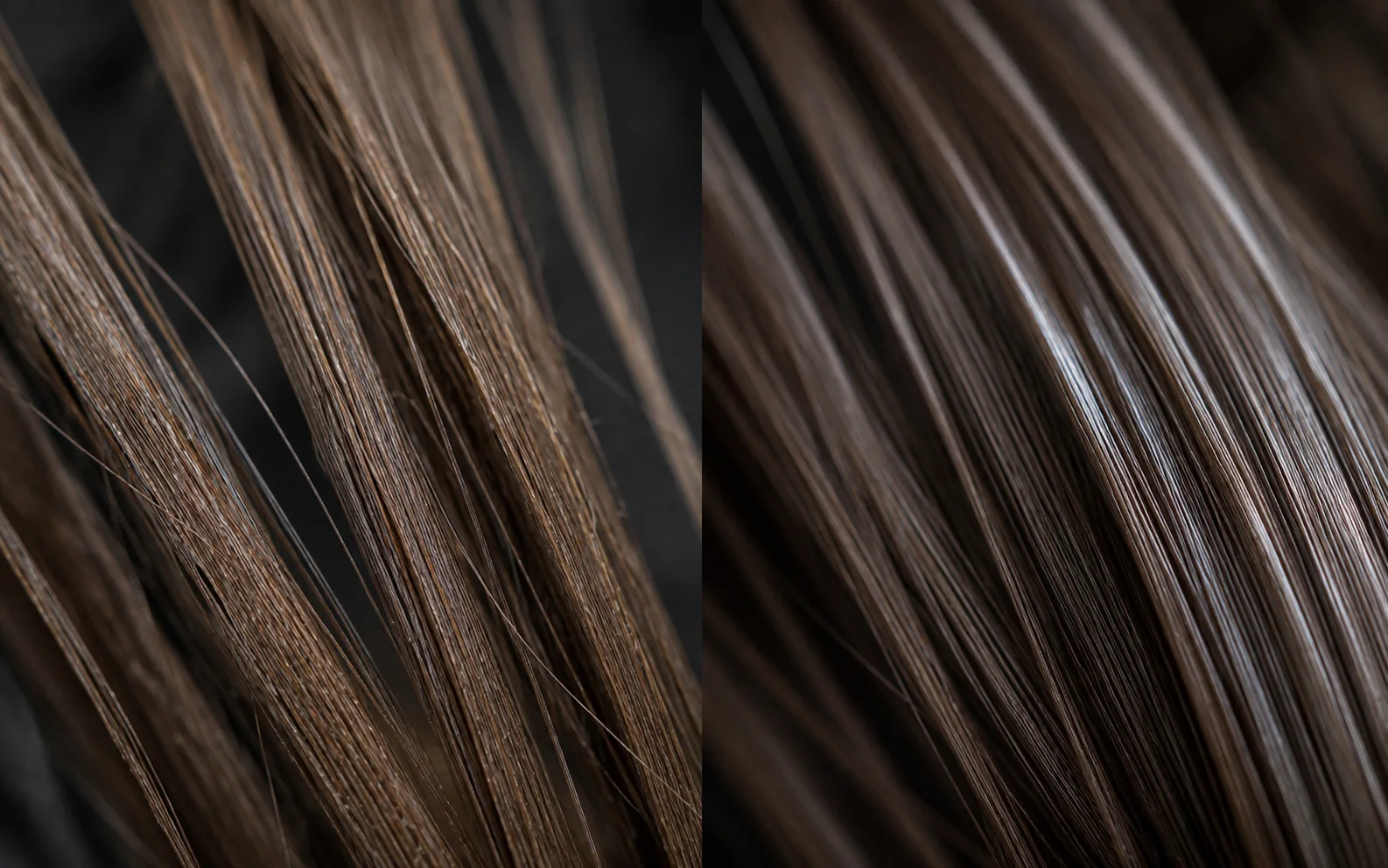
Not all human hair is created equal. Remy hair has cuticles aligned in the same direction, which prevents matting and extends lifespan. By contrast, non-Remy hair is collected from multiple sources — brushes, salon floors, random donations — with cuticles facing both directions. It tangles. Then it frizzes. Eventually, clients lose trust in the piece. The price gap between Remy and non-Remy can be 30% to 50% at wholesale, but the return rate on non-Remy stock often wipes out that savings.
Virgin hair — never chemically processed — commands the highest price. It's also the most versatile for coloring and perming. However, virgin hair is becoming harder to source in consistent lengths and textures. Most wholesale buyers find that high-quality Remy offers the best balance of performance, availability, and margin.
Styling Versatility
This is where human hair wins decisively. For example, clients can curl it, straighten it, blow-dry it, and color it — within reason. Most Remy toppers tolerate heat up to 350°F (180°C). Beyond that, damage accelerates. Therefore, we recommend advising clients to use heat protectant and to avoid daily high-heat styling. A topper treated gently lasts one to three years. However, one abused with a 400°F flat iron every morning might need replacement in eight months.
Realistic Lifespan Expectations
Marketing claims of "five-year lifespan" are fantasy. Even premium Remy toppers show wear after eighteen to twenty-four months of daily use. First, the hair loses luster. Next, the ends dry out. Eventually, the base construction may remain intact, but the hair itself reaches the end of its cycle. Therefore, we always advise wholesale partners to set client expectations at one to two years for daily wear, two to three years for occasional use.
Pricing Structure for Wholesale
Human hair toppers at factory-direct wholesale typically range from $80 to $250 per unit depending on length, density, and base construction. Retail markup in the US and European markets usually falls between 2x and 3.5x. That means a $120 wholesale piece sells for $240 to $420. The margin is healthy, but the upfront inventory investment is significant.
Synthetic Hair
Understanding Synthetic Hair Toppers
Synthetic toppers are best for buyers who need lower entry prices, predictable replacement cycles, and simple care instructions. They are not a downgrade when the client values convenience more than restyling freedom.
Fiber Technology in 2026
Synthetic fibers have come a long way from the plastic-shine wigs of the nineties. In fact, modern kanekalon and toyokalon fibers mimic the light reflection of human hair surprisingly well. Heat-friendly synthetics — often labeled as "HD fiber" or "styleable synthetic" — can withstand temperatures up to 280°F (140°C). However, that's enough for gentle curling or straightening, not for daily heat styling.
The limitation remains memory fiber. Standard synthetic holds its factory style permanently. As a result, a straight piece stays straight and a wavy piece stays wavy. For clients who want zero maintenance, this is a feature. By contrast, clients who like to change their look weekly may see it as a dealbreaker.
The Pre-Styled Advantage
Here's where synthetic quietly wins market share. A client buys a synthetic topper, takes it out of the box, shakes it, and wears it. No styling required. No learning curve. For older clients, busy professionals, or anyone intimidated by hair care routines, this simplicity is genuinely appealing. Furthermore, synthetic fibers don't react to humidity the way human hair does. A client in Florida or Houston can walk outside in August without her style collapsing.
Replacement Cycles
Synthetic toppers last three to six months with daily wear. At first, that sounds like a drawback until you realize it creates predictable reorder cycles. A client who replaces her piece twice a year generates more lifetime revenue than a client who buys one human hair piece and disappears for three years. In fact, some of our most successful wholesale partners built their business model around synthetic's shorter lifespan, offering subscription-style replacement programs.
Wholesale Pricing and Margins
Synthetic toppers at factory wholesale range from $25 to $80 per unit. Retail markup is similar — 2x to 3.5x — but the lower entry price attracts a broader client base. A salon can stock ten synthetic pieces for the cost of three human hair units. That inventory diversity reduces risk.
Comparison
Side-by-Side: What Matters for Your Business
The right wholesale mix depends on client age, styling habits, climate, budget, and how much after-sale education your salon can provide. A balanced assortment usually performs better than choosing one fiber type as the universal answer.
Client Demographics and Buying Behavior
Younger clients — those in their thirties and forties — overwhelmingly prefer human hair. They style actively, they experiment with color, and they're willing to invest in longevity. Clients over sixty often prefer synthetic. They want simplicity, predictable cost, and minimal maintenance. If your salon skews younger, allocate 70% human hair. If you serve an older demographic, flip that ratio.
Maintenance Education Burden
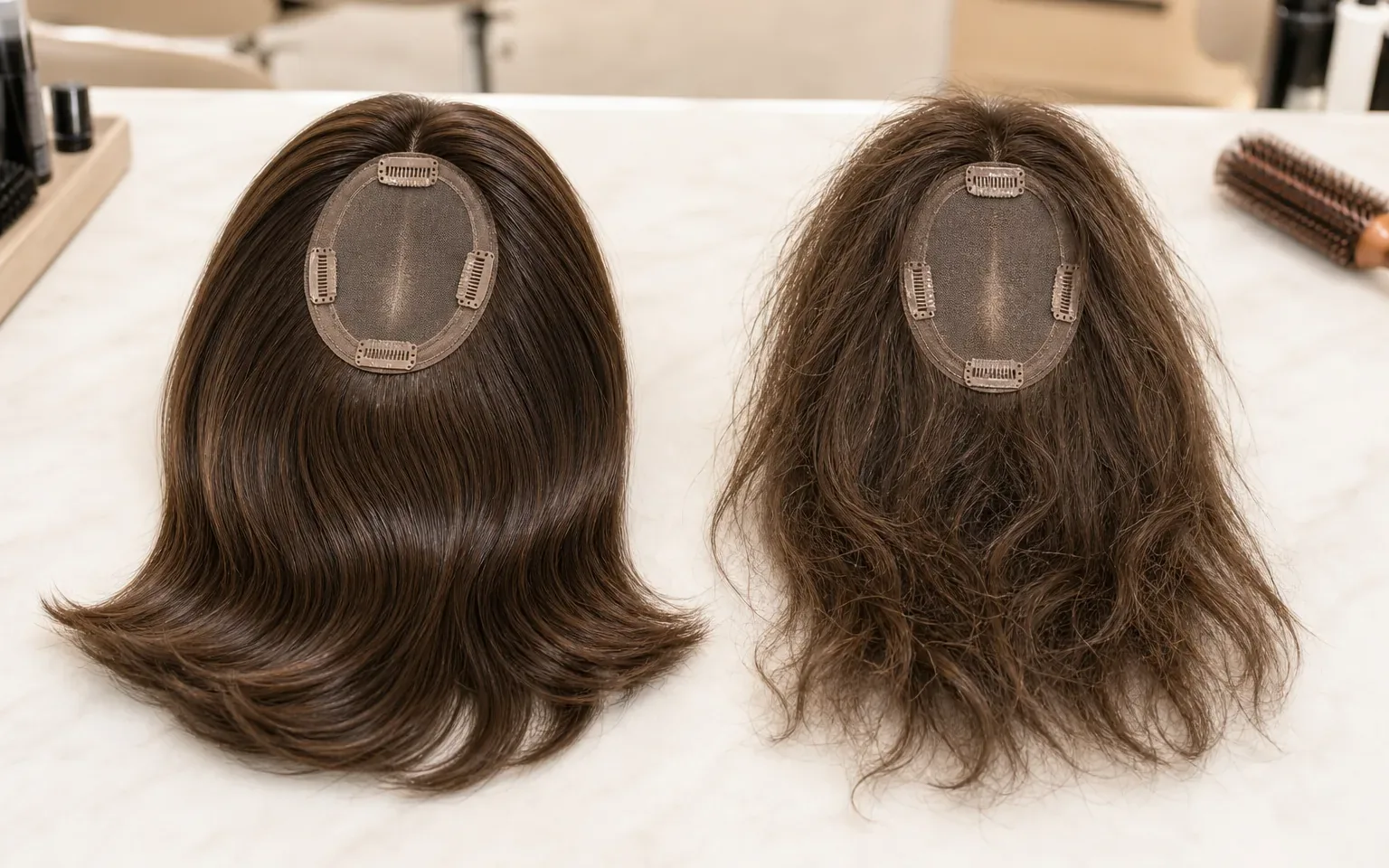
Human hair toppers require client education. Shampooing, conditioning, heat protection, storage — it's a lot to teach. Synthetic requires almost none of that. For salons with limited staff time, synthetic reduces the post-sale support load significantly. However, clients who buy human hair and learn proper care often become fiercely loyal. They trust you with their maintenance products, their color appointments, and their friends' contact information.
Return and Complaint Rates
Here's the number that should drive your decision. In our experience tracking wholesale partner feedback, human hair toppers generate returns at roughly 8% — mostly due to color mismatch or density disappointment. Synthetic generates returns at roughly 12% — mostly due to shine complaints or heat damage from clients who ignored care instructions. The synthetic return rate is higher, but the absolute financial loss per return is lower because the unit cost is lower.
Inventory Strategy
Most successful wholesale accounts we work with maintain a mixed portfolio. Specifically, a typical starting point is 60% human hair, 30% standard synthetic, and 10% heat-friendly synthetic. Then adjust quarterly based on sales data. Instead of letting personal preference drive inventory decisions, let your clients' buying patterns decide.
Sourcing
Common Mistakes When Sourcing Human Hair or Synthetic Toppers
The biggest sourcing risk is treating material labels as proof. Some suppliers blend human hair with heat-resistant synthetic fibers and label the result as "human hair blend." That's not necessarily deceptive — if it's disclosed. But undisclosed blends create trust issues when clients try to color a piece and the synthetic fibers melt. Always request fiber composition certificates for bulk orders.
Underestimating synthetic's heat limitations is another frequent problem. A client buys a standard synthetic topper, ignores the care card, and runs a curling iron through it at 350°F. The fiber melts into a sticky clump. She blames the salon. The salon blames you. The fix is simple: only stock heat-friendly synthetic if your market actively requests styling flexibility. Otherwise, standard synthetic with clear care instructions is safer for everyone.
Not testing before bulk ordering is the mistake we see most often from new wholesale accounts. A buyer sees photos, compares prices, and places a $5,000 order. The pieces arrive beautifully packaged — and completely wrong for their client base. Texture too coarse. Colors too warm. Bases too large. We offer sample programs specifically to prevent this. Use them.
FAQ
Frequently Asked Questions
Can clients dye a human hair topper?
Yes, if it's genuine Remy or virgin hair. However, lifting color — going darker to lighter — is harder than depositing color. We recommend professional salon coloring rather than box dye. Synthetic fibers cannot be dyed with standard hair color. Some fabric dyes work on kanekalon, but results are unpredictable.
What's the maximum heat setting for synthetic toppers?
Standard synthetic should not be heat styled at all. Heat-friendly synthetic usually tolerates up to 280°F (140°C), but salons should advise clients to start lower and test a hidden section first. Melted fiber is not repairable, so clear care cards reduce complaints.
How do I tell real Remy hair from processed hair?
Run your fingers from tip to root. Remy hair feels smooth in both directions because the cuticles are aligned. Processed or non-Remy hair feels rough when stroked upward. Also examine the ends. Remy hair has tapered, natural ends. Acid-washed hair has blunt, uniform ends that tangle easily.
Which type has better profit margins for salons?
Human hair has higher per-unit margins because the retail price is larger. Synthetic has faster turnover and lower per-unit risk. For most salons, a mixed inventory creates the best total profitability. The exact ratio depends on local demographics, styling demand, and price sensitivity.
Should I offer both human hair and synthetic options?
Yes. Clients who cannot afford human hair today may upgrade in two years, especially if their first topper experience is positive. Synthetic options also help salons serve price-sensitive shoppers without losing them to another vendor. Offering only one material narrows your market.
Conclusion
Conclusion
The human hair vs synthetic debate isn't about finding a winner. It's about matching inventory to clientele. Young, style-conscious clients want the versatility of Remy human hair. Older, low-maintenance clients want the simplicity of pre-styled synthetic. Both groups represent significant revenue if you stock the right pieces.
Your job as a wholesale buyer is to understand your local market better than your supplier does. We can tell you what's popular globally. However, only you know whether your clients are yoga instructors who need heat-styling flexibility or retirees who want wash-and-wear convenience.
At our Qingdao workshop, we manufacture both human hair and synthetic toppers with identical quality standards — because the material doesn't matter if the construction is poor. As a hair topper manufacturer, we support sample orders, MOQ planning, private label packaging, density customization, and shipping regions for wholesale accounts. Base alignment, knot security, color consistency, and final quality control determine client satisfaction regardless of fiber type. Request samples of both materials, confirm lead time with your sales contact, test the pieces with your stylists, and let client reactions guide your inventory mix.

Ready to Build Your Inventory?
Request human hair and synthetic topper samples from our factory. Then our team in Qingdao can help you select the right mix for your clients.
Request Samples