Jewish Hair Traditions
Jewish Head Coverings: Sheitel, Tichel, Snood and Shpitzel
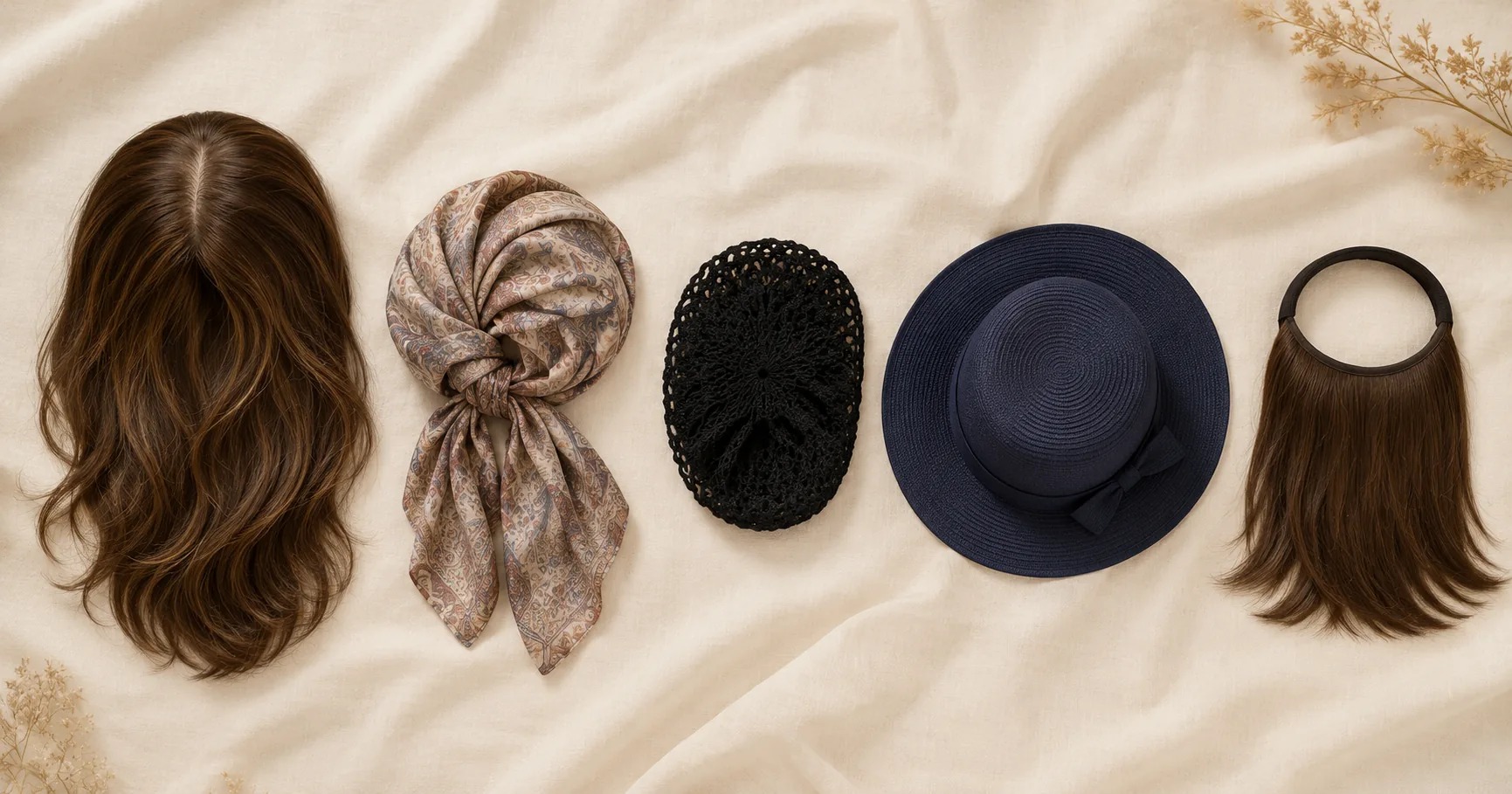
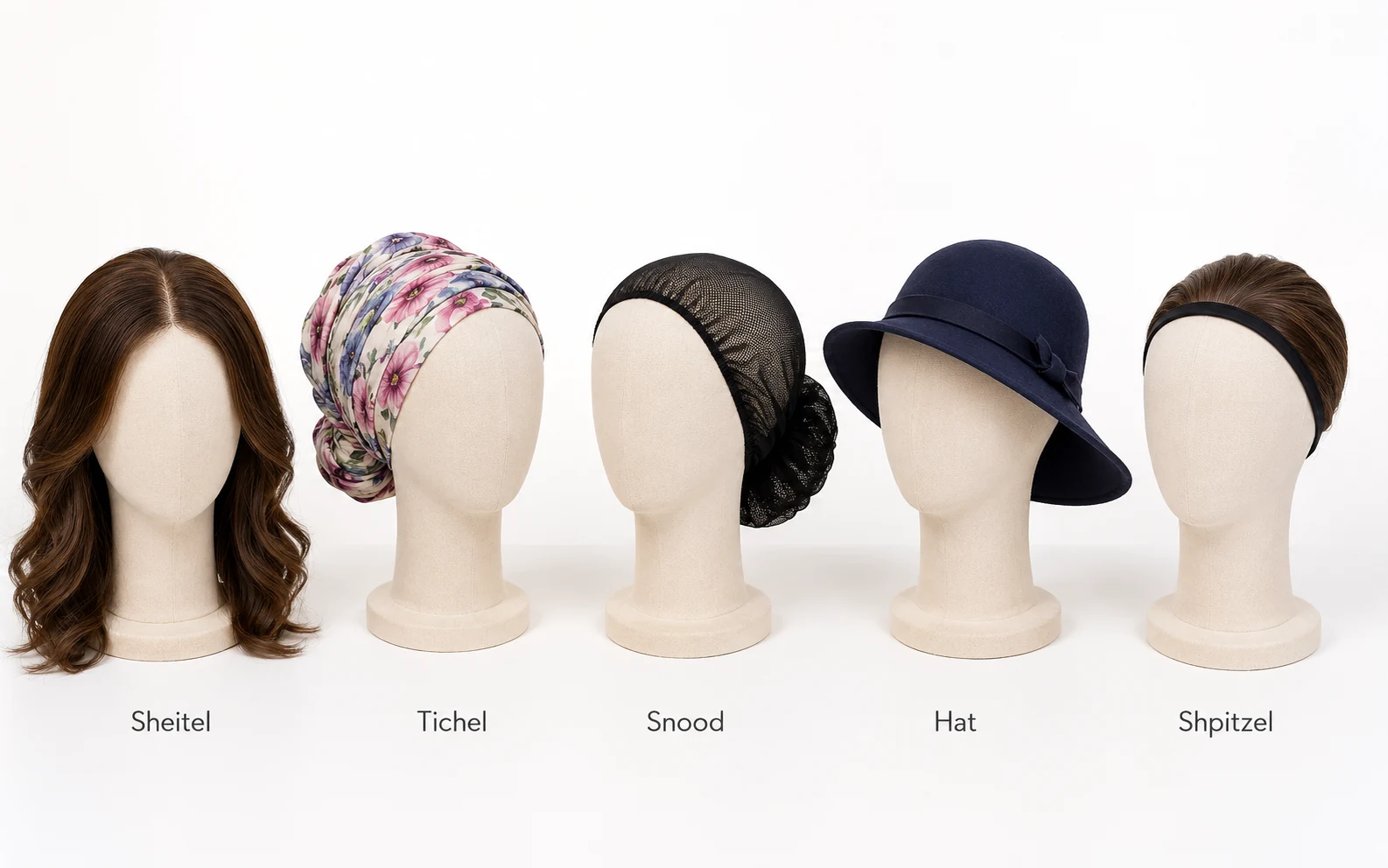
This guide compares six common types of Jewish head covering: the sheitel (a wig), the tichel or mitpachat (a head scarf), the snood, the hat, the shpitzel (a partial hairpiece worn with another covering), and falls (half-wigs). They differ in how much hair they cover and whether they imitate hair or visibly cover it. Which covering a married woman wears follows her own halachic guidance, family and community custom, and practical needs — the terms describe constructions, not a fixed code for observance or community identity.
This guide explains each Jewish head-covering type and gives wholesale buyers a practical fit brief. Product guidance draws from LEV Wigs' Qingdao manufacturing work, including cap construction, materials, layering, and repair considerations. Religious practice varies, so buyers should confirm local custom instead of inferring specifications from a broad label.
Key Takeaways
- Jewish head coverings include sheitels (wigs), tichels (scarves), snoods, hats, shpitzels, and falls
- A shpitzel is a partial hairpiece worn with a scarf, hat, or snood; it is not a full sheitel
- Covering choice reflects halacha, family and community custom, personal preference, and practical needs
- Demand for each format varies by community, climate, budget, and wearer preference
- Retailers should build assortments from a verified fit brief, not from community stereotypes
Religious Foundation
Why Jewish Women Cover Their Hair
The Religious Foundation
In Orthodox Jewish practice, hair covering after marriage is discussed within the laws and customs of tzniut (modesty). The biblical sotah passage and the discussion in Ketubot 72a are commonly cited in later halachic treatment. Berakhot 24a discusses exposed hair in the separate context of reciting sacred words. These sources should not be collapsed into one claim: later authorities distinguish legal obligation, interpretation, and community custom. In most Orthodox communities, the established practice concerns married women, while details of coverage vary.
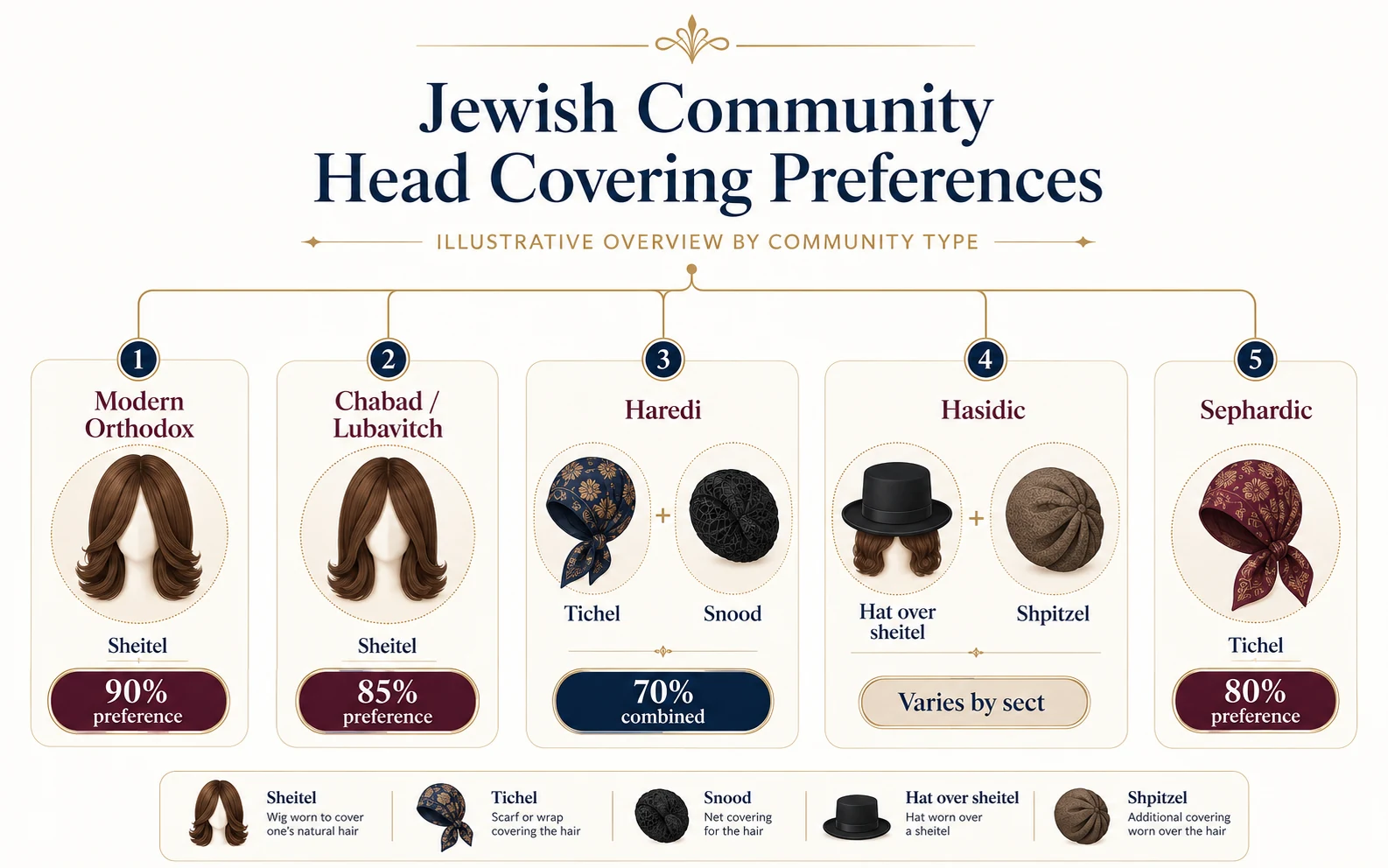
What counts as appropriate coverage differs among authorities, families, and communities. Some Chabad teachings strongly favor a sheitel, while other Orthodox customers choose scarves, snoods, hats, or layered combinations. However, a community name does not determine cap shape, density, or length. Wholesale buyers should document the wearer's coverage standard, whether another covering sits on top, crown-height limits, grip needs, climate, workplace context, and local guidance before recommending a construction.
How Covering Methods Evolved
Historically, Jewish women used simple scarves and veils to cover their hair. The development of sophisticated sheitels is a relatively modern phenomenon, driven by advances in wig-making technology and changing social contexts. In the 20th century, as wigs became more realistic and socially acceptable, sheitels gained popularity — particularly in communities where women wanted to maintain a natural appearance while fulfilling religious obligations.
At our Qingdao factory, retailers increasingly request realistic sheitel constructions, such as lace fronts and silk tops. We also see consistent demand for tichels and snoods from customers who prefer traditional coverings or supplementary layers.
Primary Covering
Sheitel — The Wig
The sheitel (Yiddish for wig) is a common hair-covering option in many Orthodox communities. Made from human hair or synthetic fibers, it can provide full-head coverage and be styled like hair. Its practical appeal is a familiar silhouette, but acceptable length, density, hairline, and realism depend on the wearer's own halachic guidance and community custom.
Construction and Fit
Materials and construction determine sheitel quality. Human-hair and synthetic models behave differently, while machine-made and hand-tied caps differ in movement, ventilation, repairability, and labor. Our Qingdao workshop reviews the cap, parting area, density, length, and hair brief as one specification rather than treating material alone as the quality grade.
Price and service life vary with material, cap construction, processing, wear, maintenance, and repair access. Product tiers should therefore be quoted separately. LEV provides wholesale pricing after reviewing construction, material, length, density, and quantity.
Community guidance can shape whether a sheitel is selected and how it should look. Chabad educational material presents the sheitel as a preferred method, while other Orthodox authorities may favor scarves or set different limits. Retailers should present these as variations and confirm the customer's requirements.
Sheitels are the primary category in LEV's own Jewish-market production mix, not a claim about every retailer. Buyers can test clearly different constructions in a controlled starter assortment, then expand after local sales and fitting feedback identify the strongest combinations.
Versatile Covering
Tichel — The Head Scarf
The tichel (Yiddish, derived from "Tuch" meaning cloth) is a head scarf worn by many Orthodox Jewish women. In Hebrew, it is called a mitpachat — our dedicated mitpachat vs tichel guide compares the two terms, fabrics, and ties in depth. Unlike the sheitel, a tichel does not simulate natural hair. Instead, it creates a distinctive wrapped appearance that clearly signals the wearer's married status and religious commitment.
Tichels are versatile by design. Common approaches include smooth wraps, layered wraps, braided effects, and turban-style folds. Fabrics range from breathable cotton and linen to silk, velvet, and synthetics. The useful wholesale variables are fabric grip, opacity, stretch, size, weight, colorfastness, and whether an under-scarf or volumizing base is required.
The price point for a scarf is generally lower than for a constructed human-hair wig, although fabric, finishing, brand, and accessories change the final retail position. Tichels can support color and seasonal variety without requiring the fitting and repair services associated with wigs.
A tichel creates a visible wrapped silhouette rather than imitating loose hair. It may require wrapping skill and adjustment, while a styled sheitel involves fitting, washing, and repair. The choice depends on the wearer's coverage, appearance, comfort, and maintenance priorities.
Scarf preferences can vary by family background, local fashion, occasion, climate, and wrapping method. Instead of assigning fabrics or colors to a broad ethnic label, wholesalers should collect a local brief: requested dimensions, opacity, texture, grip, seasonal weight, pattern range, under-scarf use, and formal-versus-daily-wear demand. A small fabric and color test is more reliable than a demographic assumption.
Specialty Coverings
Snood, Hat, Shpitzel, and Falls
Snood
A snood is a bag-like covering, typically made of net or fabric, that gathers hair at the back of the head. It may be used alone or as part of a layered approach. Buyers should compare opening size, grip, depth, opacity, seam comfort, and whether the snood must accommodate natural hair, a volumizing base, or a wig.
Hat Over Wig
Hat over sheitel describes a layered system rather than one fixed standard. Depending on the wearer's practice, the hat may cover part or all of the wig. Our Qingdao workshop can adjust cap weight, crown volume, grip, and ventilation for buyers who specify the hat's interior dimensions and the amount of hair intended to remain visible.
Shpitzel
What it is: a shpitzel is a partial hairpiece, usually a narrow band of hair attached to a headband-style base, worn together with a scarf, hat, or snood that covers the rest of the head. It supplies the look of a front hairline while the main covering remains fabric, so only a planned strip of hair is visible.
Versus a full sheitel: a full sheitel is a complete wig that covers the whole head on its own and is fitted, styled, washed, and repaired as a wig. A shpitzel is smaller, lighter, and depends on the covering worn with it. It is not a stricter or looser practice — it is a different construction, and its suitability follows the wearer's own halachic guidance and community custom.
What to confirm when ordering: how much hairpiece stays visible and where the scarf or hat sits; attachment method (headband, combs, clips); fiber type and color match against the covering and any exposed hair; front profile height; and the interior dimensions of the hat or wrap it must fit under.
Because construction and styling vary by local custom, two products both sold as "shpitzels" can behave differently in wear. A sample reviewed against the intended scarf or hat answers more than the label alone. Our dedicated shpitzel head covering guide covers construction and wear in more depth.
Falls (Half-Wigs)
Falls are half-wigs that cover the back and sides of the head but leave the front hairline exposed. Women often pair falls with hats or headbands to create the appearance of hair while concealing the wig's edge. Falls offer a compromise between full sheitels and tichels, providing some natural hair effect without the full commitment of a wig. They are less common today but remain available through specialty manufacturers.
Quick Reference
Fit brief → confirm coverage standard, approved covering methods, visible-hair allowance, layering, cap or scarf dimensions, climate, daily versus formal use, maintenance support, budget, and local guidance.
Head to Head
Head-to-Head Comparison
The table below breaks down each Jewish head covering type across key factors that matter to wholesale buyers and their customers. Use this comparison when deciding which products to prioritize for your target market. For the two most compared options, our sheitel vs tichel comparison works through coverage, cost, and daily-life trade-offs.
| Type | Material | Appearance | Coverage and Layering | Maintenance | Buyer Fit Question |
|---|---|---|---|---|---|
| Sheitel (Wig) | Human hair or synthetic | Excellent | Full-head; may be worn alone or layered | Washing, styling, occasional repair | Which cap, hairline, density, and length are approved? |
| Tichel (Scarf) | Cotton, silk, linen, synthetic | Low (distinctive wrapped look) | Coverage depends on size and wrap method | Low — washing, re-wrapping | What opacity, grip, dimensions, and under-scarf are needed? |
| Snood | Net or fabric | Low | Full or partial, depending on depth and opening | Minimal — washing | Must it fit natural hair, a base, or a sheitel? |
| Hat Over Wig | Wig + hat/beret | Low (wig concealed) | Layered; hat may cover part or all of wig | Wig care + hat cleaning | What crown height and hat dimensions must work together? |
| Shpitzel | Hair on a headband-style base | Low | Partial hairpiece combined with another covering | Minimal | How much hairpiece remains visible and where? |
| Falls (Half-Wig) | Human hair or synthetic | Moderate | Partial; usually paired with a hat or headband | Washing, styling | Which front covering and attachment method complete coverage? |
LEV's production records show that sheitels are the largest category in our own Jewish-market output. Buyers should use that only as a supplier capability signal, then validate their local mix with small opening orders, fitting feedback, sell-through by construction, and requests that could not be fulfilled.
LEV Factory Planning NoteB2B Strategy
What Wholesale Buyers Should Stock
Building the right inventory starts with a documented buyer brief, not a community label. Interview customers and local fitters about approved covering methods, minimum coverage, whether a second covering is used, desired appearance, climate, daily wear, formal wear, service expectations, and budget. Where a question is religious rather than commercial, direct it to qualified local rabbinic guidance.
Start with construction needs. For sheitels, record cap circumference, ear-to-ear and front-to-nape measurements, hairline preference, crown height, density, length, fiber or hair origin, parting area, and repair access. When specifying scarves and snoods, record dimensions, opacity, grip, stretch, depth, fabric weight, and under-scarf compatibility. With partial pieces such as shpitzels and falls, also record the covering they will be worn with.
Test the assortment. Open with a limited matrix of clearly different options instead of many near-duplicates. Track fittings, returns, alteration requests, sell-through by construction, and unfulfilled requests. Those records provide stronger replenishment evidence than assumptions about a neighborhood or denomination.
Separate product guidance from religious guidance. LEV can advise on materials, cap engineering, ventilation, layering, quality control, samples, and customization. The buyer and their local authority remain responsible for deciding whether a specific appearance or covering method meets the customer's practice.
Factory Perspective
At our Qingdao workshop, we use fit briefs and reviewed samples to define cap construction, material, density, length, layering, and service requirements before a buyer scales an assortment.
FAQ
Frequently Asked Questions
A shpitzel is a partial hairpiece, typically a narrow band of hair attached to a headband-style base, worn together with a scarf, hat, or snood that covers the rest of the head. It gives the appearance of a natural front hairline while the main covering remains fabric. Construction and styling vary by local custom, so confirm how much of the piece stays visible before ordering.
No. A full sheitel is a complete wig that covers the whole head on its own and is fitted, styled, washed, and repaired as a wig. A shpitzel is a smaller partial piece that relies on another covering to complete coverage, so fit, attachment, and maintenance differ. Whether either option suits a wearer is decided by her own halachic guidance and community custom, not by the product label.
There is no universal most popular covering across all Orthodox communities. A sheitel is common in many communities, but popularity varies by location, custom, and individual practice. Retailers should confirm local custom, coverage expectations, climate, budget, and wearer preference before setting inventory.
No. Orthodox Jewish women use sheitels, tichels, snoods, hats, and layered combinations. Practice varies by halachic guidance, family and community custom, and personal circumstances. A retailer should avoid treating an Orthodox label as a fixed specification and instead document the customer's required coverage, preferred appearance, comfort needs, and budget.
Some women add a hat over a sheitel because their family or community custom calls for an additional visible covering or greater coverage. The hat may cover part or all of the wig, depending on the practice. For product selection, confirm crown height, cap weight, grip, ventilation, and the hat's interior dimensions.
Decision Guide
Choosing the Right Head Covering Products
For wholesale buyers, the safest strategy is evidence-led. Start with genuinely different constructions and covering methods, then measure fittings, returns, repairs, sell-through, and unmet requests. Expand combinations that solve verified needs rather than assigning one assortment to an entire community.
For sheitel projects, buyers can discuss lace, silk-top, machine-made, and hand-tied sample options with LEV. Tichels, snoods, hats, shpitzels, and falls should be sourced from suppliers whose materials and dimensions match the same documented fit brief.
A verified fit brief can be used to define sample options, custom specifications, and quality-control checkpoints before scaled production.
| Fit Brief Factor | Questions to Ask | Inventory Implication |
|---|---|---|
| Coverage standard | What must be covered, and which methods are approved? | Determines full, partial, scarf, hat, or layered options |
| Appearance | What length, density, hairline, color, and finish are wanted? | Defines sample matrix and customization fields |
| Layering | Will a hat, scarf, snood, or base sit over or under it? | Changes crown volume, grip, weight, and dimensions |
| Wear context | Daily, work, formal, Shabbat, travel, or seasonal use? | Guides durability, ventilation, fabric, and service level |
| Budget and service | What fitting, care, alteration, and repair support is available? | Sets the viable material and construction tier |



Stock the Right Head Covering Products for Your Community
Send LEV a verified fit brief to discuss sample options, construction choices, quality-control checkpoints, and an opening assortment.
Request Wholesale Catalog