Jewish Hair Myths
Do Orthodox Women Shave Their Heads? Facts vs Fiction

Key Takeaways
- Most Orthodox women do NOT shave their heads — this is practiced only by specific Hasidic communities as a custom, not a universal requirement
- Head shaving is a minhag (custom), not halacha (Jewish law) — the Talmud requires hair covering, not removal
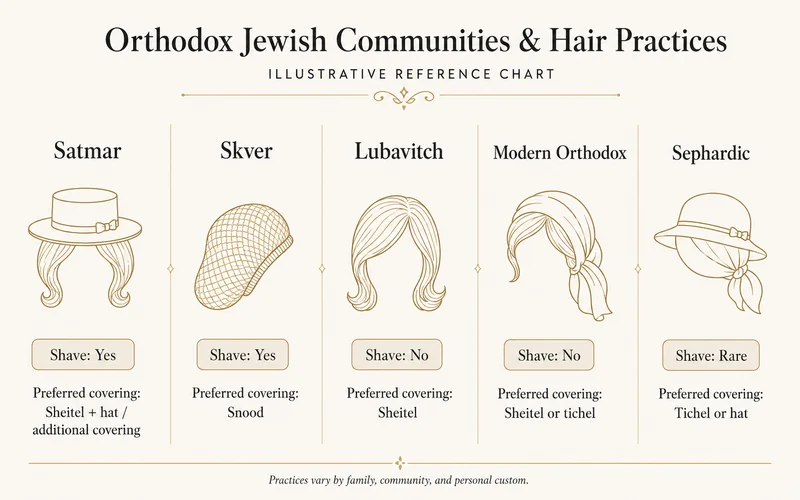
- The custom is documented in some Hasidic communities, including Satmar and Skver, but practice can vary within a community
- Most Orthodox women cover their hair with sheitels (wigs), tichels, snoods, or hats — keeping their natural hair underneath
- For wholesale buyers, understanding this distinction prevents stocking mistakes — different communities need different product types
Consider a common purchasing error: a wholesale buyer assumes all Orthodox women shave their heads and stocks only ultra-light sheitels designed for direct scalp contact. Clients who wear a wig over pinned or braided natural hair may need a different cap depth, grip, and ventilation pattern. The inventory mistake begins with a cultural assumption rather than a verified customer requirement.
Most Orthodox Jewish women do not shave their heads. The practice exists in specific Hasidic communities as a custom (minhag), not a requirement across Orthodox Judaism. For wholesale buyers and salon owners, this distinction affects product selection, customer education, and fit recommendations.
This article explains where the custom exists, why the myth persists, what the relevant Jewish sources say, and how wholesalers can translate cultural context into a better product brief.
The Direct Answer
The Short Answer: No, Most Do Not
No — most Orthodox Jewish women do not shave their heads. This is the most important fact to understand. The practice is not universal. It is not required by Jewish law. It is not the norm across Orthodox communities.
The common halachic framework concerns hair covering after marriage, not hair removal. Actual observance and the degree of covering vary across Orthodox communities. Women may use wigs (sheitels), headscarves (tichels), snoods, hats, or combinations of these coverings. A 2023 Nishma Research community profile also shows substantial variation in reported hair-covering practice across Orthodox subgroups; importantly, that survey measures covering, not shaving.
Wholesale Buyer Note
Stocking only ultra-light sheitels designed for direct-scalp wear limits fit options. Many clients need construction that sits comfortably over natural hair. Carry more than one cap profile and explain the fit requirements each profile serves.
Understanding the Confusion
Where Does the Myth Come From?
The misconception that all Orthodox women shave their heads stems from several sources. None justify the generalization, but together they explain why the myth persists.
Media Portrayal and Visibility Bias
Visible Hasidic communities are overrepresented in media portrayals of Orthodox Judaism. When filmmakers or journalists document Orthodox life, they often focus on distinctive communities like Satmar in Williamsburg or Skver in New Square. These communities happen to practice head shaving. When viewers see these images repeatedly, they form a false impression that the practice represents Orthodox Judaism as a whole.
The Hasidic Exception
The confusion also arises because some Orthodox communities do practice head shaving. Specifically, certain Hasidic groups maintain this custom as a stringency. The practice is real within these communities. The error is extrapolating from the specific to the general.
The custom is documented in some Hasidic communities, including Satmar and Skver. However, practice can vary by congregation, family, and rabbinic guidance. Other Orthodox and Hasidic women keep their natural hair and cover it. Community labels provide context, but they should never be treated as a guarantee about an individual woman's practice.
Source Context
Jew in the City explains that most Orthodox women do not shave their heads. A Forward personal account documents the custom in Satmar and Skver settings while illustrating why individual experience should not be generalized to all Orthodox women.
The practical point is simple: head shaving is a legitimate custom within specific communities, but it does not represent Orthodox women as a whole. Buyers and content creators should describe the practice accurately without turning one community's custom into a universal rule.
Actual Practices
What Orthodox Women Actually Do
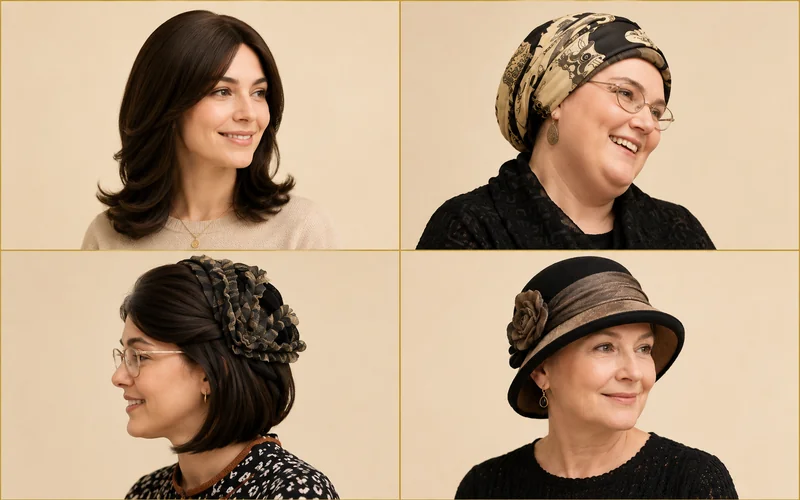
Most Orthodox women keep their natural hair and, when following the practice, cover it after marriage. Covering methods vary by community, personal preference, and occasion. Understanding that variation helps wholesalers ask better fit questions.
Sheitel (Wig)
The sheitel is a common hair-covering option among Orthodox women. A well-made human hair wig can resemble natural hair, allowing a wearer to maintain a conventional appearance while following her community's approach to hair covering. Preferences differ by community, family, workplace, and personal practice.
Sheitels range dramatically in quality and construction. Budget options use synthetic hair or lower-grade human hair. Premium sheitels feature European-cuticle hair, hand-tied caps, and meticulous ventilation. For wholesale buyers, understanding sheitel construction is essential because clients who keep their natural hair need caps with different properties than clients who shave.
Tichel (Headscarf)
Tichels are fabric headscarves tied in various styles. They are popular across the Orthodox spectrum, from Modern Orthodox to Haredi. Some women wear tichels daily. Others reserve them for Shabbat, holidays, or specific occasions. Tichels allow for creative styling and are often more comfortable in hot weather.
Snoods, Hats, and Falls
Snoods (fabric pouches holding the hair) are common in some communities, particularly for casual wear. Hats — from berets to wide-brimmed styles — serve as both religious covering and fashion accessory. Hair falls (half-wigs that blend with natural hair) offer a compromise between full wig and uncovered hair.
Hair covering is not one-size-fits-all. Women within the same community may make different choices based on practice, comfort, and occasion. Successful wholesalers verify requirements instead of relying on labels.
| Buyer Question | Why It Matters | Product Guidance |
|---|---|---|
| Will the cap sit over pinned or braided natural hair? | Hair underneath changes cap depth, friction, and heat management. | Confirm depth, stretch, grip, and ventilation before ordering. |
| Will the cap sit directly on the scalp? | Direct contact changes comfort and base-material requirements. | Prioritize soft seams, secure fit, and a comfortable interior finish. |
| What coverage and style does the buyer request? | Community norms do not replace an individual specification. | Record length, density, hairline, parting, and coverage requirements. |
| Has the retailer verified local guidance? | Practice varies within labels such as Hasidic, Yeshivish, and Modern Orthodox. | Use community knowledge as context, then confirm the actual customer brief. |
Practical Tip
When stocking sheitels for communities that don't shave, prioritize breathable caps and comfortable construction. Clients with natural hair need ventilation and cap designs that prevent tangling with their own hair.
Religious Sources
What Jewish Law Actually Says
Jewish legal sources address hair covering; they do not mandate head shaving. The distinction matters because local custom and the underlying legal discussion are not the same thing.
The primary hair-covering source: Ketubot 72a discusses a married woman going out with her head uncovered and derives a hair-covering obligation from the biblical sotah passage. The text addresses covering; it does not command shaving.
A related ervah discussion: Berakhot 24a contains the separate statement that a woman's hair is ervah in a discussion about reciting the Shema. Conflating these two passages creates an inaccurate citation. Neither passage states that Orthodox women must shave their heads.
Halacha vs. minhag: Halacha refers to Jewish law, while minhag refers to community custom. Head shaving is a minhag practiced in some communities, not a universal halachic requirement. The exact covering standard and its application are matters for the woman, her community, and her rabbinic guidance.
Verification in practice: For wholesalers and retailers, the commercial implication is simple: do not assume. Ask whether the cap will sit over natural hair or directly on the scalp, then confirm the required depth, grip, ventilation, base material, length, and density. Religious decisions should be referred to the buyer's own rabbinic authority.
Editorial Boundary
This article explains documented customs and product-fit implications. It is not a personal halachic ruling. Individual readers should follow their own community practice and consult a qualified rabbinic authority when they need religious guidance.
Wholesale Insights
Why This Matters for Wholesale Buyers
Understanding Orthodox hair practices directly impacts your wholesale business. Assumptions cost sales. Education builds trust. Inventory aligned with real community needs drives repeat orders.
At our Qingdao workshop, we do not infer cap construction from a community label alone. We ask retail partners whether the cap will sit over pinned or braided natural hair or directly on the scalp, then confirm cap depth, stretch, grip, seam finish, base material, and ventilation. Those inputs affect fit and comfort, so they belong in the product brief before sampling or bulk production.
Avoid Lost Sales
A retailer who stocks only one cap profile may lose orders from customers with different fit requirements. The preventable mistake is treating a cultural label as a technical specification. Carrying more than one cap construction is useful only when the retailer can explain who each construction is designed to fit.
Stock for Diversity
Build inventory around verified fit profiles rather than stereotypes. Stock lightweight, soft-interior caps for direct-scalp wear where buyers request them. Also stock breathable caps with appropriate depth and grip for customers wearing a sheitel over natural hair. Tichels, snoods, and hats may serve buyers who prefer alternatives or rotate between covering methods.
Diversify your cap constructions: Hand-tied mono tops, silk tops, lace fronts, and full lace caps each serve different preferences and budgets. Diversify your hair types: European-cuticle hair for premium buyers, blended hair for mid-tier customers, synthetic options for budget clients. The Orthodox market is not monolithic, and your inventory should not be either.
Educate Your Buyers
Position yourself as a resource, not just a vendor. Explain which fit requirements each cap construction serves, and provide spec sheets covering depth, stretch, grip, base material, ventilation, and suitable use cases.
Factory-Direct Advantage
LEV Wigs develops sheitel cap constructions for retailers serving varied Orthodox markets. Contact our Qingdao team for samples and wholesale pricing based on the fit profiles in your customer brief.
The Opportunity
The Orthodox wig market includes buyers with different community practices, fit needs, budgets, and style requirements. A stronger wholesale process records those requirements before production and keeps cultural context separate from the technical product brief. That approach supports accurate samples, clearer communication, and fewer avoidable fit problems.
FAQ
Frequently Asked Questions
No, most Orthodox Jewish women do not shave their heads. The majority cover their hair with wigs (sheitel), tichels, snoods, or hats. Head shaving is practiced only by certain Hasidic communities as a stringency (minhag), not as a universal requirement across Orthodox Judaism.
The custom is documented in some Hasidic communities, including Satmar and Skver. Practice can vary by congregation, family, and rabbinic guidance, so community labels should not be treated as a guarantee about an individual woman. Many other Orthodox and Hasidic women keep their natural hair and cover it.
No. Ketubot 72a discusses a married woman's uncovered head as a hair-covering issue; it does not command shaving. Berakhot 24a contains the separate statement that a woman's hair is ervah in the context of reciting the Shema. Head shaving is a community custom for some groups, not a universal halachic requirement.
Most Orthodox women who observe this practice cover their hair after marriage using a sheitel, tichel, snood, hat, or a combination. A sheitel is a common option, not the only one. The degree and method of covering vary by community, personal practice, occasion, and rabbinic guidance.
The myth persists because media often focus on visibly distinctive Hasidic communities, including communities where head shaving is practiced. Repeated portrayals can make a limited custom look universal. Broader Orthodox practice is more varied, and an individual's covering choice should not be inferred from clothing, neighborhood, or community label alone.
Conclusion
The Truth About Orthodox Hair Practices
The assumption that all Orthodox women shave their heads is a myth. The reality is far more nuanced. Most Orthodox women keep their natural hair and cover it with sheitels, tichels, snoods, or hats. Only specific Hasidic communities practice head shaving as a custom, not as a religious requirement.
For wholesale buyers and retailers, this distinction matters. Assumptions lead to lost sales and frustrated clients. Understanding leads to better inventory, smarter stocking, and stronger customer relationships. The Orthodox market rewards expertise and punishes stereotypes.
| Myth vs. Fact | Common Myth | Actual Fact |
|---|---|---|
| Prevalence | All Orthodox women shave their heads | Only some Hasidic communities practice this |
| Legal Basis | Required by Jewish law | It is a custom (minhag), not law (halacha) |
| Universal Practice | Standard across all Orthodox communities | Varies by community and personal choice |
| Product Needs | All need ultra-light wigs | Different communities need different cap types |
LEV Wigs manufactures sheitels for every Orthodox community at our Qingdao factory. We understand the differences because we build them daily. Whether you need ultra-light caps for Satmar clients or comfortable breathable caps for Modern Orthodox women keeping their natural hair, we produce both with consistent quality standards.
Contact our team to request samples, spec sheets, current production lead times, and wholesale pricing tailored to your market. Confirm cap-fit requirements in the sampling brief so the production team can recommend a suitable construction before a bulk order.


Source Sheitels for Every Orthodox Community
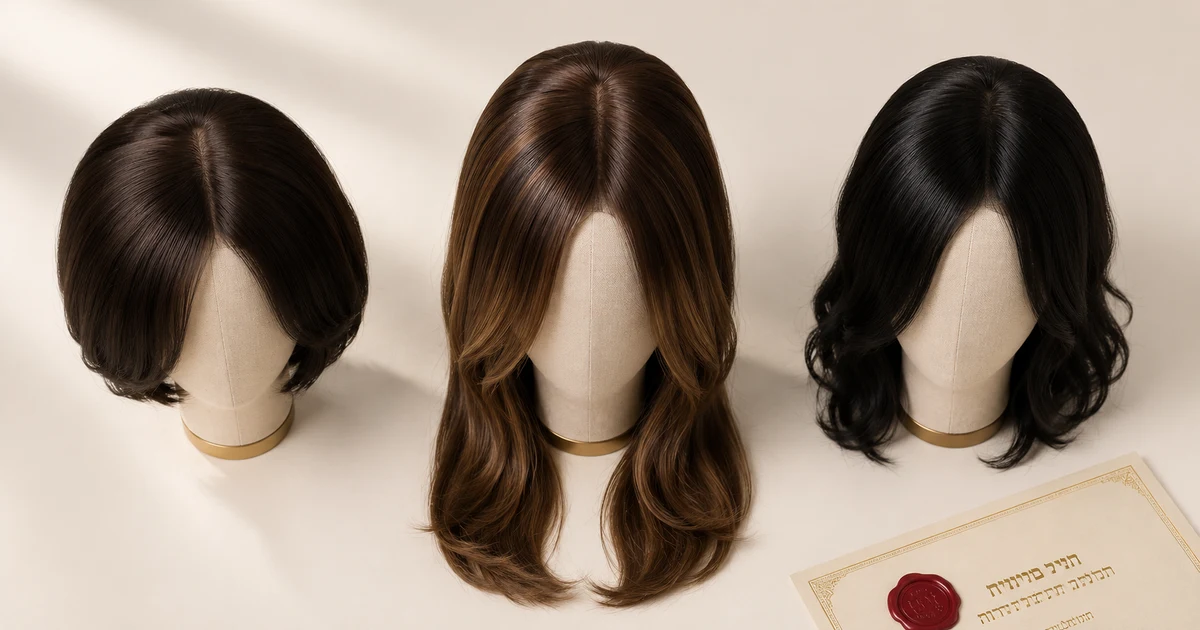
From ultra-light caps for Satmar clients to comfortable construction for Modern Orthodox women, we manufacture sheitels for every community at our Qingdao factory.
Request Wholesale Pricing