Sheitel Comparison
Lace Front vs Lace Top Sheitels: Complete Comparison Guide
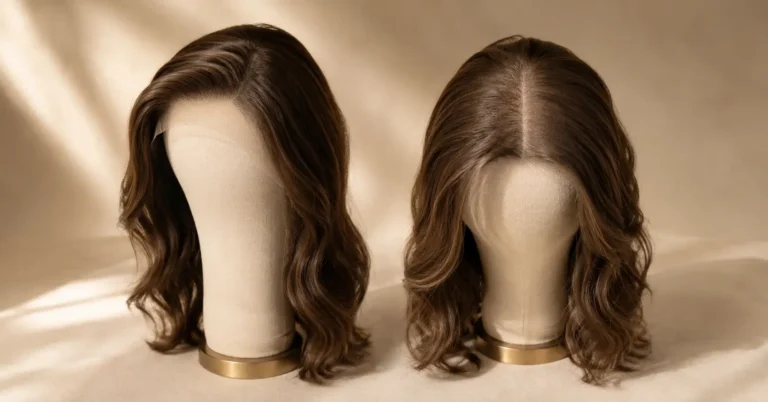
Last quarter, a sheitel store owner from Flatbush called us with a question we hear weekly from wholesale buyers: lace front vs lace top sheitel — which should she stock? She had been ordering only lace fronts for three years. Her customers kept asking for "the one with the natural parting," which could mean either construction. She wasn't sure what the actual difference was, and honestly, neither were half the salon owners we talk to.
At our Qingdao factory, we manufacture both types daily. The differences are real, measurable, and they matter differently depending on who your end client is. This comparison comes directly from our production floor — not from marketing materials, but from the physical construction, materials, and client feedback we've tracked across 800-plus wholesale orders in the past two years.
What follows is a straightforward breakdown: how each cap is built, how they differ in comfort, styling, and durability, and which one makes sense for different types of clients. For deeper background on cap constructions, see our complete guide to lace top sheitels.
Cap Construction
The Core Difference: Where the Lace Sits
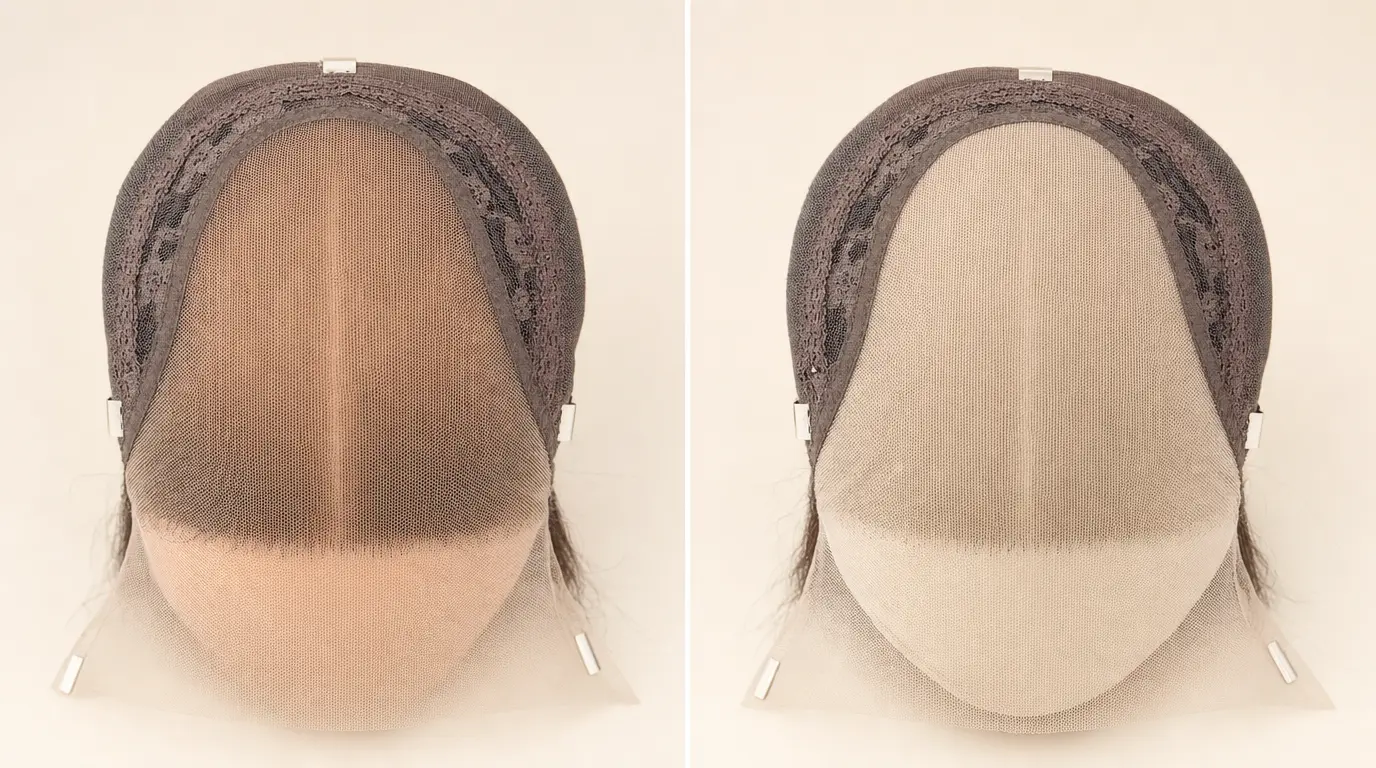
The naming tells you most of what you need to know, but the details catch people off guard. A lace front sheitel has a strip of lace mesh across the front hairline — typically 2 to 4 inches deep. Only this front zone is hand-tied strand by strand, which is the essence of lace front sheitel construction. The rest of the cap (crown, sides, nape) uses machine-sewn wefts or, on premium models, a full hand-tied base. The lace exists to create one thing: a realistic hairline.
A lace top sheitel extends that lace mesh across the entire top of the cap — from the front hairline all the way back to the crown. Every strand on the top surface is hand-tied through lace. You can part the hair anywhere on top and see what looks like scalp underneath. The sides and back still use wefted or hand-tied construction, but the visible top is entirely lace-based.
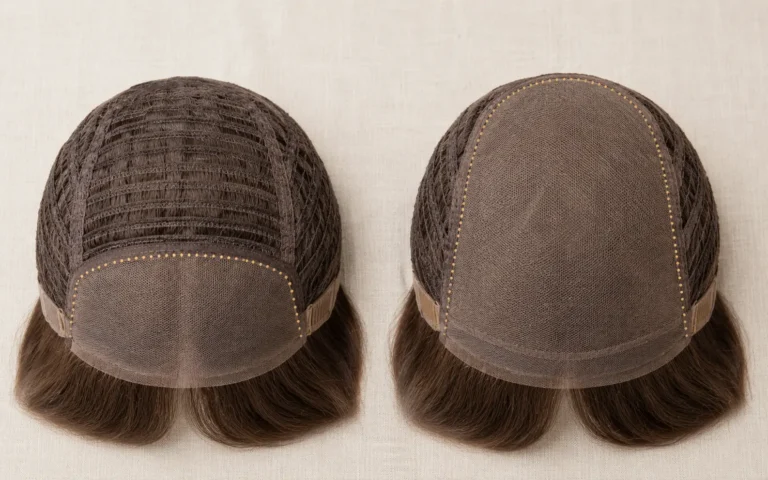
Side-by-Side Comparison
| Feature | Lace Front Sheitel | Lace Top Sheitel |
|---|---|---|
| Lace coverage | Front hairline only (2–4 inches) | Entire top of cap to crown |
| Parting flexibility | Hairline area only | Anywhere on top — freestyle |
| Hairline realism | Optimized — full focus on front | Excellent — but spread over larger area |
| Breathability | Moderate (wefted back allows airflow) | High (lace breathes across top) |
| Weight on head | Lighter (less hand-tied area) | Slightly heavier (dense hand-tied top) |
| Daily wear lifespan | 12–18 months (Swiss lace) | 14–20 months (Swiss lace) |
| Wholesale price tier | Lower — less labor per unit | Premium — 40+ hours hand-tying |
| Best for | Budget-conscious, first-time buyers | Versatility-focused, experienced wearers |
One common misconception worth clearing up: neither construction is "better" than the other. They solve different problems. Lace front gives you the most hairline realism per dollar. Lace top gives you the most styling flexibility per unit. Your job as a retailer is matching the construction to the client's priorities — and now you can explain why.
Wear Experience
Comfort and Breathability: How Each Feels After Eight Hours
Construction specs matter on paper, but your clients care about one thing: how does it feel on my head from morning to night? As a manufacturer producing both constructions daily at our Qingdao workshop, we've gathered feedback from dozens of salon partners, and the comfort differences are consistent.
Lace Top: Cooler, but Noticeable
Because lace mesh covers the entire top of the cap, air circulates more freely across the scalp. For clients in warm climates — Israel, Florida, summer in New York — this is a meaningful advantage. The trade-off is that some wearers feel the lace texture more acutely, especially in the first two weeks of breaking in a new unit. The hand-tied knots create a slight unevenness across the top that you don't notice once the cap settles, but it can feel strange initially.
Lace Front: Lighter Overall
With less hand-tied area, lace front sheitels weigh slightly less — typically 20 to 40 grams difference on an 18-inch unit. That doesn't sound like much, but after a full day of wear, clients with sensitivity around the temples notice it. The wefted or machine-sewn back section sits flatter against the head, which some wearers prefer for sleeping (those who don't remove their sheitel at night).
In practice, the comfort winner depends on your client's specific sensitivity. If she runs hot and prioritizes airflow, lace top wins. If she wants the lightest possible cap and doesn't mind slightly less breathability, lace front takes it. We recommend ordering samples of both and letting your clients feel the difference themselves — we send free construction swatches to wholesale partners for exactly this purpose.
My clients in Tel Aviv overwhelmingly prefer lace top for the airflow. My Brooklyn clients? They lean lace front for the lighter weight. The product isn't better or worse — it's about matching the climate and the customer.
Sheitel Salon Owner, with locations in Brooklyn and Tel AvivStyling
Styling Versatility: Parting, Updos, and Daily Wear
This is where the two constructions diverge most visibly, and it's the section your clients will care about most when choosing between them. Our factory produces both types in equal volume, so we see firsthand which styling features drive reorders.
Parting: The Biggest Difference
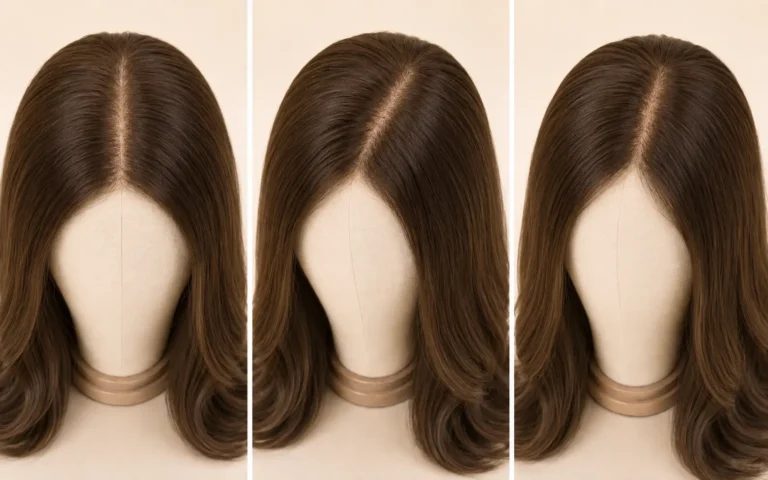
Lace front sheitels create a convincing part only at the front hairline — the area covered by the lace strip. Move the part further back, and you hit the transition zone where lace meets wefted tracks. At that point, the part looks like hair sitting on fabric, not hair growing from scalp. Clients who wear their hair parted at the front with the rest pulled back or straight down won't notice this limitation.
Lace top sheitels allow parting anywhere on the top surface — center, side, zigzag, whatever the stylist creates. Because the lace extends all the way to the crown, every exposed part shows the same scalp-like appearance. For clients who change their part frequently or want to switch between styles, this flexibility is the deciding factor. Our lace top sheitel styling guide covers specific techniques.
Updos and Pulled-Back Styles
Both constructions handle updos, but with different caveats. Lace front sheitels can be pulled into a ponytail or low bun without exposing the cap transition — as long as the style doesn't lift the front hairline too high. A high ponytail risks revealing the edge where lace meets wefts. Lace top sheitels handle high styles more convincingly because the lace coverage extends further back, so there's no visible transition line to hide.
For clients who wear their hair down 90% of the time, lace front covers their needs completely. For clients who alternate between down, half-up, and full-up styles, lace top provides more creative range. As a retailer, knowing how your client styles her hair on a typical Tuesday is more useful than any spec sheet.
Longevity
Durability and Lifespan: What Our Factory Data Shows
We track return rates and lifespan reports across all our wholesale orders. After two years of data, the patterns are clear — and they might surprise you.
Lace front sheitels average 12 to 18 months of daily wear with Swiss lace construction. The most common failure point is the front lace edge — after months of adhesive application, removal, and tension from styling, the lace along the hairline begins to fray. Units that are removed nightly last longer than units worn continuously, because the adhesive cycle is gentler. With French lace, expect 2 to 3 months less.
Lace top sheitels average 14 to 20 months with identical Swiss lace and hair quality. The longer lifespan comes down to one factor: tension distribution. On a lace front, all the pulling stress concentrates on that 2 to 4 inch strip. On a lace top, the stress is distributed across a much larger lace area, so no single section wears out as quickly.
That said, lace top sheitels have their own weak point: shedding at the crown. Because clients part and brush the crown area most aggressively, the knots there experience more friction. Our solution — and this is standard on all LEV lace top units — is double-knotting the crown section during ventilation. It adds 4 hours per cap but reduces crown shedding by roughly 60%.
Maintenance plays a bigger role than construction type. A lace front that's washed properly every 12 to 15 wears will outlast a lace top that's neglected. For care specifics, our lace top sheitel washing guide applies to both constructions — the washing technique is identical.
Halacha
Halacha Considerations for Retailers
Both lace front and lace top sheitels are widely worn across Orthodox Jewish communities worldwide. From a manufacturing standpoint, both constructions use the same hair sources and cap materials — the difference is purely structural (where the lace sits on the cap).
Some rabbonim express preferences based on coverage and whether the cap material meets communal standards for hair covering. These standards vary by community, and we've seen identical sheitels accepted in one community and questioned in another. The construction type (lace front vs lace top) is rarely the deciding factor — it's the overall coverage, hair density, and how the sheitel sits on the head that matters halachically.
As a manufacturer, we don't issue halachic rulings. If your clients have specific concerns about whether a particular construction meets their community's standards, we encourage them to consult their local Rav. We're happy to provide detailed construction specifications and material information to share with their posek. For a broader halacha overview, see our lace top wigs and halacha guide.
FAQ
Frequently Asked Questions
Lace front sheitels typically cost 15 to 25% less per unit than lace top sheitels at comparable hair quality. The price difference comes from labor — hand-tying the entire top cap takes 40-plus hours versus 12 to 16 hours for a lace front strip. For budget-conscious stockists, lace fronts offer a lower entry point without sacrificing hairline realism.
Yes. A well-constructed lace front sheitel with Swiss lace and sealed knots handles daily wear for 12 to 18 months. The key is the material behind the lace — a wefted back breathes adequately for most climates, while a hand-tied back adds comfort in humid environments. Clients in warmer areas often prefer lace top for its superior airflow.
For most first-time sheitel buyers, a lace front sheitel is the practical starting choice — lower cost, easier fitting, and a natural-looking hairline that builds confidence. Once a client understands her preferences for parting and daily comfort, she may upgrade to a lace top. Stocking both lets you serve new and experienced wearers.
Slightly more, yes. Because the entire lace top is hand-tied, more knots are exposed to washing and styling friction. We recommend washing every 10 to 12 wears for lace top versus 12 to 15 for lace front. Both benefit from sulfate-free products and air drying on a canvas block. Detailed care instructions ship with every LEV order.
Conclusion
Choosing the Right Sheitel Construction for Your Clients
Both lace front and lace top sheitels have clear, distinct strengths. Rather than declaring a winner, here's a practical decision framework we share with our wholesale partners:
- Daily wear, fixed front part, budget priority — Lace front. The most natural hairline per dollar, lighter on the head, and easier for first-time sheitel wearers to manage.
- Daily wear, multiple parting styles, warmth sensitivity — Lace top. Superior airflow, freestyle parting anywhere on top, and distributed tension for longer lifespan.
- Special occasions and Shabbat only — Lace front. The lower price point makes sense for a unit worn once or twice a week, and the hairline realism shines in event settings.
- Client who changes styles frequently — Lace top. Maximum styling versatility justifies the premium for clients who want to switch between center parts, side parts, and updos.
Our recommendation to wholesale buyers: stock both. Your clientele isn't monolithic, and carrying both constructions lets you match the right sheitel to each client's needs. For more details on lace front sourcing specifically, see our lace front sheitels buyer's guide.
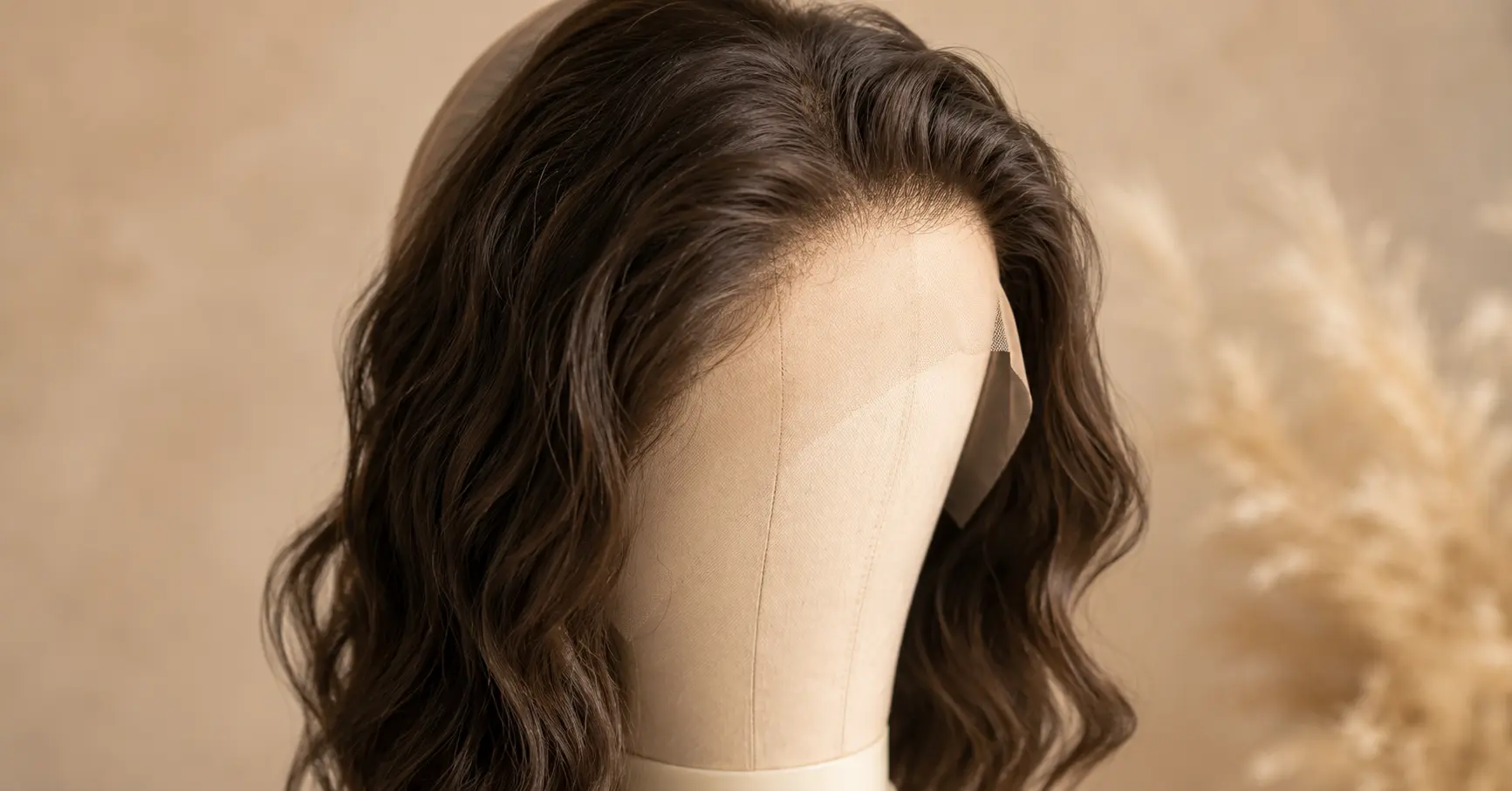
Need Help Choosing What to Stock?
LEV Wigs manufactures both lace front and lace top sheitels in Qingdao. We'll help you build a wholesale assortment that matches your clientele — Swiss lace, European hair, and custom options available. MOQ as low as 5 units for trial orders.
Request Wholesale Pricing