Salon Guide
Hair Topper for Thinning Crown: 2026 Salon Fit Guide
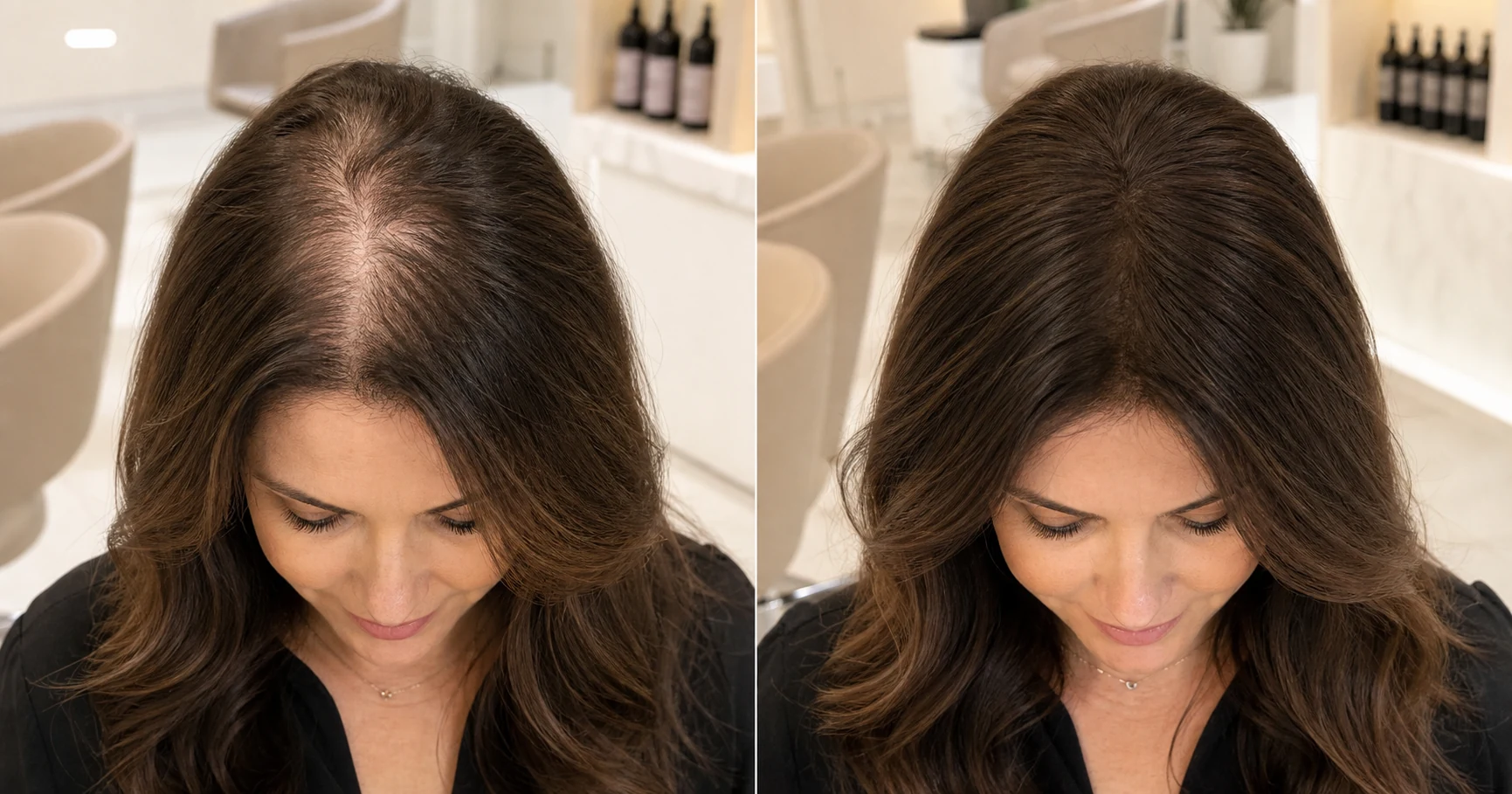
Your client parts her hair in the mirror and freezes. There's a patch at the crown — small now, but unmistakable. She's not ready for a full wig. She wants coverage that looks like her own hair, feels light enough to forget, and doesn't require shaving her head. A hair topper for thinning crown is exactly what she's asking for, even if she doesn't know the name yet.
Why Crown Thinning Matters
Crown thinning is the most common pattern of hair loss in women over forty, and it's the entry point for most first-time topper buyers. As a salon owner or wholesale buyer, understanding how to measure, select, and fit these pieces separates you from competitors who simply hand clients a catalog and hope for the best.
We've been manufacturing crown toppers at our Qingdao workshop for over a decade. The mistakes we see from wholesale partners haven't changed much — wrong base size, wrong density, wrong attachment method. This guide addresses each one. You'll learn how to assess crown thinning severity, choose the right construction, and help clients wear their topper with confidence. If your team is still defining the category, start with our wholesale hair topper guide before comparing base options.
The Problem
Understanding Crown Thinning and Why Clients Seek Toppers
The Psychology of Crown Hair Loss
Crown thinning terrifies clients because it's the one angle they can't control. They see it in bathroom mirrors, in car sun visors, in overhead photos. Unlike temple recession, which can be masked with styling tricks, crown loss sits right where gravity draws the eye. Consequently, clients often delay seeking help until the thinning is advanced. By the time they sit in your chair, they've usually spent months — sometimes years — trying to hide it.
Common Causes
Androgenic alopecia accounts for the majority of crown thinning cases we encounter in reorders. It presents as a gradual widening of the part or a circular area of reduced density at the vertex. Postpartum shedding creates a more diffuse pattern across the entire top, though the crown typically shows it first. Traction damage from tight ponytails, braids, or extensions can also thin the crown specifically, especially along the center part line.
Age-related thinning is different from hormonal loss. After menopause, hair follicles shrink uniformly, producing finer strands across the scalp. A client with hormonal crown thinning might still have thick perimeter hair. A client with age-related thinning has less anchor hair everywhere, which affects attachment options.
How to Assess Severity
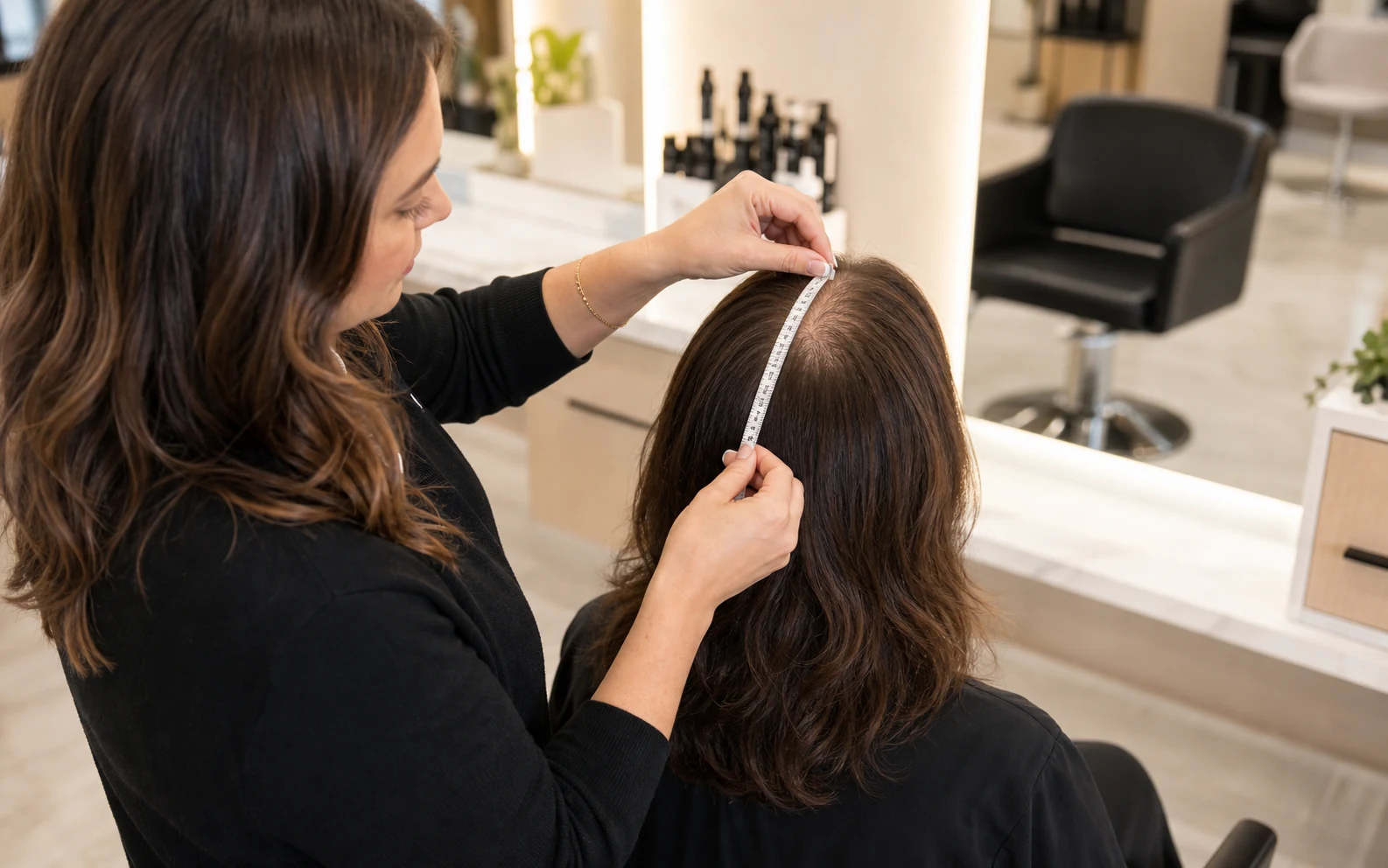
Grab a tail comb and a hand mirror. Have the client bend forward slightly so the crown is visible. Measure the longest and widest points of the thinning area, then add half an inch on each side for blending. A patch smaller than 3 by 3 inches qualifies as early stage. Between 3 by 3 and 5 by 5 inches is moderate. Anything larger suggests diffuse thinning that may need a bigger piece or a full wig.
Don't rely on eyeballing it. One of our Chicago wholesale partners used to estimate base sizes visually. Their return rate was 22%. Once they started measuring every client with a soft tape, returns dropped to 6%. Numbers don't lie.
Selection Guide
Choosing the Right Hair Topper for Crown Coverage
Measuring the Thinning Area
Accuracy here saves you from returns. Use a flexible measuring tape — not a ruler, not a comb, not your fingers. Measure from the front hairline to the back of the crown, then across the widest part of the thinning zone. Write both numbers down. Then add half an inch to each measurement. That extra margin is what allows the topper to blend into healthy hair instead of sitting like a hat on top of it.
For example, a client with a 3 by 4 inch thinning area needs a 3.5 by 4.5 inch base at minimum. Most wholesale buyers round up to the nearest standard size — in this case, 4 by 5 inches. That's fine. Rounding down is where problems start.
Base Construction for Crown Toppers
Silk top remains the gold standard for crown coverage. The layered construction hides every knot, so the part looks like it's growing from real scalp. For clients who part their hair frequently or change part direction, silk top is worth the premium. Monofilament is the practical alternative. It's more breathable, more durable, and allows multi-directional parting at a lower price point. Lace bases work for crown coverage too, but they're fragile. We generally don't recommend full lace for crown-only pieces unless the client lives in a hot climate and prioritizes breathability over longevity. For a deeper material comparison, see our silk top vs lace top topper guide.
Density and Length Matching
Crown toppers look unnatural when the density is wrong. Too sparse, and the piece fails to cover the thinning. Too dense, and it creates a suspicious bump where the topper meets bio hair. 130% density is the industry sweet spot for most clients. It provides enough coverage without looking artificial.
Length matching is simpler than most buyers think. The topper should blend with the client's current length, not the length she wishes she had. A client with shoulder-length hair who orders an 18-inch topper will have obvious layering problems. Match the existing length, or plan for a trim.
Color Blending Strategies
Always match the mid-lengths and ends, not the roots. The topper sits on top of the head and blends downward. If the roots are slightly darker than the topper, it looks like natural grow-out. If the ends are lighter than the topper, it looks like a mismatched extension. Furthermore, clients with highlights need dimensional color — not a flat shade. Our factory offers blended colors with two to three tones woven together, which camouflages far better than single-process shades.
Fitting and Care
Helping Clients Wear and Maintain a Crown Topper
Secure Attachment Techniques
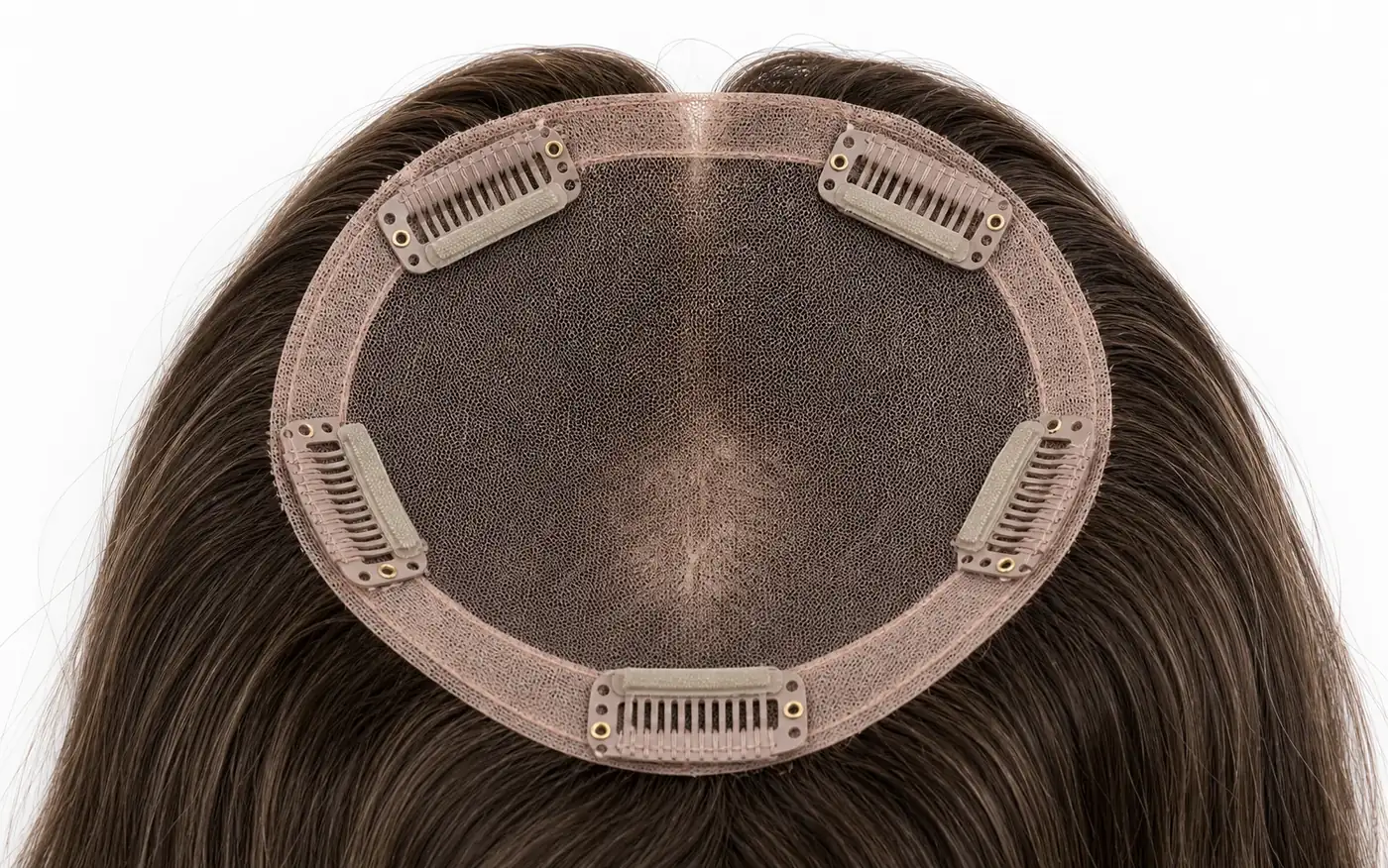
Clip placement determines comfort. For crown pieces, position the front clips about half an inch back from the hairline and the rear clips at the occipital bone. This creates a triangle of support that distributes tension evenly. If all four clips sit in a straight line across the crown, the client gets headaches by mid-afternoon.
For clients with fragile anchor hair, silicone-lined clips grip better with less pressure. Tape-in methods work well for active clients but require reapplication every two to three weeks. We've also seen growing demand for integration toppers — pieces with holes throughout the base that allow the client's natural hair to be pulled through and blended. They take longer to install but eliminate clip-related tension entirely.
Daily Styling for Natural Blend
The part line is where most crown toppers fail the realism test. Teach clients to align the topper's part with their natural part before securing the clips. A misaligned part creates a double-line effect that's visible from across the room. Root shadowing helps too. If the topper has slightly darker roots than the client's bio hair, it reads as natural regrowth rather than a seam.
For texture matching, clients can curl or straighten human hair toppers to match their bio hair. Synthetic pieces can't tolerate heat unless they're specifically labeled heat-friendly. Always check the fiber specs before recommending styling tools.
Maintenance Schedule
Crown toppers need washing every seven to ten wears — not because they're dirty, but because scalp oils accumulate at the base and attract dust. Use sulfate-free shampoo and lukewarm water. Hot water opens the cuticle and accelerates tangling. Air drying on a mannequin head preserves the shape better than blow-drying, especially for synthetic fibers.
Storage matters more than most clients realize. A silk bag or a standing mannequin head prevents the base from creasing. Tossing a topper into a drawer destroys the construction within weeks. We include care cards with every wholesale order because educated clients are returning clients. Salons that want a higher scalp-realism option can also review our silk top hair topper buying notes before ordering samples.
Common Mistakes Salon Owners Make with Crown Toppers
Recommending a base that's too small is the most expensive error. The client sees the edges of the thinning area peeking out around the topper and assumes the product is defective. It's not. The base was simply undersized. When in doubt, size up by half an inch. A slightly larger base can be camouflaged with styling. A too-small base cannot.
Ignoring the client's lifestyle is another frequent oversight. A yoga instructor who inverts daily needs a more secure attachment than a retired teacher who spends most of her time seated. If you sell a clip-in piece to an active client without mentioning tape or band options, you're setting her up for a mid-workout disaster.
Forgetting to teach removal technique creates long-term problems. Clients who rip clips out damage their anchor hair, which leads to more thinning, which creates a cycle of dependency. Show them how to open the clip fully before sliding it out. It takes thirty seconds to demonstrate and prevents months of traction-related hair loss.
FAQ
Frequently Asked Questions
What is the best base size for crown thinning?
Measure the thinning area and add half an inch to each side before choosing a base. For moderate crown thinning, a 5 by 5 inch topper usually covers the visible gap without bulk. Early-stage thinning can start at 4 by 4 inches, while larger patterns often need 6 by 6 inches.
Will clips damage already thin crown hair?
They can if used incorrectly. Silicone-lined clips distribute pressure better than metal ones. Teach clients to place clips in slightly different positions each day rather than gripping the exact same strands repeatedly. Integration toppers eliminate clips entirely for the most fragile cases.
How often should clients wash a crown topper?
Wash a crown topper every seven to ten wears, or sooner if the client uses heavy styling product. More frequent washing shortens lifespan. Less frequent washing allows oil buildup that weakens the base material. Use sulfate-free shampoo, cool to lukewarm water, and air drying on a stand.
Can clients exercise or swim with a crown topper?
Exercise is fine when the topper is secured with properly placed clips or tape. Swimming is not recommended because chlorine and salt water damage human hair, synthetic fibers, and base materials. If a client insists, require a swim cap and immediate rinsing afterward.
How do I know if a client needs a topper or a full wig?
Assess anchor hair. If the sides and back are thick enough to support clips or tape, a topper works. If thinning has reached the temples and nape, or if the client has total hair loss, a full wig is the more practical choice. Don't force a topper onto insufficient anchor hair.
Conclusion
Crown thinning is where most women first acknowledge they need help. The right topper, fitted correctly, doesn't just cover a bald spot. It restores the client's ability to move through her day without thinking about her hair. For salon owners, this translates into loyalty. A client who trusts you with her first topper will trust you with color services, maintenance products, and referrals.
The fitting process matters as much as the product itself. Measure accurately. Choose construction based on lifestyle, not just price. Teach attachment and removal. These small details separate professionals from order-takers.
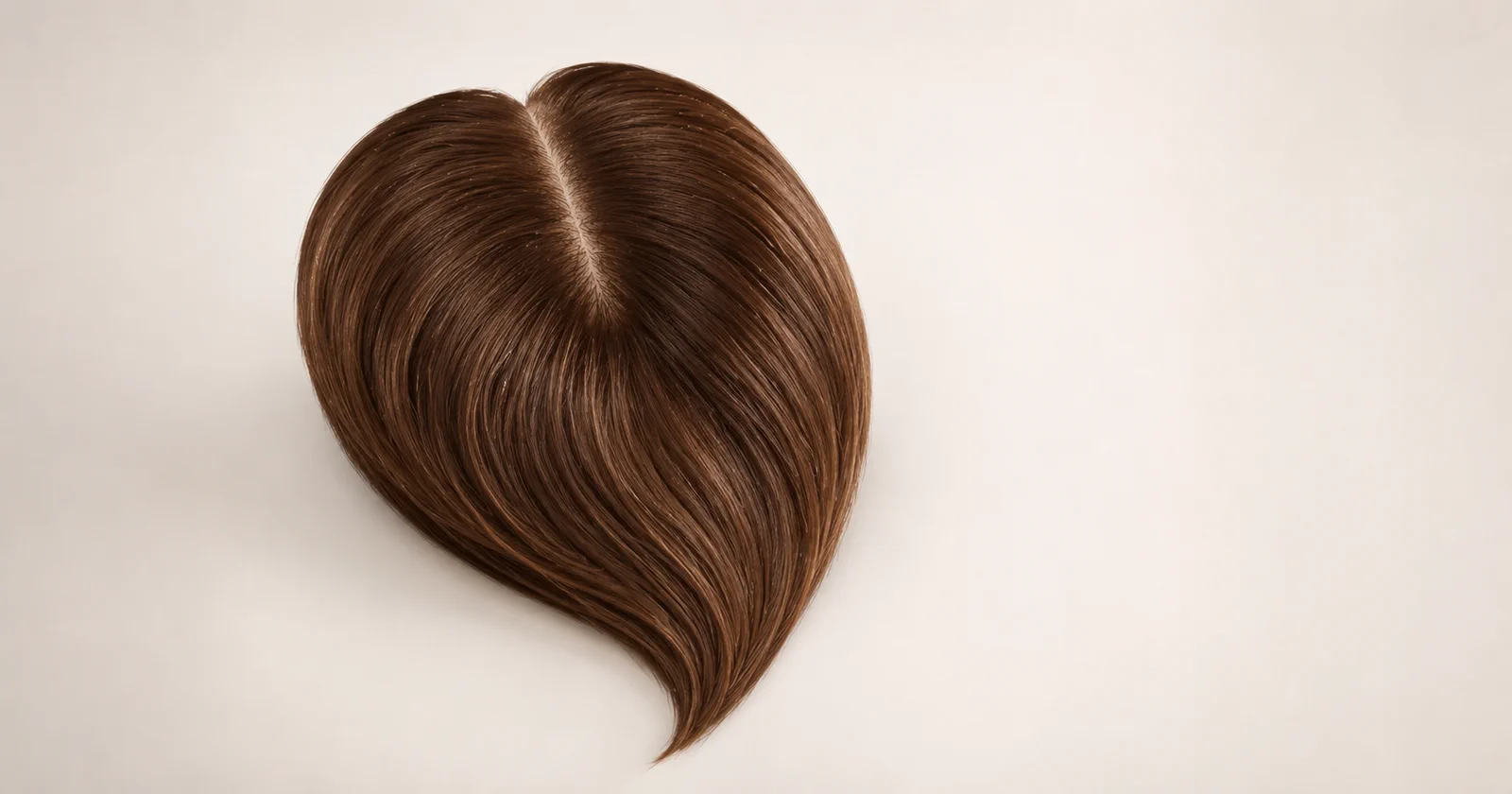
At LEV Wigs, we manufacture crown toppers in silk top, mono, and lace constructions with customizable base sizes from 2 by 3 to 8 by 8 inches. As a B2B hair topper manufacturer, our wholesale program includes sample pieces, MOQ guidance, private label packaging options, spec sheets, and training materials for salon staff. Each order goes through density, color blend, clip tension, and base-shape quality control before shipment. Submit an inquiry through our contact form to discuss volume pricing, lead times, and shipping regions.


Ready to Stock Crown Toppers?
Browse our wholesale silk top and mono base crown toppers.
Request Wholesale Pricing