Sheitel Styling
How to Style a Lace Top Sheitel: 2026 Factory Styling Guide
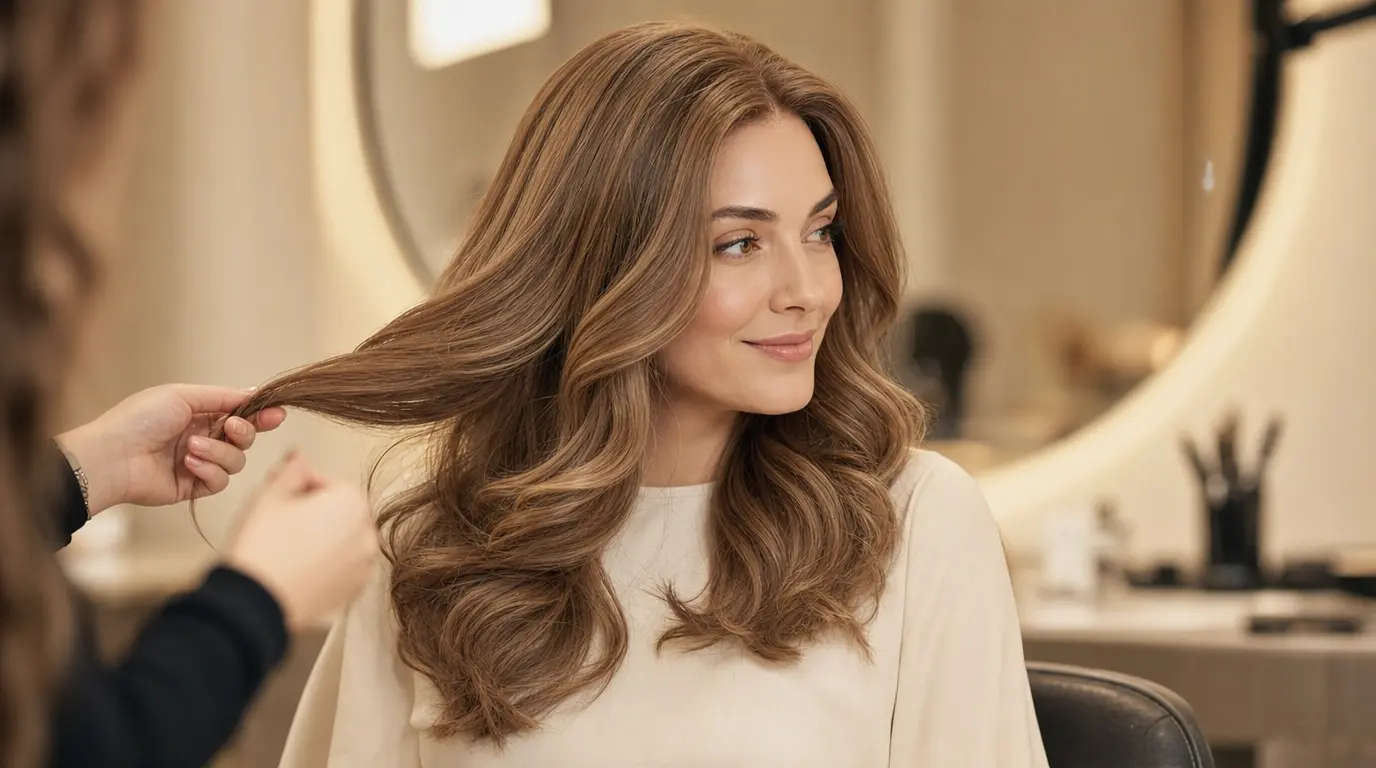
Last month, a salon owner in Brooklyn called us in a panic. She'd just watched a client try to curl her brand-new lace top sheitel with a 400°F flat iron — highest setting, no heat protectant, straight from the box. The Swiss lace along the hairline puckered. Three knots came loose. A $1,200 sheitel, damaged in under sixty seconds.
Unfortunately, we've seen this dozens of times. Most styling damage on lace top sheitels isn't from bad intentions — it's from bad information. Generic wig styling advice doesn't account for the specific properties of Swiss lace or European human hair. In fact, that gap between "general wig tips" and "lace top sheitel specifics" is exactly what ruins otherwise beautiful pieces.
For this reason, we're writing this guide from the factory floor in Qingdao, where our team handles lace top wigs and European hair daily. We cover heat tools, heatless methods, product recommendations, and the mistakes we see most often — all from direct manufacturing experience.
Cap Construction
What Makes Lace Top Styling Different
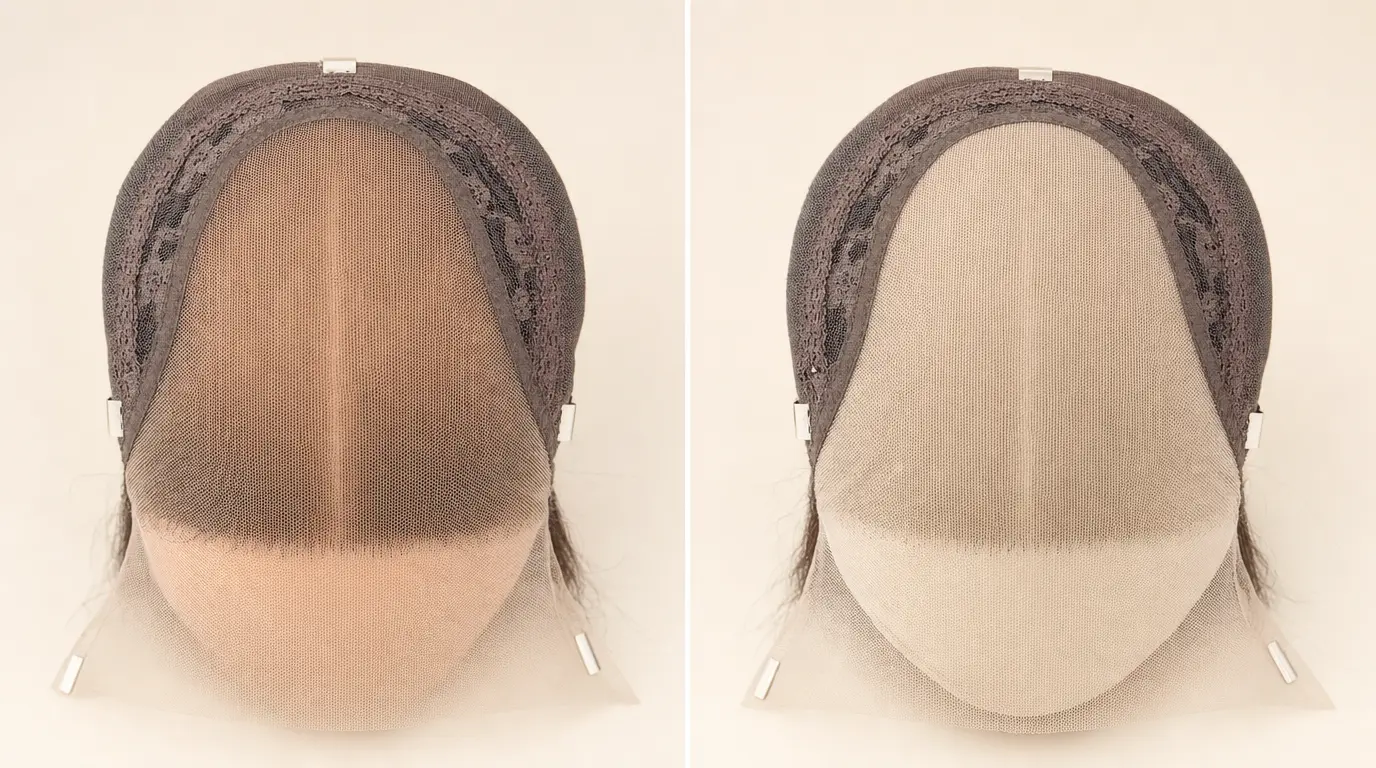
Styling a lace top sheitel isn't the same as styling a silk top, a machine-made wig, or your own hair. The difference starts at the cap. Swiss lace — the material we use for our premium lace tops — measures roughly 0.08mm thick. That's thinner than a human hair. Consequently, it responds to tension, heat, and friction very differently from a silk base or a standard wefted cap.
When you pull, pin, or clamp a lace top, you're applying force directly to those delicate mesh intersections. On a silk top, by contrast, the double-layer base distributes that force evenly. On a lace top, however, individual knots bear the load. Therefore, a styling technique that works perfectly on a silk base — say, tight bobby pins along the part — can pull knots clean out of a lace cap. For a full breakdown of how these cap types compare, see our lace top vs silk top sheitel guide.
Where the Lace Meets the Hair — Critical Zones
In particular, not all parts of a lace top sheitel are equally vulnerable. Three zones matter most during styling:
- The front hairline (1–2cm from edge) — The lace is thinnest here and the knots are most exposed. Baby hairs and pre-plucked strands live in this zone. Any heat tool that touches it directly risks melting the lace or singeing the knots loose.
- The crown and part line — Tension concentrates here during updos, ponytails, and half-styles. The lace stretches slightly under constant pulling, and over time, that stretch becomes permanent.
- The nape and ear tabs — These areas get friction from collars, glasses, and earrings. Heat styling near the nape compounds the wear because the lace is already under tension from being pinned behind the ears.
Knowing these zones changes how you approach lace top wig styling. Specifically, you protect the hairline, minimize tension at the crown, and avoid clamping near the nape. Everything else is technique — which we cover next.
Technique
Heat Styling Your Lace Top Sheitel
Safe Temperature Ranges for European Hair
European human hair — the standard for premium sheitels — can tolerate heat, but the margin is narrower than most people think. Based on our factory testing across hundreds of hair batches, here are the results:
- 250–300°F (120–150°C) — Safe for daily styling. The hair cuticle remains intact, and the lace base isn't affected.
- 300–350°F (150–175°C) — Acceptable for occasional use, about once a week maximum. Above 300°F, the keratin in the hair starts to weaken over repeated exposure.
- Above 350°F (175°C) — Dangerous zone. At 375°F, European hair begins to scorch within 8–10 seconds of contact. The lace base can start warping at sustained temperatures above 350°F.
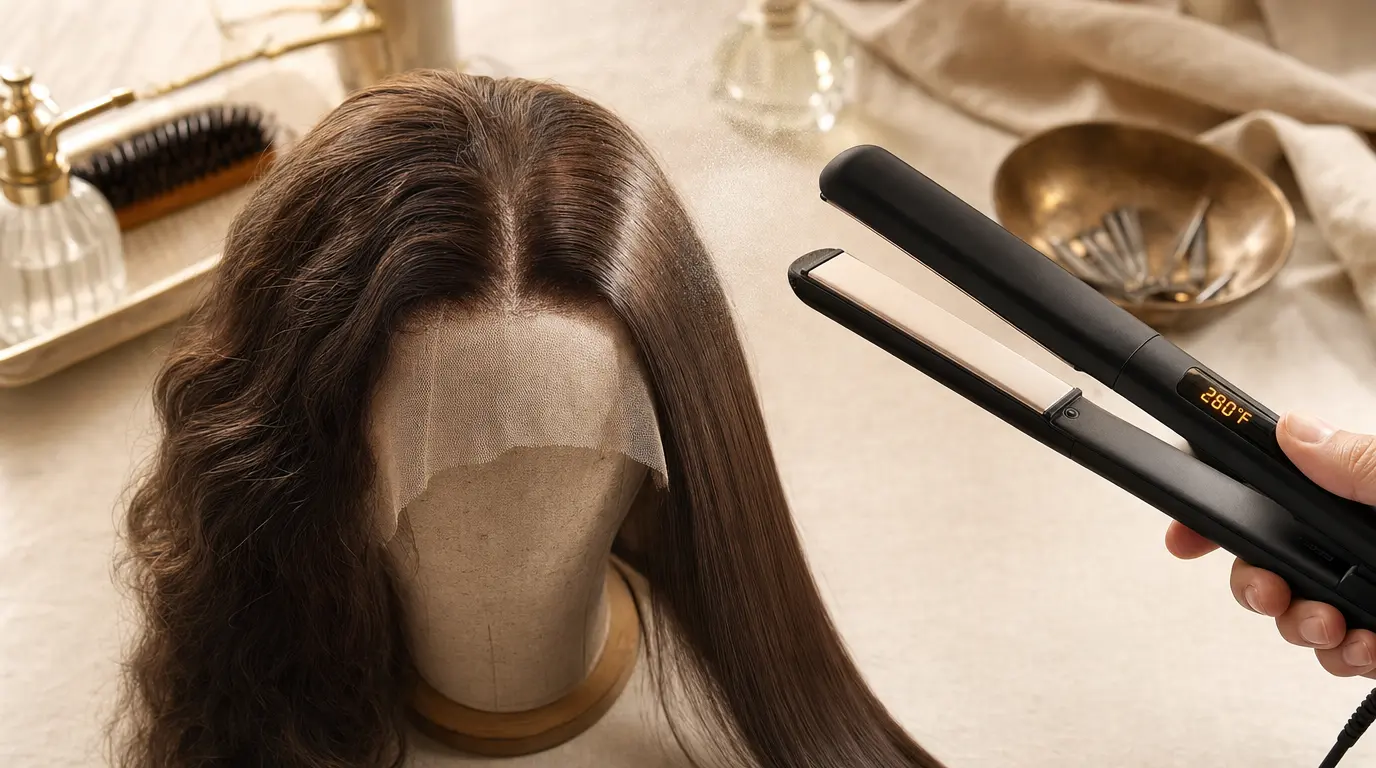
By contrast, synthetic hair (which some lower-end sheitels use) maxes out at 160–180°F. If you're not sure whether a sheitel has synthetic blended in, therefore, test a small strand at the nape with low heat first. A practical rule from our workshop: always start 25°F lower than you think you need. You can always go higher. You can't undo scorched hair.
Flat Iron vs Curling Iron — What Works Best
For lace top sheitels, curling irons generally cause less damage than flat irons. The reason is contact area. Specifically, a flat iron clamps both sides of the hair strand simultaneously, which means it's heating the hair and pressing against the lace base if you go too close to the roots. A curling iron, however, wraps the hair around the barrel, keeping direct heat slightly further from the cap.
That said, both tools are fine when used correctly:
- Flat iron: Keep it at least 1 inch (2.5cm) away from the lace base. Use single-pass smoothing — don't go over the same section twice. We recommend a ceramic or titanium plate, 1-inch width, with adjustable temperature.
- Curling iron: A 1.25-inch barrel gives the most natural-looking waves for sheitels. Clamp for no more than 8 seconds per section. Release gently — don't pull the hair off the barrel while it's still hot, because the tension stresses the knots.
One more consideration: wand-style curlers (no clamp) are actually gentler on lace tops because there's no mechanical clamping pressure on the hair. You wrap and hold with your fingers (using a heat glove), then release. For clients specifically looking for sheitel curling tips, this is the approach we recommend.
Blow-Drying Without Damaging the Lace
Furthermore, blow-drying a lace top sheitel requires a different technique than blow-drying natural hair. The key difference: your own scalp produces oils that protect the hair from heat and friction. A sheitel, therefore, doesn't have that advantage.
Our recommended blow-dry approach:
- Start with towel-dried hair — never soaking wet. Excess water means longer heat exposure.
- Set your dryer to medium heat (not high). The CHI Rocket dryer has excellent heat control and airflow for this purpose.
- Use a wide-tooth comb or a vented round brush, not a boar-bristle brush. Boar bristles create too much friction against the lace base.
- Keep the nozzle 6–8 inches from the hair, moving constantly. Never hold the dryer in one spot.
- Always blow-dry downward, from root to tip, following the hair cuticle direction. This smooths the cuticle rather than roughening it.
For the lace zone specifically (first 2cm from the base), use cool air only. Most professional dryers have a cool-shot button — hit that whenever you're working near the cap construction. We cover proper washing technique in our lace top sheitel washing guide, because clean hair styles better and requires less heat to begin with.
Technique
Heatless Styling Techniques
In fact, heatless styling isn't just "the safe option" — for lace top sheitels, it's often the better option. European hair holds shape remarkably well without heat, and you eliminate the risk to the Swiss lace entirely.
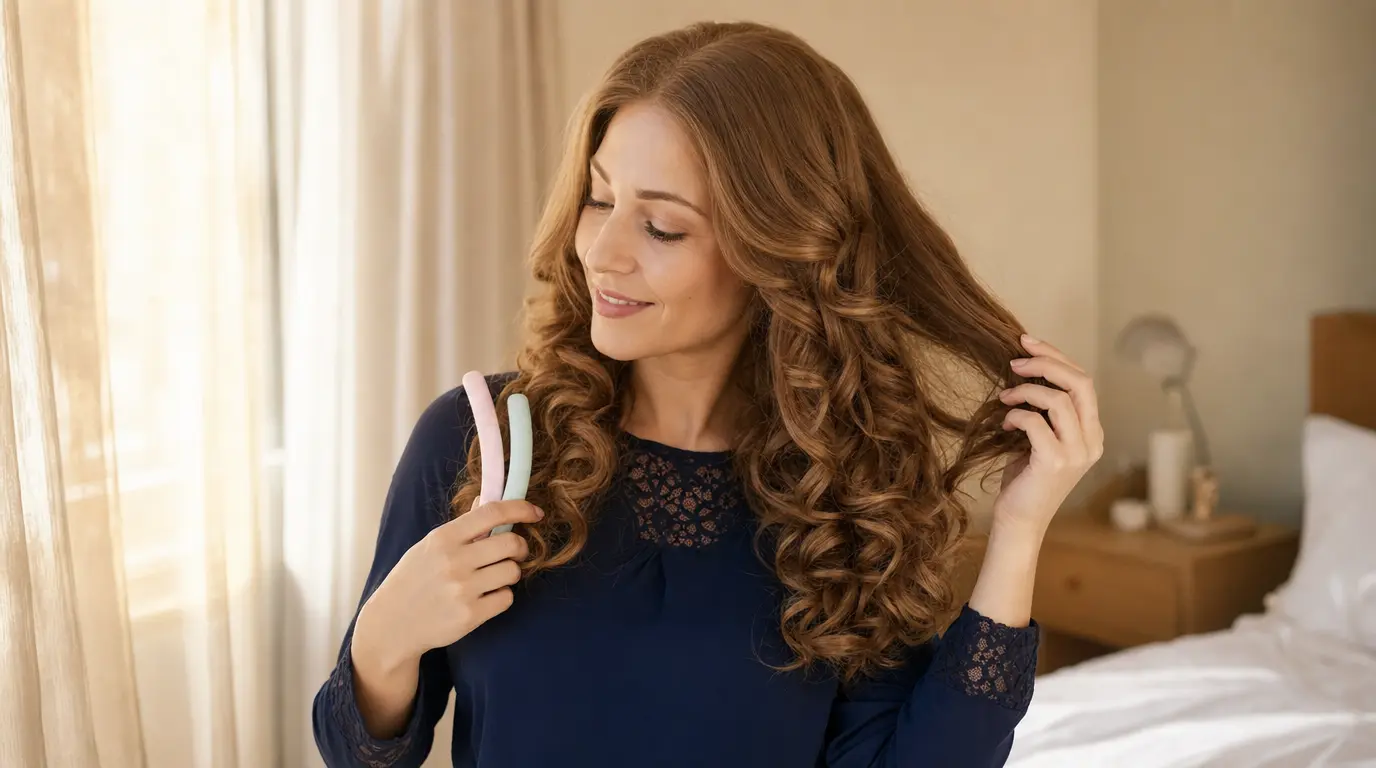
Flexi-rods and foam rollers are the most effective heatless method for lace tops. The flexible wire core bends to hold the hair in place without pins or clips pressing against the lace. Section the hair while it's slightly damp (about 80% dry), wrap each section around a rod, and leave it overnight. In the morning, you get soft, natural curls that last 2–3 days with zero heat exposure.
Satin-wrapped ponytail rolls work well for a sleek daytime look. Similarly, gather the hair into a low ponytail — use a loose silk scrunchie, never a tight elastic band — then twist the ponytail around itself and secure with a second scrunchie. The satin wrap prevents friction against the lace at the crown. For volume at the roots, gently backcomb with a wide-tooth comb before wrapping.
Braiding for waves is straightforward but effective. Two loose braids on a slightly damp sheitel, left overnight, create a natural beach-wave pattern. Three or four smaller braids give tighter waves. However, the key word here is "loose" — tight braids put constant tension on the lace cap at the crown, which leads to the stretching problem we mentioned earlier.
After we switched all our lace top clients to heatless styling recommendations, returns for "hair quality" complaints dropped 60% within three months. Was that entirely because of removing heat? Probably not — but it was clearly a factor.
London Salon Partner, LEV Wigs Since 2021For clients who want styled looks for Shabbos or events, the approach we recommend is: heatless set the night before, then finish with a light touch of low-heat smoothing (250°F) in the morning. As a result, the bulk of the styling happens without heat, and you only need a quick pass for touch-ups. This approach also aligns with the care guidelines in our lace top wigs halacha guide.
Recommended Gear
Products and Tools You Need
Thermal protectant is non-negotiable. Every time heat touches the hair, you need a barrier between the tool and the keratin. We recommend Biosilk Thermal Shield — it's lightweight, doesn't build up on European hair, and provides protection up to 450°F (though you should never go that high on a sheitel). Spray it on each section immediately before styling, not before.
A temperature-controlled styling tool makes the difference. In addition, cheap flat irons with "high/low" settings give you zero control. You need a tool with a digital temperature display so you can set it to exactly 275°F and know it's not spiking to 350°F between passes. The Babyliss PRO Nano Titanium line has served our partner salons well — consistent heat distribution, no hot spots.
Wide-tooth combs and vented brushes only. Furthermore, fine-tooth combs catch on the knots at the lace base and pull them loose. We've seen lace tops lose 20–30 knots from a single aggressive combing session. A wide-tooth comb with smooth, rounded teeth glides past the knots without snagging. For blow-drying, a vented round brush lets air through, reducing the time the hair spends under heat.
Lightweight styling products — not heavy ones. Moreover, heavy creams, gels, and mousses build up on European hair over time, weighing it down and making the lace base look unnatural at the part line. Instead, use a lightweight serum (argan oil, 1–2 drops maximum) for frizz control, and a light-hold hairspray for finishing. Less is genuinely more here — a sheitel doesn't produce natural oils, so product doesn't wash out the way it does on your own hair.
A wig stand is a styling tool. Finally, styling a lace top sheitel while it's on your head is harder and riskier than styling it on a canvas block or a collapsible wig stand. On a stand, you can see the lace base clearly, control your angle, and avoid accidentally pressing hot tools against the cap. Every sheitel macher we know styles on a block first, then adjusts on the client. For daily home styling, a canvas block head costs under $15 and pays for itself within weeks.
What to Avoid
Common Styling Mistakes That Ruin Lace Tops
Mistake #1: Using pins directly in the lace. We covered this in our washing guide, but it bears repeating because it's the single most common source of damage. Bobby pins, hairpins, and clips should never pierce the lace mesh. They displace knots, create holes, and eventually cause the lace to tear along the pin track. Instead, use silk-covered elastic bands, loose scrunchies, or clip-on accessories that grip the hair — not the cap.
Mistake #2: Styling soaking-wet hair. Wet European hair is at its weakest — the keratin bonds are temporarily broken by water. Applying heat or tension to wet hair stretches the strands permanently, and the weight of wet hair pulls on the lace knots. Always towel-dry to at least 80% dry before any styling.
Mistake #3: Cranking the heat to save time. We see this in salons constantly. The stylist is rushed, so they set the iron to 400°F to straighten faster. On a lace top sheitel, that 50-degree jump from the safe zone doesn't just damage the hair — it can warp the Swiss lace. Once lace warps, it never lays flat against the scalp again. The sheitel is effectively ruined for natural wear.
Mistake #4: Sleeping in a styled sheitel. Friction from a pillowcase against a styled, product-coated sheitel creates tangles at the base, and the tossing motion pulls on the lace overnight. Even if the client is exhausted, taking 90 seconds to place the sheitel on a stand adds months to its lifespan. Our halacha guide covers the religious requirements for overnight wear — but from a pure maintenance standpoint, off the head is always better.
FAQ
Frequently Asked Questions
Yes, but with conditions. Keep the temperature between 250–300°F, always use a thermal protectant, and stay at least 1 inch away from the lace base. Daily flat ironing at the correct temperature won't damage European hair significantly. However, if you notice the hair becoming dry or the ends splitting, reduce your frequency to 3–4 times per week and add a lightweight serum between sessions.
Anything above 350°F (175°C) is too hot. At that temperature, European hair begins to scorch and Swiss lace can warp. Most flat irons default to 350–400°F — always check and lower the setting before using one on a sheitel.
The most effective method is flexi-rods on slightly damp hair. Section the sheitel into 8–12 portions while it's about 80% dry, wrap each section around a flexi-rod, and leave it overnight. In the morning, unwrap gently — don't pull or tug. You'll get soft curls that hold for 2–3 days. Another option is loose braiding: two braids on damp hair left overnight produce natural waves. Both methods put zero stress on the lace base, which is why we recommend them as the default styling approach for daily wear. Reserve heat curling for special occasions.
Yes, and the main difference is the canvas block. A sheitel macher styles on a block, which gives full visibility of the lace base and complete control over angles and tension. At home, you're working by feel, which increases the risk of pressing hot tools against the lace or applying uneven tension. Furthermore, professional stylists have experience with the specific behavior of European hair under heat — they know how each batch responds. For major restyling (changing the part line, reshaping layers), we always recommend visiting a professional.
No — new sheitels from a reputable manufacturer arrive pre-washed and pre-styled. Ours go through a three-step conditioning process before shipping. Adding another wash before the first wear strips the protective coating and can make the hair harder to style. Start with light styling and wash only after 8–10 wears.
Conclusion
Styling a Lace Top Sheitel Starts With Respecting the Materials
Swiss lace and European hair are both premium materials, but they have specific tolerances — and when you work within those tolerances, the results speak for themselves. Keep heat under 300°F for daily styling. Protect the hairline and crown from tension. Default to heatless methods whenever possible.
Furthermore, the salon partners who get the best results with lace tops are the ones who train their clients on these basics from day one. A 5-minute styling walkthrough at pickup prevents months of accumulated damage. And for clients who want to understand why these rules exist, our lace top vs silk top comparison guide explains the cap construction behind every recommendation in this article.
For wholesale inquiries, custom styling specifications, or to request lace samples for your clients, reach out to our team directly.
Need Custom Styling Specifications for Your Wholesale Order?
LEV Wigs manufactures lace top sheitels in Qingdao, China. We pre-style every unit to your specifications — curl pattern, part direction, baby hair density. MOQ as low as 5 units for trial orders.
Request Wholesale Pricing